not every application needs oracle data delivered the same way.
DIA supports two models:
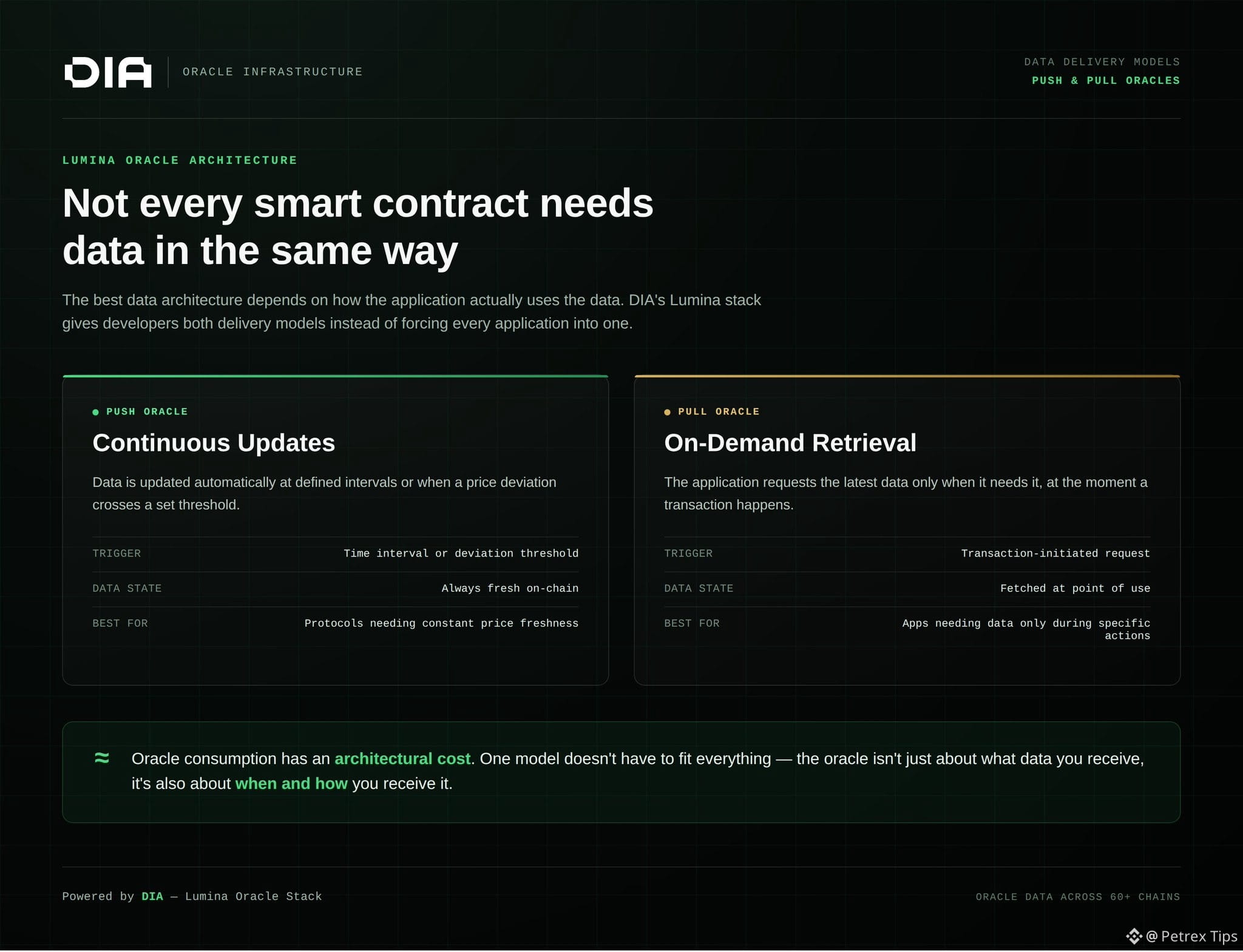
push oracles automatically update data at set intervals or when a defined price deviation is reached.
pull oracles provide the latest data only when an application requests it.
the difference matters because data delivery comes with architectural costs. protocols that constantly need fresh prices may benefit from push updates, while applications that only need data for specific transactions can use pull oracles.
the point is simple: oracle infrastructure shouldn't be one-size-fits-all.
DIA's Lumina stack gives developers flexibility over not just what data they use, but also when and how that data reaches their application.
DIA supports two models:
push oracles automatically update data at set intervals or when a defined price deviation is reached.
pull oracles provide the latest data only when an application requests it.
the difference matters because data delivery comes with architectural costs. protocols that constantly need fresh prices may benefit from push updates, while applications that only need data for specific transactions can use pull oracles.
the point is simple: oracle infrastructure shouldn't be one-size-fits-all.
DIA's Lumina stack gives developers flexibility over not just what data they use, but also when and how that data reaches their application.