

Compiled/translated from: @thedankoe
Everyone is worried about whether artificial intelligence will replace their jobs.
But I can't help but think that there is something about the human experience that cannot be replaced.
I believe that humans will still want to work. They will still crave to create something, share it with others, and receive some form of reward for their contributions. This is a fundamental characteristic of human nature, but unfortunately, the word 'work' has become a dirty term stripped of meaning because productivity has become our faith.
I'm not too worried about factory-style jobs being automated. We all know what that soulless environment does to a person.
I am more interested in creative work.
What will the future look like?
Will money become obsolete?
Will Artificial General Intelligence (AGI) write all essays and create all art?
If struggle, status, and curiosity are the generative factors of meaning, and AGI promises to eliminate them, what should we do?
If there is one thing that AGI cannot replace, it is...
In a world without scarcity, how can one become a scarce entity?
I want to share six thoughts about the future of work, the skills and traits you must optimize as a creator, and ultimately how to live a meaningful life in a daunting future. I will share my own thoughts and theories that I believe are relevant.
If you're a creator wondering whether artificial intelligence will replace your job, this article is for you.
(By the way, my article is quite long. If you don't have time right now, you can bookmark it, but I don't expect it to please those with short attention spans like goldfish. My goal is to help you understand, not to collect some points that sound good but aren't helpful to you.)
I – The crisis of meaning makes meaning worth paying for.
Meaning has become a scarce commodity.
This is not hard to see.
But to understand how we got into this predicament, some historical knowledge can be helpful.
You see, reality tends to become more complex over time. When things become too complex or chaotic, a new ordered structure (or a new whole to surround the parts) must emerge.
Here are a few simple examples:
Letters → Words → Sentences → Paragraphs
Atom → Cell → Molecular → Organism
Matter → Life → Thought → Spirit
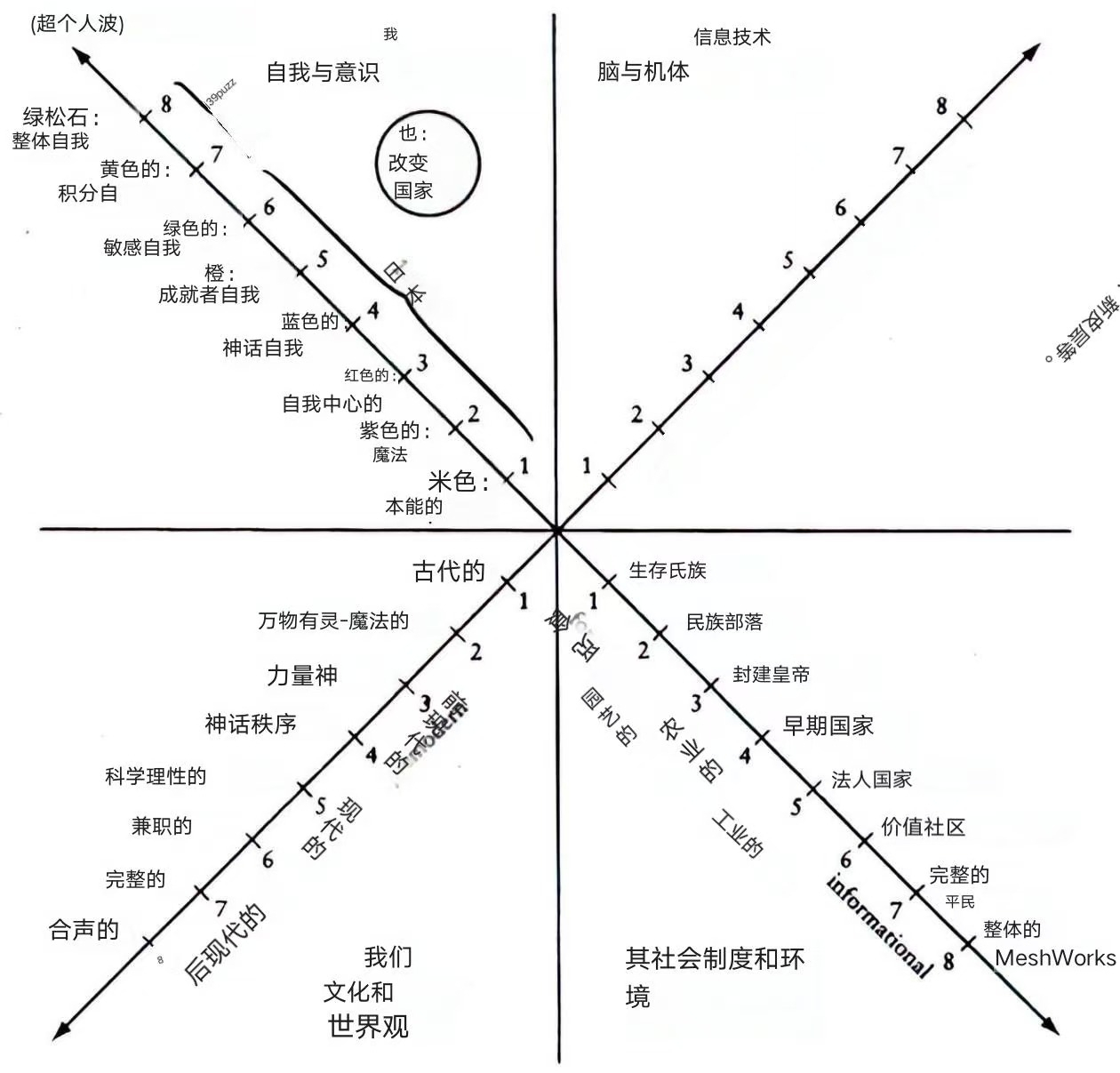
This is the structure of reality.
When discussing meaning, I want to focus on how society evolves, which can be viewed from two perspectives:
The technological and economic foundation (or dominant mode of production) and the specific technologies used in past societies.
Foraging → Horticulture → Agriculture → Industry → Information Technology → What's next (Smart Technology?)?
The dominant worldviews and value structures (their meaning-making systems) of people in these societies.
Premodern → Modern → Postmodern → What's next (hypermodern?)
For the sake of brevity, we can quickly browse the first few stages.
Foraging societies are hunter-gatherer societies. It's quite simple. In horticultural societies, men are hunters, while women tend small plots of land. In agricultural societies, food comes from large-scale cultivation, generating a large surplus that allows men to reduce their working hours, thus using their newfound time for exploration, discovery, and conquest.
The technological development of these societies has gone through the following stages:
Axe, spear, and fire → hoe and digging stick → animal-drawn plow (from human labor to animal labor).
All of these societies are essentially based on a pre-modern worldview.
In other words, meaning is bestowed by a higher power (elders, scriptures, kings, priests). You are told what to believe. You obey. Autonomy is a trait that can get you killed or banished.
Then came the Industrial Age, with food production driven by mechanized agriculture. Fewer farmers fed more people, and food became a commodity. The main technologies were steam, coal, and oil. The need for human and animal labor was greatly reduced.
A key insight here is that a society’s technological and economic foundation creates conditions for the emergence of a new layer of worldview and value system.
Industrial society established the modern worldview, which values reason. Meaning is discovered through reason, science, and evidence, rather than through the inheritance of tradition. Nature becomes less mysterious, progress replaces the sacred, and merit replaces the right of birth.
That's where the problem lies.
First, productivity is overemphasized in youth. From the moment you are born, you are expected to go to school, find a job, and become a cog in a machine. You are programmed to be like a robot from the very beginning.
Secondly, we are disconnected from tribes, villages, and communities. We are alone in this vast digital world filled with artificial connections.
Third, religious and spiritual frameworks were replaced by mechanical cosmological models. Meaning was no longer conferred by the divine.
Fourth, we began outsourcing autonomy to institutions, forgetting the value of self-directed work. Nine-to-five jobs replaced the labor of artisans and farmers.
All of this has led to the corruption of what we do and how we work. Work is broken down into simple, repetitive tasks, dulling workers’ understanding of the whole process to the point that they cannot replicate it independently (as we discussed in a previous article, why generalists always outperform specialists).
In other words, meaningless work has become our sole focus and means of survival. We've become so incapable of seeing it any other way that many will be shocked when artificial intelligence actually eliminates this cancer.
This leads to the information age, where the invention of computers has further abstracted labor. We now work at desks instead of farming—most of the time—and letting machines do the heavy lifting.
The dominant worldview now is postmodernism, and we have begun to deconstruct everything from the past.
(By the way, I assure you this is relevant to future work.)
A key insight of postmodernism is the absence of a single perspective, or the absence of a privileged one. All perspectives are situational, partial, and context-dependent. This is a great achievement because we now know that a single perspective is not the only true and absolute one that everyone must follow (whether religious, political, or otherwise).
However, this achievement only exacerbated the crisis of meaning, to the point that we realized something had to change.
This has led to a contradiction that must be resolved in the next stage of development we are entering (the intelligent era).
If no perspective is better, more realistic, or more developed than another, then the viewpoint that claims all perspectives are equally valid is simply a viewpoint you claim is better. It's a ranking of values. You deconstruct all ranks by creating your own perspectives.
Postmodernism correctly recognized that the absence of perspective is absolute, but mistakenly concluded that the absence of perspective is better.
Some perspectives are actually better.
What's so important about that?
First, the evolution of meaning is effectively as follows:
Meaning from "above" (God) → Meaning from "outside" (productivity and progress) → Meaning from "nowhere" (so-called equality) → What comes next (meaning from "inside"?)
Secondly, taste is a core skill that will become important in the future, requiring you to say that one thing is better than another.
It needs to be rejected.
Autonomy is also becoming a core survival skill. In the past, few people consciously demonstrated it.
Your personal perspective may be the only thing that AGI can't replace. It could be your competitive advantage in your creative work.
Creators are the architects of meaning in society, and if babies are abandoned with their bathwater (the work), the consequences could be disastrous.
Finally, we are in a state of chaos and desperately need a new structure to emerge. We can play a role in shaping the future. This is a major reason why I write so frequently.
Furthermore, productivity is no longer a reliable identity. Nobody knows which path to take or what skills to learn.
The significance is at a historical low, but so is certainty and a sense of security. So what's next?
What can we learn to ensure we are not at a huge disadvantage in this new world?
To understand this, we must understand the emerging technological and economic foundations (artificial intelligence), as this creates the conditions for the next worldview, thereby affecting what we value and even further impacting what we do.
Important content.
II – The Acceleration (and Meaninglessness) of Artificial Intelligence
Artificial intelligence promises to eliminate all of our labor.
At least that's all the hype surrounding it, and that's what everyone's focusing on.
It promises to provide the necessary conditions so that we no longer live in scarcity.
But by all standards, its approach only exacerbates the scarcity of meaning. Many people, including myself, derive meaning from some form of labor. I'm not against artificial intelligence, but I don't believe it can eliminate craftsmanship in creation.
But why?
Why do jobs disappear?
What has replaced the economic function of work?
To fully understand this, David Shapiro's (Post-Labor Economics) is a useful theory that depicts what the future might look like.
The question that everyone is pondering is:
Since working (working for a wage) has become the norm, companies pay workers, workers spend that money, and companies make a profit, in an endless cycle.
But then artificial intelligence emerged, threatening all of that.
As a company, owning a machine to do all the work is desirable. Humans are expensive, complex, emotionally charged, and legally risky. Until now, the only option has been to hire humans.
Once artificial intelligence and robots cross the threshold of being “better, faster, cheaper, and safer” for a particular job (assuming they have indeed reached that point, we can only speculate for now), it becomes economically unfeasible to continue employing humans for the job.
Unreasonable does not mean immoral or optional. I am not here to judge the morality of doing so.
This is illogical, because the hoe replaced the digging stick. Animal-drawn plows replaced the hoe (and allowed a new class of explorers and conquerors to emerge). Industrial machines replaced the plow. With each evolution, the power and potential of the individuals wielding these tools increased. In today's world, an individual can run a more streamlined and profitable enterprise than many companies. You can learn anything, build anything, but even with this power, most people still do nothing, while those who do act engage in endless competition with each other, leaving us all asking: where does the individual's competitive advantage lie?
But of course, one of the biggest problems with artificial intelligence replacing all jobs is:
If everyone is laid off, nobody will have money. If nobody has money, nobody will buy anything. If nobody buys anything, the economy will collapse.
As we will see, the above sentence applies to people with jobs, not people who own companies, which reminds me of Naval's statement:
There are nearly 7 billion people on this planet. One day, I hope there will be nearly 7 billion companies.
Currently, most people are worried about how they will receive income if they don't have jobs. There are only three ways for a family to earn income:
Wages – someone pays you for your labor (employer, customer, self-employed).
Transfers – The government pays you (Universal Basic Income, Social Security, Food Stamps, Medical Insurance).
Capital income – Your assets pay for you (dividends, rent, interest, capital gains).
If the first method collapses, the second and third methods will have to shoulder the burden. But relying solely on transfer payments would create political instability and disrupt price signals. This is simply not a comprehensive solution.
This means that a potential solution is to increase capital participation. Ordinary people will have access to income-generating assets.
For the sake of brevity, I won't list all the proposed mechanisms. Because the truth is, some people, especially creators, still want to work and be recognized for their work. That's what we'll be discussing.
Personally, I don't want to sit around collecting the bare minimum of cash. Much of the meaning in my life comes from personal and professional growth in all areas of life, and growth requires autonomy. If money can transform from a productivity indicator into a tool for expressing autonomy, that's the path I want to pursue.
I suggest delving deeper into Shapiro's ideas and keeping an eye out for when his comprehensive book on the subject (Labor Zero) will be published.
Fortunately, some jobs may still exist even when automation is superior. These jobs are based on specific human needs from other humans:
A highly responsible role (with accountability).
Statutory positions (personnel required by law)
Experience economy (bartenders, boutiques, art)
Meaning creators (those who help people navigate the human experience)
Relationship/trust work (sales, diplomacy, negotiation)
As a day creator, I want to focus on the third and fourth options.
This is what people are willing to pay a premium for.
But before we discuss how to incorporate new meaning into the economy or what advanced skills are needed, we've missed something crucial: how to generate meaning in the first place.
III – The Evolution and Anatomy of Meaning (Robots and Humans)
The elegance of the future lies not in the confrontation between humans and machines, but in their division of labor: silica sand smooths away the rough edges of necessity, allowing carbon to sublimate into meaning. We will abolish baristas, canonize chefs, silence agents, and reinstate actors. It is the same selfish instinct in both—eliminating friction, preserving narrative—that drives a world where the most tedious trifles are handled by circuits, while the most vivid stories are told by flesh-and-blood people.
...
For much of history, humanity has found meaning—or a reason to live—by looking up at the sky.
"On top."
Meaning is assigned.
Then, it seems, we became smarter. We regarded productivity as our god. We sought meaning in science and reason.
"Outside."
Meaning is gained through effort.
Now, we've become too smart for ourselves. We search for meaning in relativity, but we can't find it.
"nowhere."
The meaning has been deconstructed.
Moving into the future, your task is to pick up the pieces. You must accept your role as a creator. A builder of tools. An explorer. A problem solver. If you outsource too much autonomy to machines, they'll gladly connect you to a collective dopamine venous injector.
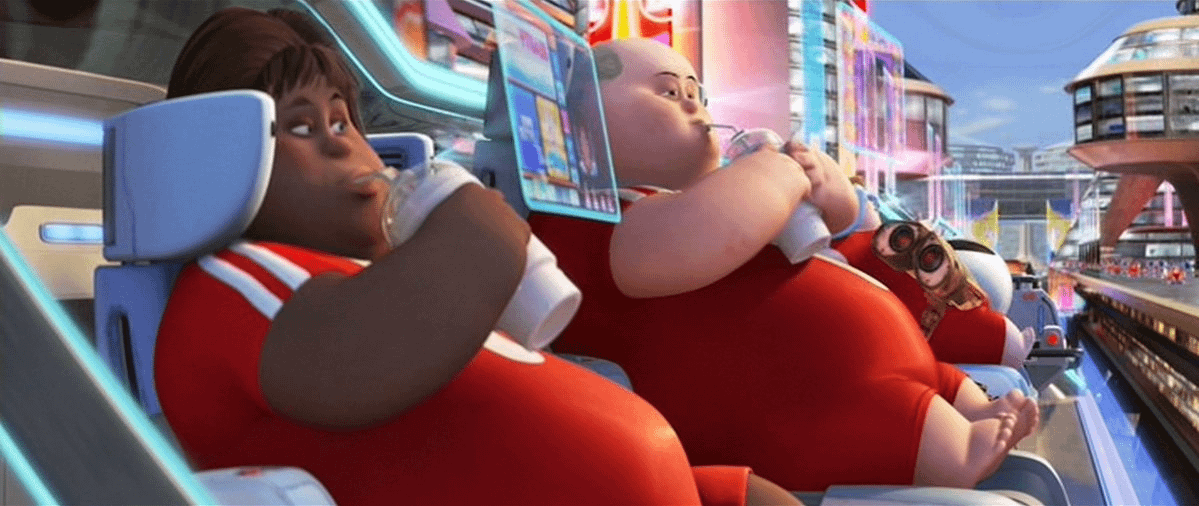
Now, meaning must be generated.
How do you generate meaning?
Okay, it's helpful to understand what causes meaninglessness.
First, meaninglessness stems from stagnation. If you do nothing in your life—like many who are simply trying to survive after their jobs disappear—you won't remain unchanged. You'll slowly descend into chaos. Entropy can also be observed in the mind.
Secondly, meaninglessness is exacerbated by isolation. Without tribes and villages, we are more alone than ever before. We sit in front of the screen waiting for the next paycheck so we can keep spending.
We can say that the two pillars of meaning are the feeling of moving forward and the connection with something greater than oneself.
Progress and contributions.
For a long time, we outsourced both. Progress was provided by employers, and connections by divine authority. Now, both are in your hands, which isn't pleasant for many.
Progress and contribution are activated through creative problem-solving. You have a goal for the future, you identify the problems that are holding you back, you create solutions through experimentation, and then pass them on to others in similar situations. If that person finds it valuable enough, they will reward you with value in another form.
Of course, this doesn't help in understanding how creators will survive if all work disappears. We'll discuss that shortly.
What I'm arguing is that you must be a creator. You must build your own things. You must walk your own path. You must express your autonomy. In any case, don't sit and wait for the world to promise to solve all your problems, because I guarantee it won't.
Beyond the two pillars of meaning, there are three generative factors:
Struggle—the engine of progress. The things you choose to struggle for (or care about) are your purpose.
Curiosity—the direction of progress. A non-linear choice of focus to solve problems.
Status—proof of contribution. Recognition for completing the cycle.
When you combine these factors, you get a story.
A story, a true story, will demand a premium.
Because the human brain is a story engine.
This is how we understand the world.
We hate it when something that should be done quickly becomes slow.
We hate long lines at the Department of Motor Vehicles (DMV). We hate late Uber drivers with long conversations. We hate waiting 30 minutes to answer a phone call to ask what should be simple support questions. We hate our fast food orders going wrong.
But we're willing to pay a premium for a five-star restaurant when we fly around the world.
We sat on the edge of our seats while watching a deeply moving play.
When tasks are related to speed, accuracy, or utility, we leave them to machines. But when our minds are no longer in a state of needing to accomplish something (as we do when we engage in leisure activities, and there will be many such activities in the future), we crave something entirely different.
We crave the potential to fail.
We crave the lessons of those who shed blood.
We crave stories, drama, novelty, myth, and meaning, and we're willing to pay good money for them.
A complete economy will be built around this, and that construction has already begun.
So the question is, what makes you unique? How do we ensure that this won't be replaced by machines?
IV – Creator Economy = Meaning Economy
If you're not getting paid from your job and don't find meaning in collecting enough passive income to meet your basic needs, then what's left?
Reward yourself for believing in what you are doing and for wanting to see more people in the world benefit from it.
You pursue what you care about and inspire others to care about it too.
Therefore, attention is a scarce resource that creators are competing for.
We're already starting to see this play a role in the creator economy.
Elon Musk serves as a prime example of understanding the primal power of attention. He is, in essence, a shaper of the future. He can mobilize capital, talent, and networks. He is the resource of all resources to ensure his galactic lifelong endeavor is realized.
The same goes for Mr. Beast. He's a master at capturing attention and reinvesting it in production, thereby gaining even more attention.
Think about how you get your education, news, and knowledge today. Most of it comes from social media creators who see it as a job of providing their perspectives. Centralized education and information still dominate, but this won't last long.
However, I don't want to be the next Mr. Beast. You probably don't want to take the risks and criticism that Musk faces. You simply want to pursue your interests and share them with a tribe that cares about your vision, just as your brain was designed. You want to create and share meaning.
The biggest misconception about the creator economy is that it's a winner-takes-all battlefield. That's not the case.
Justin Welsh is a friend in this field, known for wanting a quiet life. He desires meaningful work, ample family time, and the ability to do what he wants without financial pressure. He's doing quite well and has complete control over his "working" time.
But you don't even need to be that big. Many people with a small following earn enough to live comfortably. They don't work 16-hour days. They don't care about being billionaires. They're just pursuing what they find meaningful and sharing it (paired with specific skills that allow them to gain attention, as we'll discuss later). You see these people every day. By the way, if you want to be a billionaire or work extreme hours, go ahead. Some people enjoy that lifestyle. I'm not here to tell you how to live.
"But Dan, what about the dead internet? Won't artificial intelligence drown this space in idiocy and garbage?"
Yes, actually.
What's wrong with that?
Are you telling me that everyone in this space is so mediocre that it's never been easier to stand out? I think most people's concerns about AI garbage stem from a lack of understanding of how attention works.
It becomes worthless once everyone can do it instantly.
Of course, anyone can have AI write 1,000 posts or 10 articles to play algorithmic lottery, but how long will it take to see "garbage" actually go viral? If it does go viral, doesn't that mean it's not garbage?
Garbage exists on a spectrum. When I went viral last week, many people reduced my post to "just a bunch of self-help clichés," and honestly, if you actually read it, you'd know that's a bit of a stretch—considering parts on psychology, epistemology, and human behavior. No AI could have generated that exact post, or even this one. It's not to say it's the most profound writing on the planet, but it makes me question why a small segment of self-help content would enrage some people—can't self-help help you? Intelligent people often have biases in their areas of expertise, which is a rather unproductive way of thinking. Frankly, once something becomes "popular," those who consider themselves anti-mainstream immediately find reasons to hate it. One person's garbage is another's treasure, and vice versa.
Putting aside the spam, you've visited ChatGPT, right? So why are you still reading this article? Is it because you don't know what to type into the chatbot? Is it because there are things in life more important than answering questions you know how to ask? Do you think artificial intelligence will one day present this article to you completely? Think about these questions carefully before you start talking—it's all doomed to fail.
The fact is, skills are becoming more abstract.
The manual tasks of typing words on a page or adding brushstrokes on a canvas remain important because compiling everything into chat input deprives one of autonomy over work that requires personal touch, but they are less important than the mind of the artist performing those tasks.
Skills like marketing, persuasion, writing, digital art, and programming remain important, but those who achieve the most results are operating at a higher level.
They operate on a human level.
VI – Post-Labor Skills Combination
Future skill sets cannot be limited to occupation-specific skills.
We all know that artificial intelligence can write content, code, and create music.
More importantly, we need to develop the skills that humanize these things.
As this article gets longer, I will keep it concise. I have been and will continue to expand on these skills in future writings. For now, this list is simply to make you aware of them, so that you begin to look for opportunities to acquire and refine these skills.
This skill set, or more precisely, a skill level, is as follows:
1.) Autonomy – The meta-skill for creating stories worth telling
Autonomy refers to the ability to take action without permission or external prompting.
In other words, it's your ability to create unique stories. It's your ability to set the trajectory of your life and make billions of small and big decisions that propel you forward, backward, and laterally. Within each decision lies the opportunity to acquire knowledge, which is then stored in the things you choose to create.
Autonomy is practiced through the three generative factors of meaning that we discussed earlier: struggle, status, and curiosity.
The struggle demands that you make thoughtful choices, refuse to conform, step into the arena, cultivate the potential for failure, and develop a character arc. Staying on the default path society expects you to take is a reliable way to be replaced.
In the future, status will still revolve around money, but money will shift from a productivity indicator to a tool for expressing autonomy. The more money you have (not that you need to become super rich), the more choices you'll have, and the more unique your decisions will be. The complexity of your story increases with the amount of money you have.
Curiosity is your specific way of filtering signals and noise. The more distracted and numb you become, the harder it is to notice how your inner core pulls you onto new paths in life.
2.) Taste – the skill of discernment
Artificial intelligence is now creating the infinite library problem.
If a library contained every possible book and every permutation of every character, it would contain all truth, all falsehood, and all nonsense.
This library is actually useless because finding meaningful texts is statistically impossible.
Information without planning or structure is noise.
The planning and structure are a reflection of your taste.
In addition, artificial intelligence has created the infinite monkey problem.
In an infinite amount of time, a group of monkeys typing randomly could generate works by Shakespeare, but the output would be meaningless because there is no intention or choice in it.
To cultivate taste, you must build your own.
Because if taste is the ability to discern what is worth keeping and what is not, and you don't have complete control over this process, then you will be shaped by the tastes of others.
For creators, planning is a more important skill than creation.
3.) Perspective – Enhance your human abilities
Developmental psychology shows that human values and worldviews evolve through predictable stages over time.
We discussed this issue at the beginning of this article.
Typically, these stages follow a simple pattern: your thinking becomes less compliant, less ideological, and less dogmatic—as long as you don't get trapped.
In other words, your thinking is expanding. You are able to understand higher-level systems and structures. You are able to accommodate more complex thoughts without labeling them as "wrong" as a defense mechanism against a lack of understanding.
In other words, you've accumulated more perspectives. You no longer see the world from a narrow perspective, which hinders your ability to plan and limits the value you appreciate.
As we see very clearly on social media, the problem is that about 50% of the population lives in a highly compliant stage of development.
In other words, most people lack the cognitive capacity for true autonomy. They simply hear that they should be highly autonomous and conform to that idea, which is a form of low autonomy.
We've discussed self-development theory many times before, and I'll continue to talk about it, but here's 80/20 of what actually enhances your ability to see the bigger picture:
You're not trying to "upgrade." You're just allowing yourself to get lost or out of balance, and letting that become your new normal (without rejecting it).
For example, when you get a new job and feel overwhelmed because your current mindset can't process it, you learn. The same applies to new relationships or exposure to new cultures.
The worst thing you can do is to double down on your current perspective, because that will shut down your own opportunities for growth.
People try to resolve pain or disharmony too quickly because everything moves so fast in today's world.
They treat political opinions as law and believe that everyone else is wrong.
Or, they undergo a false transformation, acting as if they've reached a higher stage, but without actually achieving it. We often see this in hippies. They use spirituality as a status symbol to mask their massive egos.
4.) Persuasion – the ability to get people to care
You created something.
What you care about.
But most creators stop there. They just think they can publish, write, produce, and people will magically discover it. Or they think it's enough to sound clever or witty in their writing to show their ideas are worth paying attention to. In reality, nobody cares unless you can convince them it's good for their lives.
When we lived in tribes and villages, you were assigned a role. You produced what was necessary, and others benefited from it.
In today's world, you may seem alone. You must put in the effort to spread your work.
You can have the world's best books, products, paintings, or music, but if you don't understand attention mechanisms (marketing, sales, social media, advertising), no one will see it, and no one will care enough to pay you. Art must be combined with business.
We don't need to discuss "how" to learn these skills, because they are at a lower level in this skill hierarchy.
You automatically learn these skills by building your own things, making mistakes, and correcting them; only highly developed individuals can do this effectively.
In short: If you don't get the results you want, you need to experiment, learn, and iterate until you get them. That's how you become effective at anything.
5.) Technical knowledge – Utilizing artificial intelligence and tools
This article may seem to be against artificial intelligence, but I can assure you that it is not.
You don't need to choose one side.
And come on, we just discussed the development perspective.
The truth is, everyone will be working with AI to some extent, even those creators who swear to oppose it (while simultaneously posting on social media how much they hate AI, directly feeding Grok's algorithm, which does a good job).
The best advice I can give you, as always, is to try it.
Try using artificial intelligence in your next project.
The question is how artificial intelligence can outsource tasks that do not require human touch.
If you wish, you can feed it this article, provide a description of the content you want to create, and then start...
Start playing. See if it provides some cognitive relief, allowing your mind to focus more freely on what matters.
That's all for now, because I'm tired of writing, and I'm sure you're tired of reading too.
Thank you for your attention.
-- And