Believed the zero slippage claim for about three days. Then I pulled the on-chain data.
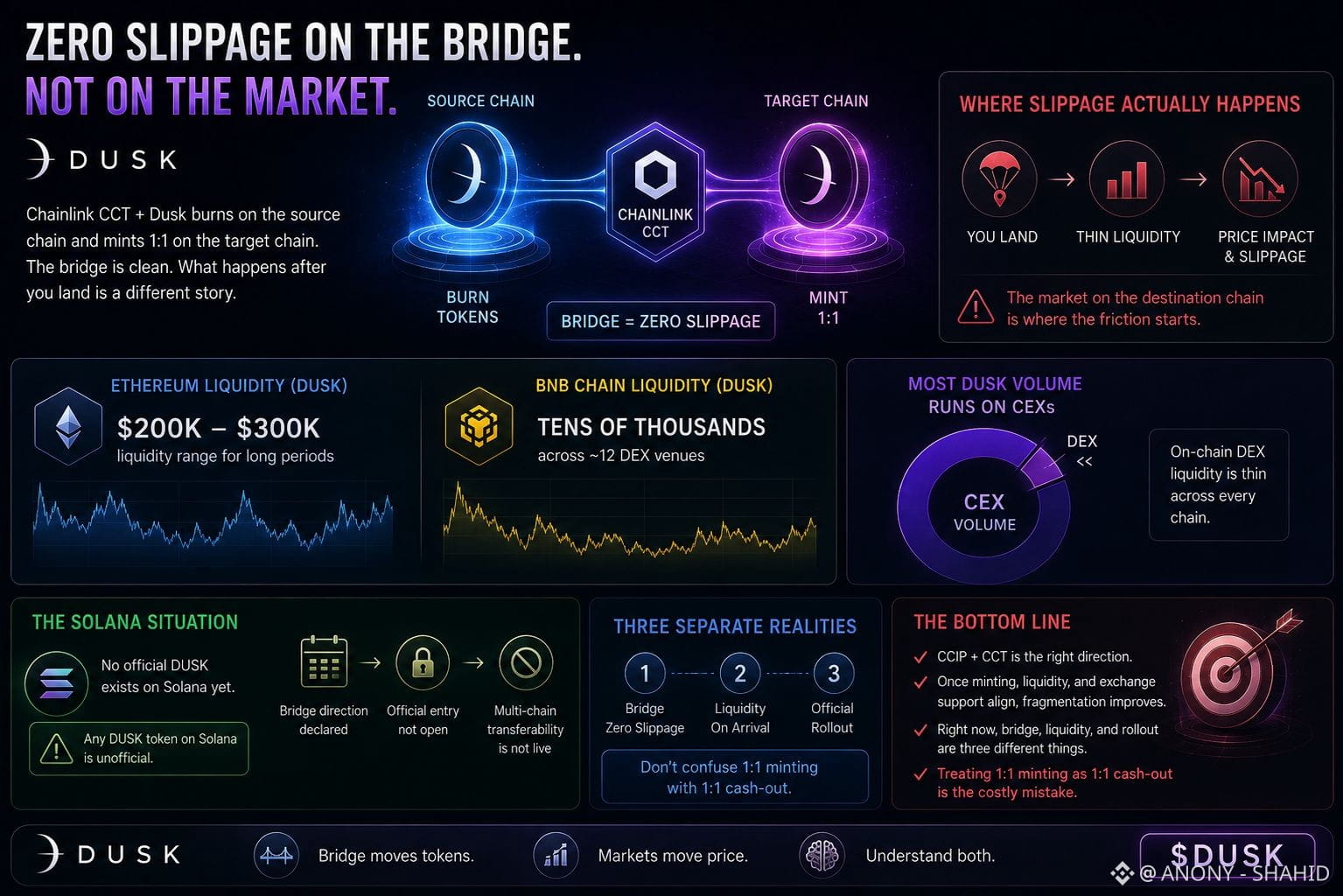
Chainlink CCT paired with Dusk burns tokens on the source chain and mints 1:1 on the target chain. No liquidity pool involved. That part is accurate. The bridge itself genuinely does not slip.
What the marketing skips is what happens after you land.
Ethereum-side @Dusk pool liquidity sits between a few hundred thousand and roughly three hundred thousand dollars for extended periods. BNB Chain pools across a dozen venues combined add up to tens of thousands. Most DUSK volume runs through centralized exchanges. On-chain DEX liquidity is thin across every chain it touches.
The bridge gets you across cleanly. The market on the other side is where the problem starts. If you want to convert DUSK to USDT after crossing, the slippage and price impact are waiting there regardless of how clean the bridge transfer was. Zero slippage on the bridge does not mean zero friction on the destination.
The Solana situation adds another layer. Dusk has stated clearly that no official DUSK exists on Solana yet. Any token claiming to be DUSK on Solana is unofficial. The bridge direction has been declared but the official entry point is not open. Multi-chain transferability right now means infrastructure exists, not that liquidity exists or that trading safely on multiple chains is currently possible.
CCIP and CCT as a direction is correct. Once official minting, destination chain pools, and exchange support align, the fragmentation should improve. That is a reasonable medium-term view.
But right now these three things are separate: the bridge zero slippage, the liquidity on arrival, and whether official rollout has landed. Treating 1:1 minting as 1:1 cash-out is the mistake most people make.
#dusk $DUSK #Binance
Chainlink CCT paired with Dusk burns tokens on the source chain and mints 1:1 on the target chain. No liquidity pool involved. That part is accurate. The bridge itself genuinely does not slip.
What the marketing skips is what happens after you land.
Ethereum-side @Dusk pool liquidity sits between a few hundred thousand and roughly three hundred thousand dollars for extended periods. BNB Chain pools across a dozen venues combined add up to tens of thousands. Most DUSK volume runs through centralized exchanges. On-chain DEX liquidity is thin across every chain it touches.
The bridge gets you across cleanly. The market on the other side is where the problem starts. If you want to convert DUSK to USDT after crossing, the slippage and price impact are waiting there regardless of how clean the bridge transfer was. Zero slippage on the bridge does not mean zero friction on the destination.
The Solana situation adds another layer. Dusk has stated clearly that no official DUSK exists on Solana yet. Any token claiming to be DUSK on Solana is unofficial. The bridge direction has been declared but the official entry point is not open. Multi-chain transferability right now means infrastructure exists, not that liquidity exists or that trading safely on multiple chains is currently possible.
CCIP and CCT as a direction is correct. Once official minting, destination chain pools, and exchange support align, the fragmentation should improve. That is a reasonable medium-term view.
But right now these three things are separate: the bridge zero slippage, the liquidity on arrival, and whether official rollout has landed. Treating 1:1 minting as 1:1 cash-out is the mistake most people make.
#dusk $DUSK #Binance