$BNB A balancing act for privacy compliance—Dusk weighs more than you think
In the privacy transfer logs of the Dusk testnet nodes, the coupling between compliance checks and zero-knowledge proofs is higher than expected. It doesn’t seem intent on pleasing anyone on performance; instead, it takes a very hard stance on the path of programmable compliance. And in the testnet phase, the pricing logic for $DUSK is still somewhat unclear. Compared with Polymesh’s securities chain built by stacking permissioned nodes and real-name verification, Dusk compresses identity verification and asset transfers into zero-knowledge proofs at the same time—raising engineering complexity, and not necessarily improving usability in sync.
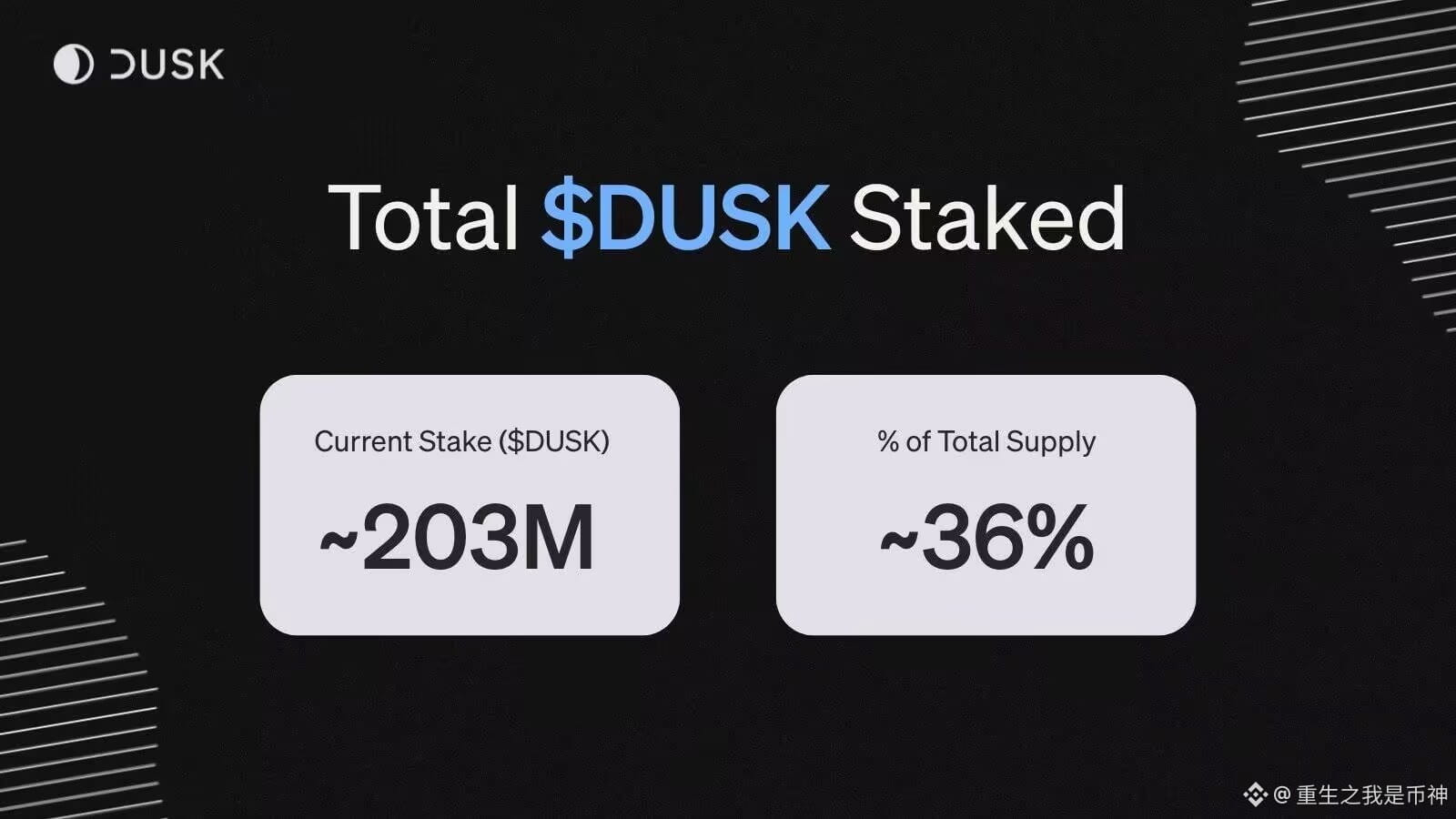
The problem lies on the developer side. The documentation version doesn’t match the actual SDK behavior, the testnet blocks sometimes experience delays of more than three seconds, and the browser wallet’s adaptation for mobile devices is rather rough. This wouldn’t be fatal for an early-stage project, but Dusk has consistently emphasized building for institutional-grade financial infrastructure. Institutions have a much lower tolerance for instability than retail users. As $DUSK is both a fee and staked asset, its economic model doesn’t show clear deflation pressure; the inflation release schedule is a bit too fast. With no ongoing demand for real asset minting, price support may be relatively thin.
Comparing with Ondo makes it clearer. Ondo tokenizes on-chain funds, hands asset compliance to traditional frameworks, and leaves only the minimum settlement and yield distribution on-chain. What Dusk wants to do is heavier: embed compliance logic directly into the protocol layer so that privacy and regulatory requirements are automatically handled in every transaction. The direction has high value, but the pace of implementation is slow, and the market narrative can’t wait. At this stage, $DUSK feels more like an entry ticket—betting on whether this chain can ultimately run institutional-grade privacy RWA, rather than delivering short-term liquidity.
I won’t dismiss it just because the technical route is aggressive, and I won’t treat the testnet data as a mainnet expectation. What Dusk needs isn’t more proofs of concept, but an intermediary capability that can truly connect real assets with real institutions. If $DUSK relies only on staking rewards to hold the ground, it will be difficult to run an independent market in this cycle. @Dusk #dusk $DUSK
In the privacy transfer logs of the Dusk testnet nodes, the coupling between compliance checks and zero-knowledge proofs is higher than expected. It doesn’t seem intent on pleasing anyone on performance; instead, it takes a very hard stance on the path of programmable compliance. And in the testnet phase, the pricing logic for $DUSK is still somewhat unclear. Compared with Polymesh’s securities chain built by stacking permissioned nodes and real-name verification, Dusk compresses identity verification and asset transfers into zero-knowledge proofs at the same time—raising engineering complexity, and not necessarily improving usability in sync.
The problem lies on the developer side. The documentation version doesn’t match the actual SDK behavior, the testnet blocks sometimes experience delays of more than three seconds, and the browser wallet’s adaptation for mobile devices is rather rough. This wouldn’t be fatal for an early-stage project, but Dusk has consistently emphasized building for institutional-grade financial infrastructure. Institutions have a much lower tolerance for instability than retail users. As $DUSK is both a fee and staked asset, its economic model doesn’t show clear deflation pressure; the inflation release schedule is a bit too fast. With no ongoing demand for real asset minting, price support may be relatively thin.
Comparing with Ondo makes it clearer. Ondo tokenizes on-chain funds, hands asset compliance to traditional frameworks, and leaves only the minimum settlement and yield distribution on-chain. What Dusk wants to do is heavier: embed compliance logic directly into the protocol layer so that privacy and regulatory requirements are automatically handled in every transaction. The direction has high value, but the pace of implementation is slow, and the market narrative can’t wait. At this stage, $DUSK feels more like an entry ticket—betting on whether this chain can ultimately run institutional-grade privacy RWA, rather than delivering short-term liquidity.
I won’t dismiss it just because the technical route is aggressive, and I won’t treat the testnet data as a mainnet expectation. What Dusk needs isn’t more proofs of concept, but an intermediary capability that can truly connect real assets with real institutions. If $DUSK relies only on staking rewards to hold the ground, it will be difficult to run an independent market in this cycle. @Dusk #dusk $DUSK