Dusk Staking Explained: How DUSK Helps Secure the Network
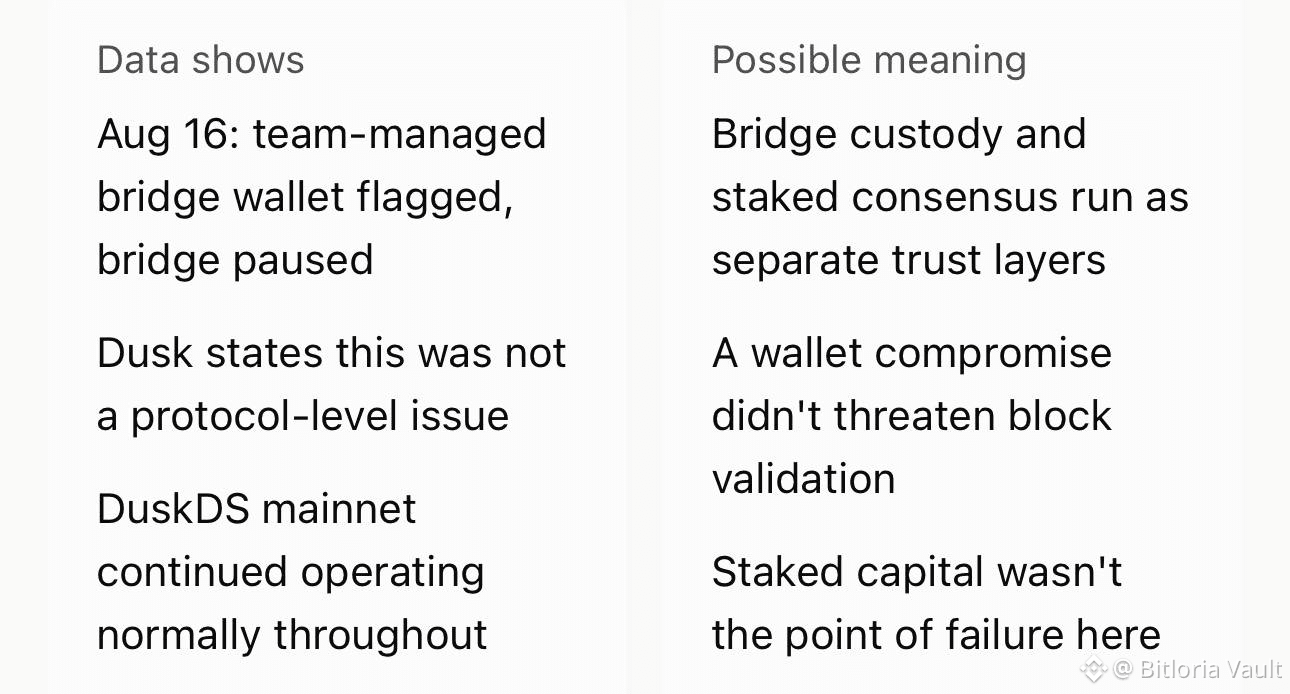
What actually caught my attention here wasn’t a staking dashboard number — it was what stayed constant during a stressful week. On August 16, Dusk’s team flagged suspicious activity on a bridge-operations wallet, paused bridge services, and recycled the affected addresses. What I went looking for afterward was whether block production itself wobbled. It didn’t. Dusk’s own incident notice states this was not a protocol-level issue and that the DuskDS mainnet kept operating normally throughout — meaning the SBA consensus, secured by staked DUSK from provisioners and block generators, kept validating blocks while a separate custodial wallet was compromised.
That’s a cleaner test of “how staking secures the network” than any marketing line: the compromised wallet was team-managed infrastructure for the bridge, not staked consensus capital, and the two systems didn’t share fate.
What I couldn’t verify: current total staked amount or validator count. Public sources show conflicting or outdated figures, and I’m not going to cite a stale number as current.
Does separating consensus security from bridge/custody risk change how you’d weigh incidents like this going forward?
Sources: Dusk’s official bridge incident notice and Messari’s Dusk Network project page for the August 16 timeline and network-status language.
@Dusk $DUSK #dusk
What actually caught my attention here wasn’t a staking dashboard number — it was what stayed constant during a stressful week. On August 16, Dusk’s team flagged suspicious activity on a bridge-operations wallet, paused bridge services, and recycled the affected addresses. What I went looking for afterward was whether block production itself wobbled. It didn’t. Dusk’s own incident notice states this was not a protocol-level issue and that the DuskDS mainnet kept operating normally throughout — meaning the SBA consensus, secured by staked DUSK from provisioners and block generators, kept validating blocks while a separate custodial wallet was compromised.
That’s a cleaner test of “how staking secures the network” than any marketing line: the compromised wallet was team-managed infrastructure for the bridge, not staked consensus capital, and the two systems didn’t share fate.
What I couldn’t verify: current total staked amount or validator count. Public sources show conflicting or outdated figures, and I’m not going to cite a stale number as current.
Does separating consensus security from bridge/custody risk change how you’d weigh incidents like this going forward?
Sources: Dusk’s official bridge incident notice and Messari’s Dusk Network project page for the August 16 timeline and network-status language.
@Dusk $DUSK #dusk