


Node pre-sales are the most common early cold-start model for blockchain and Web3 projects. Thanks to their low entry threshold and high early-holder benefits, they have become the preferred choice for many players to position themselves for early upside. However, node projects on the market are a mixed bag: most are “air drops” or Ponzi schemes that rely on flashy promotion to harvest users, while only a small number of projects can achieve long-term deployment and value appreciation. To avoid traps and precisely filter quality targets, there’s no need to blindly follow the crowd. By mastering a set of core judgment criteria, you can clearly distinguish between good and bad projects.
First, examine the authenticity of the project team and its background—this is the foundation for the project’s long-term development. A reliable node project will have a transparent, openly disclosed core team, and its members possess relevant experience in blockchain technology development, marketing and operations, and ecosystem building, along with past successful deployment cases. On the other hand, high-risk projects are usually led by anonymous teams with unclear backgrounds, relying only on packaging and hype without any real technical foundation. At the same time, you can verify whether the project has backing from third-party authoritative institutions—such as investment or technology partnerships—whether there is a formal security audit report, and thoroughly eliminate “three-nothing” shell projects.

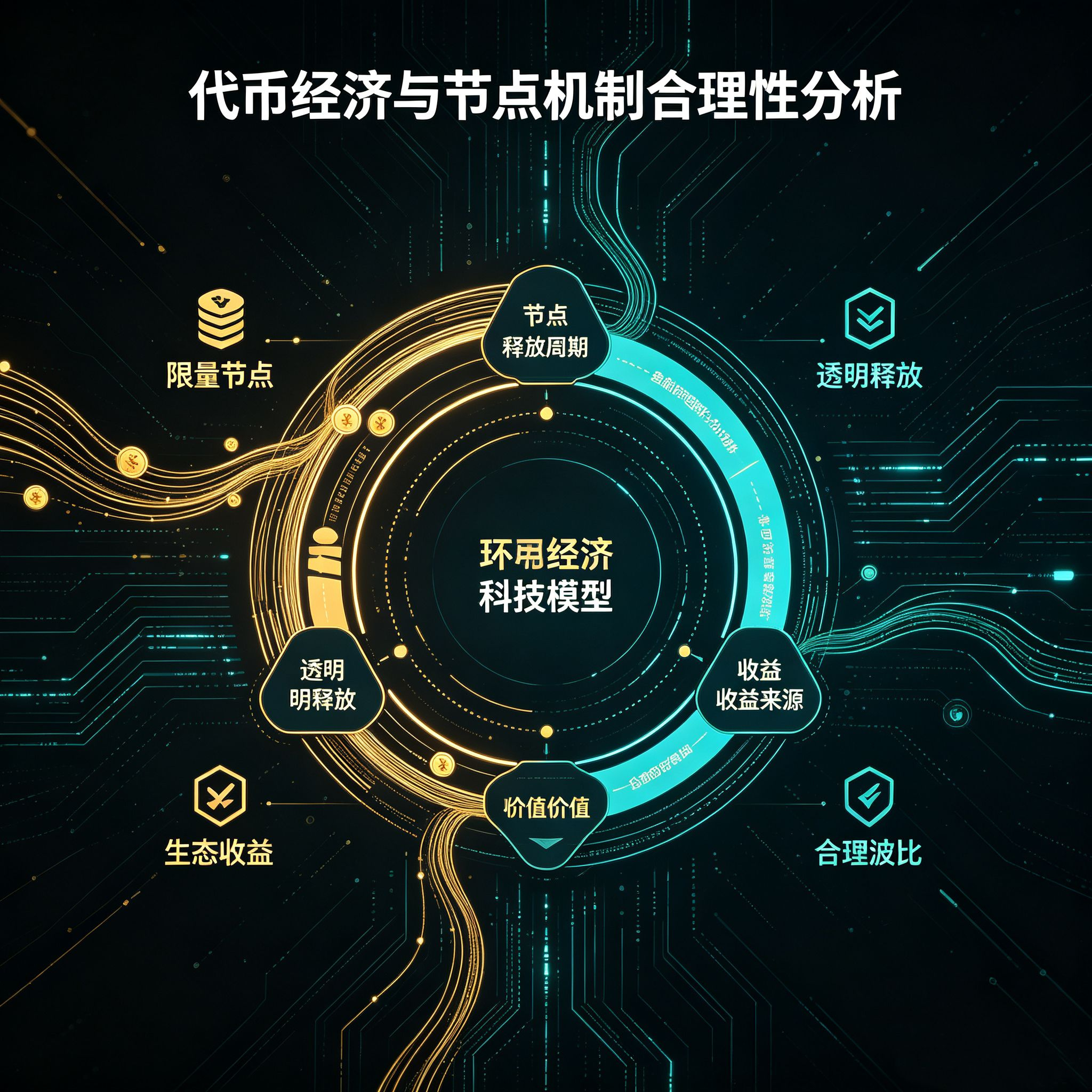
Next, verify the tokenomics and the node mechanism to ensure they’re reasonable, and eliminate the risk of a bubble collapse. In high-quality projects, the node system is clearly tiered with a quantity that’s reasonably limited and controllable. Token release schedules, reward distribution, and vesting/unlocking rules are transparent, with no tricks like extremely high “static returns” or unlimited minting. The core returns are based on ecosystem contributions, task outputs, and market circulation—not simply on recruiting people to earn commissions. By contrast, scam projects often sell the promise of high multiple returns and quick payback. Their tokenomics become unbalanced and the bubble is huge: in the early stage, they pay returns using newcomers’ funds, and once traffic dries up, they inevitably collapse.
The key focus is the real value of ecosystem deployment—this is what determines whether the project can go the distance. A truly high-quality node project is never just selling nodes for fundraising. It has a clear development roadmap, real application scenarios, and ongoing plans for technological iteration. Node rights are tied to genuine ecosystem value, including tangible benefits such as governance permissions, dividend rights, and ecosystem enablement. By contrast, an air project is driven only by conceptual hype: no technology updates, no real deployment scenarios, and no ecosystem operations. In such cases, node “rights” are merely harvesting tools—the moment it launches, it’s effectively worthless, and the probability of跑路 is extremely high.
Furthermore, observe the project team’s operations and risk-control capabilities to judge overall stability. Reliable teams keep operations on a steady rhythm, maintain a healthy community atmosphere, focus on building consensus rather than疯狂疯狂 recruiting, and keep market rules consistent—without chaos like arbitrary rule changes, forced lockups, or shutting down channels. At the same time, they have a complete risk-control system: the capital flow loop is healthy, the token/chip-lock mechanism is reasonable, and this effectively avoids problems like large holders dumping, funding breakdown, and compliance risks. Low-quality projects, however, focus only on quick extraction—frequently adjusting mechanisms, exaggerating returns, and manufacturing anxiety, all to raise money as fast as possible.
Finally, distinguish real market consensus and reputation from fakes to avoid marketing traps. In quality projects, consensus comes from genuine user recognition and real ecosystem deployment outcomes; reputation spreads naturally, without volume-pushing or misleading promotions. Ponzi scheme projects rely on paid shills to manufacture hype, create false scarcity, and exaggerate profitability expectations—using strong referral/viral mechanisms and high rewards to push users into疯狂 promotion. True early opportunities are never loud and hyped. Node projects that aggressively鼓吹 getting rich fast are very likely to be harvesting traps.
In short, when judging whether a node pre-sale project is worth participating in, the core logic is to value substance over hype. Don’t look at how tempting the promotion is or how exaggerated the returns are—only assess whether the team is reliable, the model is healthy, the ecosystem is actually deployed, and the operations are steady. Sticking to this screening logic lets you capture early-project upside while minimizing risk, helping you stay away from empty-air schemes and cash-grab Ponzi operations.