$DUSK
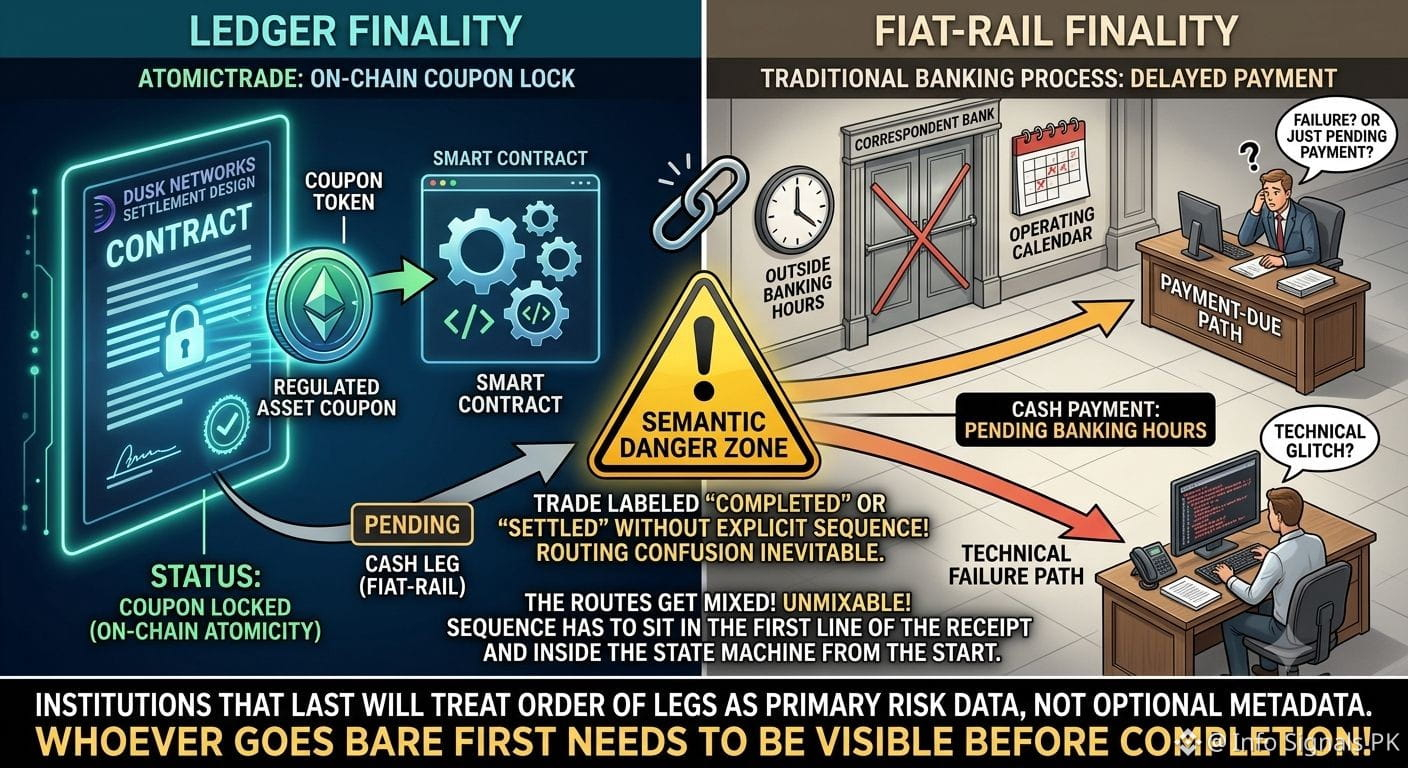
In traditional finance RVP leaves one side naked first while DVP just squeezes that exposure window. On-chain atomic trades look a lot like DVP, but they only lock the coupon. When the cash leg still sits at another bank, that lock does nothing to the counterparty’s operating calendar. Ledger finality is not the same as fiat-rail finality.
The real danger isn’t a technical glitch. It’s a semantic one. Call the trade “completed” or “settled” without spelling out the sequence—simultaneously, coupon-first, or payment-first—and a simple payment-due state gets treated as a failure. Those two paths go to completely different customer-service desks. Once the routes get mixed, no amount of politeness or later clarification can unmix them. Sequence has to sit in the first line of the receipt and inside the state machine from the start.
Dusk’s settlement design, built for regulated assets, runs straight into this test. On-chain atomicity is necessary, but it’s not enough when one leg is still waiting on banking hours. The institutions that last will treat the order of the legs as primary risk data, not optional metadata. Whoever goes bare first needs to be visible before anyone starts celebrating completion.
$TUT $CL #dusk @Dusk
In traditional finance RVP leaves one side naked first while DVP just squeezes that exposure window. On-chain atomic trades look a lot like DVP, but they only lock the coupon. When the cash leg still sits at another bank, that lock does nothing to the counterparty’s operating calendar. Ledger finality is not the same as fiat-rail finality.
The real danger isn’t a technical glitch. It’s a semantic one. Call the trade “completed” or “settled” without spelling out the sequence—simultaneously, coupon-first, or payment-first—and a simple payment-due state gets treated as a failure. Those two paths go to completely different customer-service desks. Once the routes get mixed, no amount of politeness or later clarification can unmix them. Sequence has to sit in the first line of the receipt and inside the state machine from the start.
Dusk’s settlement design, built for regulated assets, runs straight into this test. On-chain atomicity is necessary, but it’s not enough when one leg is still waiting on banking hours. The institutions that last will treat the order of the legs as primary risk data, not optional metadata. Whoever goes bare first needs to be visible before anyone starts celebrating completion.
$TUT $CL #dusk @Dusk