

Text: Pan Xian
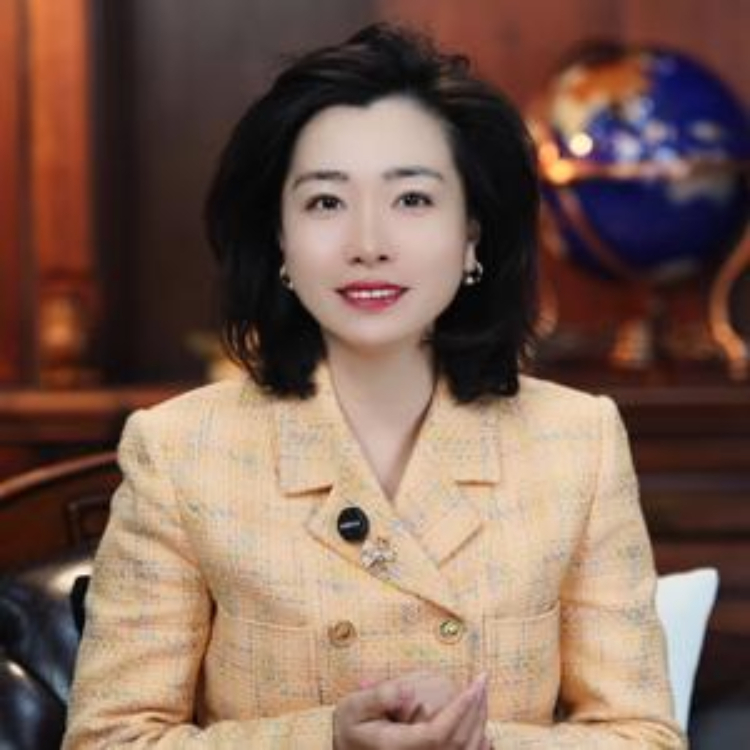
After handing over responsibilities to Yang Xiaofan in March and the “advance notice” of his upcoming posting to Nestlé headquarters, the former CM0 of Xu Fu Ji, Cai Dianru, is entering the countdown period for his new role.
Small Food Times learned from within the industry that Cai Dianru will assume the role of Global Gift Brand Manager as scheduled starting September 1, based at the Switzerland headquarters. He will report to Leandro Cervi, head of Nestlé’s global chocolate category. Previously, after stepping down as Xu Fu Ji’s marketing director in March this year (note: equivalent to chief marketing officer), Cai Dianru is currently Xu Fu Ji’s Category Innovation Director.
At present, Nestlé’s chocolate business falls under the Candy & Confectionery segment and includes many well-known industry brands such as KitKat, Pocky?; Wait: Actually brands listed: 奇巧 (Qi Qiao), 脆脆鲨 (Crispy Shark), Cailler, 巴绮 (Barry?) and more. In 2025, Candy & Confectionery, with revenue exceeding RMB 75 billion, is also one of Nestlé’s key bets.
Next, let’s take a look.
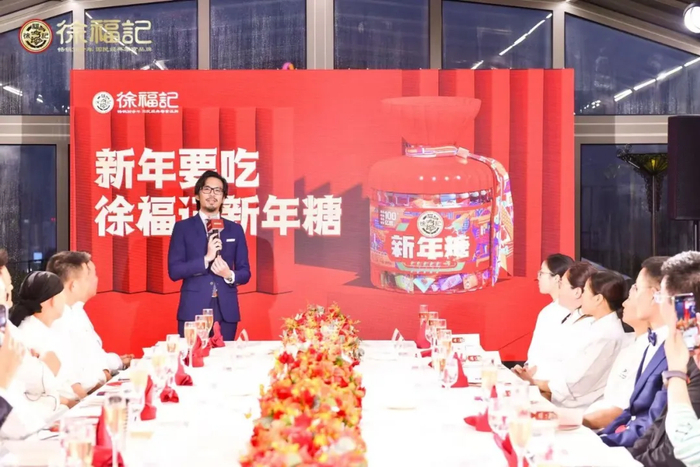
Cai Dianru, head of Xu Fu Ji’s category innovation (data photo)
Confectionery experience
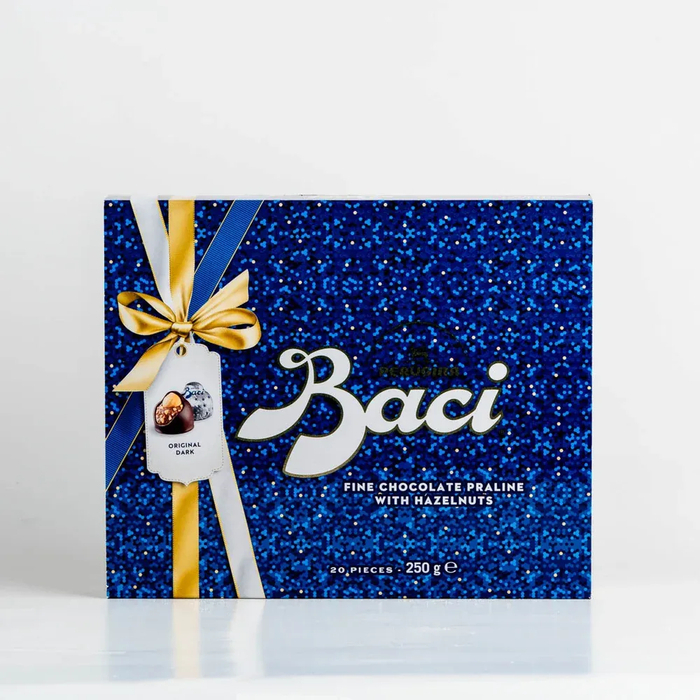
Based on Nestlé’s arrangement for Cai Dianru, the responsibilities he will cover include chocolate brands centered on gifting scenarios. Currently, Nestlé has multiple chocolate brands for high-end gifting scenarios, such as Baci from Italy, Cailler from Switzerland, and Kopenhagen acquired from Brazil.
Smallfood Times learned that Baci and Cailler were both introduced into the China market by Nestlé in the past, but currently they are not available in the official flagship stores of mainstream e-commerce channels; they are sold only by third-party sellers. At present, it also remains unclear whether appointing people with backgrounds in the China market will bring changes to the development of these brands in China.
However, in terms of his new role, this aligns with Cai Dianru’s experience accumulated in confectionery.
According to information obtained by Smallfood Times, Cai Dianru joined Nestlé in Taiwan in 2012. He previously served as a senior brand manager for Nestlé Dairy & Beverages in Taiwan, and it is said that he consistently drove good growth for brands such as KitKat, Milo, and Eagle Brand condensed milk. In 2019, Cai Dianru moved to Xu Fu Ji, initially serving as head of the chocolate business, and later also managed gifting brands. At the end of 2022, he was promoted to Xu Fu Ji’s Chief Marketing Officer.
In the earlier announcement about Cai Dianru’s new position, Xu Fu Ji described him as a talent who combines passion and leadership, having made “outstanding contributions” during his past seven years at the company.
At the same time, the company also listed his achievements during the various roles he held, including leading the historic generational upgrade of Xu Fu Ji’s New Year candies; helping Chinese-style candies achieve many years of positive, healthy growth; driving KitKat to successfully take root in China’s chocolate market; launching full new categories and products including Quman Guo 100% fruit juice soft candies and Milo sports power biscuits; and comprehensively upgrading Chinese-style gift treats, accelerating the development of the gifting business.
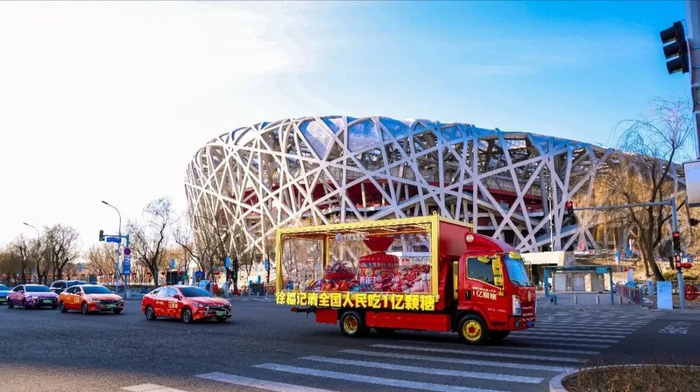
In addition, in marketing and promotion, Cai Dianru led a series of brand promotion campaigns such as (Xu Fu Ji asks the whole population to eat 100 million candies), which has been described as having played a prominent role in making Xu Fu Ji’s parent brand and its sub-brands deeply ingrained in people’s hearts.
During Cai Dianru’s tenure, brand revitalization and product innovation were the work he cared most about.
For brand revitalization, in recent years Xu Fu Ji has taken a traditional-meets-modern approach, making the brand image better aligned with young people’s preferences. Taking its New Year candies as an example, earlier upgrades brought in renowned packaging designer Pan Hu for redesign—such as the candy bucket, which incorporates more China-chic elements that match young people’s aesthetics. This new product launch also primarily targets young consumers through Douyin and Xiaohongshu. It is reported that after the “New Year candies” were upgraded for the 2024 Spring Festival, sales increased by 57%.
“In fact, many products are worth redoing from scratch, and our New Year candies are also being redone.” In discussions with Smallfood Times and others, Cai Dianru said, “Product development, as we often say, includes both innovation and iterative upgrades. Pure innovation is something you can’t always come by—you have to really move consumers. Iterative upgrades include optimizing processes, upgrading packaging, providing emotional value, and so on. Xu Fu Ji won’t relax on either of these two aspects—innovation and iterative upgrades.”
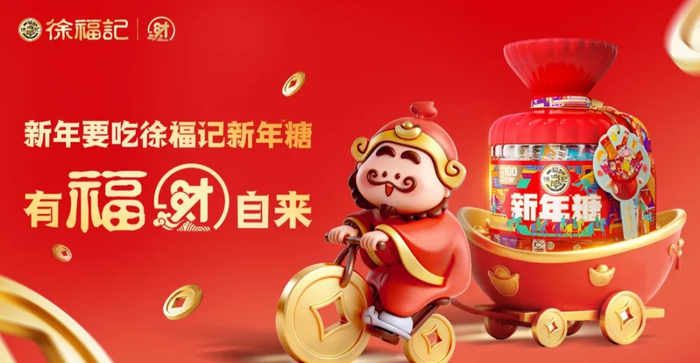
As for product innovation, Xu Fu Ji emphasized “health-forward” and “premiumization,” including introducing products with different nutritional elements, reducing sugar and oil, and using premium production techniques—so as to meet consumer needs while delivering delicious experiences. “We will ensure that every new product has a selling point, and more importantly, it has a soul. What does it mean for a product to have a soul? When you pick up a snack and eat it, the person next to you will think, ‘Wow, I also really want to eat it.’” Cai Dianru said. Deliciousness is the top prerequisite for Xu Fu Ji’s innovation.
Over 75 billion
On Nestlé’s food and beverage “giant ship,” confectionery is a small but excellent business.
Today, Smallfood Times reviewed Nestlé’s 2025 annual report and found that the confectionery business generated 8.696 billion Swiss francs in sales for the full year, equivalent to roughly RMB 75.2 billion, accounting for nearly 10% of Nestlé’s sales. Its scale is only slightly larger than the drinking water business that had recently been sold with half its equity.
However, from a global perspective, Nestlé’s position in the confectionery industry should not be underestimated.
According to the company’s 2024 Capital Markets Day materials, in 2023, Nestlé was the world’s third-largest confectionery company, holding a 9.5% share. Within this segment, the largest contributor was chocolate, accounting for as much as 77%. In addition, there were biscuits & snacks (15%) and confectionery/candies (8%).
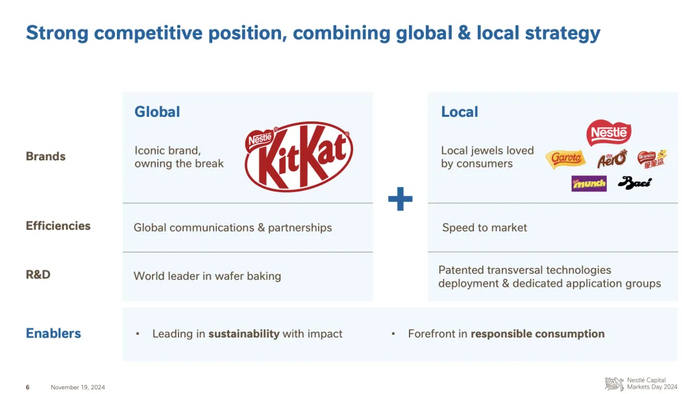
According to the materials above, Nestlé Confectionery’s brand matrix consists of one global brand and multiple regional brands. The most iconic global brand is KitKat, which is also the #1 chocolate bar outside the United States (note: Nestlé has sold its U.S. sugar confectionery business to Ferrero). Other regional star brands include China’s Crispy Shark, Italy’s Chocolates Baci, Brazil’s Garoto, and more.
If divided by price positioning, Nestlé Confectionery is split into three tiers, including mainstream (such as Crispy Shark), premium/high-value (such as Baci), and niche/premium (such as Kopenhagen and La Fête).
In the China market, Nestlé Confectionery’s business is mainly operated by Xu Fu Ji, and some products are also operated by the confectionery and ice cream departments. In 2024, the overall revenue scale was about RMB 6.547 billion (note: after Nestlé’s 2025 restructuring, it no longer separately disclosed category data for Greater China). At present, besides the namesake brand, Xu Fu Ji also manages the KitKat, QiaoOuBi, and Milo biscuit brands under Nestlé in China.
Smallfood Times noticed that in the capital markets day event mentioned above, Xu Fu Ji was defined as one of the “key growth platforms.” Just a few months after the event, Nestlé acquired 40% of Xu Fu Ji’s equity to gain full ownership control, seeking to further accelerate growth.
Xu Fu Ji has said that after being fully acquired by Nestlé, it will gain broader and more convenient access to Nestlé’s global brand and product resources to achieve its growth goals. Nestlé can also develop its domestic snacks and candies business by leveraging Xu Fu Ji’s existing advantages, especially its strong distribution network. In the future, more of Nestlé’s global snack brands may be strategically introduced into China, which could become a potential growth engine for Xu Fu Ji.
“The core of the synergy strategy proposed by Xu Fu Ji is to deeply integrate Nestlé’s global capabilities with Xu Fu Ji’s local ecosystem, achieving system-level growth where ‘1+1>2.’” Cai Dianru once said.
Focus
Nowadays, confectionery is also one of Nestlé’s key focus segments. After Philipp Navratil became Nestlé’s CEO in September last year, he announced that the company will focus on four business areas in the future: coffee, pet care, nutrition products, and food & snacks. Confectionery falls under the food & snacks segment.
“We have globally advantageous brands such as Maggi, KitKat, Milo, and Nestlé Confectionery. These brands account for one-third of (food & snacks) sales, so we will prioritize them. We also have many strong local star brands with significant scale and distinct characteristics, such as Alimama, Garoto, and Thomy.” Navratil once said.
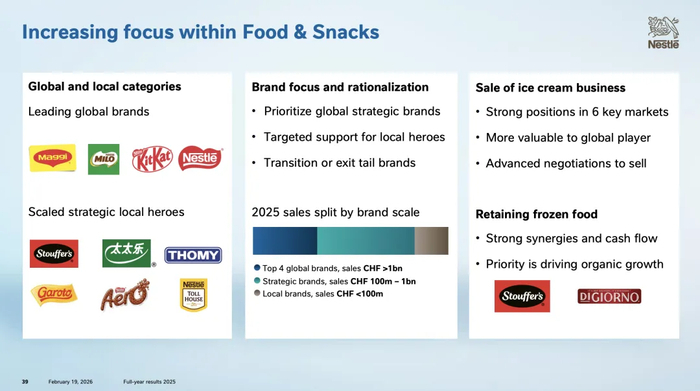
Although food and snacks are discussed together, at headquarters they are still managed independently.
Public information reviewed by Smallfood Times shows that on January 1, 2026, Nestlé officially established the Confectionery and Snacks strategic business unit, with Liberato Milo as the head. Brands under the unit include KitKat, Nestlé, and Milo, among others. Before this, Liberato Milo’s management scope was broader and included not only confectionery but also ice cream, cocoa drinks, and more. Earlier this year, Nestlé had already made clear that it was in negotiations to sell the remaining ice cream business.
Smallfood Times also noted that in June of this year, Nestlé’s Food Strategic Business Unit welcomed a new head, Marcin Poplawski. This department covers brands such as Maggi and Alimama. Poplawski previously served as global head of Nestlé’s marketing transformation.
Regarding confectionery, Nestlé CEO Philipp Navratil has not yet specifically elaborated on its key work directions. However, the “focus” proposed by this business more than a year ago is consistent with Navratil’s current overall thinking.
For example, at Nestlé Confectionery’s 2024 Capital Markets Day, Corinne Gabler, then head of the Nestlé Confectionery strategic business unit, said that in the past, Nestlé Confectionery managed more than 200 brands, with dispersed investment, numerous innovation projects, and a complex situation. Therefore, the business now focuses on key brands and concentrates paid media resources into these brands, especially KitKat. The business also aims to drive fewer but more meaningful innovations.
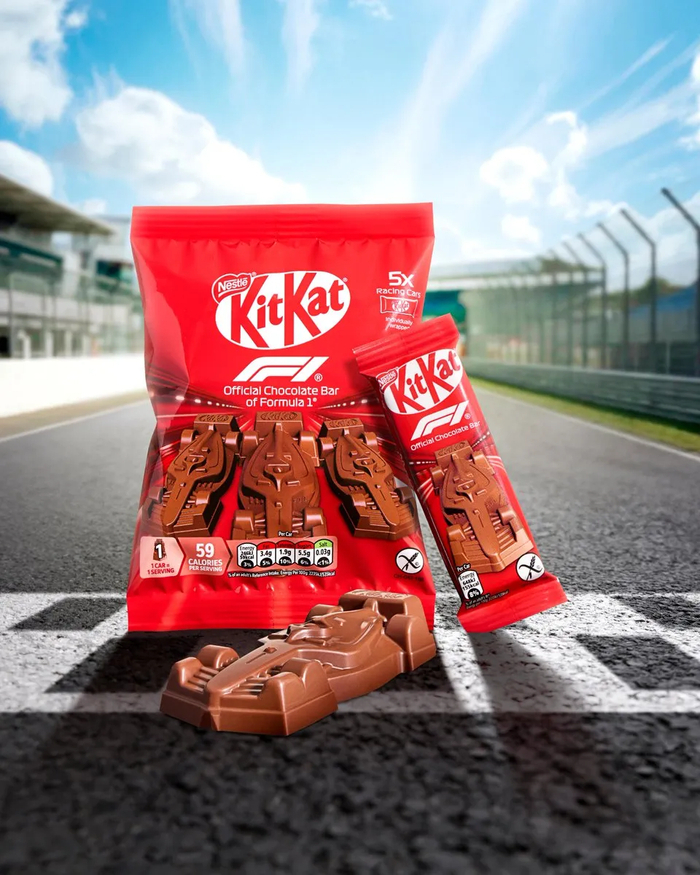
At the time, Gabler also proposed three major growth drivers to capture over the coming years: increased consumption frequency, innovation and premiumization, and growth in emerging markets. China was identified as one of the key emerging markets, and Xu Fu Ji was also singled out as particularly promising.
“We will achieve success by increasing investment and expanding distribution channels (in emerging markets), because we still have plenty of room to expand distribution. We will also offer customized products for certain fast-growing channels, including China snack stores or some specialty snack stores.” Gabler said.
During this year’s visits to the China market and discussions with Smallfood Times, Ferrand Rui also repeatedly mentioned that he is optimistic about Xu Fu Ji’s potential.
He believes that building growth in the business in China is based on inspiring innovation product lines, as well as brand-building that includes local brands in China, such as Alimama and Xu Fu Ji. In the future, Alimama and Xu Fu Ji have great potential for exports. For example, in Italy, Xu Fu Ji products brought by Chinese tourists are well received.