
ZION_1
6k Posts

ZION_1
Open Trade
Frequent Trader
8.6 Months
543 Following
24.7K+ Followers
3.1K+ Liked
Posts
Portfolio
All
Quotes
Live

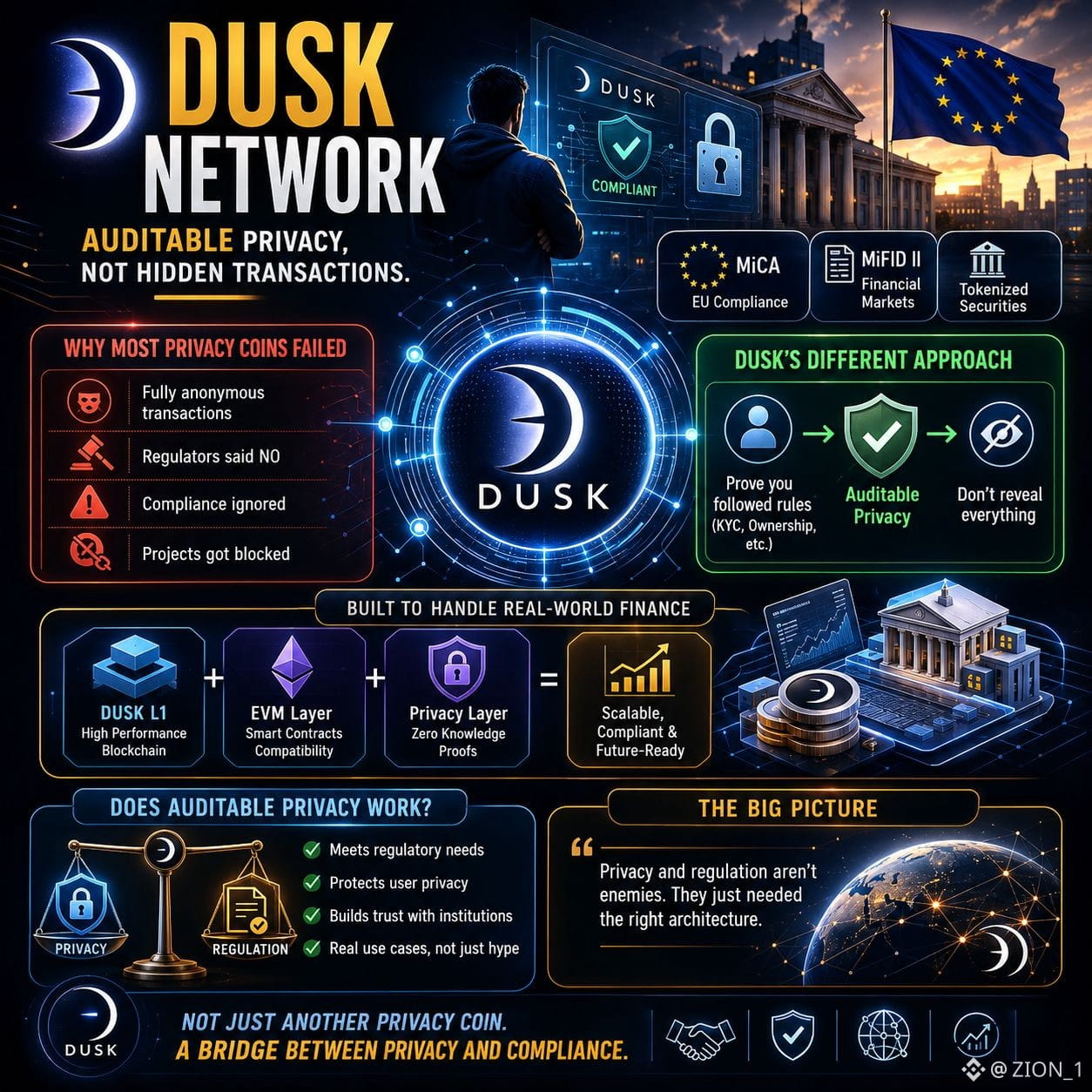
Ok so I finally get why Dusk Network keeps showing up in my feed. Most privacy coins picked a fight with regulators and lost. Fully anonymous transactions sound great until a regulator looks at it and just says no, doesn't matter how clean the cryptography is.
Dusk is doing something different. You're not hiding your transaction from everyone, you're proving you followed the rules (KYC, ownership, whatever the requirement is) without dumping all your data out in the open. Small distinction on paper, but it's actually the whole game.
And they're clearly not optimizing for hype. They're going after unglamorous stuff, MiCA, MiFID II, tokenized securities in the EU. Nobody's making viral content about that. But that's usually the boring corner where real institutional money eventually shows up.
The part I can't ignore is that this is genuinely hard to build. An L1, plus an EVM layer, plus a separate privacy layer, all shipping at once. That's a lot to execute cleanly. And the token price swinging all over the place tells me the market hasn't figured out how to value this compliant privacy thing yet either.
I still think the underlying idea holds up though. Privacy and regulation aren't automatically opposites, they just haven't been built together properly until now.
So genuinely curious, does "auditable privacy" actually crack this problem, or is it just privacy with extra paperwork that regulators push back on anyway?
@Dusk #dusk $DUSK
Dusk is doing something different. You're not hiding your transaction from everyone, you're proving you followed the rules (KYC, ownership, whatever the requirement is) without dumping all your data out in the open. Small distinction on paper, but it's actually the whole game.
And they're clearly not optimizing for hype. They're going after unglamorous stuff, MiCA, MiFID II, tokenized securities in the EU. Nobody's making viral content about that. But that's usually the boring corner where real institutional money eventually shows up.
The part I can't ignore is that this is genuinely hard to build. An L1, plus an EVM layer, plus a separate privacy layer, all shipping at once. That's a lot to execute cleanly. And the token price swinging all over the place tells me the market hasn't figured out how to value this compliant privacy thing yet either.
I still think the underlying idea holds up though. Privacy and regulation aren't automatically opposites, they just haven't been built together properly until now.
So genuinely curious, does "auditable privacy" actually crack this problem, or is it just privacy with extra paperwork that regulators push back on anyway?
@Dusk #dusk $DUSK


·
--
🎙️ Crypto market updates discussion; newcomer Q&A✅坚持社区建设🦅 spreading free ideas! maintain ecological balance!

End
03 h 17 m 29 s
8.9k
89

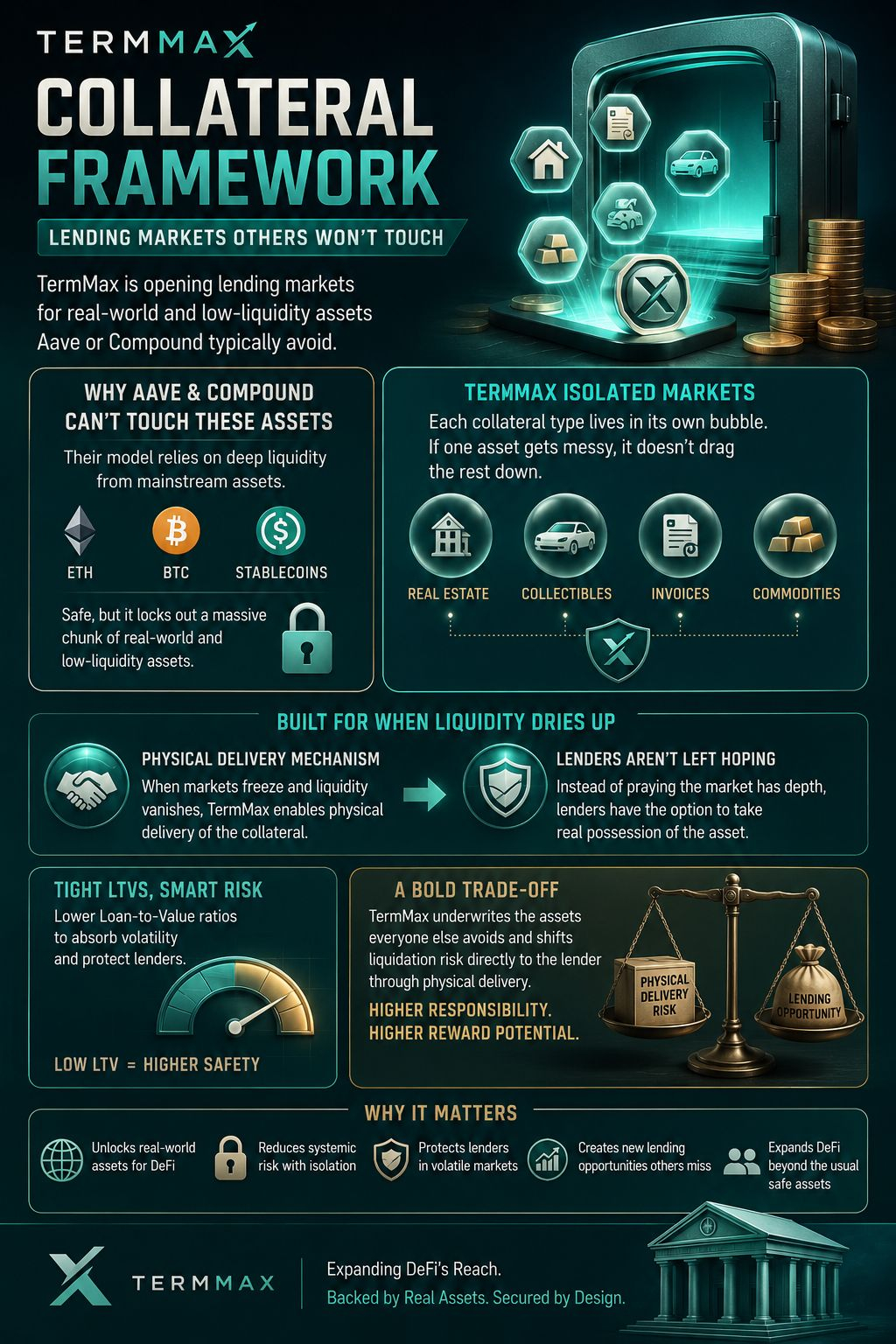
Spent the last couple of days digging into TermMax's collateral framework. Honestly interesting how they're targeting assets that Aave or Compound just won't touch.
Makes sense why though. Aave's whole model runs on deep liquid stuff — ETH BTC stablecoins. Safe, but it locks out a huge chunk of real-world and low-liquidity assets that never get a lending market at all.
The isolated markets setup is what stands out. Each collateral type sits in its own bubble, so if one asset gets messy, it doesn't drag down everything else.
Then there's the physical delivery mechanism — built for exactly the moment liquidity dries up, so lenders aren't just stuck hoping the market has depth. LTVs are kept tight here too, and that's the right call.
Not sure how many protocols are actually willing to underwrite the assets everyone else avoids, but shifting liquidation risk directly to the lender via physical delivery is a bold trade-off.
@TermMax #TermMax
Makes sense why though. Aave's whole model runs on deep liquid stuff — ETH BTC stablecoins. Safe, but it locks out a huge chunk of real-world and low-liquidity assets that never get a lending market at all.
The isolated markets setup is what stands out. Each collateral type sits in its own bubble, so if one asset gets messy, it doesn't drag down everything else.
Then there's the physical delivery mechanism — built for exactly the moment liquidity dries up, so lenders aren't just stuck hoping the market has depth. LTVs are kept tight here too, and that's the right call.
Not sure how many protocols are actually willing to underwrite the assets everyone else avoids, but shifting liquidation risk directly to the lender via physical delivery is a bold trade-off.
@TermMax #TermMax
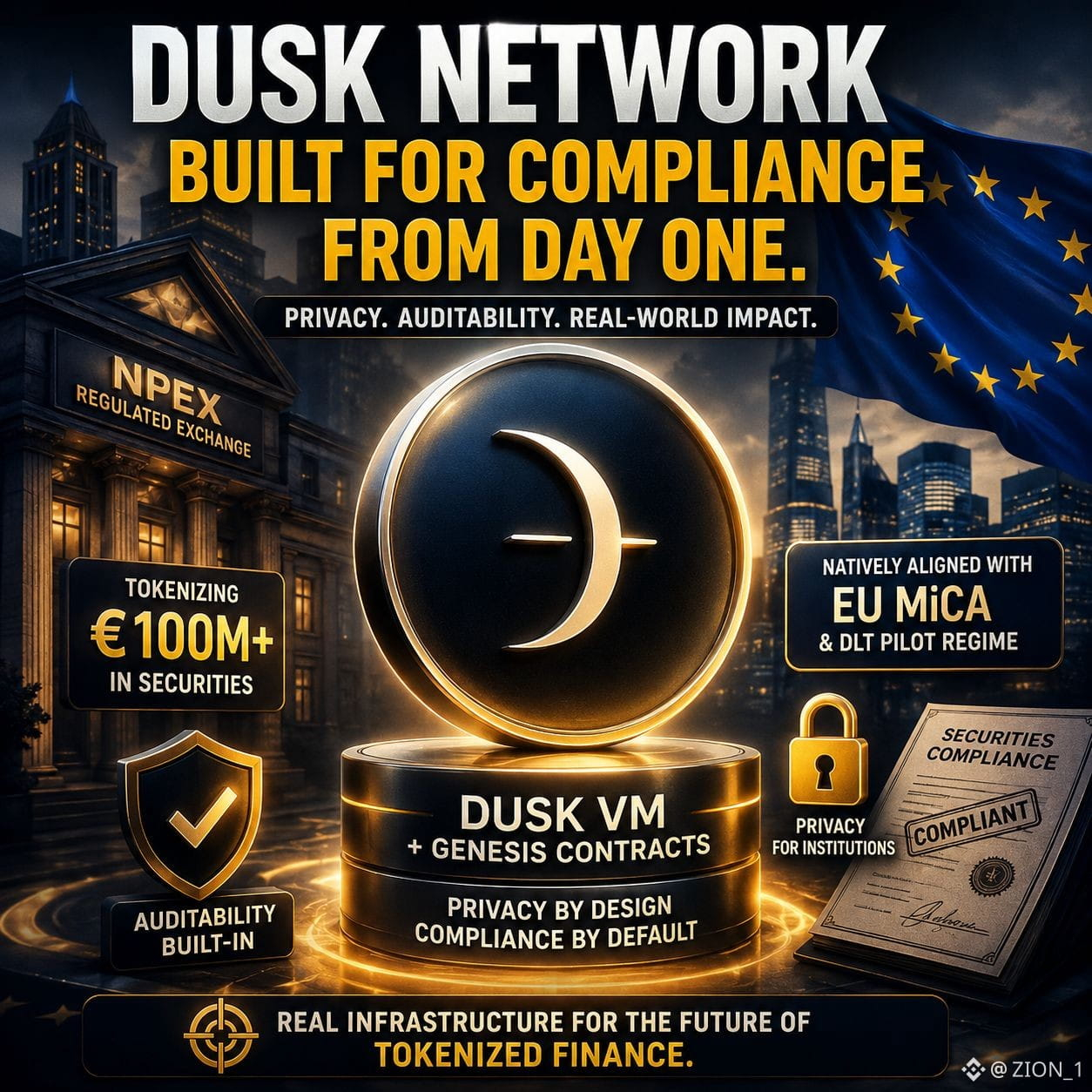
Been digging into Dusk Network lately.
Not your usual "fast chain, low fees" pitch.
This one actually thinks about compliance from day one.
Dusk VM + Genesis Contracts form the base layer where smart contracts get deployed. Privacy is baked in, not bolted on later.
Genesis contracts set the foundational rules before anything else runs on top.
Honestly, that part impressed me. Most chains treat compliance as an afterthought.
What really got my attention is the "regulated finance" angle.
Securities trading needs auditability. It needs KYC-friendly rails. It needs privacy for institutions.
Dusk is built around that. Not forcing TradFi to adapt to crypto's usual chaos.
And it's not just theory. Dusk is working with NPEX, a Dutch-regulated exchange, to tokenize hundreds of millions of euros in securities.
Their architecture also aligns natively with EU's MiCA and DLT Pilot Regime, which honestly puts them ahead of most chains scrambling to retrofit compliance later.
From my experience, projects solving real regulatory pain points get ignored early... then suddenly matter when the market shifts toward RWA and tokenized securities.
Are we sleeping on Dusk right now? 🤔
Drop your take below 👇
@Dusk #dusk $DUSK
Not your usual "fast chain, low fees" pitch.
This one actually thinks about compliance from day one.
Dusk VM + Genesis Contracts form the base layer where smart contracts get deployed. Privacy is baked in, not bolted on later.
Genesis contracts set the foundational rules before anything else runs on top.
Honestly, that part impressed me. Most chains treat compliance as an afterthought.
What really got my attention is the "regulated finance" angle.
Securities trading needs auditability. It needs KYC-friendly rails. It needs privacy for institutions.
Dusk is built around that. Not forcing TradFi to adapt to crypto's usual chaos.
And it's not just theory. Dusk is working with NPEX, a Dutch-regulated exchange, to tokenize hundreds of millions of euros in securities.
Their architecture also aligns natively with EU's MiCA and DLT Pilot Regime, which honestly puts them ahead of most chains scrambling to retrofit compliance later.
From my experience, projects solving real regulatory pain points get ignored early... then suddenly matter when the market shifts toward RWA and tokenized securities.
Are we sleeping on Dusk right now? 🤔
Drop your take below 👇
@Dusk #dusk $DUSK
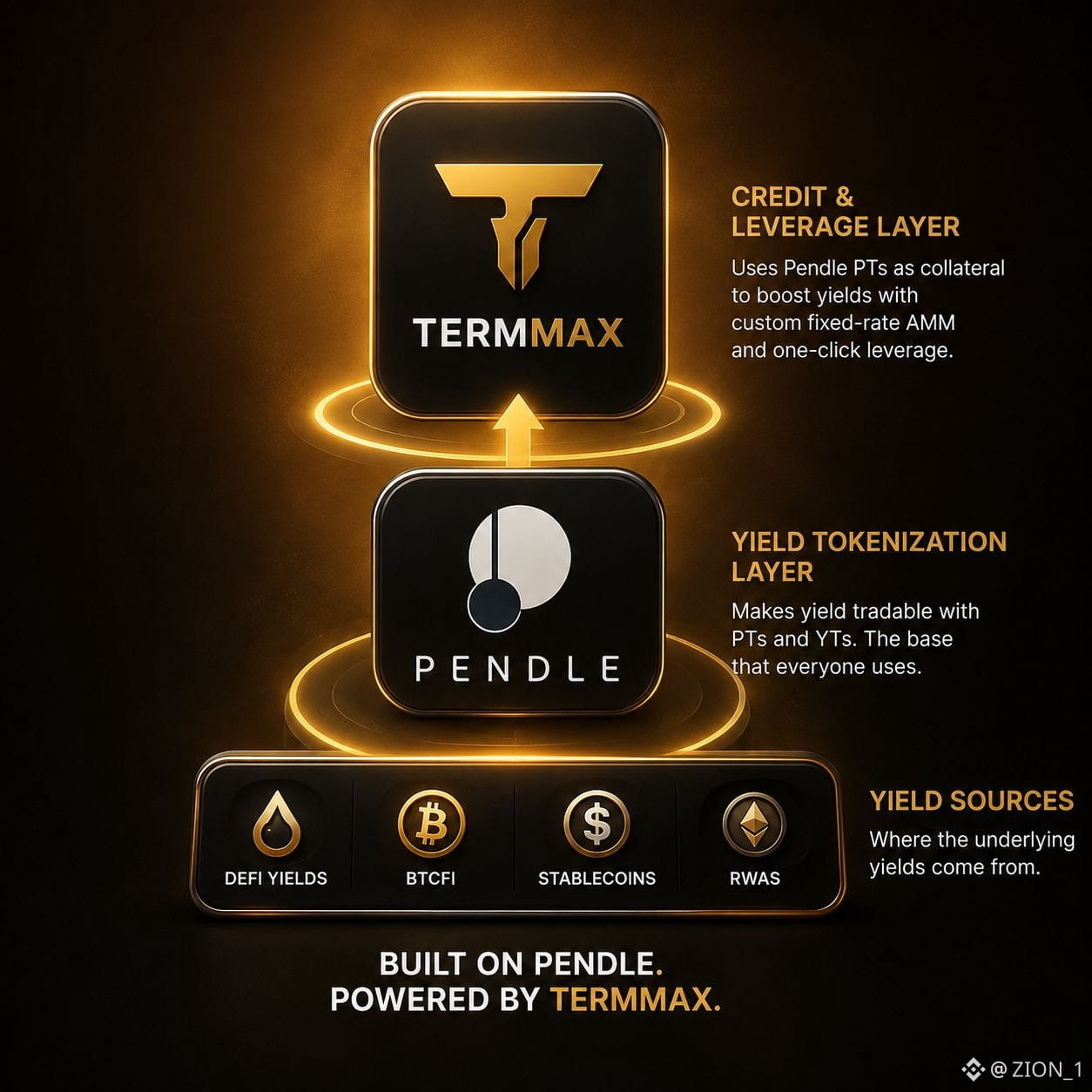
Spent way too long reading TermMax docs last night. Took me a minute to realize where it actually fits.
It's not competing with Pendle. It's building on top of it.
Pendle already won the yield-tokenization game with PTs and YTs. Everyone uses it.
TermMax takes those Pendle PTs and uses them as collateral to push yields higher. It reworked the Uniswap V3 AMM into something built for fixed rates, with pricing curves you can actually customize. It turns what used to be a 4-step looping headache across multiple dApps into a single click.
So here's the actual difference: Pendle makes yield tradable. TermMax takes that tradable yield and turns it into a credit/leverage layer sitting on top.
Real question though — at what point does stacking leverage on top of a dominant primitive like Pendle stop adding value and just multiply systemic risk?
@TermMax #TermMax
It's not competing with Pendle. It's building on top of it.
Pendle already won the yield-tokenization game with PTs and YTs. Everyone uses it.
TermMax takes those Pendle PTs and uses them as collateral to push yields higher. It reworked the Uniswap V3 AMM into something built for fixed rates, with pricing curves you can actually customize. It turns what used to be a 4-step looping headache across multiple dApps into a single click.
So here's the actual difference: Pendle makes yield tradable. TermMax takes that tradable yield and turns it into a credit/leverage layer sitting on top.
Real question though — at what point does stacking leverage on top of a dominant primitive like Pendle stop adding value and just multiply systemic risk?
@TermMax #TermMax
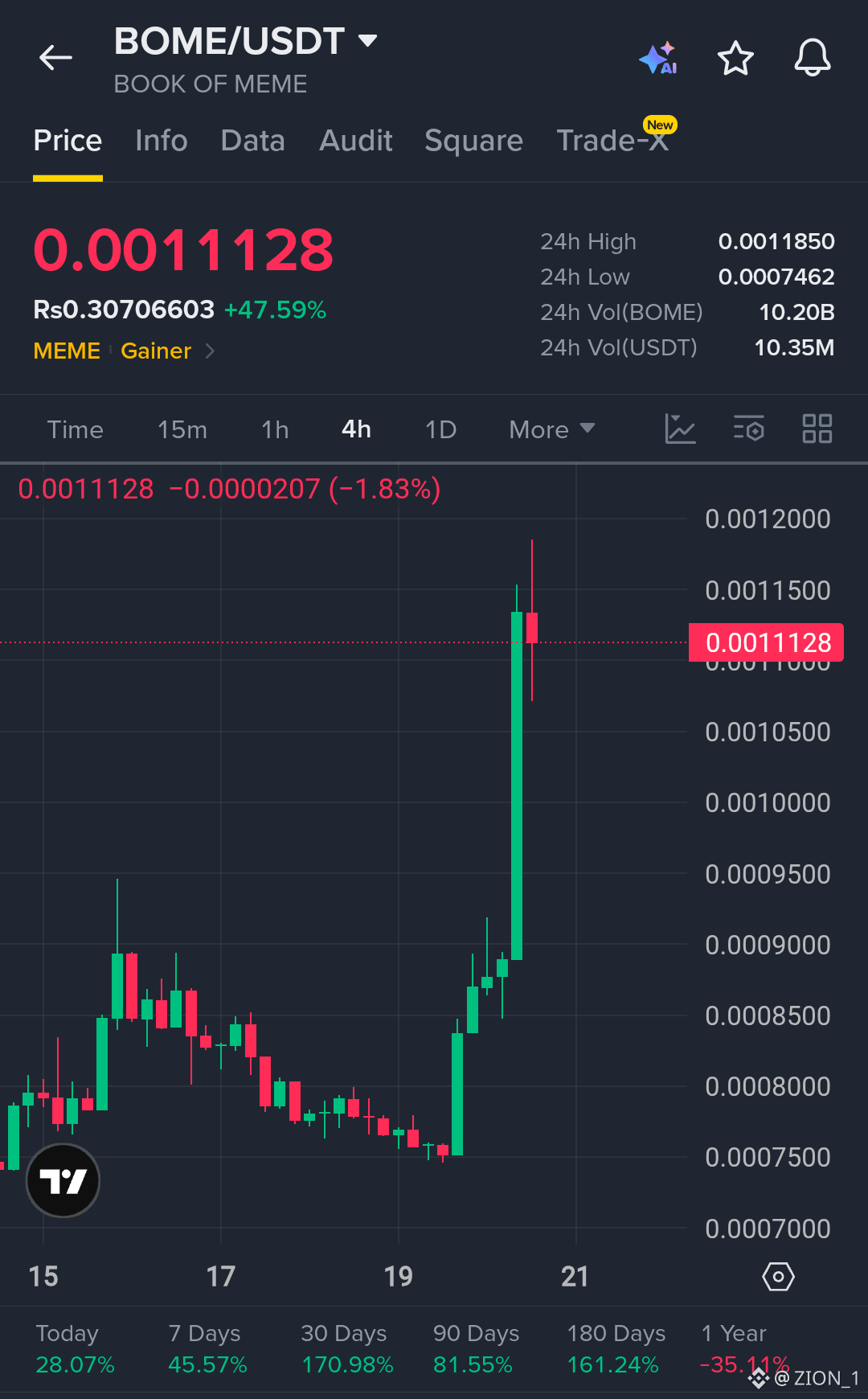
$BOME — Huge breakout, but sellers just showed up near 0.00118.
BOME pushed from the 0.00075 base with strong momentum, breaking through 0.00090 and quickly reaching the 0.00118 resistance. The latest 4H candle has a clear upper wick and a red close, suggesting profit taking at the highs. I’d rather watch the 0.00105–0.00108 area for a healthy retest and buyer reaction before chasing.
Entry: 0.00105–0.00108
SL: 0.00100
TP1: 0.00118
TP2: 0.00125
TP3: 0.00135
After a 47% pump, protecting capital matters more than catching every candle.
$BOME
BOME pushed from the 0.00075 base with strong momentum, breaking through 0.00090 and quickly reaching the 0.00118 resistance. The latest 4H candle has a clear upper wick and a red close, suggesting profit taking at the highs. I’d rather watch the 0.00105–0.00108 area for a healthy retest and buyer reaction before chasing.
Entry: 0.00105–0.00108
SL: 0.00100
TP1: 0.00118
TP2: 0.00125
TP3: 0.00135
After a 47% pump, protecting capital matters more than catching every candle.
$BOME
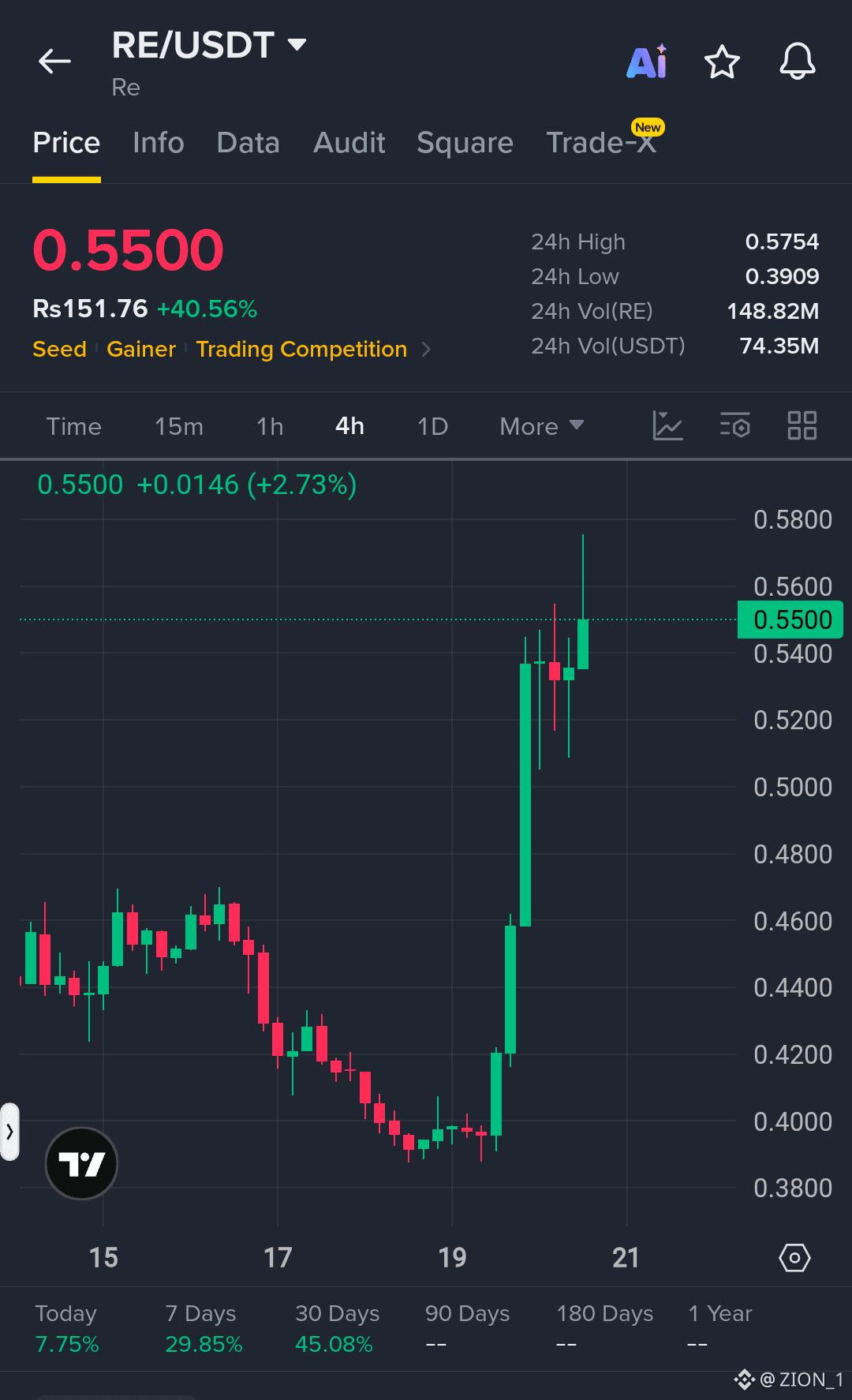
$RE — Massive breakout from the 0.40 base, now testing heavy resistance near 0.5750.
Buyers completely shifted the structure after reclaiming 0.46 and 0.50, but the long upper wick shows sellers are defending the 0.5750 area. On the lower timeframe, price is holding around 0.53–0.55 instead of giving back the breakout, which keeps the bullish setup alive. I’d watch for a clean break above 0.5750 or a controlled retest of 0.53–0.54.
Entry: 0.5300–0.5450
SL: 0.5150
TP1: 0.5750
TP2: 0.6000
TP3: 0.6250
When momentum gets this aggressive, waiting for confirmation can save you from buying the top.
$RE
Buyers completely shifted the structure after reclaiming 0.46 and 0.50, but the long upper wick shows sellers are defending the 0.5750 area. On the lower timeframe, price is holding around 0.53–0.55 instead of giving back the breakout, which keeps the bullish setup alive. I’d watch for a clean break above 0.5750 or a controlled retest of 0.53–0.54.
Entry: 0.5300–0.5450
SL: 0.5150
TP1: 0.5750
TP2: 0.6000
TP3: 0.6250
When momentum gets this aggressive, waiting for confirmation can save you from buying the top.
$RE
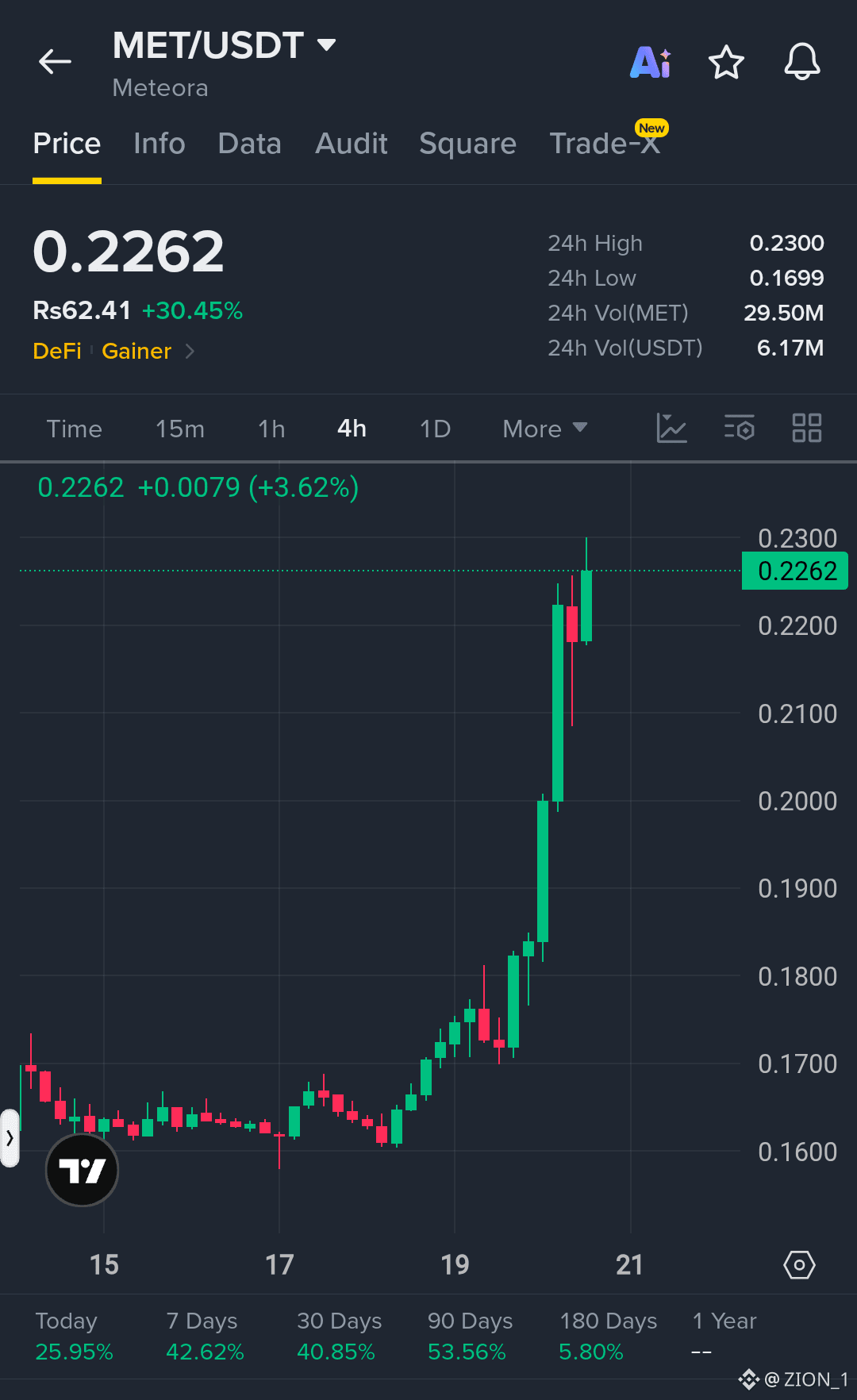
$MET — Vertical breakout and buyers are pushing straight into 0.2300 resistance.
MET has moved from the 0.1600 base with a strong series of higher lows, then accelerated above 0.2000. Buyers still control the structure, but the sharp expansion means chasing here carries more risk. I’d prefer a pullback toward the breakout area and look for buyers to defend it.
Entry: 0.2150–0.2200
SL: 0.2070
TP1: 0.2300
TP2: 0.2400
TP3: 0.2500
Strong momentum can continue, but the best trades usually come after the first cooldown.
$MET
MET has moved from the 0.1600 base with a strong series of higher lows, then accelerated above 0.2000. Buyers still control the structure, but the sharp expansion means chasing here carries more risk. I’d prefer a pullback toward the breakout area and look for buyers to defend it.
Entry: 0.2150–0.2200
SL: 0.2070
TP1: 0.2300
TP2: 0.2400
TP3: 0.2500
Strong momentum can continue, but the best trades usually come after the first cooldown.
$MET
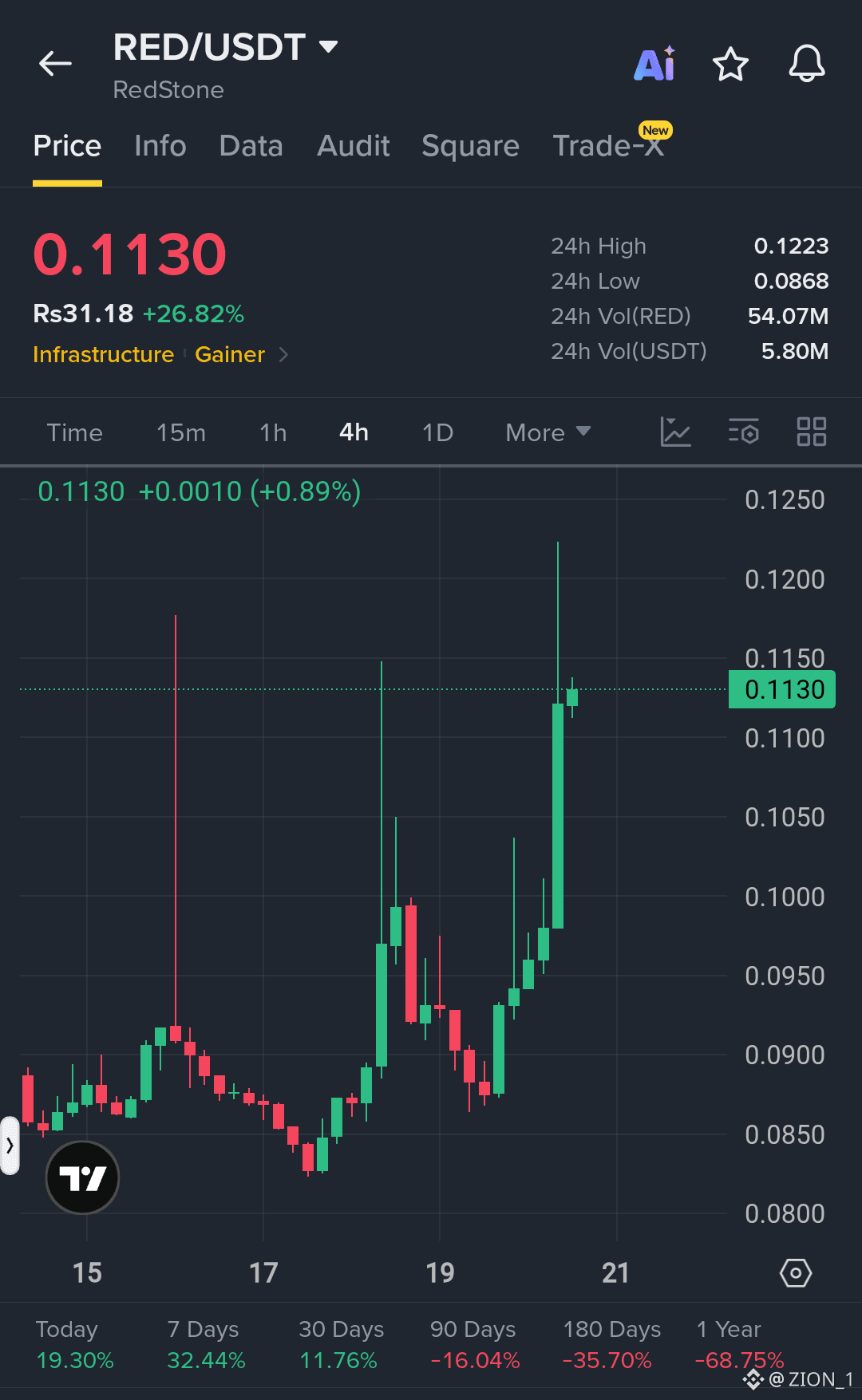
$RED — Buyers just reclaimed the 0.1100 area after a strong breakout.
The move from 0.0850 has built a clear higher low structure, and buyers are now pressing into the 0.1150 resistance. There’s also a long upper wick near 0.1220, showing sellers are still active higher up. I’d watch for a clean breakout or a pullback into the recent support before entering.
Entry: 0.1080–0.1110
SL: 0.1035
TP1: 0.1160
TP2: 0.1210
TP3: 0.1260
After a sharp move, patience usually pays better than chasing.
$RED
The move from 0.0850 has built a clear higher low structure, and buyers are now pressing into the 0.1150 resistance. There’s also a long upper wick near 0.1220, showing sellers are still active higher up. I’d watch for a clean breakout or a pullback into the recent support before entering.
Entry: 0.1080–0.1110
SL: 0.1035
TP1: 0.1160
TP2: 0.1210
TP3: 0.1260
After a sharp move, patience usually pays better than chasing.
$RED
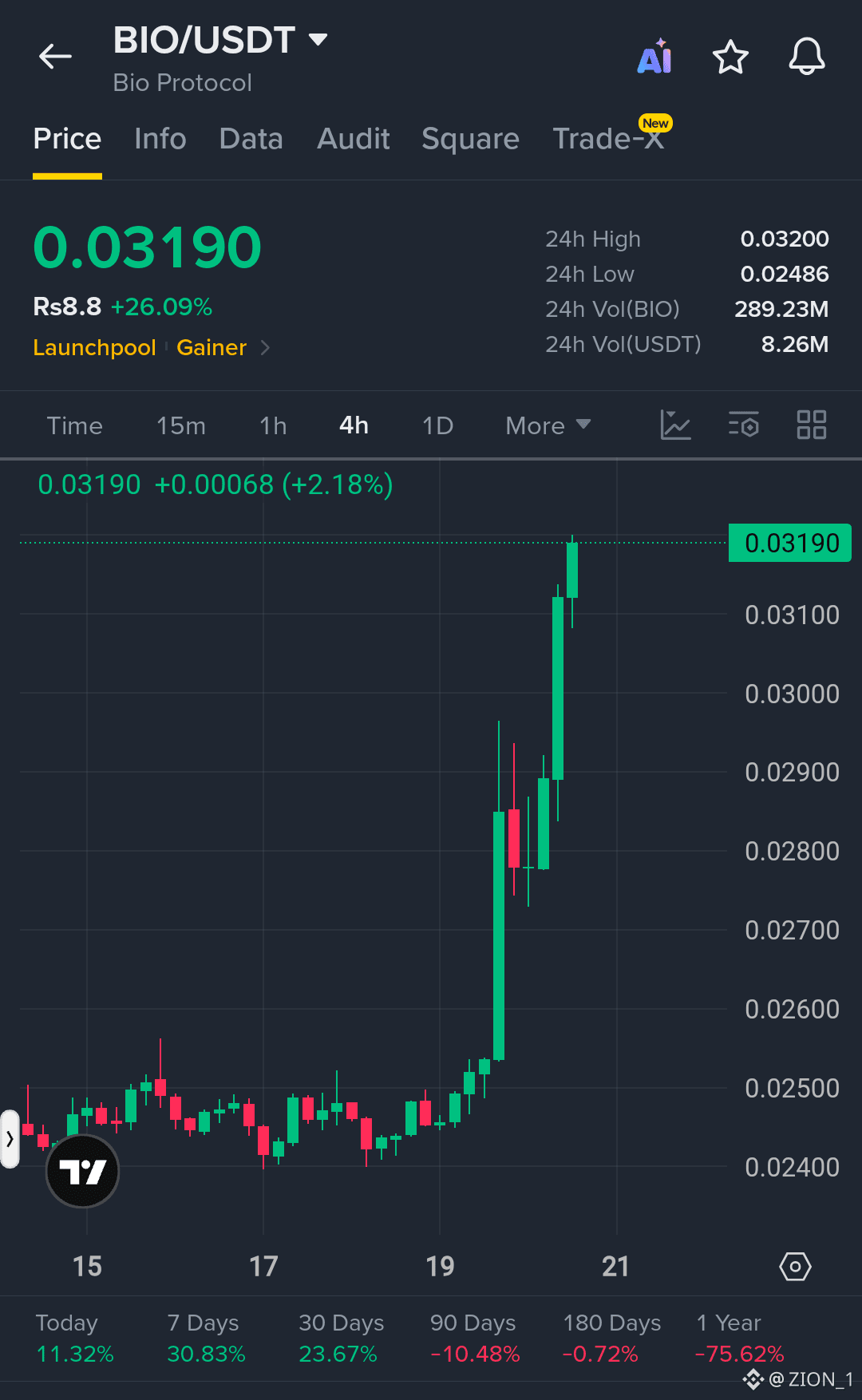
$BIO — Strong pump into the 0.0320 resistance zone.
BIO has pushed hard from the 0.0240 base and buyers are clearly in control. The key now is whether 0.0320 breaks cleanly or triggers a pullback. On the lower timeframe the structure is still bullish with higher lows and strong buying pressure, so I’d rather look for a retest than chase the green candles.
Entry: 0.0305–0.0312
SL: 0.0292
TP1: 0.0335
TP2: 0.0350
TP3: 0.0370
The best entries usually come after the excitement cools down not during the pump.
$BIO
BIO has pushed hard from the 0.0240 base and buyers are clearly in control. The key now is whether 0.0320 breaks cleanly or triggers a pullback. On the lower timeframe the structure is still bullish with higher lows and strong buying pressure, so I’d rather look for a retest than chase the green candles.
Entry: 0.0305–0.0312
SL: 0.0292
TP1: 0.0335
TP2: 0.0350
TP3: 0.0370
The best entries usually come after the excitement cools down not during the pump.
$BIO
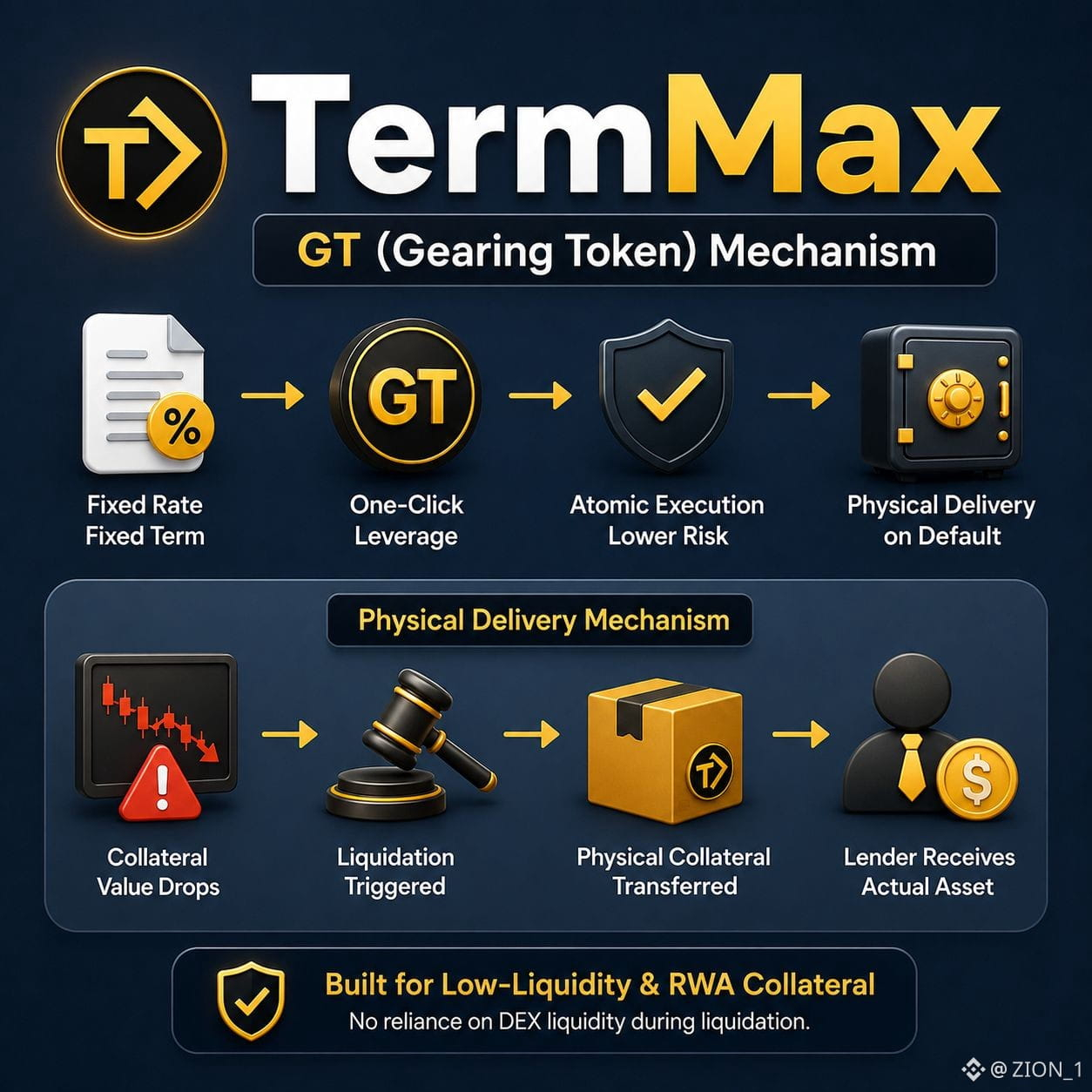
Been digging into TermMax's design lately, and their GT (Gearing Token) mechanism caught my attention.
First thing worth noting — this isn't a variable-rate pool like Aave.
TermMax runs on fixed-rate, fixed-term lending through an AMM auction model.
When you leverage into something like PT-sUSDe, you know your borrowing rate and maturity upfront.
That’s a completely different risk profile than floating-rate exposure where rates can spike overnight.
Now, the traditional looping problem:
Normally, leverage takes 5-6 manual transactions — borrow, swap, supply, repeat.
It’s expensive on gas and a headache to manage.
TermMax encapsulates the entire leveraged position into a single GT token.
One transaction, atomic execution, full leverage in one shot.
Liquidation risk is still there, of course — if the underlying collateral drops, you're exposed regardless of how clean the execution was.
But the most interesting part to me is Physical Delivery.
Most RWA tokens and low-liquidity yield assets don't have deep DEX market depth.
If a market crashes and a liquidation triggers without DEX liquidity, standard cash-settlement mechanisms break down.
TermMax addresses this by transferring the actual collateral directly to the lender upon default.
No reliance on DEX liquidity at the moment of liquidation.
Still curious though: how often will physical delivery actually trigger in live markets versus just sitting there as a safety framework?
What’s your take on physical delivery for low-liquidity collateral?
1️⃣ Essential safety net for RWAs
2️⃣ Too complex for retail lenders
3️⃣ Prefer standard cash-settlement only
@TermMax #TermMax
First thing worth noting — this isn't a variable-rate pool like Aave.
TermMax runs on fixed-rate, fixed-term lending through an AMM auction model.
When you leverage into something like PT-sUSDe, you know your borrowing rate and maturity upfront.
That’s a completely different risk profile than floating-rate exposure where rates can spike overnight.
Now, the traditional looping problem:
Normally, leverage takes 5-6 manual transactions — borrow, swap, supply, repeat.
It’s expensive on gas and a headache to manage.
TermMax encapsulates the entire leveraged position into a single GT token.
One transaction, atomic execution, full leverage in one shot.
Liquidation risk is still there, of course — if the underlying collateral drops, you're exposed regardless of how clean the execution was.
But the most interesting part to me is Physical Delivery.
Most RWA tokens and low-liquidity yield assets don't have deep DEX market depth.
If a market crashes and a liquidation triggers without DEX liquidity, standard cash-settlement mechanisms break down.
TermMax addresses this by transferring the actual collateral directly to the lender upon default.
No reliance on DEX liquidity at the moment of liquidation.
Still curious though: how often will physical delivery actually trigger in live markets versus just sitting there as a safety framework?
What’s your take on physical delivery for low-liquidity collateral?
1️⃣ Essential safety net for RWAs
2️⃣ Too complex for retail lenders
3️⃣ Prefer standard cash-settlement only
@TermMax #TermMax
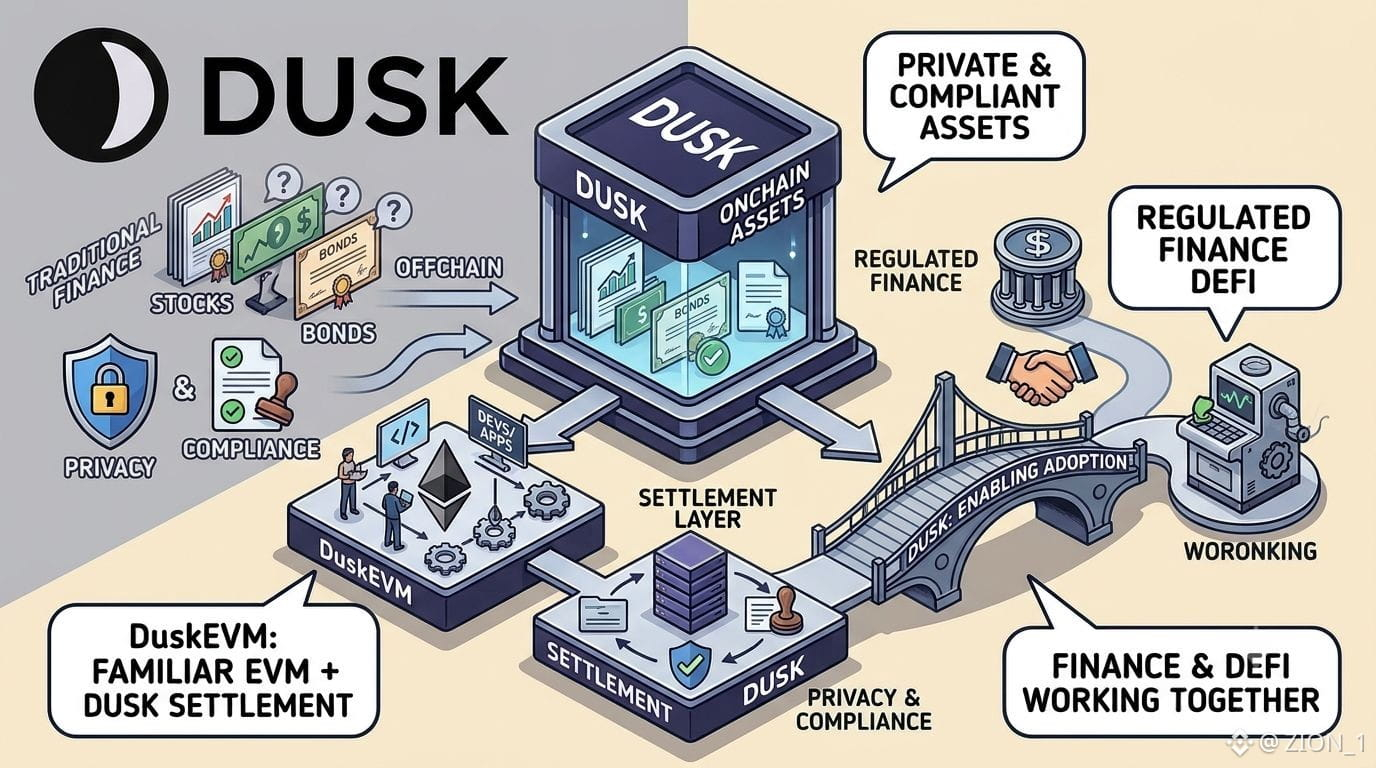
Been digging into $DUSK lately. What caught my eye is how focused they are on a problem most chains still don’t solve well.
How do you bring financial assets onchain without giving up privacy or ignoring compliance?
Bitcoin keeps things simple and transparent. Ethereum gives developers a flexible base for building apps. Dusk is taking a different path. They’re trying to make privacy and compliance part of the network itself.
DuskEVM is another part I find interesting. Devs get a familiar EVM setup while Dusk handles the settlement layer underneath.
That sounds good on paper, but I think real adoption will be the important test. Can this actually make it easier for regulated finance and DeFi to work together?
That’s the part I’ll be watching.
@Dusk #dusk $DUSK
How do you bring financial assets onchain without giving up privacy or ignoring compliance?
Bitcoin keeps things simple and transparent. Ethereum gives developers a flexible base for building apps. Dusk is taking a different path. They’re trying to make privacy and compliance part of the network itself.
DuskEVM is another part I find interesting. Devs get a familiar EVM setup while Dusk handles the settlement layer underneath.
That sounds good on paper, but I think real adoption will be the important test. Can this actually make it easier for regulated finance and DeFi to work together?
That’s the part I’ll be watching.
@Dusk #dusk $DUSK
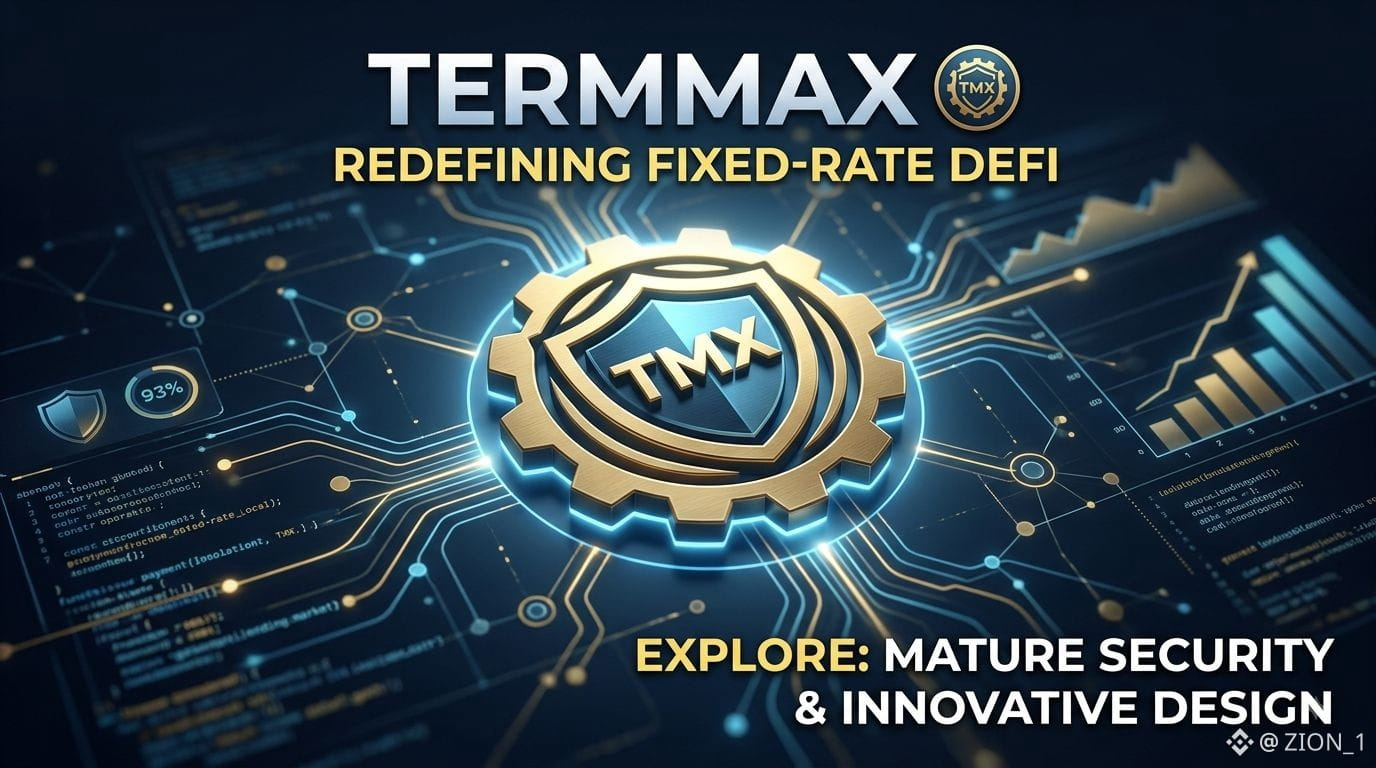
Spent some time going through TermMax's documentation this week, mainly because fixed-rate lending is a space where most "innovation" ends up being marketing dressed as design. TermMax's approach felt different: isolated markets with strategy curators instead of the usual pooled risk model.
What stood out was the DeFiSafety Process Quality Review. TermMax scored 93%, matching Aave V3's rating on the same framework. That's not a small claim, since DeFiSafety evaluates documentation rigor and operational process, not just code audits. On the numbers side, the protocol currently holds around $29.5m in active loans, which is tiny next to the $40b sitting in the lending category overall. Small footprint, but the security posture is disproportionately mature for that size.
Fixed-rate DeFi still solves a real problem: predictable borrowing costs for anyone building on-chain treasury or lending strategies.
Honestly, I doubt most degens care about a 93% security score when there's higher yield sitting elsewhere, but for anyone doing actual treasury management, this is exactly what matters.
Would you trade some yield for a protocol with Aave-level security guarantees?
@TermMax #TermMax
What stood out was the DeFiSafety Process Quality Review. TermMax scored 93%, matching Aave V3's rating on the same framework. That's not a small claim, since DeFiSafety evaluates documentation rigor and operational process, not just code audits. On the numbers side, the protocol currently holds around $29.5m in active loans, which is tiny next to the $40b sitting in the lending category overall. Small footprint, but the security posture is disproportionately mature for that size.
Fixed-rate DeFi still solves a real problem: predictable borrowing costs for anyone building on-chain treasury or lending strategies.
Honestly, I doubt most degens care about a 93% security score when there's higher yield sitting elsewhere, but for anyone doing actual treasury management, this is exactly what matters.
Would you trade some yield for a protocol with Aave-level security guarantees?
@TermMax #TermMax
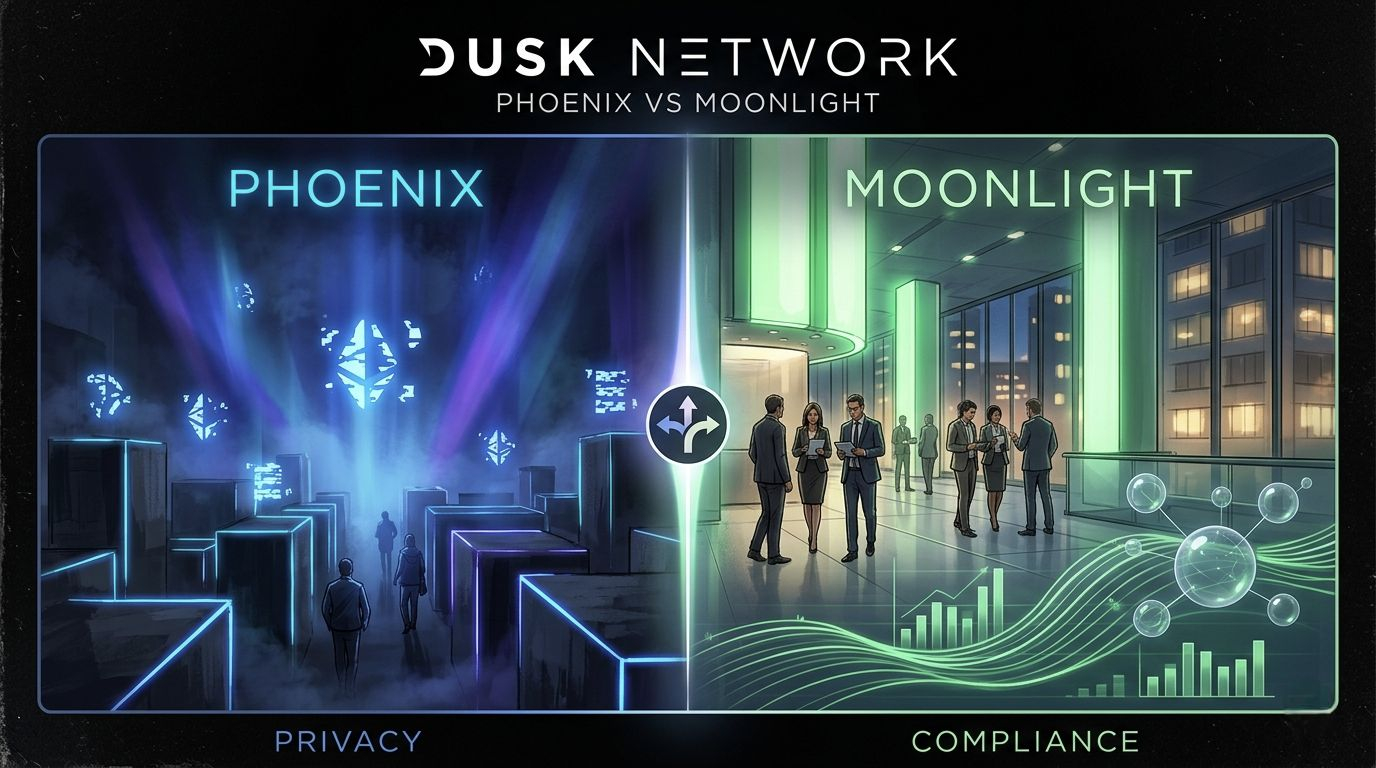
Spent a couple of hours digging through Dusk's docs today, and their Phoenix vs Moonlight setup is actually super clever.
Instead of forcing everything into full privacy or full transparency, Dusk runs both side by side. Phoenix (UTXO + ZK) handles confidential transfers, Moonlight does the transparent, account-based stuff institutions actually need for compliance. Same network, two models, pick whichever fits the transaction.
What got me was the reasoning behind it, not just the mechanics. Regulated finance rarely wants pure anonymity or pure exposure, it wants selective disclosure. Show what's needed, keep the rest private. Building that choice into the base layer instead of bolting it on later says something about who they're actually designing for honestly.
Most privacy chains treat transparency and compliance like oil and water. This one just... doesn't. Feels like the more obvious path once you see it laid out. More chains should be doing this.
@Dusk #dusk $DUSK
Instead of forcing everything into full privacy or full transparency, Dusk runs both side by side. Phoenix (UTXO + ZK) handles confidential transfers, Moonlight does the transparent, account-based stuff institutions actually need for compliance. Same network, two models, pick whichever fits the transaction.
What got me was the reasoning behind it, not just the mechanics. Regulated finance rarely wants pure anonymity or pure exposure, it wants selective disclosure. Show what's needed, keep the rest private. Building that choice into the base layer instead of bolting it on later says something about who they're actually designing for honestly.
Most privacy chains treat transparency and compliance like oil and water. This one just... doesn't. Feels like the more obvious path once you see it laid out. More chains should be doing this.
@Dusk #dusk $DUSK
DeFi lending is great, but floating rates can honestly be a headache when you’re trying to plan long-term positions.
That’s what made me look closer at TermMax.
Instead of leaving borrowing costs open to constant APY swings, it lets you lock in fixed rates and fixed terms upfront. You can know your borrowing cost and expected terms before entering a position.
What stands out to me isn't just fixed rates, but how V2 approaches liquidity:
Unified curator & limit orders into one system Multi-chain access across 10 EVM chains from a single UI
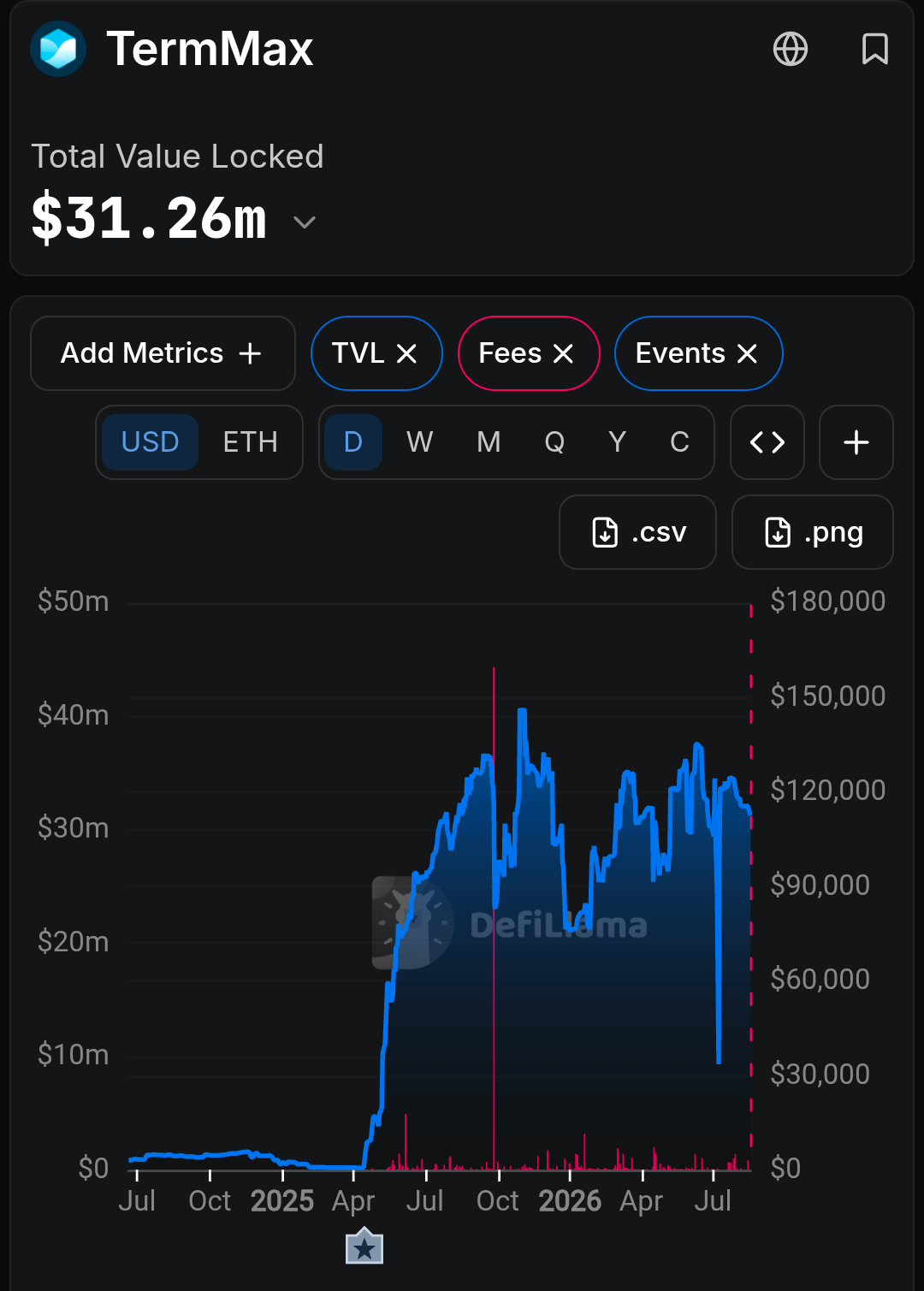
Over $31M in current TVL
I wouldn’t take TVL alone as proof of long-term success—depth of liquidity during volatile market moves is the real test for any fixed-term protocol.
But from a risk management side, having predictable rates makes hedging strategies and structured credit far more practical on-chain.
I'm keeping an eye on how tight the fixed vs floating spread stays as V2 grows. Are you guys hedging with fixed rates yet, or sticking to floating pools?
@TermMax #TermMax
That’s what made me look closer at TermMax.
Instead of leaving borrowing costs open to constant APY swings, it lets you lock in fixed rates and fixed terms upfront. You can know your borrowing cost and expected terms before entering a position.
What stands out to me isn't just fixed rates, but how V2 approaches liquidity:
Unified curator & limit orders into one system Multi-chain access across 10 EVM chains from a single UI
Over $31M in current TVL
I wouldn’t take TVL alone as proof of long-term success—depth of liquidity during volatile market moves is the real test for any fixed-term protocol.
But from a risk management side, having predictable rates makes hedging strategies and structured credit far more practical on-chain.
I'm keeping an eye on how tight the fixed vs floating spread stays as V2 grows. Are you guys hedging with fixed rates yet, or sticking to floating pools?
@TermMax #TermMax
Log in to explore more content