#dusk $DUSK
Last night, I went back to tinkering with confidentiality in Dusk, and something popped into my head:
Does all financial information really have to be visible to the public?
At first, I thought full transparency would actually be an advantage of blockchain. Ownership is recorded, transactions can be verified, and settlement can even be programmed.
But when I looked into private markets, I started to doubt.
Imagine a new institution buying a large stake in private securities. They need proof that the ownership is legitimate. But do they want competitors to know how big the position is, who the investors are, or the transaction details?
I don’t think so.
While digging into Dusk, I also initially misunderstood the issue. I thought confidentiality was only about hiding data. Turns out the question runs deeper: what information actually needs to be proven, and who is truly entitled to see it?
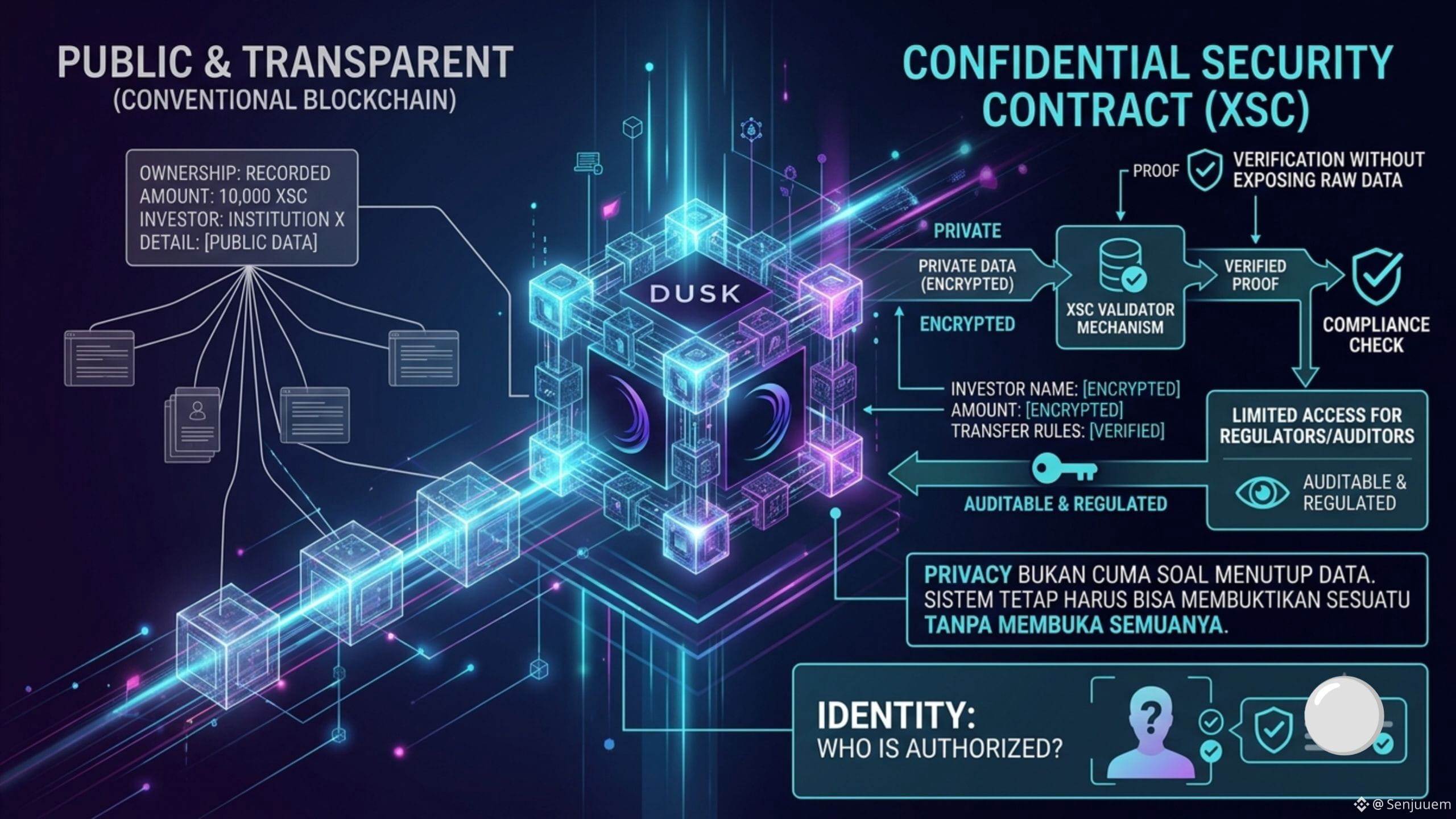
For example, an issuer issues a security token. The system still has to ensure that investors meet the requirements, transfers follow the rules, and ownership is valid. But that doesn’t mean all investor data needs to be exposed to the public.
This is where I finally started to understand why the Confidential Security Contract (XSC) is so compelling. Dusk tries to bring confidentiality directly into financial applications without sacrificing blockchain’s ability to enforce rules and verify transactions.
But I still have doubts.
If the data is made confidential, how will regulators or auditors make sure everything is correct when something goes wrong?
In my view, that’s the real test.
Privacy isn’t just about hiding data. The system still has to be able to prove something without revealing everything.
If Dusk can make that model work in real conditions, then in my opinion, private markets becomes one of the most sensible use cases.
And after getting to this point, I’m even more curious about one thing: identity. Privacy alone isn’t enough if the system doesn’t know who’s allowed to do something.
@Dusk
Last night, I went back to tinkering with confidentiality in Dusk, and something popped into my head:
Does all financial information really have to be visible to the public?
At first, I thought full transparency would actually be an advantage of blockchain. Ownership is recorded, transactions can be verified, and settlement can even be programmed.
But when I looked into private markets, I started to doubt.
Imagine a new institution buying a large stake in private securities. They need proof that the ownership is legitimate. But do they want competitors to know how big the position is, who the investors are, or the transaction details?
I don’t think so.
While digging into Dusk, I also initially misunderstood the issue. I thought confidentiality was only about hiding data. Turns out the question runs deeper: what information actually needs to be proven, and who is truly entitled to see it?
For example, an issuer issues a security token. The system still has to ensure that investors meet the requirements, transfers follow the rules, and ownership is valid. But that doesn’t mean all investor data needs to be exposed to the public.
This is where I finally started to understand why the Confidential Security Contract (XSC) is so compelling. Dusk tries to bring confidentiality directly into financial applications without sacrificing blockchain’s ability to enforce rules and verify transactions.
But I still have doubts.
If the data is made confidential, how will regulators or auditors make sure everything is correct when something goes wrong?
In my view, that’s the real test.
Privacy isn’t just about hiding data. The system still has to be able to prove something without revealing everything.
If Dusk can make that model work in real conditions, then in my opinion, private markets becomes one of the most sensible use cases.
And after getting to this point, I’m even more curious about one thing: identity. Privacy alone isn’t enough if the system doesn’t know who’s allowed to do something.
@Dusk