
橙子Joyce
493 Posts

橙子Joyce
 Square Verified+
价值投资者:以十年为单位投资美股及BTC.ETH.BNB.SOL.推特X:@Joyce88ai
Occasional Trader
8.7 Years
689 Following
30.6K+ Followers
36.0K+ Liked
Posts
All
Quotes
Videos
Live
PINNED

橙子Joyce
·
--
SK Hynix announces the latest HBM progress, saying the competitive focus is shifting from memory performance to packaging technology
①SK Hynix executives’ latest remarks: In the age of artificial intelligence semiconductors, the impact of packaging technology is becoming increasingly significant, beyond just the performance of HBM itself. ②In the manufacturing of AI semiconductors, because memory is assembled into the interposer layer earlier than other devices, its reliability requirements are higher. ③SK Hynix is developing next-generation packaging technology and regional cooling technology to meet the evolving needs of HBM.
HBM (high bandwidth memory) technology used in AI data centers is undergoing a major shift. $SK hynix (SKHY.US)$ Lee Jae-sik, vice president of the company in the United States, said in his latest remarks that in the future, the industry will not only need to focus on HBM itself, but also on how packaging technology affects HBM.
HBM (high bandwidth memory) technology used in AI data centers is undergoing a major shift. $SK hynix (SKHY.US)$ Lee Jae-sik, vice president of the company in the United States, said in his latest remarks that in the future, the industry will not only need to focus on HBM itself, but also on how packaging technology affects HBM.
SKHYUS-4.50%
Verified
On August 26 at 20:30, the July PCE data will be released. If the reading comes in hotter than expected, expectations for the Federal Reserve’s September policy path are likely to be affected, and fluctuations in U.S. Treasury yields may move in tandem with global risk assets. In addition, the revised estimate of the U.S. real GDP for Q2 will be released on August 26 at 20:30. On a month-over-month basis, investors expect the Fed’s preferred inflation gauge—the core PCE price index—to rise by 0.2%. If the increase is larger, it could lead investors to reconsider expectations that the Fed will stay on hold in September, potentially opening the door for a pullback in gold. Conversely, if the monthly core PCE inflation data is weaker than expected, it may help gold move higher further.
Then on Thursday, August 27, traders will focus on the weekly initial jobless claims report. At 22:00 on Friday, the preliminary annual benchmark revision to nonfarm payrolls data will also be released, along with the final reading of the University of Michigan’s August consumer sentiment index.
The preliminary annual benchmark revision to nonfarm employment data will indicate whether previously reported U.S. employment figures were overestimated or underestimated. After recent signs of softer hiring, this revision may become even more important. If it suggests a significant weakening in the labor market, it could affect expectations for Fed policy.
Then on Thursday, August 27, traders will focus on the weekly initial jobless claims report. At 22:00 on Friday, the preliminary annual benchmark revision to nonfarm payrolls data will also be released, along with the final reading of the University of Michigan’s August consumer sentiment index.
The preliminary annual benchmark revision to nonfarm employment data will indicate whether previously reported U.S. employment figures were overestimated or underestimated. After recent signs of softer hiring, this revision may become even more important. If it suggests a significant weakening in the labor market, it could affect expectations for Fed policy.
Partly True
The momentum of U.S. economic growth is accelerating. S&P Global’s U.S. Composite PMI rose by 1.5 points in August to 56.0, the highest level since April 2022 and the third consecutive month of gains. At the same time, the Services PMI increased by 2.2 points to 56.8, the highest level since March 2022. The Manufacturing PMI fell by 0.7 points to 53.9, the lowest level in the past five months, but it remains in the expansion range.
Meanwhile, U.S. firms’ hiring activity is led by the services sector, with headcount increasing at the fastest pace since January 2025. These data suggest that the United States’ year-on-year GDP growth rate in Q3 2026 will reach +3.0%, compared with +1.5% in Q2. Artificial intelligence is driving a historic wave of growth.
Meanwhile, U.S. firms’ hiring activity is led by the services sector, with headcount increasing at the fastest pace since January 2025. These data suggest that the United States’ year-on-year GDP growth rate in Q3 2026 will reach +3.0%, compared with +1.5% in Q2. Artificial intelligence is driving a historic wave of growth.

【Anthropic is expected to match or exceed SpaceX’s IPO record】
Previously, reports said that Anthropic’s preliminary revenue in the second quarter exceeded $11.5 billion, while it was only $787 million in the same period of 2025. By the end of July, the company’s annualized revenue run rate had reached $65 billion.
According to people familiar with the matter, the AI company Anthropic expects its IPO size to match or exceed the record set by SpaceX. As the AI company accelerates its preparations for going public, a mega-IPO is being lined up. The people familiar with the matter said that Anthropic is conducting related calculations and preparing to file for a potentially large IPO as early as later this month. They added that a recent investor communications meeting chaired by Chief Financial Officer Klao avoided discussing valuation. Data shows that at the time of its IPO, SpaceX—an aerospace company for rockets and satellites—raised $75 billion, becoming the largest initial public offering in history. Because it exercised so-called over-allotment options, the figure ultimately rose to $86.2 billion. This mechanism is typically triggered in the early period after the stock begins trading. Anthropic’s target reflects how leading companies in the AI industry are reshaping the tech investment landscape in an extremely short time. Previously, reports said that Anthropic’s preliminary revenue in the second quarter exceeded $11.5 billion, while it was only $787 million in the same period of 2025. By the end of July, the company’s annualized revenue run rate had reached $65 billion.
Previously, reports said that Anthropic’s preliminary revenue in the second quarter exceeded $11.5 billion, while it was only $787 million in the same period of 2025. By the end of July, the company’s annualized revenue run rate had reached $65 billion.
According to people familiar with the matter, the AI company Anthropic expects its IPO size to match or exceed the record set by SpaceX. As the AI company accelerates its preparations for going public, a mega-IPO is being lined up. The people familiar with the matter said that Anthropic is conducting related calculations and preparing to file for a potentially large IPO as early as later this month. They added that a recent investor communications meeting chaired by Chief Financial Officer Klao avoided discussing valuation. Data shows that at the time of its IPO, SpaceX—an aerospace company for rockets and satellites—raised $75 billion, becoming the largest initial public offering in history. Because it exercised so-called over-allotment options, the figure ultimately rose to $86.2 billion. This mechanism is typically triggered in the early period after the stock begins trading. Anthropic’s target reflects how leading companies in the AI industry are reshaping the tech investment landscape in an extremely short time. Previously, reports said that Anthropic’s preliminary revenue in the second quarter exceeded $11.5 billion, while it was only $787 million in the same period of 2025. By the end of July, the company’s annualized revenue run rate had reached $65 billion.


Verified

Verified
The U.S. Treasury steps in to support the market, pushing down the U.S. Treasury yields that have been pressuring global stock markets. The U.S. Treasury announced that it will at least double the size of its buyback program for long-term Treasury bonds. After the news broke, the prices of ultra-long Treasury bonds issued by the U.S. government surged sharply. The backdrop to this move is that global long-term bond markets have recently suffered large-scale selling, and the yield on the 30-year U.S. Treasury briefly spiked to the highest level since 2007 on Monday. At the same time, traders are preparing for a new issuance auction of $16 billion worth of 20-year Treasury notes scheduled to take place soon. In a statement, the U.S. Treasury said, “By increasing the size of the repurchase operations, the Treasury aims to provide stronger liquidity support for the long-dated nominal Treasury market. Within these maturity ranges, market participants have consistently demonstrated strong and stable appetite, which is evidenced by the large volume of high-quality bids the Treasury regularly receives in its long-dated Treasury repurchase operations.” Under the accelerated repurchase plan, the Treasury will focus on repurchasing Treasuries in the 10-to-20-year and 20-to-30-year maturity ranges. Since the end of June, the U.S. Treasury markets in these maturities have been plagued by a “buyer walkout,” with investors’ willingness to take on the bonds clearly lacking. According to the Treasury’s announcement, the government will increase the maximum size of each repurchase operation “by at least” double—from $2 billion to “at least” $4 billion.
#黄金
#silver
#黄金
#silver

A single greeting, carries the tenderness of Qixi; a blessing, is the softness of Qixi. May all the deep feelings in this world not be let down, may all true love be cherished well, and may every rush of pursuit be met with the gentlest echoes. 🐦🔥🐲🌹🌹🌹🌹🌹🌹🌹🌹🌹

Verified

Verified
July 27|Longcheer Technology (688825.SH) stock price surged further, reaching a peak intraday gain of 535.45%, rising to 55.03 yuan and setting a new all-time high since its listing; trading volume was RMB 118.6 billion, setting a record for the single-day turnover amount of an individual stock in the A-share market; the turnover rate was as high as 56%; market capitalization reached RMB 3.68 trillion, firmly maintaining the No. 1 spot among A shares. The IPO issue price for Longcheer Technology was 8.66 yuan per share, raising approximately RMB 57.9 billion (before the full exercise of the over-allotment option), making it the largest IPO in terms of deal size for the Sci-Tech Innovation Board to date. Longcheer Technology currently has 4.503 billion shares in circulation, accounting for 6.73% of the total number of shares (66.9 billion shares).
July 25 report: SpaceX, the U.S. space exploration technology company, launched its heavy-lift rocket “Starship” from a launch site in the southern part of Texas on the afternoon of the 24th at U.S. Central Time, conducting its 13th test flight. The rocket’s first stage, the “Super Heavy” booster, splashed down in waters near the Gulf of Mexico. The second stage, the “Starship” spacecraft, completed suborbital flight and splashed down in the Indian Ocean. The launch took place at 17:51 on the 24th in U.S. Eastern Time. The rocket’s first stage “Super Heavy” booster also splashed down in waters near the Gulf of Mexico, but because the number of re-started engines was less than expected, the stage entered the water at a higher-than-expected speed. During the flight of the second-stage “Starship” spacecraft, all six engines operated normally and deployed 20 next-generation “Starlink” satellites. The spacecraft also briefly re-started one engine in space to verify the in-orbit ignition capability needed for future lunar-landing missions. About 1 hour and 5 minutes after launch, the spacecraft splashed down in the Indian Ocean, northwest of Australia.
$SPCX.US
#马斯克
$SPCX.US
#马斯克
On July 20, CryptoQuant analyst Darkfost posted that Binance and Bybit’s stablecoin reserves have continued to decline recently. Over the past 30 days, cumulative outflows have exceeded $2.3 billion, reflecting insufficient new liquidity in the crypto market.
Binance’s stablecoin reserves have fallen by about $1.55 billion over the past 30 days, while Bybit’s over the same period has decreased by about $786 million. Combined, the two major trading platforms have seen outflows approaching $2.3 billion.
Bitcoin has been trading in a tight range around the key level of $60,000 for roughly 165 days in a row. Although it briefly broke above $80,000 in May, the upward momentum could not be sustained. With the market lacking new capital inflows, whether for BTC or the overall crypto market, new demand has remained relatively weak.
Trading platforms’ stablecoin reserves have been declining steadily since the beginning of the year, with outflows dominating. This suggests investors are reducing their allocation of exchange-held funds, and some of that capital may even be exiting the market. Liquidity contraction and a more cautious market sentiment have become important obstacles to BTC breaking out of its current consolidation range.
Binance’s stablecoin reserves have fallen by about $1.55 billion over the past 30 days, while Bybit’s over the same period has decreased by about $786 million. Combined, the two major trading platforms have seen outflows approaching $2.3 billion.
Bitcoin has been trading in a tight range around the key level of $60,000 for roughly 165 days in a row. Although it briefly broke above $80,000 in May, the upward momentum could not be sustained. With the market lacking new capital inflows, whether for BTC or the overall crypto market, new demand has remained relatively weak.
Trading platforms’ stablecoin reserves have been declining steadily since the beginning of the year, with outflows dominating. This suggests investors are reducing their allocation of exchange-held funds, and some of that capital may even be exiting the market. Liquidity contraction and a more cautious market sentiment have become important obstacles to BTC breaking out of its current consolidation range.

Verified
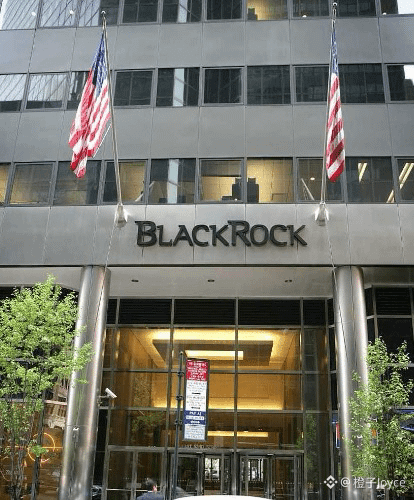
According to the financial report released by BlackRock, the world’s largest asset manager, on July 15, data shows that by the end of the second quarter, the assets under management (AUM) managed by the BlackRock Group reached US$15.3 trillion, equivalent to RMB 10.421 million billion, up 22% year over year and setting a new record. In the second quarter, the BlackRock Group’s revenue was US$7.084 billion, up 31% year over year; adjusted operating profit was US$2.916 billion, up 39%.
In the performance statement, Larry Fink, Chairman and CEO of the BlackRock Group, said that over the past year, the company achieved net inflows of US$867.8 billion and 10% growth in organic management fees. Net inflows for the first six months of 2026 increased by more than double year over year, driving the company’s AUM to a record US$15.3 trillion.
He emphasized that BlackRock is “a leading public markets asset manager, a scaled private markets platform, and a global technology company.” Referring to the second quarter, he noted that the company received net inflows of US$192 billion and organic management fee growth of 8%. By the end of the second quarter, the assets under management of the iShares ETF brand surpassed US$6 trillion. Over the past three years, iShares’ asset base has doubled. In the second quarter, the active business received net inflows of US$53 billion, driven by systematic strategies that generated net inflows; alternative assets tied to liquidity received net inflows of US$7 billion, setting a new record; and the annual contract value of technology services and subscriptions related to Aladdin increased 15% year over year.
#贝莱德
In the performance statement, Larry Fink, Chairman and CEO of the BlackRock Group, said that over the past year, the company achieved net inflows of US$867.8 billion and 10% growth in organic management fees. Net inflows for the first six months of 2026 increased by more than double year over year, driving the company’s AUM to a record US$15.3 trillion.
He emphasized that BlackRock is “a leading public markets asset manager, a scaled private markets platform, and a global technology company.” Referring to the second quarter, he noted that the company received net inflows of US$192 billion and organic management fee growth of 8%. By the end of the second quarter, the assets under management of the iShares ETF brand surpassed US$6 trillion. Over the past three years, iShares’ asset base has doubled. In the second quarter, the active business received net inflows of US$53 billion, driven by systematic strategies that generated net inflows; alternative assets tied to liquidity received net inflows of US$7 billion, setting a new record; and the annual contract value of technology services and subscriptions related to Aladdin increased 15% year over year.
#贝莱德
BLKUS+1.17%
Log in to explore more content