

In January 2026, when the global cryptocurrency market experienced severe fluctuations, BTC not only faced the first large-scale capital outflow since the launch of spot ETFs but also hit a new low price in nearly nine months by the end of the month. This dual impact of 'capital flight + price breakdown' reflects market panic under the expectation of a shift in Federal Reserve policy and exposes a reassessment of the valuation of crypto assets by institutional investors. A deep analysis of BTC's capital flow trajectory can not only grasp the short-term market pulse but also provide insights into the profound changes in the global digital asset ecosystem.
Capital movements: The 'January cold wave' of the U.S. Bitcoin spot ETF
The U.S. Bitcoin ETF experienced its first large-scale capital outflow in January 2026, becoming a core variable in BTC capital flow. The latest data shows that over the past five trading days, Bitcoin ETF outflows amounted to $1.49 billion, breaking a trend of net inflows for three consecutive months.
From the perspective of time points, capital withdrawals exhibit event-driven characteristics. Since January 18, when Trump nominated hawkish figure Kevin Warsh as Federal Reserve Chairman, the speed of capital flight has significantly accelerated, with a net outflow of $1.31 billion in the last two weeks of January. The data clearly indicates that institutional investors' expectations of tightening Federal Reserve monetary policies have directly influenced their decisions on cryptocurrency asset allocations.
Further analysis of capital flows shows that the withdrawn ETF funds have not completely exited the cryptocurrency market but exhibit characteristics of "internal transfer." On one hand, some funds have shifted towards more compliant cryptocurrency derivatives markets, with the Chicago Mercantile Exchange (CME) Bitcoin futures open interest rising from $9 billion to $10.6 billion, setting a new historical high; on the other hand, the Asian market has become a "safe haven" for funds, with Japan's Bitcoin spot ETF and South Korea's cryptocurrency asset management scale both showing month-on-month growth, reflecting that global cryptocurrency capital is shifting from the U.S. market to regions with more stable regulatory environments.
Price Break: The Multiple Pressures Behind the Loss of the $80,000 Threshold
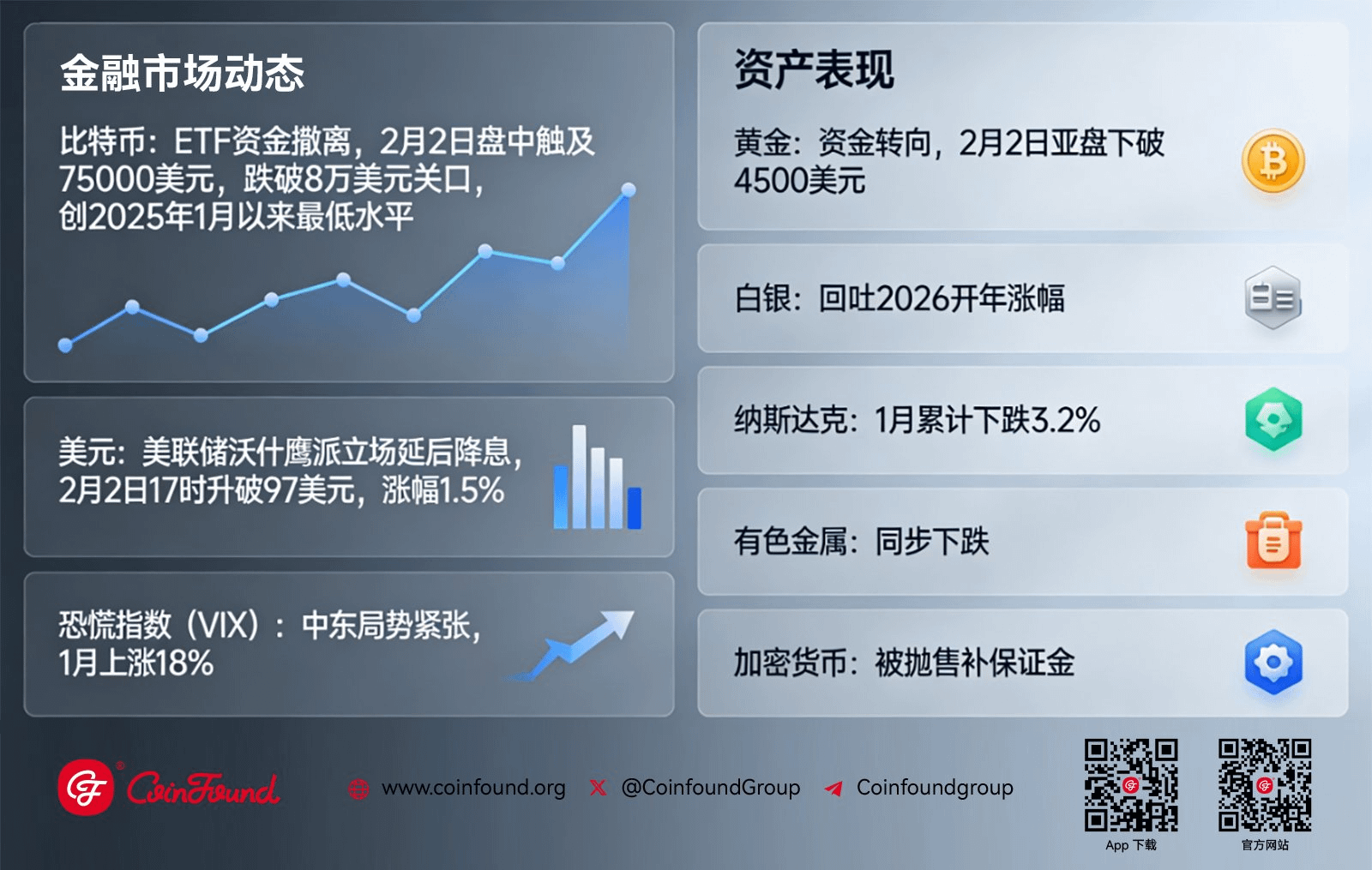
In response to the ETF capital outflows, Bitcoin's price has experienced a "cliff-like drop." On February 2, BTC briefly touched $75,000 during intraday trading, breaking below the important psychological threshold of $80,000, marking the lowest level since January 2025.
From the perspective of direct causes, the reconstruction of expectations regarding Federal Reserve policies is the core driving force behind the price break. Kevin Warsh's hawkish stance has led the market to generally expect a delay in the interest rate cut cycle. Following the news, the dollar strengthened in the short term, surpassing $97 by 5 PM on February 2, with an increase of 1.5%.
The uncertainty of the macro environment also exerts pressure on BTC prices. The tense situation in the Middle East has led to a decline in global risk appetite, with the panic index (VIX) rising by 18% in January, causing capital to seek refuge in traditional safe-haven assets such as gold; meanwhile, U.S. tech stocks experienced a pullback in January, with the Nasdaq index falling by 3.2%. As an asset closely correlated with tech stocks, Bitcoin was also affected.
The decline in precious metals further dragged down cryptocurrency assets. During the Asian trading session on February 2, precious metals encountered another sharp setback, with gold breaking below the critical threshold of $4500, silver giving back all gains since the start of 2026, and colored metals such as platinum, palladium, copper, and nickel falling simultaneously. The sharp decline led to the liquidation of more liquid cryptocurrencies to meet margin requirements, resulting in further price drops.
Future Outlook: New Trends in Capital Flow and Market Opportunities
Despite the "cold wave of funds" in the BTC market in January, from a long-term perspective, the trajectory of capital flow still shows some positive signals, providing a new observation dimension for the subsequent development of the market.
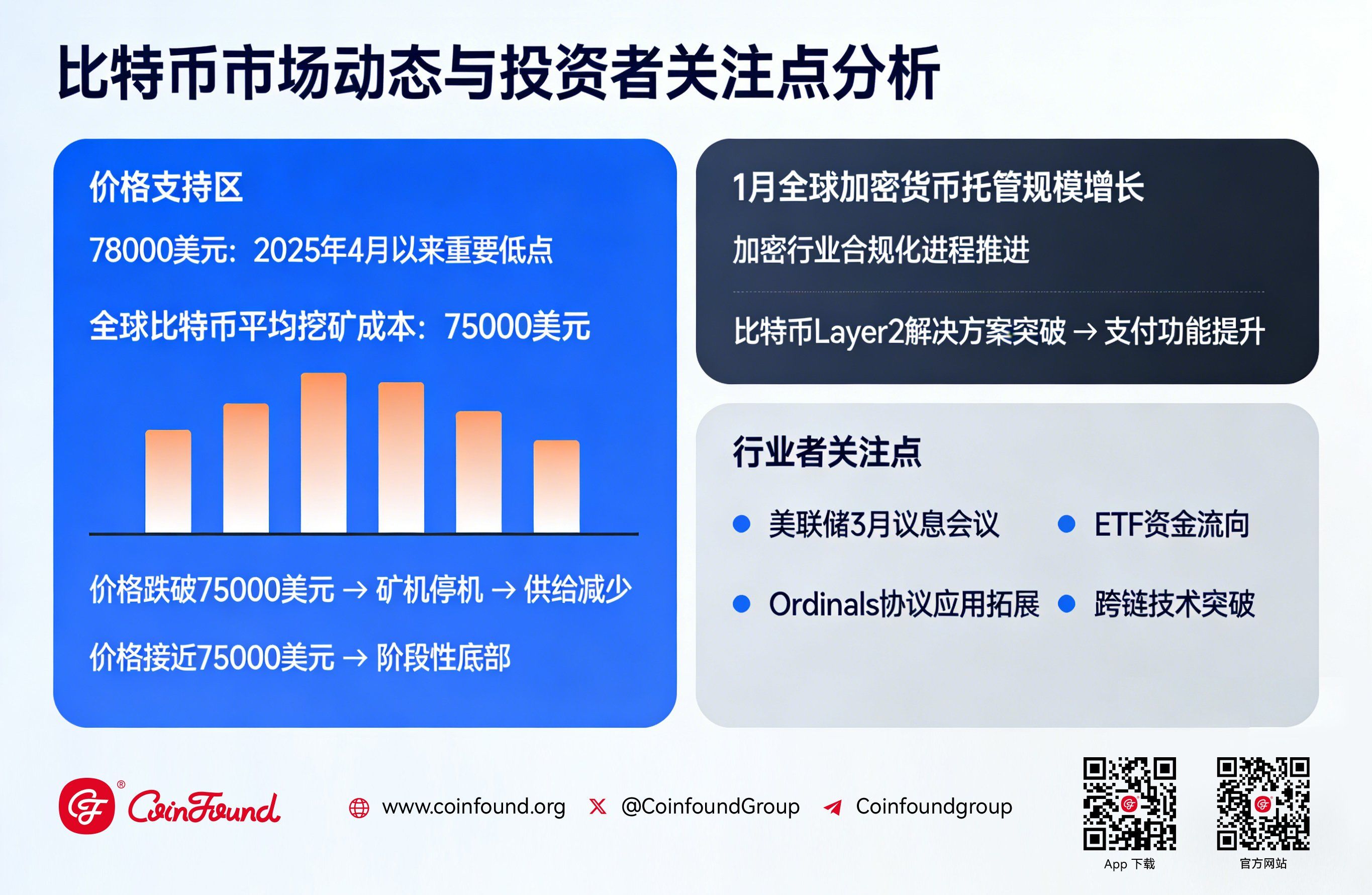
From a technical perspective, this price level is not only an important low since April 2025 but also a critical threshold for Bitcoin mining costs. The current global average Bitcoin mining cost is approximately $75,000; if the price falls below this level, some mining machines will cease operations, thereby reducing market supply. Historical data shows that when BTC prices approach the mining cost line, temporary bottoms often occur, providing long-term investors with an opportunity to position themselves.
From the perspective of industry ecology, the improvement of cryptocurrency infrastructure lays the foundation for capital return. In January, the scale of global cryptocurrency custody showed positive growth, with institutional-level custody services increasing by 12%, reflecting the ongoing compliance process in the cryptocurrency industry; at the same time, breakthroughs in Bitcoin Layer 2 solutions have significantly enhanced BTC's payment functionality, providing technical support for its application scenario expansion.
For investors, it is crucial to grasp three core logics in the current market environment: first, pay attention to the Federal Reserve's policy direction, especially the clarity on the interest rate path from the March Federal Reserve meeting, as this will directly affect the direction of BTC capital flow; second, track changes in ETF capital flows; if the net outflow scale of ETFs narrows in February, it may indicate a warming in market sentiment; third, focus on innovations in the Bitcoin ecosystem, such as the expansion of the Ordinals protocol applications and breakthroughs in cross-chain technology, as these factors will provide support for BTC's long-term value.
Conclusion: Value Reconstruction Amidst Volatility
The drastic changes in BTC capital flow in January 2026 are both the result of the macro environment and reflect that the cryptocurrency market is at a critical stage of value reconstruction. Despite many uncertainties in the short-term market, Bitcoin still possesses long-term investment value from the perspectives of capital structure, technical support, and ecological development. For investors, it is essential to rationally view short-term fluctuations and grasp the core logic behind capital flow to seize opportunities in the changing market dynamics and achieve stable asset appreciation.