

Encryption regulations have always been the biggest gray area in the United States, especially in New York. The tone of enforcement has been particularly harsh under New York Attorney General Letitia James.
New York is often considered one of the most anti-cryptocurrency states in the United States. Mainly due to its strict regulatory framework, it makes crypto businesses difficult to operate. However, it is important to note that other states have varying levels of regulation of the crypto industry.
The strange relationship between cryptocurrencies and the Big Apple
One of the main reasons New York is considered anti-cryptocurrency is the implementation of BitLicense. The regulatory framework requires businesses to obtain a license to operate in the state. The framework was introduced in 2015 by the New York State Department of Financial Services (NYDFS) and applies to businesses engaging in virtual currency activities. BitLicense requires companies to comply with strict regulations, including anti-money laundering (AML) and know-your-customer (KYC) requirements.
The BitLicense has been criticized by some in the crypto community as being too onerous and restrictive, leading some companies to avoid doing business in New York altogether. For example, in 2015, popular cryptocurrency exchange Kraken announced that it would suspend services in New York due to BitLicense regulations.
Other cryptocurrency businesses have also expressed frustration with the regulatory framework, leading some to believe New York is hostile to the industry. So what turns the region against cryptocurrencies?
It all starts with leaders
State attorneys general are responsible for enforcing state laws within their jurisdiction. This includes laws related to consumer protection, securities regulation and financial fraud. In recent years, state attorneys general have increasingly focused on enforcing cryptocurrency and blockchain technology laws.
As cryptocurrencies continue to gain popularity, there have been concerns about fraudulent activity and consumer protection in the crypto market. State attorneys general can investigate and prosecute cryptocurrency exchanges, businesses and individuals who violate state laws related to cryptocurrencies. In this case, the New York Attorney General’s Office, led by Letitia James, is the front-runner.
Democrats have taken a strict approach to cryptocurrency regulation.
In 2018, the office launched the Virtual Markets Integrity Initiative, which aims to protect cryptocurrency investors by increasing transparency and accountability in the industry. As part of the program, the Attorney General’s Office sent letters to 13 cryptocurrency exchanges requesting information about their operations, security and compliance measures.
Cryptocurrency exchanges and companies at risk
Exchanges are required to complete a questionnaire asking for details about their policies and procedures, including how they prevent market manipulation and protect customer funds. The Virtual Markets Integrity Initiative has resulted in multiple enforcement actions against cryptocurrency exchanges, including a settlement against one exchange and Tether for allegedly covering up the loss of $850 million in customer funds.
The attorney general’s office also filed a lawsuit against cryptocurrency exchange Coinseed, accusing it of defrauding investors and misappropriating funds. Recently, high-profile enforcement actions have been targeted against KuCoin, CoinEx, and Celsius Network. In addition, James alleged that Ethereum was not registered to operate as a security, which directly affected the price of ETH.
So, here comes a problem. What's behind this intense hostility? Is James choosing cryptocurrency, or is her behavior justified? The controversy surrounding New York Attorney General Letitia James’ handling of the crypto industry has sparked a range of opinions and perspectives.
Choosing a Side in Crypto
Supporters of the NY AG’s action argue that her crackdown on cryptocurrency companies is necessary to protect investors and prevent fraudulent activity. They argue that the crypto industry remains largely unregulated, allowing bad actors to take advantage of unsuspecting investors.
For example, Twitter user Parrot Capital, who has over 12,000 followers, asserts:
“Letitia James has arguably done more to stop cryptocurrency fraud than any other law enforcement officer. New York State has a long history of over-policing, but they do a better job than most states when it comes to combating cryptocurrency crime. "
Critics of the AG’s actions, on the other hand, argue that her approach to cryptocurrency regulation is too harsh and stifles innovation and growth in the industry. They argue the industry needs more clarity and guidance from regulators rather than strict enforcement. Some respondents on Reddit told BeInCrypto that the AG’s actions were motivated by a desire to “score points in the political game (by pursuing cryptocurrencies).”
The controversy surrounding regulators’ treatment of the crypto industry is complex and multifaceted, with a variety of opinions and perspectives. Is this the case in other states in the United States?
Other regions and their regulatory environments
Other states have also implemented regulations on the crypto industry, but they may have a bad aftertaste. In 2019, Wyoming passed several bills to create a favorable regulatory environment for crypto businesses. The bills include exempting certain crypto assets from state securities laws and creating special purpose depository institutions (SPDIs) that can provide banking services to crypto businesses.
Other states have also taken steps to regulate the industry, although their approaches vary. For example, some states have passed laws requiring businesses to obtain a money transfer license to operate. In contrast, others have created regulatory sandboxes that allow companies to test products and services without complying with existing regulations.
To be fair, stateside regulations remain vague and unclear, preventing cryptocurrencies from reaching their full potential. This is one of the reasons why the crypto adoption curve in the United States has declined compared to other regions.
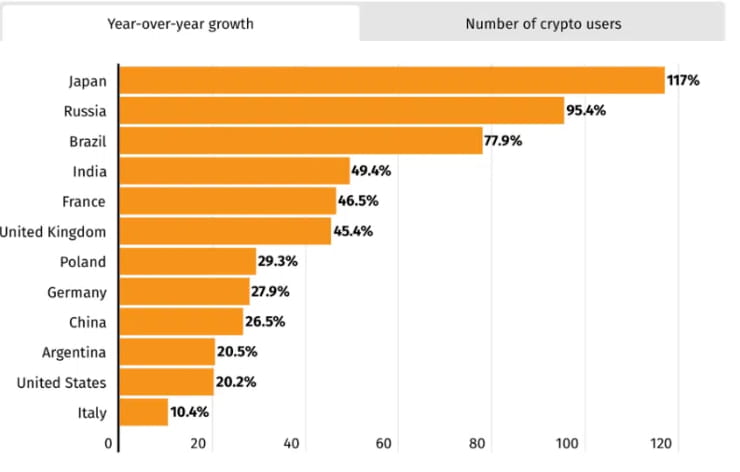
Overall, it remains to be seen whether New York will continue to be viewed as hostile to the crypto industry. or whether it will take steps to create a more favorable regulatory environment