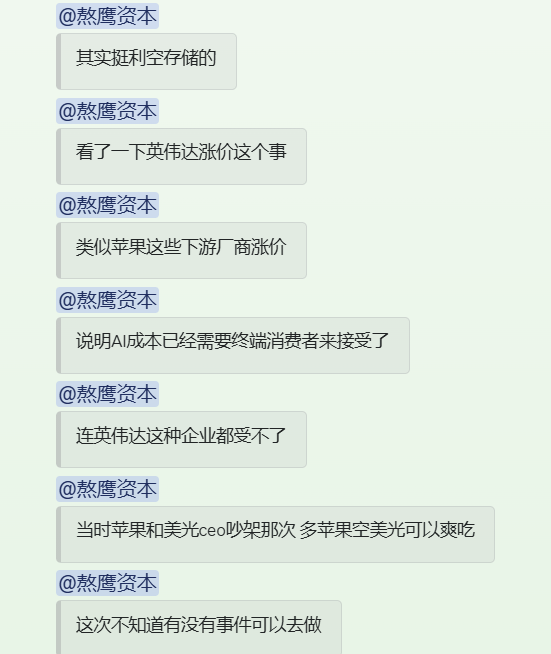

The sustained high cost of AI computing power is redefining the boundaries of competition among tech giants. A blogger, Ao Ying Capital, combined the recent Nvidia price-hike event to conduct an in-depth analysis of how costs are passed along—from chip design to end-user consumption.
🔍 Deconstructing the core cost-transfer chain:
Passing costs to end users and supply-chain squeeze:
Under pressure from Nvidia’s price hikes, downstream end-device manufacturers (such as Apple) maintain their gross margins by raising retail prices. This confirms the industry logic that “AI costs must be borne by the end users.” Even upstream monopoly-grade giants can hardly absorb a sudden surge in costs on their own; the midstream supply chain will face enormous bargaining pressure.
Potential downside in the memory segment (Memory):
Core logic: Computing power squeezes the budget + terminal demand is suppressed ➡️ storage sector bargaining power comes under pressure
Historical hedging reference: In prior periods when Apple and Micron had supply-chain frictions, the “long Apple (AAPL) / short Micron (MU)” paired trade showed extremely high risk-hedging efficiency. This event also provides ideas for long/short arbitrage across the industry chain.
Focus on the end-market’s ability to absorb price increases; this is the key metric for judging the divergence between the storage and chip sectors going forward.