A major opportunity is about to arrive 📈
But Brother Qiang has one final reminder:
If you don’t cut your losses, sooner or later you’ll hand your account over to the market!
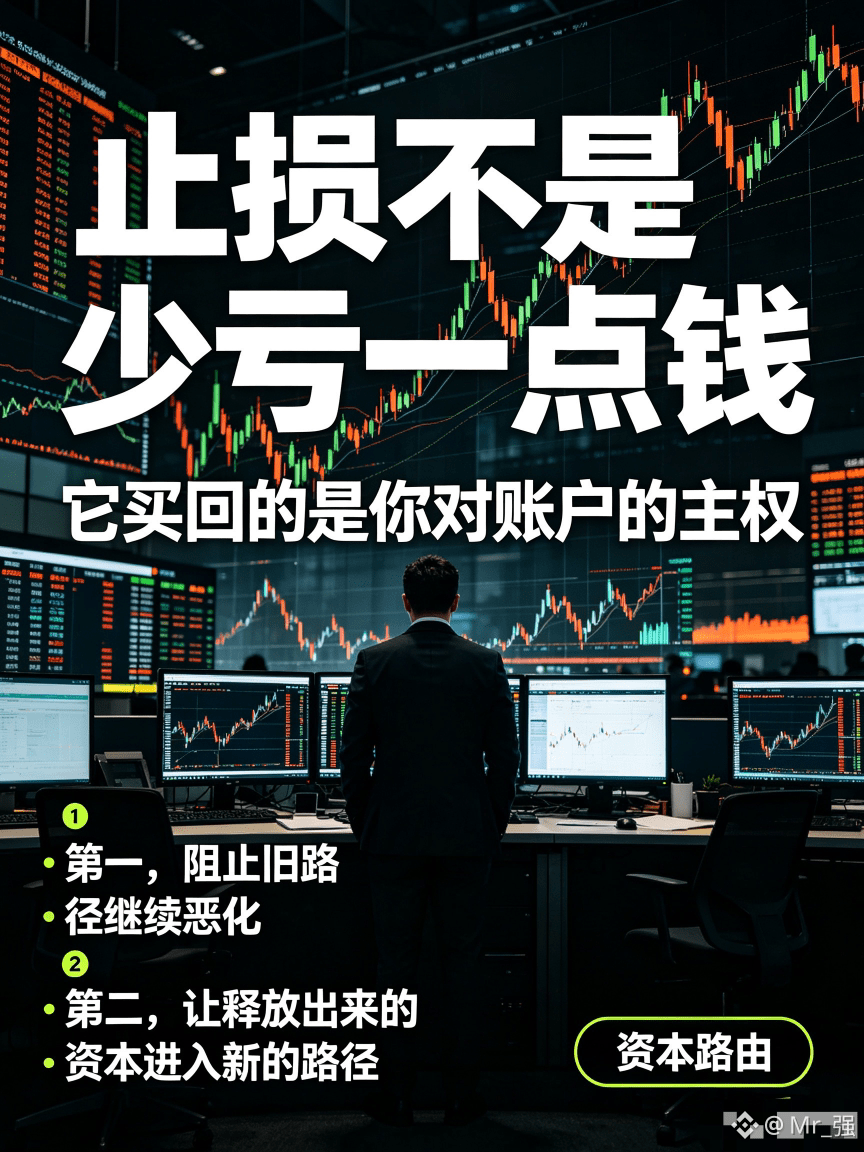
The value of stop-loss isn’t just “losing a little less.”
What it truly buys back for you is your sovereignty over your account.
Whether this stock, this coin, will go up or down tomorrow—you can’t control that.
But you can control:
Why you buy?
Where you buy?
How much you buy?
What to do after it rises?
What to do if it falls?
When to end this trade?
So what are you really doing when you don’t set a stop-loss?
You’re handing the market the power to decide the life-or-death outcome of your account—and expecting the market to be responsible for you.
But why should the market be responsible for you?
It doesn’t know you bought in at 10. And it doesn’t care whether you can stomach a drop to 5.
After you set a stop-loss, you release more than just leftover capital.
You also release:
Your risk budget,
Your position slots,
Your time,
And your attention.
These resources can re-enter the next emerging trend.
So, stop-loss actually creates two lines of returns:
First, it prevents the old path from continuing to deteriorate.
Second, it lets the released capital enter a new path and generate the next stretch of gains.
This is what I often talk about—capital routing.
Exiting isn’t admitting defeat.
It only declares:
This path ends here.
But my trading career hasn’t ended.
True sovereignty isn’t letting price run according to your predictions.
It’s that even if price doesn’t move as you expected,
it still can’t, through a single mistake, take away your entire future.
But Brother Qiang has one final reminder:
If you don’t cut your losses, sooner or later you’ll hand your account over to the market!
The value of stop-loss isn’t just “losing a little less.”
What it truly buys back for you is your sovereignty over your account.
Whether this stock, this coin, will go up or down tomorrow—you can’t control that.
But you can control:
Why you buy?
Where you buy?
How much you buy?
What to do after it rises?
What to do if it falls?
When to end this trade?
So what are you really doing when you don’t set a stop-loss?
You’re handing the market the power to decide the life-or-death outcome of your account—and expecting the market to be responsible for you.
But why should the market be responsible for you?
It doesn’t know you bought in at 10. And it doesn’t care whether you can stomach a drop to 5.
After you set a stop-loss, you release more than just leftover capital.
You also release:
Your risk budget,
Your position slots,
Your time,
And your attention.
These resources can re-enter the next emerging trend.
So, stop-loss actually creates two lines of returns:
First, it prevents the old path from continuing to deteriorate.
Second, it lets the released capital enter a new path and generate the next stretch of gains.
This is what I often talk about—capital routing.
Exiting isn’t admitting defeat.
It only declares:
This path ends here.
But my trading career hasn’t ended.
True sovereignty isn’t letting price run according to your predictions.
It’s that even if price doesn’t move as you expected,
it still can’t, through a single mistake, take away your entire future.