


Summary
On February 2, 2026, the global precious metals market experienced significant fluctuations, with gold prices sharply dropping from a historic high of nearly $5600 per ounce at the beginning of the year. The decline on that day reached approximately 2.5% to 3%, hitting a low of $4697.97 per ounce. This drop was primarily influenced by a easing of geopolitical tensions, a strengthening dollar, and technical selling pressure. Although gold prices are under pressure in the short term, institutions like UBS and CITIC Securities remain optimistic about the long-term trend of gold, believing that this pullback is a necessary adjustment in a bull market. This week will see the release of a series of important economic data, which is expected to further impact the gold market.
Price dynamics and technical analysis
As of February 2, 2026, in the Asian market's early trading, the spot gold price is approximately $4624.77 per ounce, with significant intraday declines. The gold price has fallen below the critical psychological level of $5000 and has further dropped below the 21-day moving average (SMA), with the EMA0 turning into dynamic resistance, indicating strong bearish signals.
Key price levels:
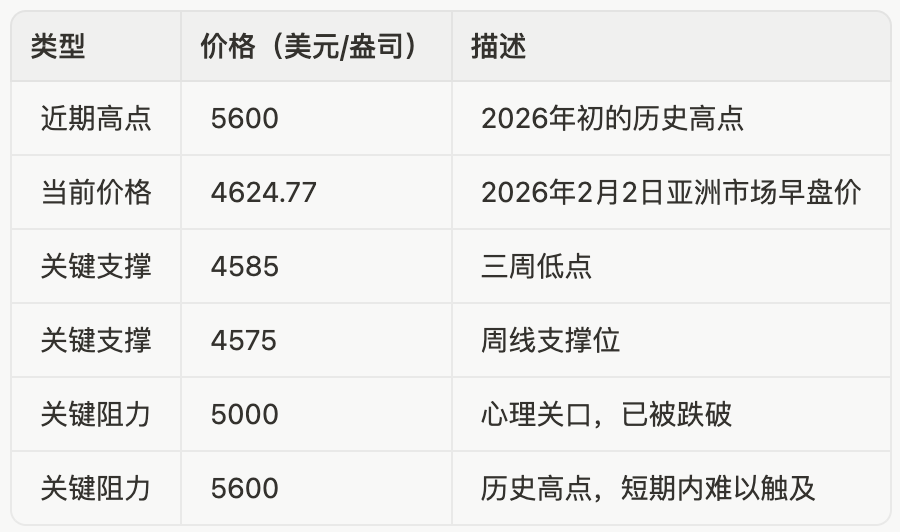
Technical analysis shows that gold prices have broken the short-term upward trend line, and negative technical signals have intensified selling pressure. The stochastic indicator has temporarily flattened at the golden cross, indicating that the market may still be in a state of adjustment in the short term.
Market factors analysis
1. Geopolitical easing
The recent easing of geopolitical tensions is one of the main reasons for the decline in gold's safe-haven demand. The United States has expressed a willingness to negotiate with Iran, and Iran's foreign minister has also stated that contacts have been fruitful, believing that there is a possibility of reaching a fair agreement. In addition, Ukrainian President Zelensky has expressed readiness for 'substantive' discussions, with the next trilateral meeting scheduled to take place from February 4 to 5 in Abu Dhabi. These signals have reduced market risk aversion, thereby exerting pressure on gold prices.
2. Stronger US dollar
The significant rebound in the US dollar index has also put pressure on gold prices. The market's expectations regarding Kevin Warsh's nomination to the Federal Reserve have sparked speculation about the possibility of a more hawkish monetary policy from the Federal Reserve, which has boosted the dollar and made gold, priced in dollars, more expensive for holders of other currencies.
3. Technical sell-offs and stop-losses
Gold prices have fallen below critical support levels, especially the psychological level of $5000, triggering a large number of stop-loss orders and speculative sell-offs, further accelerating the decline in gold prices.
'Super Week' outlook
This week (February 2 to February 6, 2026) is referred to as 'Super Week', during which a series of important economic data and events will be released, all of which may have a significant impact on the gold market:
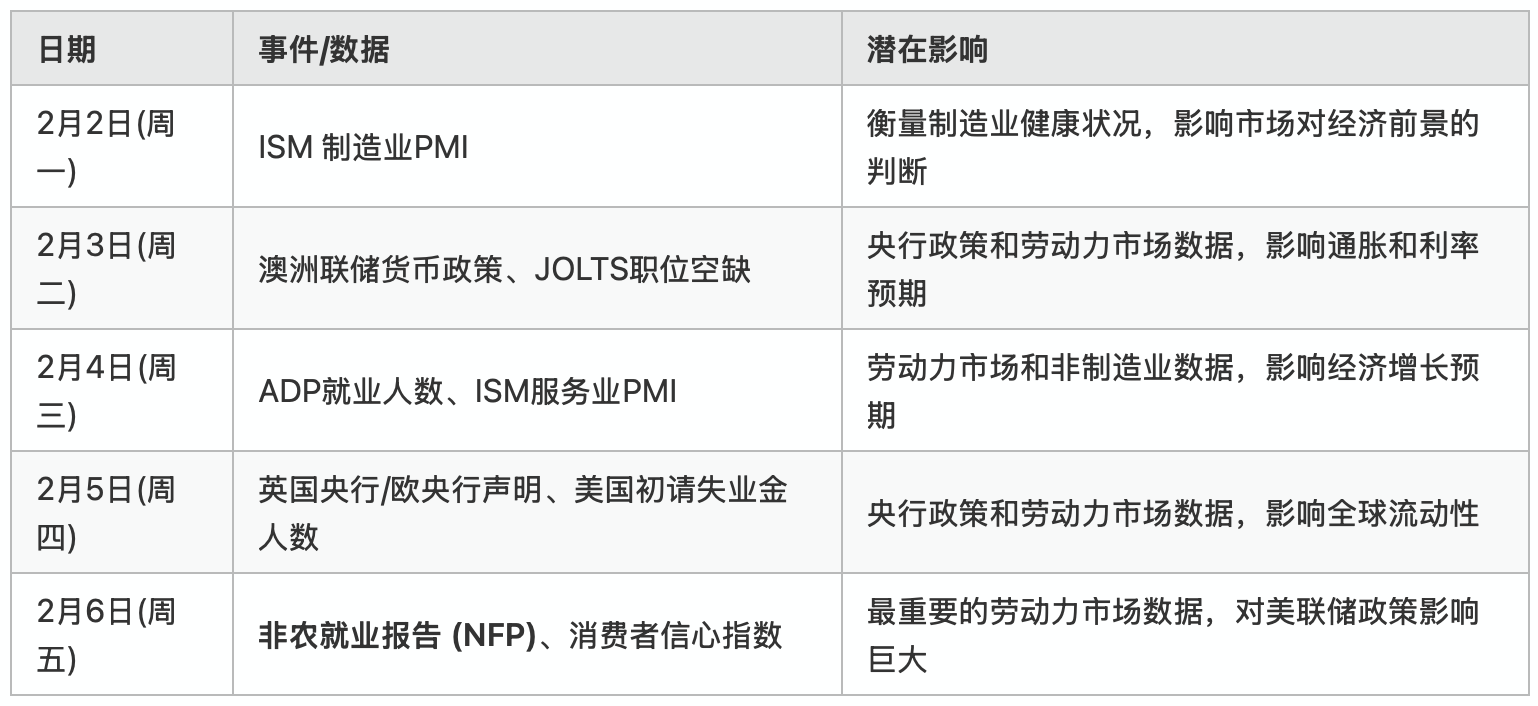
Among them, the non-farm payroll report (NFP) on Friday will be the focus of this week, and its results may significantly affect the market's expectations for the Federal Reserve's future monetary policy, thereby influencing the trends of the US dollar and gold.
Institutional views and future trend forecasts
Despite the recent sharp correction in gold prices, most institutions remain optimistic about the long-term prospects for gold:
• UBS: Maintains an optimistic outlook, predicting that gold prices may reach $6200 in March 2026 and stabilize at $5900 by the end of the year. UBS believes that the possibility of the Federal Reserve cutting rates at least twice in 2026 will put downward pressure on the US dollar, thereby driving up gold prices. Additionally, the increasing US debt and expansion of spending commitments also support gold.
• Citic Securities: Research report indicates that gold is expected to rise to $6000 per ounce in 2026.
Analysts generally believe that this sharp decline is not the end of the bull market, but a necessary adjustment after a rapid rise. The core appeal of gold as a safe-haven asset has not diminished, and uncertainties in geopolitics and macroeconomic factors (such as inflation pressures and central bank gold demand) may still drive gold prices to rebound and reach new historical highs in the future.
Conclusion
On February 2, 2026, the gold market experienced a significant decline, mainly influenced by geopolitical easing, a stronger US dollar, and technical sell-offs. In the short term, gold prices may continue to be under pressure, and investors should closely monitor various economic data this week during the 'Super Week', especially the non-farm payroll report. However, in the medium and long term, supported by expectations of Federal Reserve rate cuts, US debt issues, and ongoing geopolitical risks, gold still has the potential to rise. Investors should be wary of high volatility trading risks and pay attention to changes in market fundamentals and technicals.