

On August 24, the Kechuang innovative drug sector opened lower. As of 10:22, the “Innovative Drug New Species” Kechuang Innovative Drug ETF Huaitianfu (589120), which has higher upside volatility on the 20CM board, was down 4.04% versus its benchmark index.
On the funding side, the Kechuang Innovative Drug ETF Huaitianfu (589120) received an additional net subscription of RMB 13 million last Friday. As of the latest data, the ETF's margin balance has risen significantly from the previous day, with the latest margin balance approaching RMB 49 million!
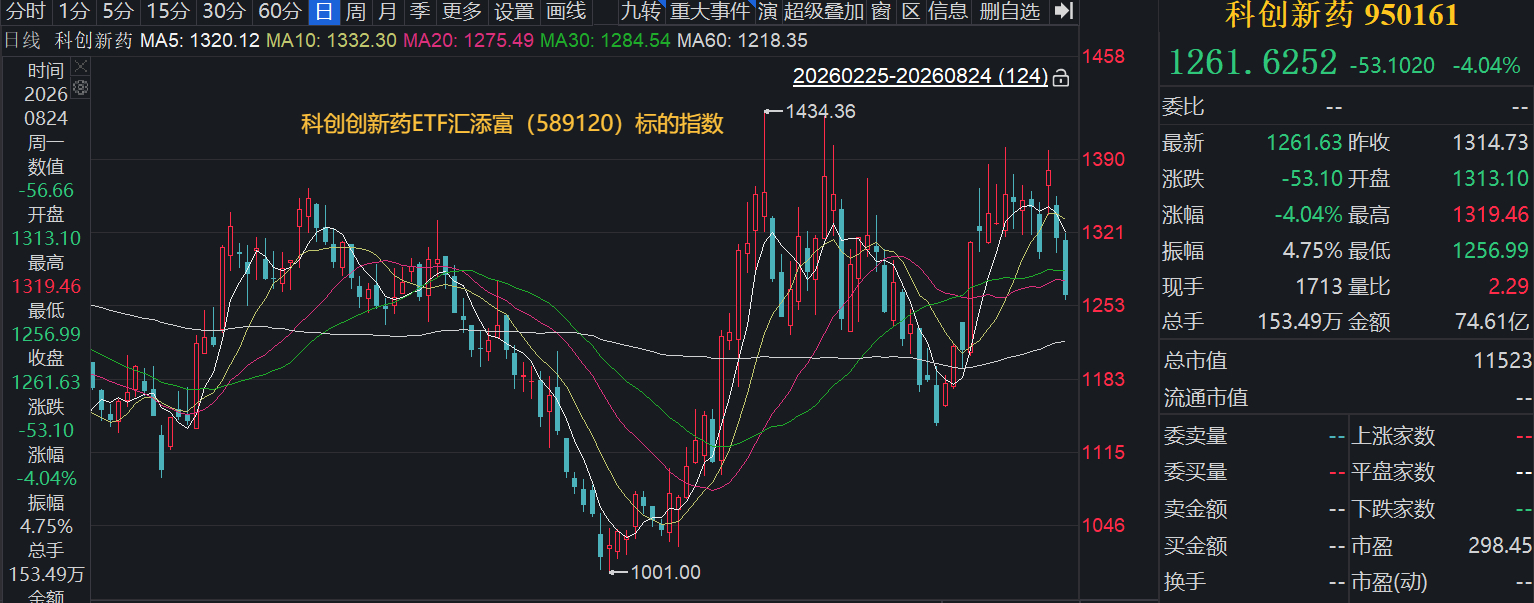
Most of the constituent stocks of the Kechuang Innovative Drug ETF Huaitianfu (589120) were trading in the red. Zekang Pharmaceutical fell by more than 7%, Junshi Bio and Rongchang Bio both dropped by more than 5%, and BeiGene fell by nearly 4%.
[Intraday price change range of constituent stocks of Kechuang Innovative Drug ETF (589120)]
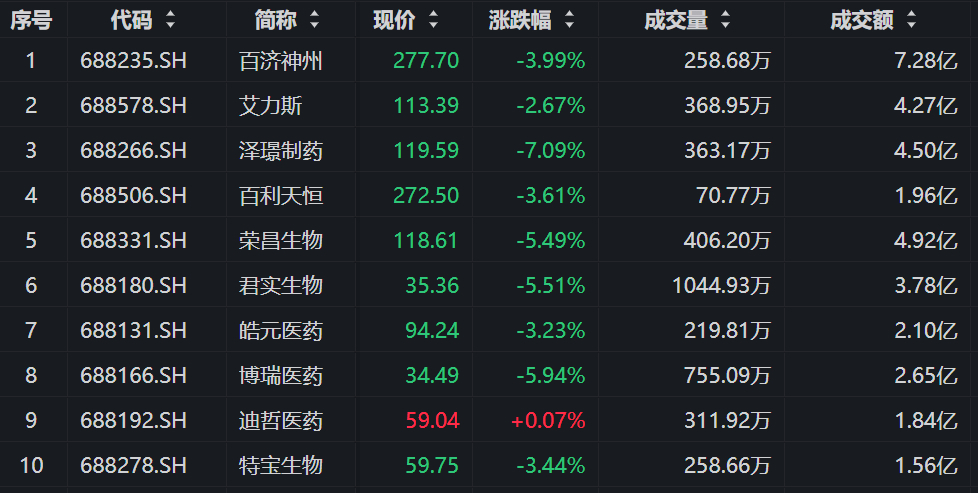
As of 10:23, constituent stocks are shown for illustrative purposes only and do not constitute investment advice.
In terms of industry news, in the past week (August 17 to 23), a total of 34 Category 1 innovative drugs were granted implied approvals to conduct clinical trials for the first time in China. Products cover siRNA, antibodies, small molecules, antibody-drug conjugates (ADCs), peptides, radiodiagnostic drugs, and more.
In addition, after market close last Friday, Dizhe Pharmaceutical announced that at the 2026 World Conference on Lung Cancer (WCLC), it will present the latest clinical research data of its independently developed novel lung cancer targeted drug Suwozhe? (suwo-tinib) in the non-small cell lung cancer (NSCLC) field in the form of a poster presentation.
It is worth noting that on July 14, 2026, Dizhe Pharmaceutical announced it had reached a licensing authorization agreement with AstraZeneca. AstraZeneca was granted the exclusive rights to develop and commercialize Suwozhe? worldwide, and the transaction is expected to be completed in the second half of 2026.
From an earnings perspective: after market close last Friday, CSPC Pharmaceutical released its semiannual report. The company achieved operating revenue of RMB 607 million, down 13.33% year over year. Net profit attributable to shareholders of the parent company reached RMB 134 million, up 66.71% year over year. As of 10:23, CSPC Pharmaceutical was up more than 9%.
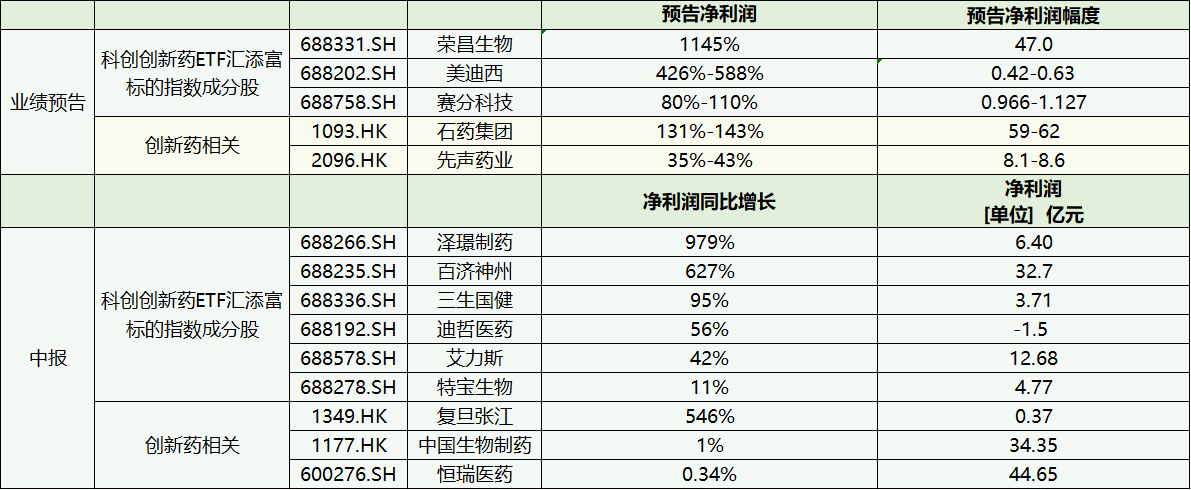
According to reports, the electronics sector is no longer a “single standout,” and balanced allocation has become a consensus. Billion-yuan private fund holdings show two trends: on the one hand, top-performing stocks have been increased by many well-known fund managers; on the other hand, institutional holdings are no longer concentrated in the electronics sector, but are distributed across industries such as non-ferrous metals, biopharmaceuticals, and machinery manufacturing.
Industry insiders say that after pooled capital cools off, companies’ earnings will become an important investment clue for the market going forward.
Recently, news that Moderna’s Phase III clinical trial of a personalized cancer mRNA vaccine achieved preliminary positive results ignited the pharmaceutical sector. Last week, we discussed in detail the significance of this event for tumor immunotherapy, as well as relevant domestic listed companies in the mRNA, cell & gene therapy, and innovative drug industrial chains. So what is the global competitive landscape for mRNA cancer vaccines? Where does the domestic development of mRNA tumor therapeutic vaccines stand? Today, we will explain this in detail.
[Domestic mRNA is at an early exploration stage, with a rich pipeline in development]
At present, the global leaders in mRNA cancer vaccines are Moderna and BioNTech. Moderna, driven by its INTerpath-001 study, was the first to complete Phase III clinical validation of the first mRNA cancer vaccine, and its R&D progress is at an absolute global lead in this field. Both companies’ mRNA cancer vaccine pipelines are structured in full-stage tiers, covering from Phase III to Phase I. Clinical data are expected to be read out progressively across different tumor types over the coming years.
Currently in China, there is no mRNA tumor therapeutic vaccine entering Phase III clinical trials yet, and the overall development is still at an early exploration stage. From the R&D company perspective, Cloudmine Innovative (YunDing) has the most clinical pipeline programs. Cloudmine Innovative’s personalized mRNA cancer vaccine EVM16 released its first-in-human (FIH) Phase Ia data at the 2026 AACR Annual Meeting: in 9 patients, 8 induced new-antigen-specific T-cell immune responses, and positive preliminary efficacy signals were observed. The fastest pipeline for a personalized mRNA vaccine in China is Hengrui’s RGL-270, indicated for non-small cell lung cancer.
[Chart: Domestic mRNA vaccine clinical progress]
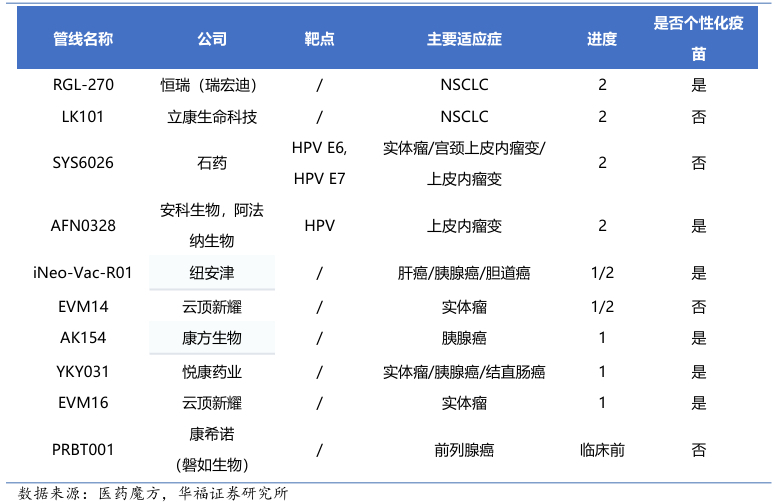
[AI4S empowers mRNA and opens a new paradigm for cancer treatment]
In this novel personalized mRNA cancer treatment regimen, AI4S plays an important role, mainly participating in the “design, screening, production scheduling, and clinical translation” steps. The core function of the drug in the body remains to induce T cells to recognize tumors after mRNA encodes new antigens.
Moderna disclosed that the design side of mRNA-4157 uses a series of fully integrated AI algorithms to read NGS sequencing data from tumor and blood samples, analyze patients’ tumor mutations, and predict up to 34 new antigens most likely to elicit immune responses. The algorithm can continue to learn from clinical data and immunogenicity data in the future to improve new-antigen screening capabilities.
According to Grand View Research data, the global AI drug R&D market is expected to grow steadily in terms of volume. The market size is expected to rise from USD 1.925 billion in 2024 to USD 9.170 billion in 2030, with a CAGR of 29.6% from 2024 to 2030.
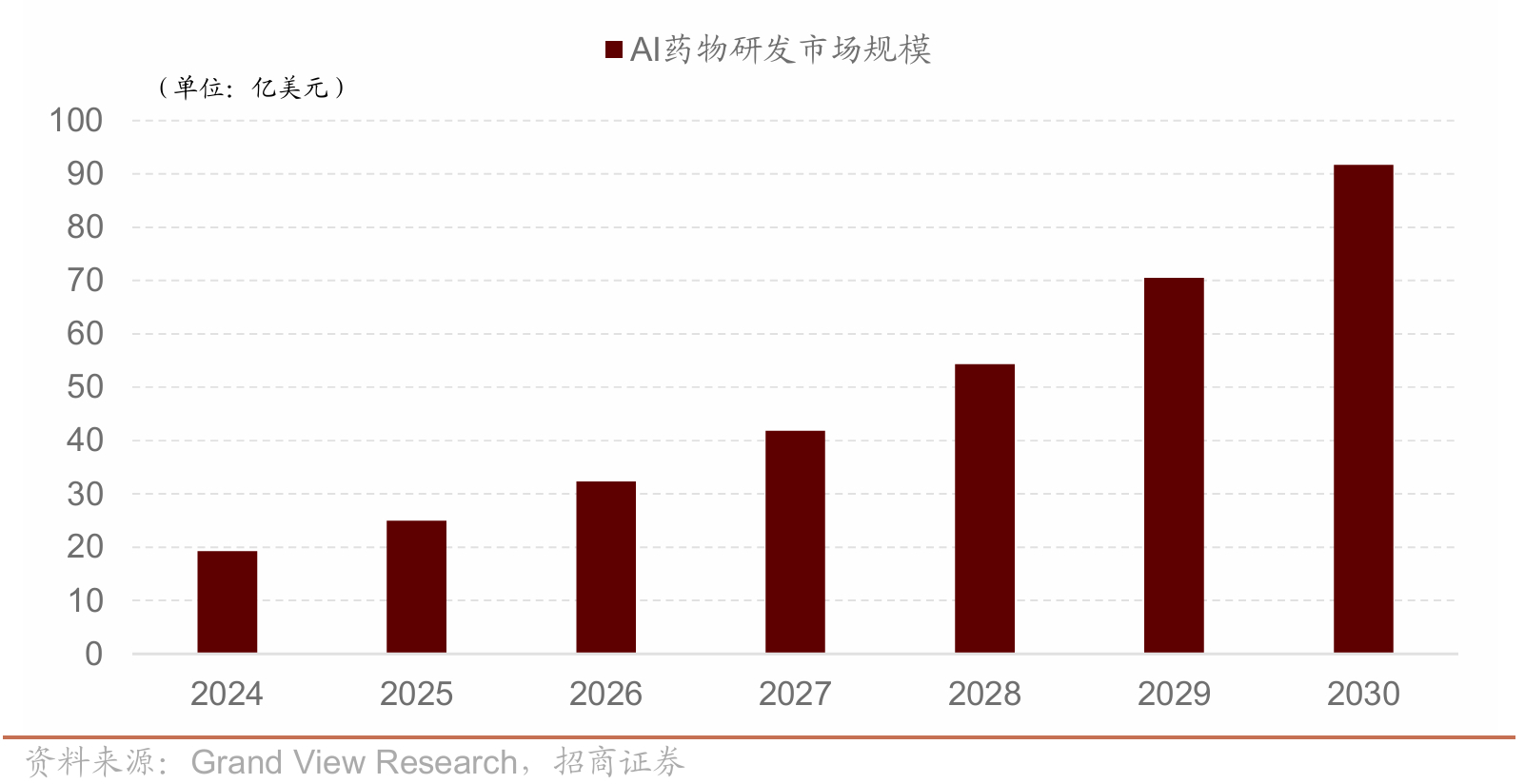
The growth momentum for AI drug R&D mainly comes from two aspects: first, rising R&D costs and high clinical failure rates among pharmaceutical companies are driving the use of AI for target discovery, improving the success rate of candidate molecule screening, and advancing drug optimization; second, advances in generative AI, multi-omics data, and protein structure prediction enable AI to extend from assisted screening to molecular design and efficacy prediction.
(Source: China Merchants Securities 20260823 (A-share Investment Strategy Weekly Report: Long-end pressure on US Treasuries still exists; focus on structural opportunities in A-shares))
Risk warning: Funds involve risks; invest with caution. We hereby remind investors to pay attention to the risk of premium/valuation spreads in secondary market trading prices. If investors invest blindly with products priced at an excessively high premium rate, they may suffer major losses. This material is for promotional purposes only and does not constitute any legal document. Investing involves risks. The fund manager undertakes to manage and use fund assets on the principles of honesty, creditworthiness, diligence and responsibility, but does not guarantee that the fund will generate profits or guarantee any minimum returns. When purchasing a fund, investors should read in detail legal documents such as (fund contract), (prospectus), and (fund product summary) to understand the fund’s specific circumstances. The performance of other funds managed by the fund manager and the past performance achieved by its investment personnel do not predict its future performance. This fund is issued and managed by E Fund Management Co., Ltd. Distribution agencies do not assume responsibility for investment, redemption, or risk management of the product. The Kechuang Innovative Drug ETF (E Fund) is a relatively high-risk product (Risk Level R4). It is suitable for investors whose risk tolerance assessment results are Growth-type (C4) and above, after applying the client–product risk level matching rules. For details, see the E Fund website. The price fluctuation limit for intraday trading of stocks listed on the STAR Market is 20%, but the price fluctuation limit does not apply on the first day when a company enters the delisting consolidation period, the first five trading days after its initial public offering, and other circumstances recognized by the SSE. STAR Market companies have relatively new business models, so the likelihood of performance fluctuations is higher and uncertainty is greater. Investors should pay attention to potential risks of stock price volatility and proceed cautiously. When investors apply for subscription/redemption of ETF fund units, the subscription/redemption agent securities firms may charge a commission at a rate not exceeding 0.50%, which includes relevant fees charged by the securities exchange, clearing/registration institutions, and others. For sales fees of other funds, please refer to the corresponding legal documents such as their prospectus and fund product summary.