

I recently went to Vietnam—spent a few days in Ho Chi Minh City. Only after getting there did I learn that 90% of small and medium merchants in Vietnam can directly accept Binance-scanned QR payments. It’s just like using WeChat Pay/Alipay back home.
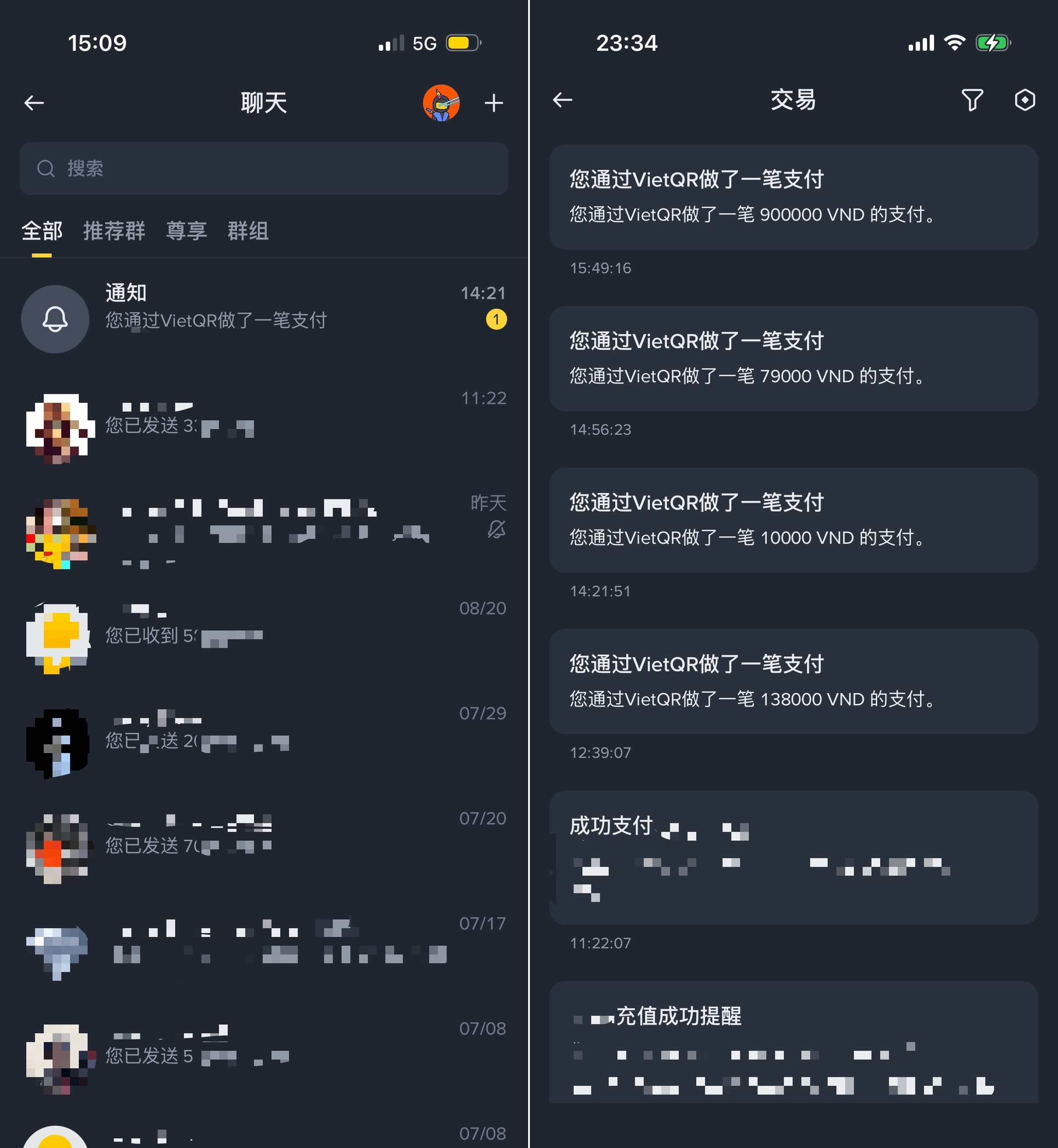
As a tourist, I paid multiple times across different scenarios—restaurants, coffee shops, shopping, massages, etc. Throughout, it was cash-free and smooth. I’d like to share it.
Overall process
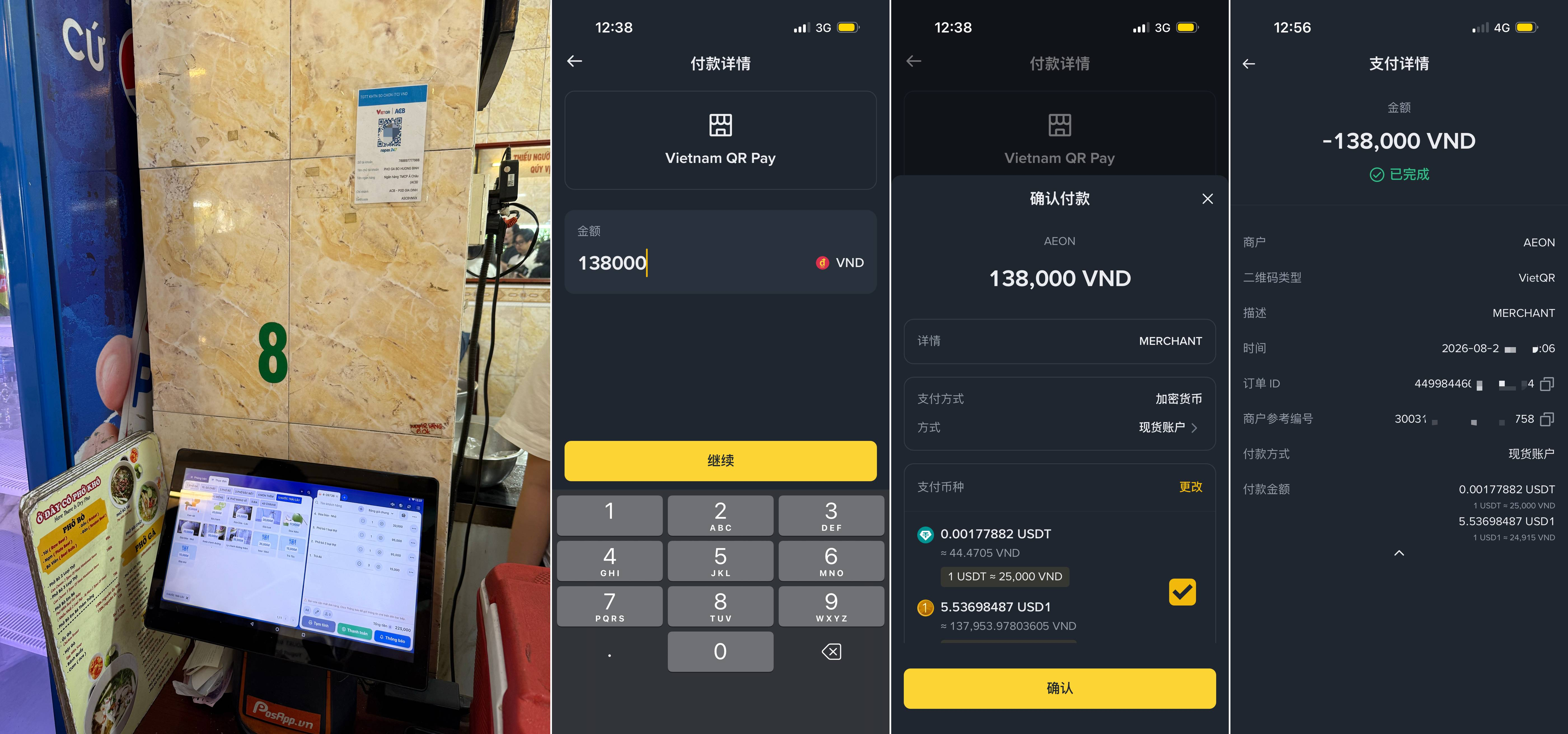
First, as a foreign tourist, I don’t need to exchange currency or carry cash. I can scan with Binance directly, preferably paying with stablecoins like USDT/USDC/USD1. I can also customize payment with tokens like BTC/BNB/Pepe. Payments settle in real time using the current exchange rate, without transaction fees;
Second, when I chatted with the merchants, I found they receive local legal tender (Vietnamese dong) directly. The whole process also doesn’t require them to understand what blockchain is, what stablecoins are, how OTC works, and so on.
Product/technical principles
I researched it—from a product design perspective, the process is roughly like this.
Binance has integrated two of Vietnam’s most important payment channels locally: one is VietQR, and the other is Momo (not China’s Momo app haha 😂).
Just from the name, you can tell VietQR has an extraordinary background. It sets the unified QR code payment standard for Vietnam. The operator behind it is NAPAS (National Payment Corporation of Vietnam)—definitely a top-tier ‘national team’ player, comparable to China UnionPay’s position. Nearly all mainstream banks in Vietnam have integrated the VietQR alliance, making interbank clearing and settlement convenient.
And Momo’s operating entity is M_Service JSC, headquartered in Ho Chi Minh City, one of Vietnam’s largest e-wallets, with licenses for e-wallets and payment intermediation issued by the State Bank of Vietnam. Momo not only provides merchant receiving, but also integrated capabilities such as coupons, memberships, and advertising/marketing—an all-people payment product (over 30 million users). Its position is comparable to China’s Alipay.
After years of development, the two payment rails VietQR + Momo have already covered 90%+ of offline merchants in Vietnam.
Therefore, as long as Binance Pay (Binance Pay) connects these two payment rails, it gains compatibility with a large number of merchants’ QR codes.
A pragmatic path
The payment experience discussed at the start of the article really caught my attention.
Users send stablecoins via Binance, and merchants receive local currency—just that simple.
Two words: elegant
As for the complex steps in between—calculating real-time exchange rates, deducting users’ stablecoins, completing fiat exchange (the intermediary is AEON), connecting to Vietnam’s payment network, ensuring merchants receive the payment instruction, and so on—everything can be handled by Binance and its partner companies.
I previously looked at some products in the PayFi space. Over the past two years, there have also been startups in this area. I think the most critical thing is: how to secure more real offline/online merchants.
It’s impossible to replicate the success path of WeChat Pay/Alipay, because they each have specific historical backgrounds. Alipay was launched in 2003, initially as a trust-guarantee tool within the Taobao ecosystem—solving the mutual lack of trust between merchants and consumers. WeChat Pay, backed by a social graph of hundreds of millions of users. Years later, once stablecoins started becoming popular, these two tracks were no longer able to squeeze into that space.
Binance Pay’s approach is a practical and effective path. Binance doesn’t need to negotiate with merchants one by one to integrate and educate them to accept stablecoins. It makes the learning cost required from both users and merchants nearly zero.
Benefits for Vietnam
Another question: why does Vietnam support this?
The benefits are obvious: it can attract tourists from around the world. No need to withdraw cash from bank ATMs, no need to exchange money, and no need to carry cash—this really saves a lot. For merchants, this payment method adds absolutely no cost. Instead, it covers Binance’s 300+ million users, making it a pure incremental market.
There’s another layer to it: VietQR and Momo’s move effectively ‘opened a door’ by adding stablecoins as one option within their payment networks. In the future, they can also onboard more assets, making Vietnam’s payment network broader and more robust.
Think of it like moving it into China: it’s like how WeChat Pay/Alipay also opened up C-end asset/currency types. If an American goes to China to eat out, when scanning to pay, they can pay in USD directly, while the Chinese restaurant receives RMB. The n steps in between are handled by WeChat/Alipay together with the banks.
An alternative use case
Besides consuming at local merchants, I also found an interesting scenario offline with the nut @Lsssss1106.
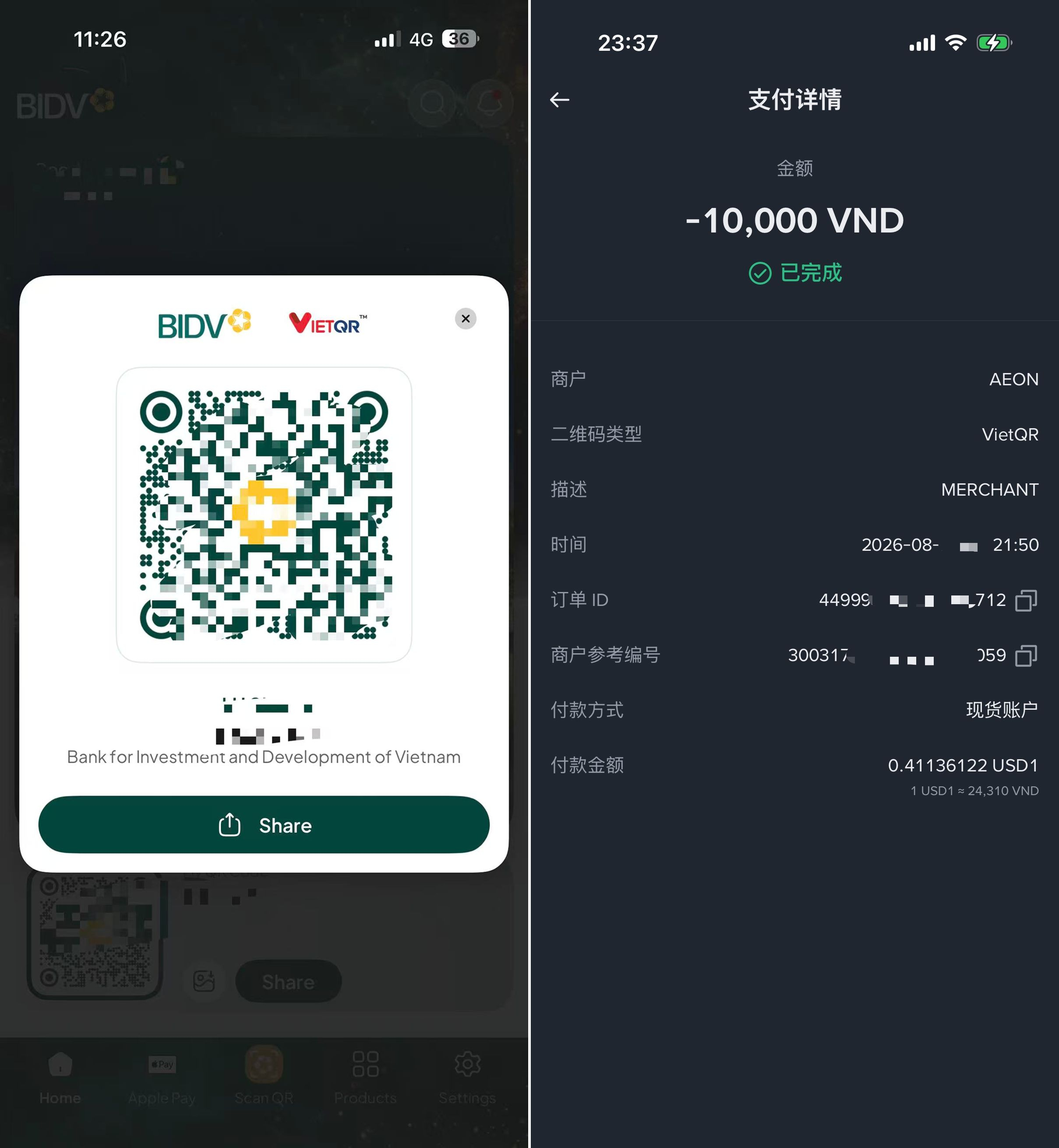
He got a local bank card in Vietnam. The app for that card also supports QR code receiving. So I opened the Binance app, scanned to transfer to his bank card 10,000 Vietnamese dong—and it was credited instantly.
It’s basically like cashing out directly from Binance to a bank card—quite interesting.
Can it be replicated in other countries?
When I experienced Binance Pay offline, I thought of my big cousin @CZ , who often meets leaders and central bank governors from many countries. Explaining blockchain and stablecoins to them is also very meaningful.
Besides Vietnam, Binance Pay also has similar partnerships in the Philippines, with channels via QRPH and InstaPay. When Vietnam and the Philippines have run this model end-to-end, can it be continuously replicated across regions like Japan and Korea, Southeast Asia, South America, Africa, the Middle East, and Central Asia?
Sister @Yi He In the first half of the year, it was said that Binance’s target is to grow from 300 million users to 3 billion. Besides trading/crypto speculation, what other viable paths are there? Using stablecoin payment networks as the entry point to give ordinary people a better user experience is a highly valuable path.
Binance Pay Tips
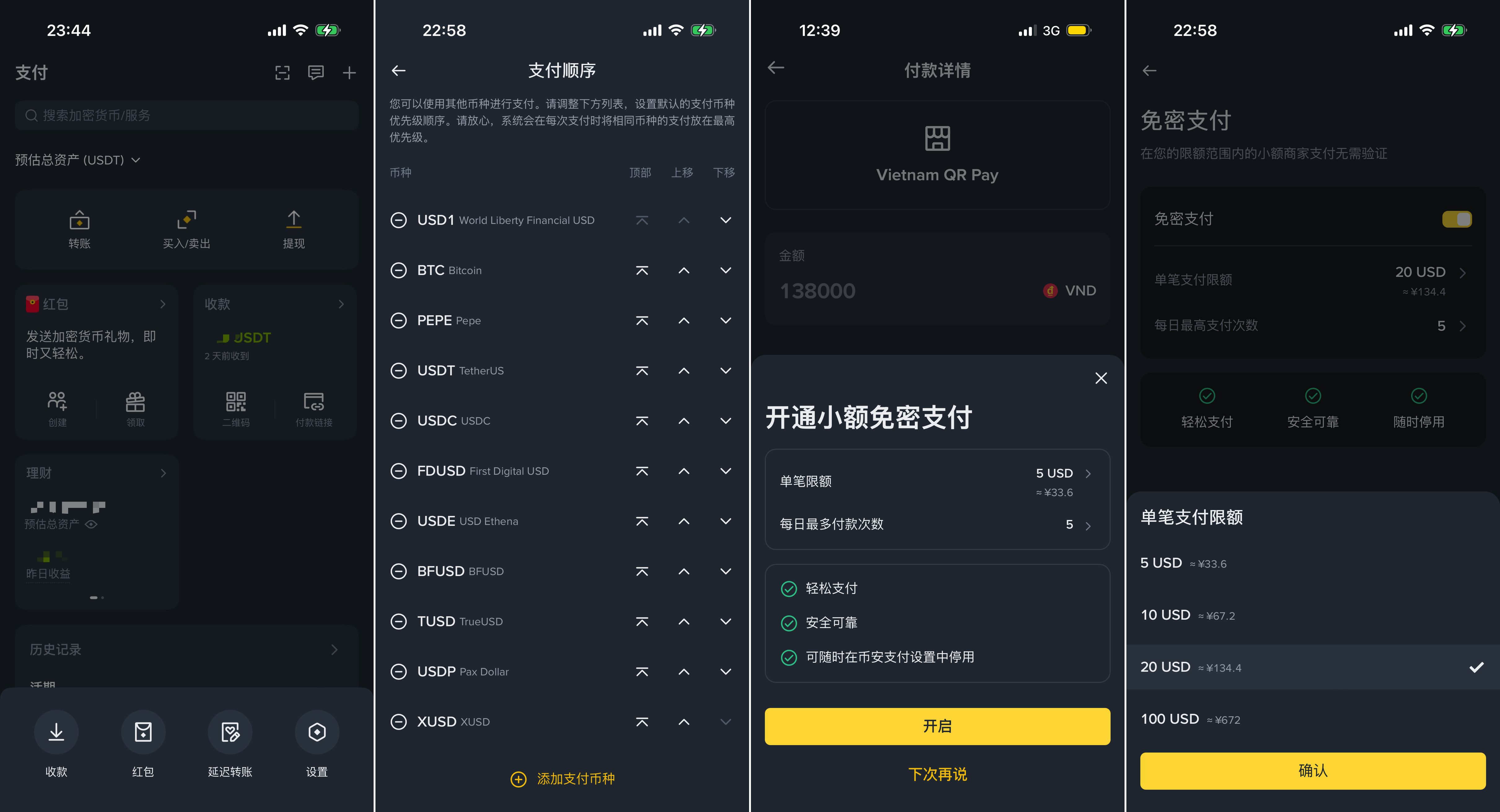
From the ‘+’ at the top-right of the payment screen, you can make more advanced settings for Binance Pay.
For example, you can customize the payment order. Recently I held USD1 in Binance, so I moved USD1 to the top. For another example, add BTC as a payment currency: even if someone holds their whole portfolio in BTC, they can still pay with BTC in daily life. If there’s a refund, everything is returned in USDT.
For example, enable password-free payments: within 100 USD, there’s no need for identity verification, resulting in a smoother experience.
Within Vietnam, there are monthly limits of $50k and daily limits of $5k. Per transaction, the maximum is $5k and the minimum is $0.39—more than enough for everyday life.
Summary
From the time Bitcoin was introduced over 17 years ago, its ‘peer-to-peer electronic cash system’ (digital gold) didn’t really become a reality. Instead, stablecoins (digital dollars) became the primary bridge connecting Crypto and the real world.
In the past few years, stablecoin payments have been fully adopted within Crypto. But to expand to society at large, Binance Pay’s practice in Vietnam showed me a practical and replicable path. Looking forward to rolling it out in more countries.