
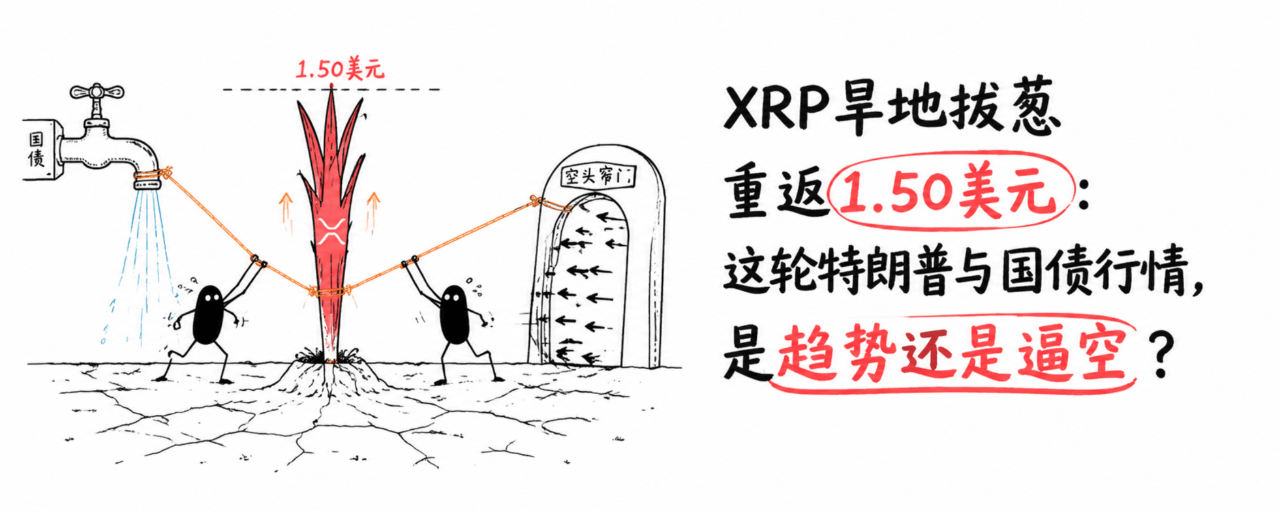

After lying dormant for a long time, $XRP finally moved. On August 17, it was still hovering around $1, but by August 24 it had returned to roughly $1.50—an almost 50% weekly gain. This is the strongest XRP weekly performance since the U.S. election rally in November 2024. Its market cap has also climbed back to around $93 billion, and trading volume temporarily surged into the billions. Honestly, even many veteran players were caught a bit off guard by this pace.
But here’s the question: why would it suddenly spike?
The answer isn’t in any single piece of good news. Instead, it’s a collision of several forces—macroeconomic liquidity, expectations for U.S. regulation, short covering, and large-holder buying—all resonating at almost the same time.
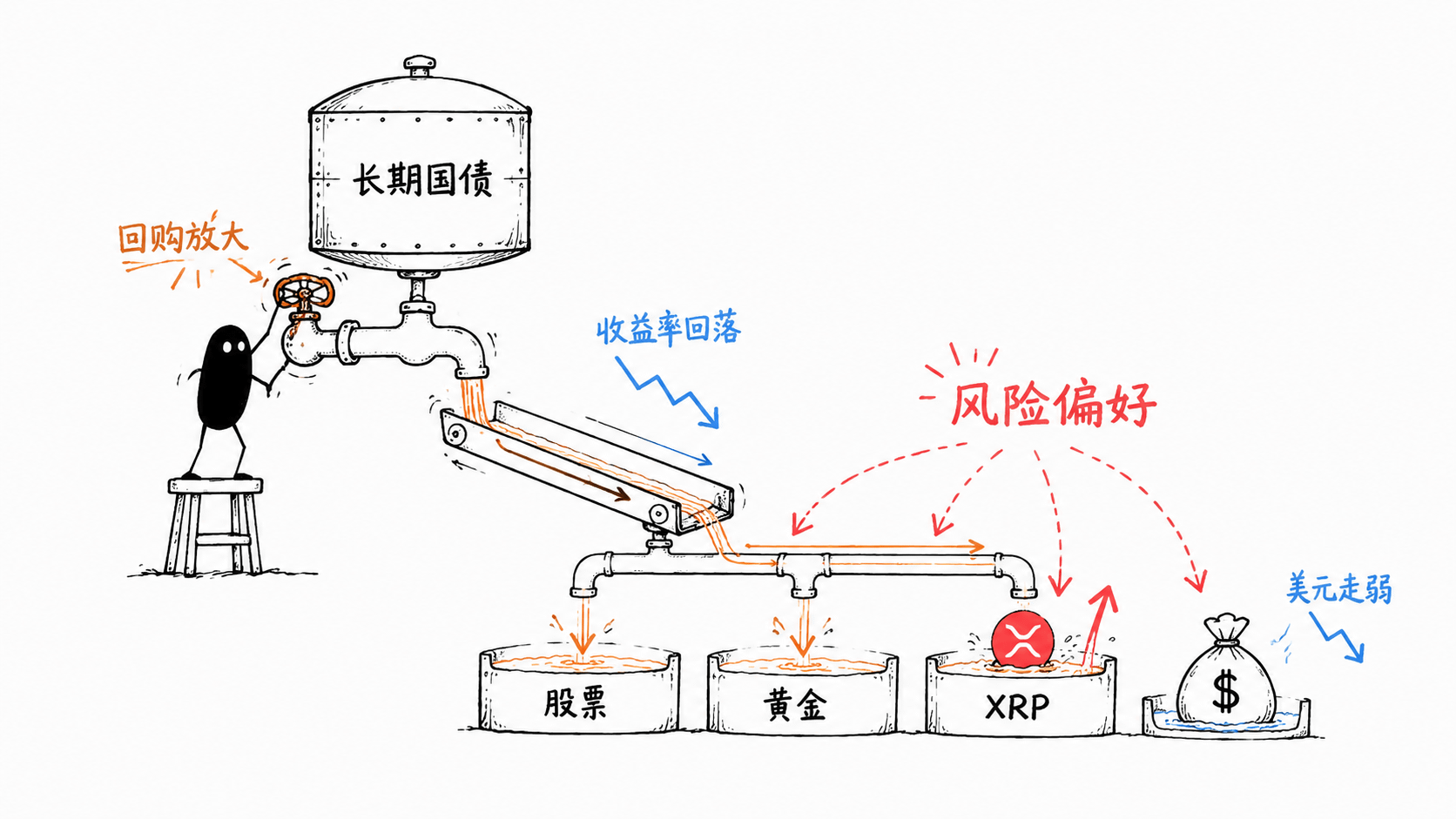
The match that truly sparks things may not be in the crypto world, but in the U.S. Treasury market. On August 19, the U.S. Department of the Treasury announced it would raise the buyback liquidity support for 10- to 30-year Treasuries—from up to $2.0 billion per operation to at least $4.0 billion—effective starting in September. After the news broke, long-term U.S. Treasury yields fell, the dollar weakened, and risk or scarce assets such as stocks, gold, and crypto all got a boost.
In the market, some people interpret this move as a form of “soft yield curve control”—when long-term yields rise too fast, the Treasury uses buybacks to provide the market with extra demand and ease selling pressure. But it’s worth clarifying: Treasury buybacks are not the same as the Fed’s QE, and they are not the U.S. formally initiating yield curve control. The official stance is still aimed at improving liquidity for existing notes and managing debt. In other words, what the market is truly betting on is that in the future, the U.S. government may be more proactive in pushing down the cost of long-term financing.
For the crypto market, a decline in long-term yields lowers the opportunity cost of holding non-yielding assets, so risk appetite can easily recover. XRP happens to sit at the intersection of low price, crowded shorts, and rising regulatory expectations—so it becomes one of the concentrated targets for capital attacks. At this level, it really is easy to be selected.

Coincidentally, on August 19, Trump also met with crypto and traditional finance executives at the White House, where he publicly urged Congress to pass a “fair version” of the CLARITY Act. The core of this bill is to clarify when digital assets are treated as securities and when they are treated as commodities, as well as the regulatory boundaries between the SEC and the CFTC.
For XRP, this matter carries unusual weight. Over the past few years, XRP’s valuation discount has largely come from the U.S. regulatory status being unclear for a long time. If the CLARITY Act can truly be implemented, at least in theory, institutions would have far fewer compliance concerns regarding custody, market making, trading, and product allocation.
But investors also need to stay calm. Trump’s call—doesn’t mean the bill has already passed. So far, the related legislation is still being debated in the Senate, and there are plenty of procedural obstacles. This rally is trading on “increased probability of approval,” not a finalized certainty.

On-chain data also suggests that this rally is not entirely driven by retail FOMO. Statistics indicate that wallets holding between 1 million and 10 million XRP have recently cumulatively increased their holdings by about 380 million XRP. Large transfers of over $1 million per transaction have also noticeably increased, while the amount of XRP flowing to Binance has actually decreased. Usually, this kind of pattern means some large holders are reducing potential selling pressure, or transferring coins to long-term holding.
On the other side, before XRP even started, it had already broken below $1, and the market had accumulated a lot of bearish positioning. Once macro and regulatory positives show up together, when the price breaks through key resistance, shorts are forced to cover, and the rhythm becomes: spot buying drives the breakout, the breakout triggers short stop-losses, and stop-losses then accelerate the rally. It’s a bit like a room full of people who are bearish, all trying to squeeze out through a narrow door at the same time— the more they squeeze, the more frantic it gets.

So this rally has both genuine capital pushing it and an obvious short-term squeeze component. You can’t simply attribute the entire rise to “institutional inflows.”
Next, personally, I’ll watch a few price levels. In the short term: XRP surged quickly from $1 to around $1.50, profit-taking has clearly increased, and volatility will likely remain high.
$1.50 is the psychological battleground between bulls and bears right now. Above that, $1.60 to $1.68 is the recent high area and a potential supply/selling pressure zone. Below, $1.40 to $1.45 is the first pullback observation area, while $1.27 to $1.30 is an important structural support after a breakout. Going further down, around $1 is the mid-term dividing line between bulls and bears—and also the starting point of this rally.
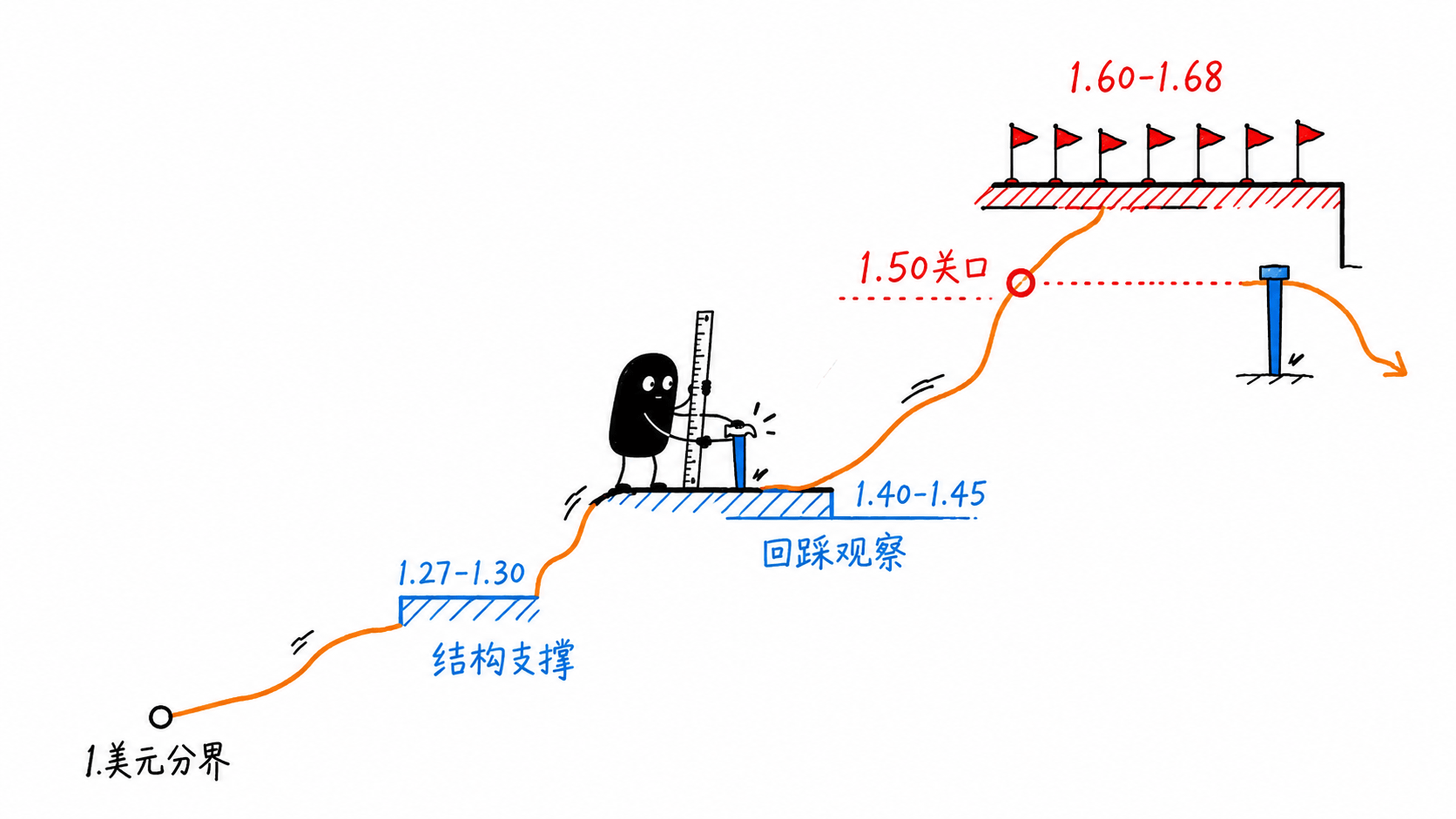
If, after trading activity cools down, it can still hold between $1.40 and $1.45, it would indicate that the rally is shifting from simply squeezing shorts to a new price support platform. Conversely, if it quickly falls below $1.30, then this rally may rely more on short-term sentiment, and afterward it will likely need to retest lower support levels.
A weekly gain of nearly 50% certainly grabs attention, but what’s even more worth watching is the change in the underlying logic. The crypto market has begun directly trading U.S. fiscal and bond policy; the U.S. digital-asset regulatory framework has returned to the political agenda; a convergence formed between XRP whale buy orders and short covering; and it has once again become a high-volatility target among large-cap altcoins.
Do you think this XRP rally is the beginning of a new trend, or just a short-term squeeze driven by macro liquidity?
This text is only compiled as market information and personal views, and does not constitute any investment advice. Crypto assets are highly volatile; please conduct independent research and control your position size.