


If you want to understand how money truly flows in the crypto market, one concept is impossible to ignore: Market Makers. Knowing what a Market Maker is and how MM operate in crypto is not optional knowledge-it’s a prerequisite for anyone who wants to trade or invest with clarity instead of emotion.
At their core, Market Makers are the invisible engines that keep markets liquid, prices tradable, and transactions smooth, especially for retail investors who lack massive capital.
What Is a Market Maker? The Foundation You Must Understand
A Market Maker (often abbreviated as MM) is a professional individual or organization with substantial capital and advanced trading infrastructure. Their primary responsibility is to provide liquidity and maintain continuous trading activity for crypto assets.

They do this by placing buy orders (bids) and sell orders (asks) at multiple price levels simultaneously. This behavior narrows the price gap between buyers and sellers, allowing the market to function efficiently instead of stalling during periods of low demand or panic.
Imagine wanting to buy 1,000 tokens of a new project, but the order book only shows 500 tokens for sale. Without a Market Maker, you either wait or accept a much higher price for the remaining tokens. With an MM involved, they can instantly sell the remaining supply from their inventory, completing your order at a reasonable price and preventing severe slippage.
In traditional finance, Market Makers have existed for decades. Crypto simply adapted this model to a 24/7, highly volatile, and largely unregulated environment.
A Deeper Look at the Role of Market Makers in Crypto
The Core Functions of a Crypto Market Maker
Liquidity is the lifeblood of any market, and Market Makers ensure it never dries up. By always standing ready to buy or sell, they guarantee that traders can enter and exit positions without waiting.
They also reduce the spread between bid and ask prices. A tighter spread directly lowers transaction costs for everyone involved, making the market more efficient and attractive.
During extreme volatility, Market Makers often act as shock absorbers. When fear-driven selling hits the market, they may place strategic buy orders to prevent flash crashes that could permanently damage a project’s credibility.
Finally, strong liquidity makes a project investable at scale. Institutional funds and large traders rarely touch assets with shallow order books. Without Market Makers, many crypto projects would never attract serious capital.
The Controversial Question: Do Market Makers Manipulate Prices?
The topic of Market Makers in crypto is often tied to accusations of price manipulation, especially “pump and dump” schemes. The reality is more nuanced.
Because crypto markets are still young and regulation is limited, some unethical Market Makers have abused algorithmic trading to create artificial price momentum, trapping inexperienced traders. Allegations surrounding DWF Labs and its involvement with YGG trading activity in 2023 are often cited as an example.
That said, reputable Market Makers typically earn far more from long-term spread capture and service agreements with projects than from risky manipulation. Damaging their reputation would cost them access to future partnerships, which is far more expensive than any short-term gain.
How Do Market Makers Actually Make Money?
Market Makers operate on a simple but powerful business model.
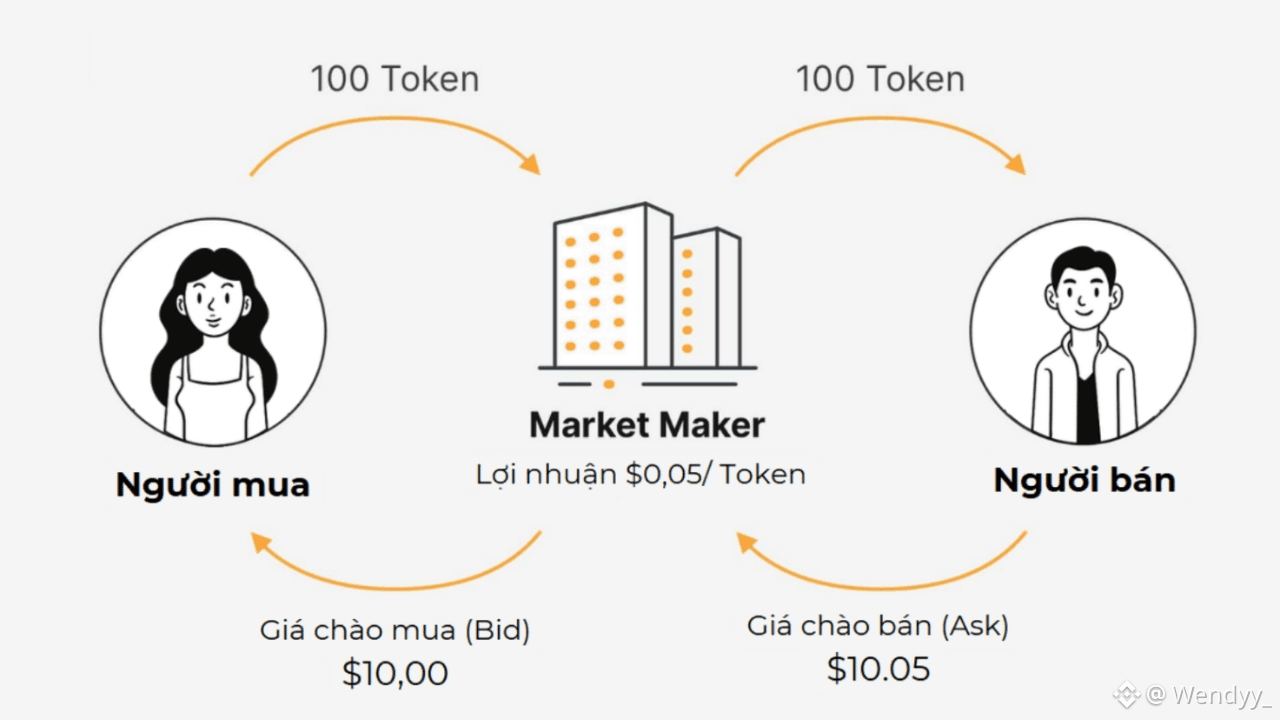
They continuously place buy orders slightly below the market price and sell orders slightly above it. The difference between these prices is known as the spread. By executing thousands-or even millions-of small trades using high-frequency algorithms, those tiny spreads compound into consistent profits.
Automation is critical. Advanced trading systems allow MMs to react in milliseconds, adjusting positions as volatility, volume, and sentiment shift throughout the day.
Common Types of Market Makers You’ll Encounter
In traditional finance, Market Makers operate in stock and forex markets under strict oversight from regulators like the SEC. Crypto Market Makers, by contrast, work across centralized exchanges such as Binance, navigating nonstop trading and extreme volatility.
Then there is the DeFi evolution: Automated Market Makers. AMMs like Uniswap remove the order book entirely. Instead, prices are determined by liquidity pools and mathematical formulas such as x × y = k, allowing anyone to become a liquidity provider.
How to Spot a Project Backed by Market Makers
Projects with active Market Makers tend to leave visible clues. Liquidity remains deep even during volatile periods. Order books show consistent activity with similarly sized trades appearing at regular intervals-often a sign of trading bots at work.
On-chain analytics can also help. Tools like Nansen and Arkham allow investors to track large wallets associated with Market Makers and observe token flows to and from exchanges.
The Giants Dominating Crypto Market Making
A handful of firms control a significant portion of crypto liquidity today.
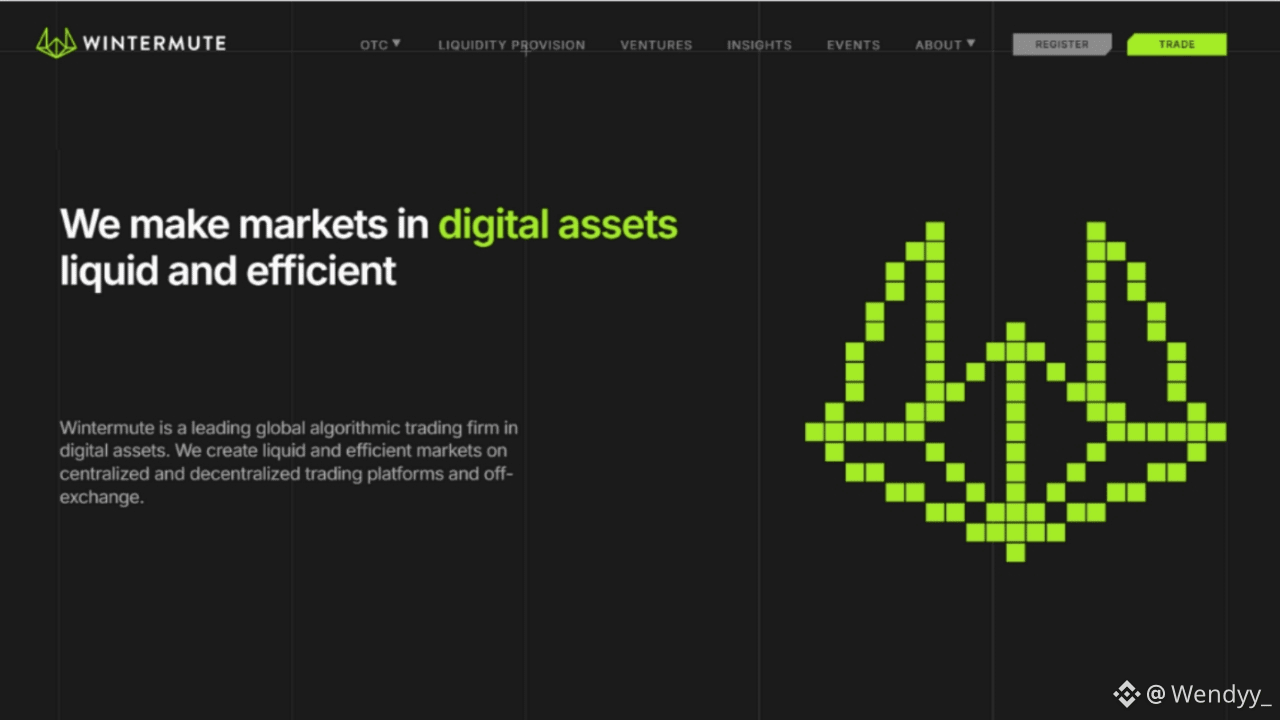
Wintermute is widely regarded as one of the most influential players, supporting hundreds of trading pairs across major exchanges. Jump Trading brings deep expertise from traditional finance into digital assets. Cumberland, a subsidiary of DRW, specializes in large OTC trades for institutional clients.
Final Thoughts
So, what is a Market Maker, and why does MM matter in crypto?
Despite their controversial reputation, Market Makers are not optional participants. They are infrastructure. Without them, liquidity would vanish, spreads would explode, and most retail traders would suffer far worse execution on every trade.
Understanding how Market Makers operate doesn’t just make you more informed-it makes you a more resilient investor in a market where structure often hides beneath volatility.
This article is for informational purposes only. The information provided is not investment advice