

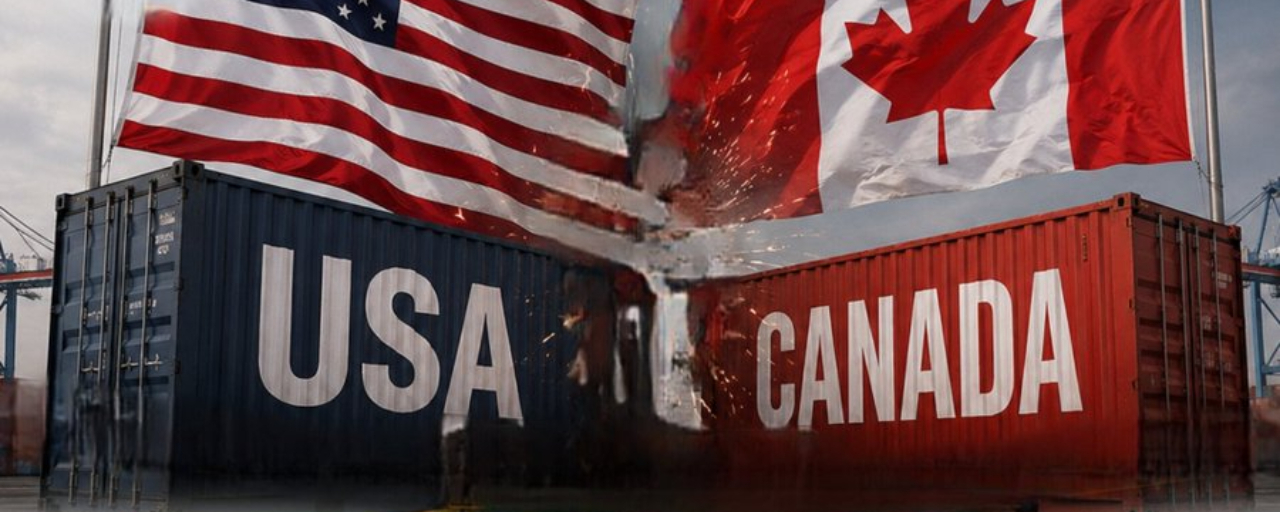

Economic relations between Canada and the United States have entered a new phase of tension, after Canadian Prime Minister Mark Carney said that his country is in a "trade war" with the United States, following the collapse of trade talks between the two countries and the escalation of reciprocal tariffs.
How did the crisis begin?
The latest escalation came after trade talks aimed at reaching an agreement to ease the impact of tariffs failed. Following the collapse of the negotiations, the U.S. administration imposed a 50% tariff on about $20 billion worth of Canadian imports—measures that affect a range of Canadian products.
Carney believes that the United States’ latest demands went beyond traditional trade disagreements, especially given that the Canadian government considered some demands to be a threat to its sovereignty and its ability to sign trade agreements with other countries. That is why Ottawa chose not to offer additional concessions and instead responded with countermeasures.
Canada retaliates in kind
Carney said that Canada will, in turn, impose retaliatory tariffs on a number of American products starting September 8, 2026, under the principle of “dollar for dollar.” The measures will cover sectors such as steel, dairy products, electronics, appliances, and agricultural machinery and equipment.
The Canadian government is trying, through this step, to pressure Washington to return to the negotiating table while also protecting Canadian companies and workers affected by the U.S. tariffs.
Why is this confrontation considered dangerous?
The danger of the crisis lies in the extent of economic interdependence between the two countries. The United States and Canada are among the world’s most trade-connected economies, with hundreds of billions of dollars flowing between them in trade every year.
The high tariffs are expected to increase production and import costs, which may be reflected in the prices of goods, consumers, and businesses in both countries. Some industrial and agricultural sectors may also face significant pressure, especially companies that rely heavily on the U.S. market.
Can the crisis evolve?
The next steps depend largely on whether Washington and Ottawa are willing to return to negotiations. Continued mutual tariffs for a long period could disrupt supply chains, raise company costs, and reduce investment.
The crisis also puts the future of the North American trade agreement under pressure, at a time when Canada is trying to reduce its economic reliance on the U.S. market and diversify its trade relationships with other countries.
Summary
Carney’s statement that Canada is in a “trade war” with the United States reflects the scale of the current escalation, not just a passing trade dispute. If Washington imposes new tariffs and Ottawa responds with retaliatory measures, it opens the door to a phase of mutual economic escalation.
However, a trade war does not necessarily mean a permanent break; the economic interests of both countries may ultimately drive them back to negotiations and to seeking a settlement. But the longer the tariffs last, the higher the cost of confrontation becomes for businesses and consumers in both countries.
The picture is clear now: Canada chose confrontation over concession, and the United States has not yet shown any willingness to back down. The biggest question is: who will bear the cost of this trade war if it lasts for months or years?$BTC $ETH

