
Z O N E P R I M E
141 Posts

Z O N E P R I M E
Crypto Explorer | Alpha Seeker | Charts & Chill Vibes | Let's in the Zone Run
Open Trade
Frequent Trader
10.1 Months
203 Following
3.1K+ Followers
1.2K+ Liked
Posts
Portfolio
All
Quotes
PINNED
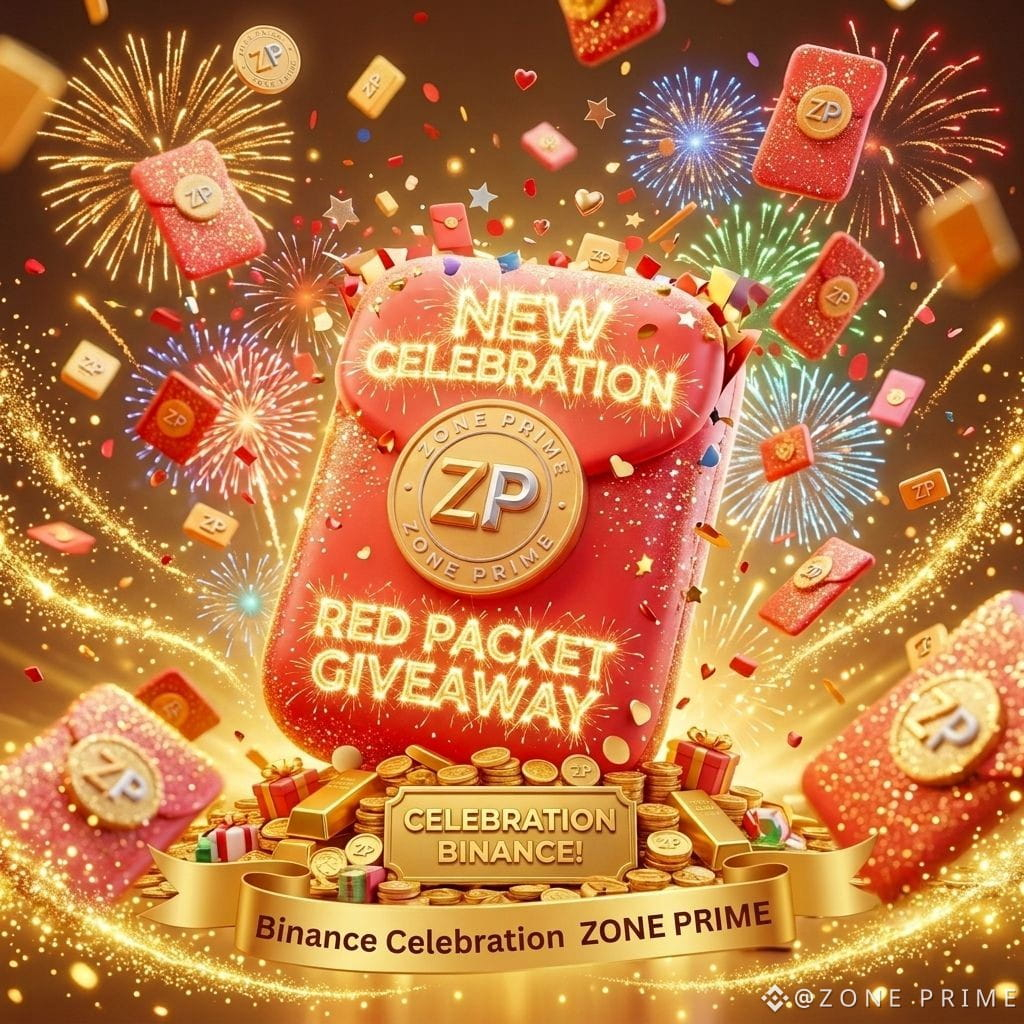
🎉🎁 ZONE PRIME BTC SURPRISE DROP! 🎁🎉
✨ The Red Packet is full and ready to open! ✨
👇 Simple Steps to Participate 👇
❤️ Follow ZONE PRIME
🔁 Like & Share
💬 Comment “BTC”
🚀 Stay active for the next reward round!
#BTC #Crypto #ZONEPRIME #RedPacket #BİNANCE
✨ The Red Packet is full and ready to open! ✨
👇 Simple Steps to Participate 👇
❤️ Follow ZONE PRIME
🔁 Like & Share
💬 Comment “BTC”
🚀 Stay active for the next reward round!
#BTC #Crypto #ZONEPRIME #RedPacket #BİNANCE
ok

楠楠nannan势不可挡
·
--
As night falls, set down all the fatigue of the day. Make peace with yourself—truly. $币安人生

ok

远方1688 BNB
·
--
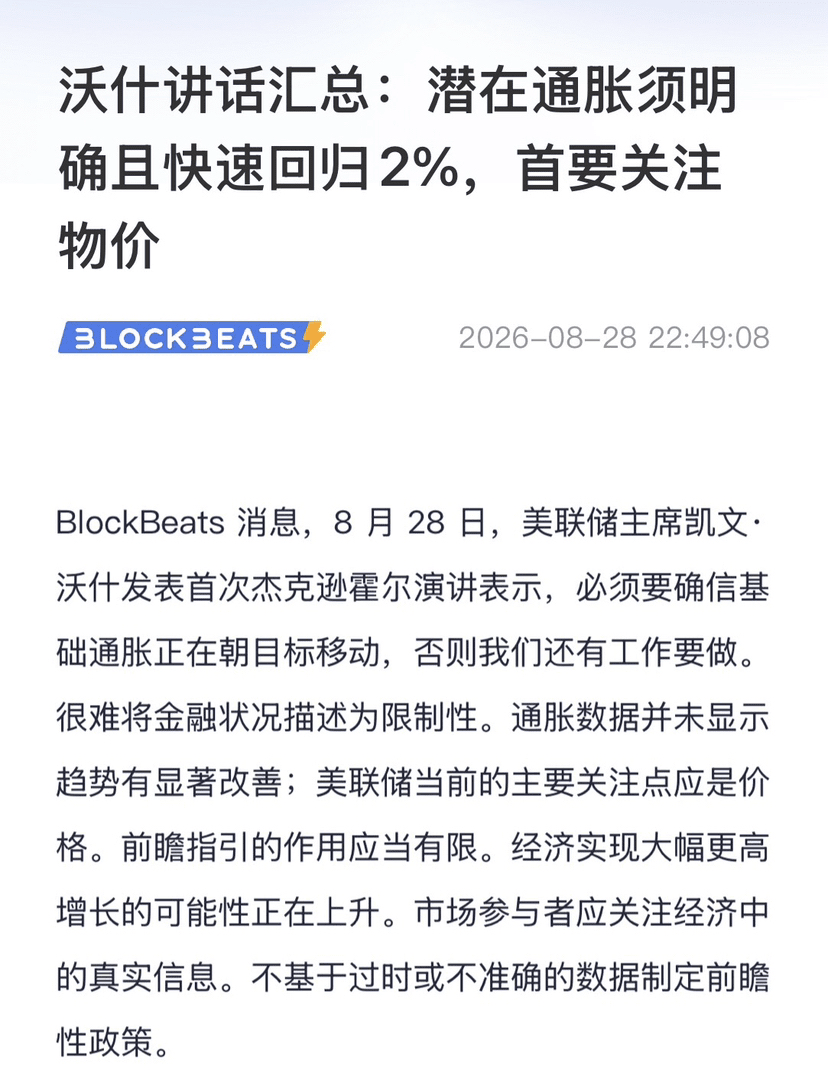
Don’t be optimistic and interpret Vosh’s remarks as a straightforward positive for rate cuts this time.
He clearly stated that the 2% inflation target will not change, but the current data is not yet sufficient to prove that inflation is returning to 2% quickly. This is crucial.
What the market wants to trade most right now is a rate cut—but what the Fed truly cares about is inflation.
If the subsequent PCE and CPI data continue to improve, expectations for easing will naturally heat up;
but if inflation proves to be erratic, rate-cut expectations will be repriced just the same.
So at this stage, I actually think we should stay a bit cautious.
The market can price in rate-cut expectations early, but before liquidity truly turns more accommodative, expectations are ultimately just expectations.
The hotter the market has been recently, the more you can’t look at only prices—the macro story hasn’t really run its full course yet.
He clearly stated that the 2% inflation target will not change, but the current data is not yet sufficient to prove that inflation is returning to 2% quickly. This is crucial.
What the market wants to trade most right now is a rate cut—but what the Fed truly cares about is inflation.
If the subsequent PCE and CPI data continue to improve, expectations for easing will naturally heat up;
but if inflation proves to be erratic, rate-cut expectations will be repriced just the same.
So at this stage, I actually think we should stay a bit cautious.
The market can price in rate-cut expectations early, but before liquidity truly turns more accommodative, expectations are ultimately just expectations.
The hotter the market has been recently, the more you can’t look at only prices—the macro story hasn’t really run its full course yet.

ok


币盈Anna
·
--
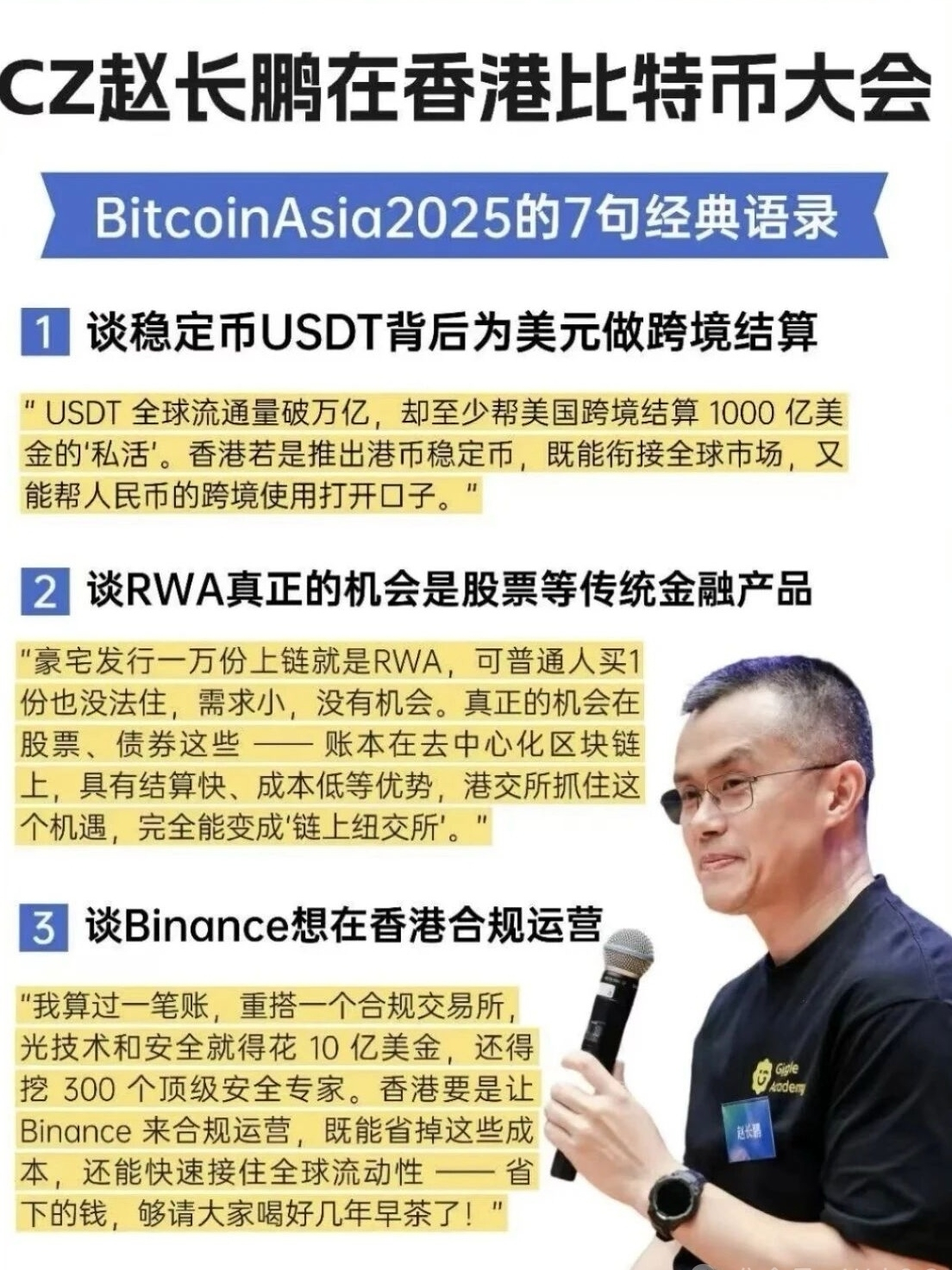
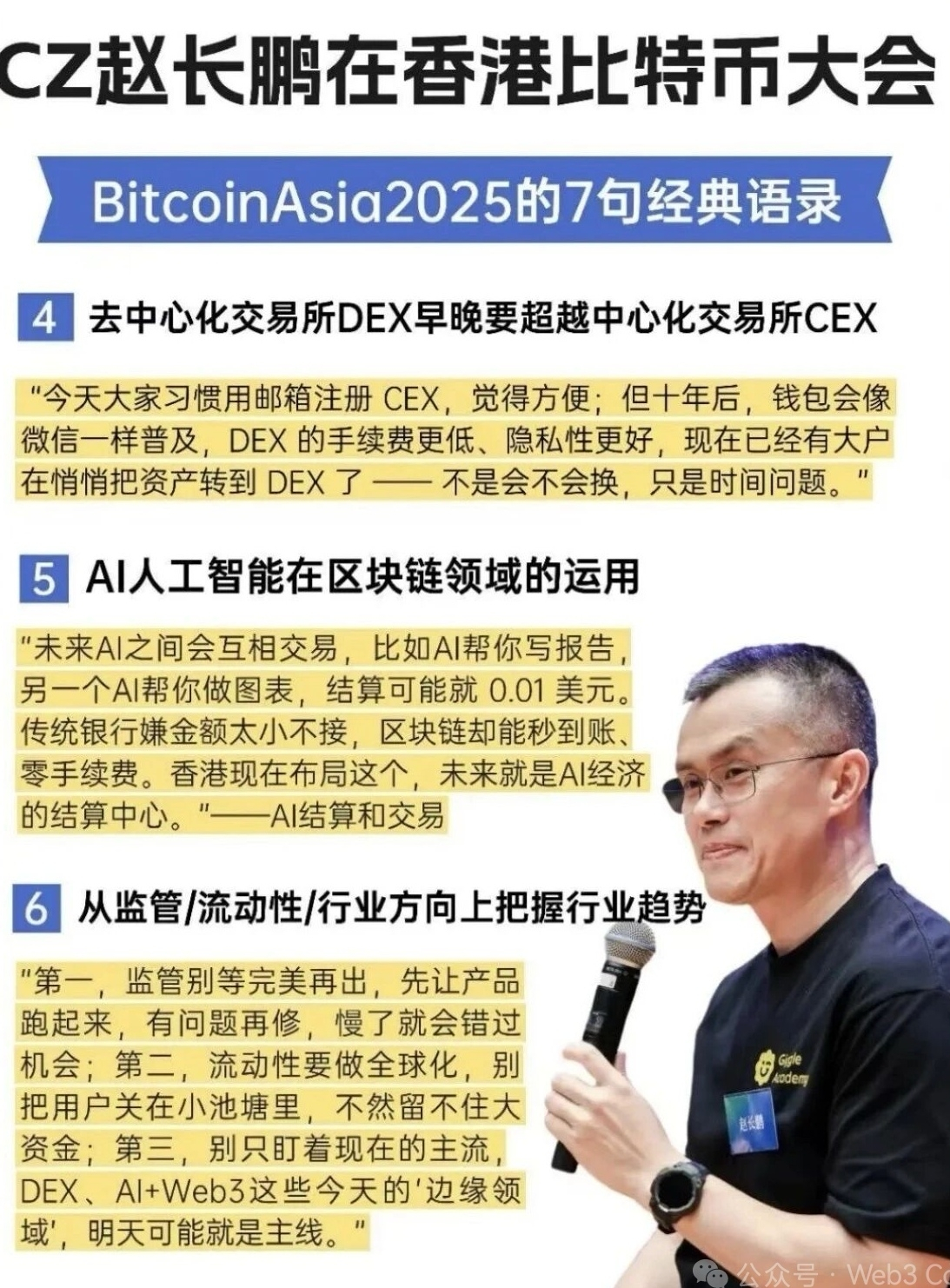
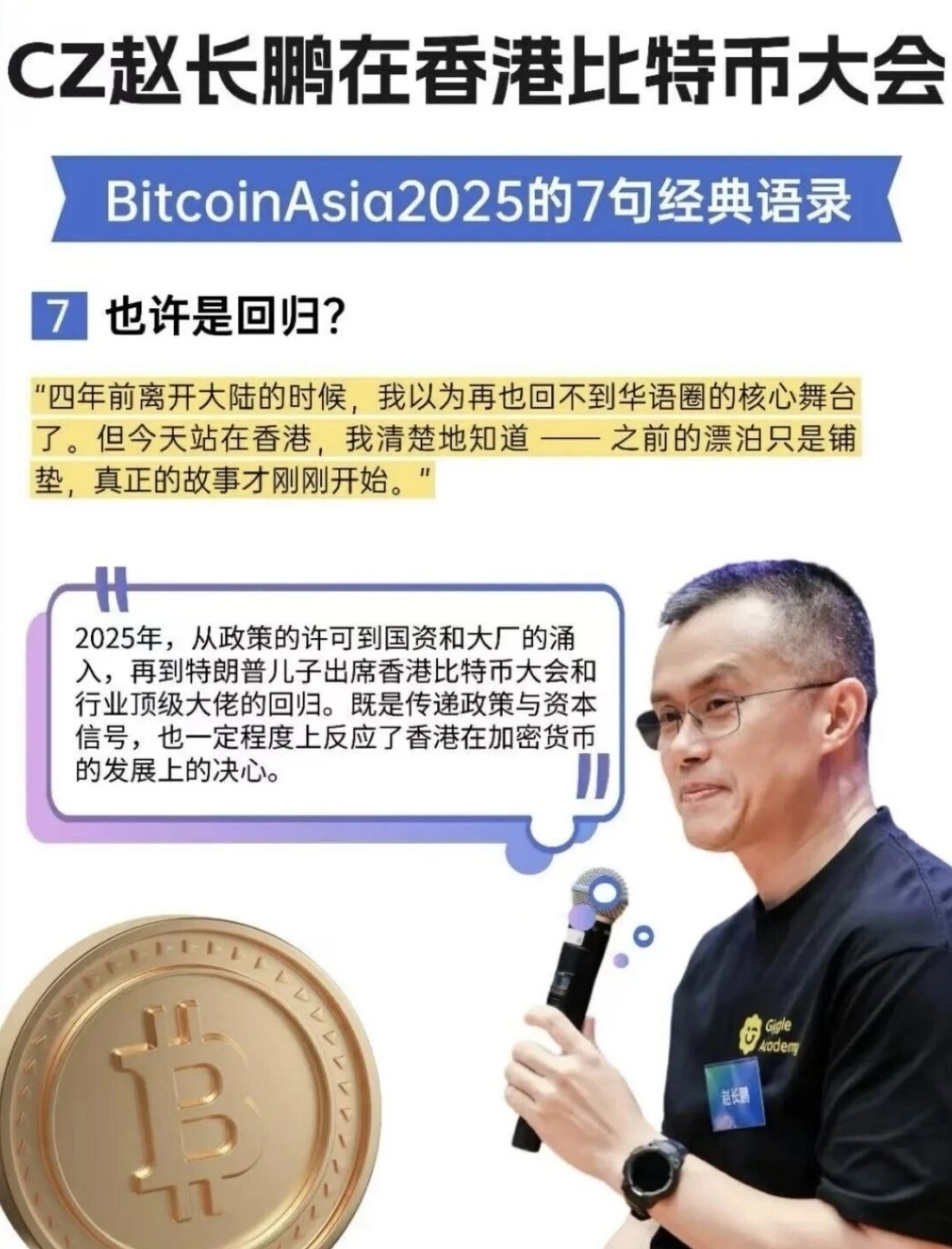
📢CZ Zhao Changpeng Hong Kong Bitcoin Conference: 7 key quotes revealed
✅ Stablecoin cross-border settlement
✅ RWA chains uploading to traditional finance
✅ DEX will surpass CEX in the future
✅ AI + blockchain economy track
✅ Hong Kong compliance and global liquidity layout
Industry insiders point the way; edge-track sectors may become the main storyline in the coming period—let’s break down the major industry trends!
Big names lay out the playbook, boost your understanding, and help you seize the trend
#赵长鹏 #香港加密峰会 #Web3风口
✅ Stablecoin cross-border settlement
✅ RWA chains uploading to traditional finance
✅ DEX will surpass CEX in the future
✅ AI + blockchain economy track
✅ Hong Kong compliance and global liquidity layout
Industry insiders point the way; edge-track sectors may become the main storyline in the coming period—let’s break down the major industry trends!
Big names lay out the playbook, boost your understanding, and help you seize the trend
#赵长鹏 #香港加密峰会 #Web3风口
ok

CoinVision110
·
--
🎁 Claim your reward
Follow me and repost this post to stay connected and support the journey. Every follow and repost means a lot! ❤️
#CaliforniaBillWouldBarOfficialMemeCoins
Follow me and repost this post to stay connected and support the journey. Every follow and repost means a lot! ❤️
#CaliforniaBillWouldBarOfficialMemeCoins
ok

DK短线复刻
·
--
Follow the replies to claim the红包🎁🎁

ok

Leo - F0
·
--
Bullish🔥🧧🧧GREETINGS TO MY FAMILY FROM DUBAİ WITH A RED GIFT PACKAGE.🧧🧧🔥
"Shed your worries under the palm tree shade. Chasing the paradise your dreams have made." 🏝️🍹🛥️
$BTC 🔥🔥🧧🧧 #Dubai_Crypto_Group
#金价升破4400美元创两月高
$BNB $ETH
#1688家族family 💚 @周周1688
#xrp #Binance
"Shed your worries under the palm tree shade. Chasing the paradise your dreams have made." 🏝️🍹🛥️
$BTC 🔥🔥🧧🧧 #Dubai_Crypto_Group
#金价升破4400美元创两月高
$BNB $ETH
#1688家族family 💚 @周周1688
#xrp #Binance

ok

JANNAT BM_
·
--
GIFT🎁 BOX 🎁🎁🎁🎁 BTTC 🧧🧧🧧 CLAIM
ok

AbdullRauf
·
--
YOUR SUPPORT = OUR THANKS. 2000 GIFTS, GO! 🚀🎁💐
Square Family, you rock! 🧧 To celebrate YOU, we’re giving away 2000 GIFTS. Let’s go!
How to enter:
👉 Follow us
👉 Share this post
👉 Comment “666”
Random draws. Huge wins. Enter now!
Square Family, you rock! 🧧 To celebrate YOU, we’re giving away 2000 GIFTS. Let’s go!
How to enter:
👉 Follow us
👉 Share this post
👉 Comment “666”
Random draws. Huge wins. Enter now!

ok

J U N I A
·
--
comment "yes" and 🤑 claim reward

ok

Tahir 塔希尔
·
--
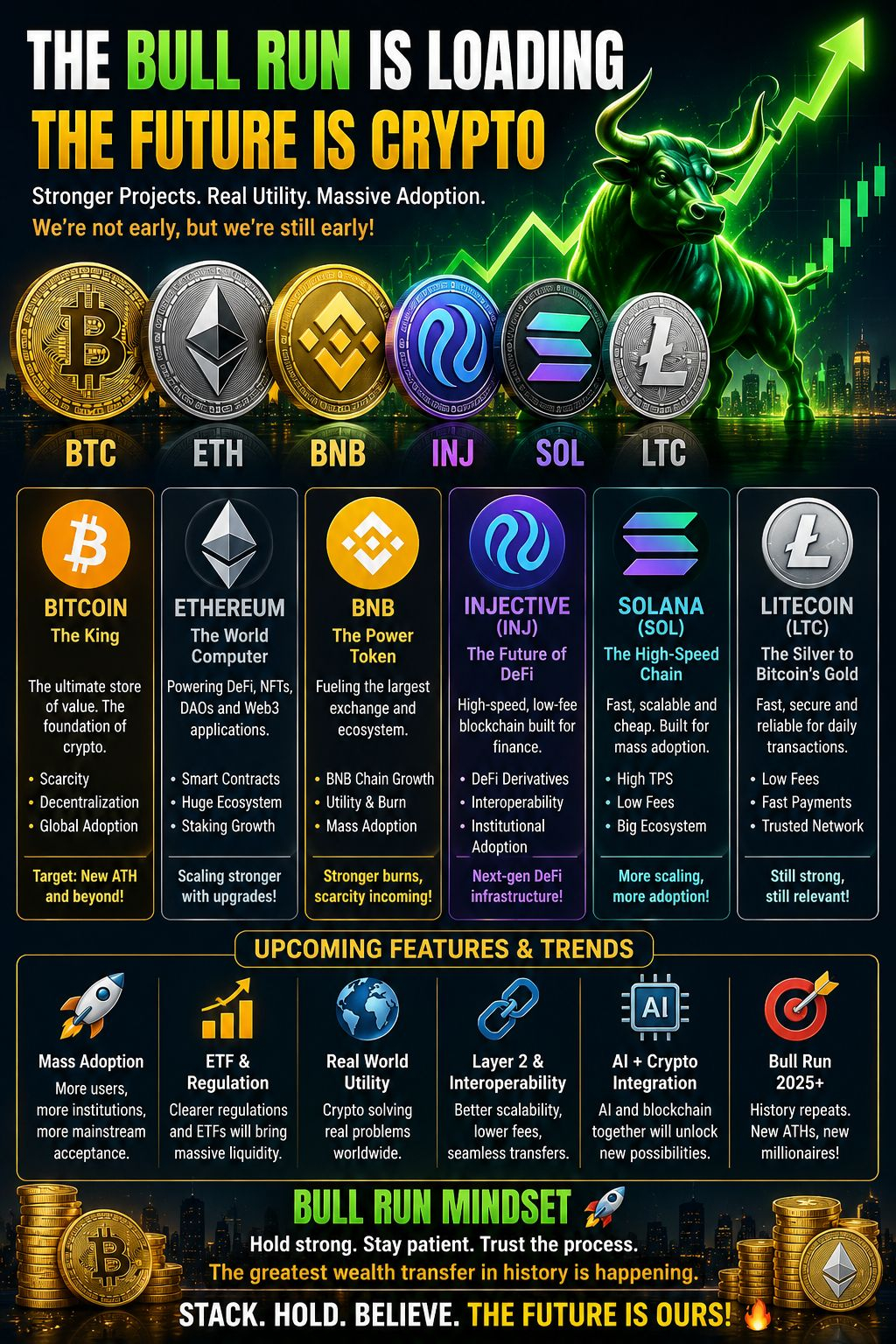
🚀 CRYPTO BULL RUN: THE NEXT BIG MOVE? 🐂🔥
The crypto market is evolving fast — and the next cycle may be driven by utility, adoption, institutions, and real on-chain finance, not just hype.
₿ BTC — The King
Digital scarcity + institutional adoption + ETF demand. Bitcoin remains the foundation of the entire market.
♦️ ETH — The World Computer
Ethereum continues pushing scalability and ecosystem growth, with major upgrades focused on making the network faster and more efficient.
🟡 BNB — The Ecosystem Engine
BNB Chain continues expanding its DeFi, Web3 and application ecosystem while BNB benefits from network utility and token economics.
🔵 INJ — Finance on-chain
Injective is building toward a finance-native blockchain with EVM + WASM, tokenized assets, stablecoin settlement, institutional access and an expanding RWA ecosystem.
🌈 SOL — Speed + Adoption
Solana continues pushing performance, while Alpenglow is one of the major protocol upgrades to watch in 2026, targeting dramatically faster finality.
⚡ LTC — The Veteran
Litecoin remains focused on fast, reliable payments, while upcoming developments include programmable functionality and its next halving cycle.
🔥 WHAT COULD DRIVE THE NEXT BULL RUN?
✅ Institutional capital
✅ ETF adoption
✅ Clearer crypto regulation
✅ Real-world asset tokenization
✅ Stablecoin growth
✅ DeFi expansion
✅ AI + blockchain
✅ Faster & cheaper networks
✅ Mass adoption
✅ New all-time highs
Bitcoin recently moved back above $80K, while ETH and SOL also posted strong gains — but a rally does not automatically guarantee a full bull market.
The real question isn't:
“Will crypto survive?”
It's:
“How big can the next adoption wave become?” 🌎🚀
BTC. ETH. BNB. INJ. SOL. LTC.
Different narratives.
Different technology.
One massive ecosystem.
🐂 The bull may be waking up.
#Bitcoin #Ethereum #BNB #Injective #Solana #Litecoin #Crypto #BullRun #DeFi #RWA #Web3 #Blockchain
The crypto market is evolving fast — and the next cycle may be driven by utility, adoption, institutions, and real on-chain finance, not just hype.
₿ BTC — The King
Digital scarcity + institutional adoption + ETF demand. Bitcoin remains the foundation of the entire market.
♦️ ETH — The World Computer
Ethereum continues pushing scalability and ecosystem growth, with major upgrades focused on making the network faster and more efficient.
🟡 BNB — The Ecosystem Engine
BNB Chain continues expanding its DeFi, Web3 and application ecosystem while BNB benefits from network utility and token economics.
🔵 INJ — Finance on-chain
Injective is building toward a finance-native blockchain with EVM + WASM, tokenized assets, stablecoin settlement, institutional access and an expanding RWA ecosystem.
🌈 SOL — Speed + Adoption
Solana continues pushing performance, while Alpenglow is one of the major protocol upgrades to watch in 2026, targeting dramatically faster finality.
⚡ LTC — The Veteran
Litecoin remains focused on fast, reliable payments, while upcoming developments include programmable functionality and its next halving cycle.
🔥 WHAT COULD DRIVE THE NEXT BULL RUN?
✅ Institutional capital
✅ ETF adoption
✅ Clearer crypto regulation
✅ Real-world asset tokenization
✅ Stablecoin growth
✅ DeFi expansion
✅ AI + blockchain
✅ Faster & cheaper networks
✅ Mass adoption
✅ New all-time highs
Bitcoin recently moved back above $80K, while ETH and SOL also posted strong gains — but a rally does not automatically guarantee a full bull market.
The real question isn't:
“Will crypto survive?”
It's:
“How big can the next adoption wave become?” 🌎🚀
BTC. ETH. BNB. INJ. SOL. LTC.
Different narratives.
Different technology.
One massive ecosystem.
🐂 The bull may be waking up.
#Bitcoin #Ethereum #BNB #Injective #Solana #Litecoin #Crypto #BullRun #DeFi #RWA #Web3 #Blockchain
ok
JANNAT BM_
·
--
GIFT🎁 BOX 🎁🎁🎁🎁 BTTC 🧧🧧🧧 CLAIM
ok

Shaheen 69
·
--
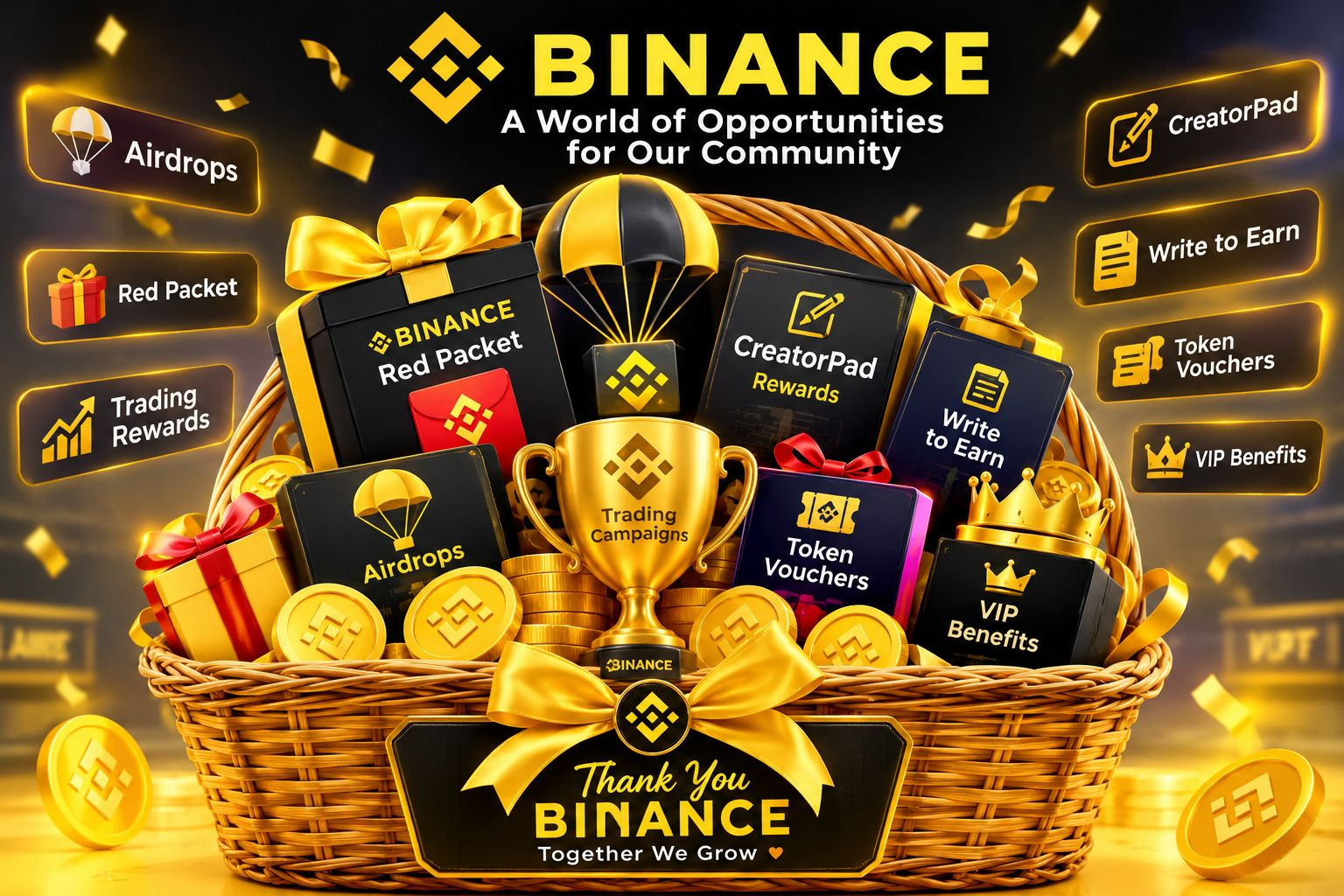
🎁 BINANCE PUT ALL THE GIFTS IN ONE BASKET! 🟡
Imagine one basket filled with Airdrops, Red Packets, Trading Rewards, Token Vouchers, CreatorPad rewards, Write-to-Earn opportunities and VIP benefits. 🚀
That’s what makes the Binance ecosystem exciting — it’s not only about trading, but also about discovering new opportunities, participating in campaigns and sharing rewards with the community.
And today, Shaheen69 is opening the gift basket for YOU! 🎉
I’m sharing Red Packet rewards with all of you as a small thank-you for your continued support and love. ❤️
Good luck everyone! 🍀
Who will grab the reward? 👀
#Binance #BNB #redpacket
Imagine one basket filled with Airdrops, Red Packets, Trading Rewards, Token Vouchers, CreatorPad rewards, Write-to-Earn opportunities and VIP benefits. 🚀
That’s what makes the Binance ecosystem exciting — it’s not only about trading, but also about discovering new opportunities, participating in campaigns and sharing rewards with the community.
And today, Shaheen69 is opening the gift basket for YOU! 🎉
I’m sharing Red Packet rewards with all of you as a small thank-you for your continued support and love. ❤️
Good luck everyone! 🍀
Who will grab the reward? 👀
#Binance #BNB #redpacket
ok

奕澤YiiiiiZze
·
--
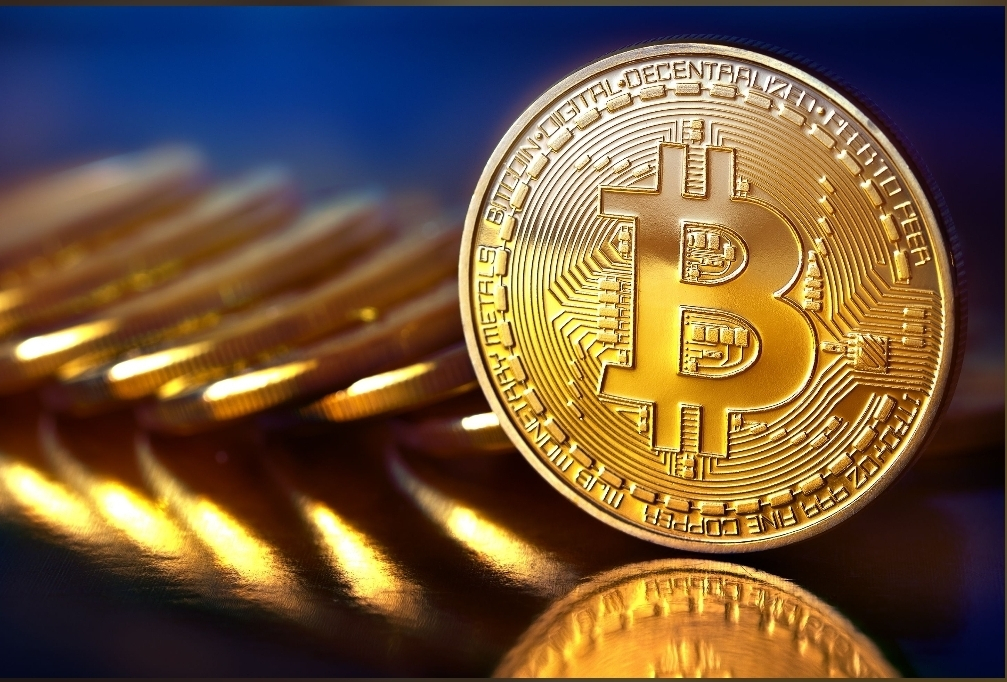
Recently, Bitcoin (BTC) has rebounded strongly from its 63,000 USD level and has moved above the 80,000 USD mark. Premiums have appeared on U.S. exchanges such as Coinbase, indicating a clear rebound in buy-side demand in the U.S. market. At the same time, Bitcoin spot ETFs have seen net inflows for multiple consecutive trading days, with total August inflows exceeding $3 billion.
Despite hawkish signals from Federal Reserve officials that have led to short-term consolidation at high levels, selling pressure from institutions and long-term holders has eased. Overall market sentiment remains steady and resilient.
Despite hawkish signals from Federal Reserve officials that have led to short-term consolidation at high levels, selling pressure from institutions and long-term holders has eased. Overall market sentiment remains steady and resilient.
ok

ANUUONCHAIN
·
--
😍🥰😍🥰😍🥰😍🥰😍🥰😍🥰😍🥰😍
🥵🥵🥵🥵🥵🥵🥵🥵🥵🥵🥵🥵🥵🥵🥵
follow me please
🙌🙌🙌🙌😼😼😼😼😼😼😼😼😼😼😼
🥵🥵🥵🥵🥵🥵🥵🥵🥵🥵🥵🥵🥵🥵🥵
follow me please
🙌🙌🙌🙌😼😼😼😼😼😼😼😼😼😼😼

ok
大嗯BNB
·
--
BTC is trading in a tight range near 80,000, with Warsh giving his first keynote address tonight at Jackson Hole. 69% of fund managers expect a neutral tone—no specific rate signals.
Beyond the content of the speech itself, there’s one thing tonight that’s worth watching more than whether the tone is hawkish or dovish.
Analyst Lee proposed a key observation framework: after the speech, look at the synchrony between BTC and gold. If BTC rises while gold also rises and long-term bonds fall, it indicates the market is using BTC to trade narratives around government debt risk and currency debasement—the “digital gold” role is being confirmed. If BTC and stocks fall together, it suggests BTC is still priced as a pure high-volatility risk asset, with rate sensitivity outweighing any hedging narrative.
The difference between these two scenarios is not about how much the price moves tonight, but rather what role this asset class actually plays within the macro framework. That question has remained unanswered throughout the first half of 2026, and tonight’s price action may provide a partial answer.
The variables that truly affect short-term prices, ranked by importance, are: dollar funding conditions, real yields, and term premium. These three are more directly relevant than rate decisions themselves. By contrast, the Fed’s balance sheet, the Treasury’s cash balance, and bank reserves affect liquidity structure over a longer horizon.
After tonight’s speech ends, don’t rush to chase or cut. Watch the direction of gold and long-term bonds rather than relying on BTC’s own price to judge the real logic behind this sell-off and rebound.
Since Warsh took office, he has abandoned forward guidance—each speech is the only source of information. If he offers any positive remarks regarding financial innovation, stablecoins, or a regulatory framework for digital assets, that would be a structural positive catalyst independent of the rate path. Its long-term impact on the crypto industry could exceed any instance of a pause in rate hikes.
What are you planning to focus on tonight when it comes to this speech? Will you watch the wording on rates, or the synchrony between BTC and gold? Share your thoughts.
$BTC
Beyond the content of the speech itself, there’s one thing tonight that’s worth watching more than whether the tone is hawkish or dovish.
Analyst Lee proposed a key observation framework: after the speech, look at the synchrony between BTC and gold. If BTC rises while gold also rises and long-term bonds fall, it indicates the market is using BTC to trade narratives around government debt risk and currency debasement—the “digital gold” role is being confirmed. If BTC and stocks fall together, it suggests BTC is still priced as a pure high-volatility risk asset, with rate sensitivity outweighing any hedging narrative.
The difference between these two scenarios is not about how much the price moves tonight, but rather what role this asset class actually plays within the macro framework. That question has remained unanswered throughout the first half of 2026, and tonight’s price action may provide a partial answer.
The variables that truly affect short-term prices, ranked by importance, are: dollar funding conditions, real yields, and term premium. These three are more directly relevant than rate decisions themselves. By contrast, the Fed’s balance sheet, the Treasury’s cash balance, and bank reserves affect liquidity structure over a longer horizon.
After tonight’s speech ends, don’t rush to chase or cut. Watch the direction of gold and long-term bonds rather than relying on BTC’s own price to judge the real logic behind this sell-off and rebound.
Since Warsh took office, he has abandoned forward guidance—each speech is the only source of information. If he offers any positive remarks regarding financial innovation, stablecoins, or a regulatory framework for digital assets, that would be a structural positive catalyst independent of the rate path. Its long-term impact on the crypto industry could exceed any instance of a pause in rate hikes.
What are you planning to focus on tonight when it comes to this speech? Will you watch the wording on rates, or the synchrony between BTC and gold? Share your thoughts.
$BTC
ok
Quoted content has been removed
ok

圣克斯Lucky1688
·
--
🧧🧧🔥🔥🧧🧧With inflation remaining the main focus, uncertainty around the Fed is on the rise. Less guidance may mean increased market volatility—so watch the data, yields, and liquidity closely. Follow me, answer 1 to the question, and take away the $SOL red envelope 🧧🧧🔥🔥🧧🧧.

ok

wiki002
·
--
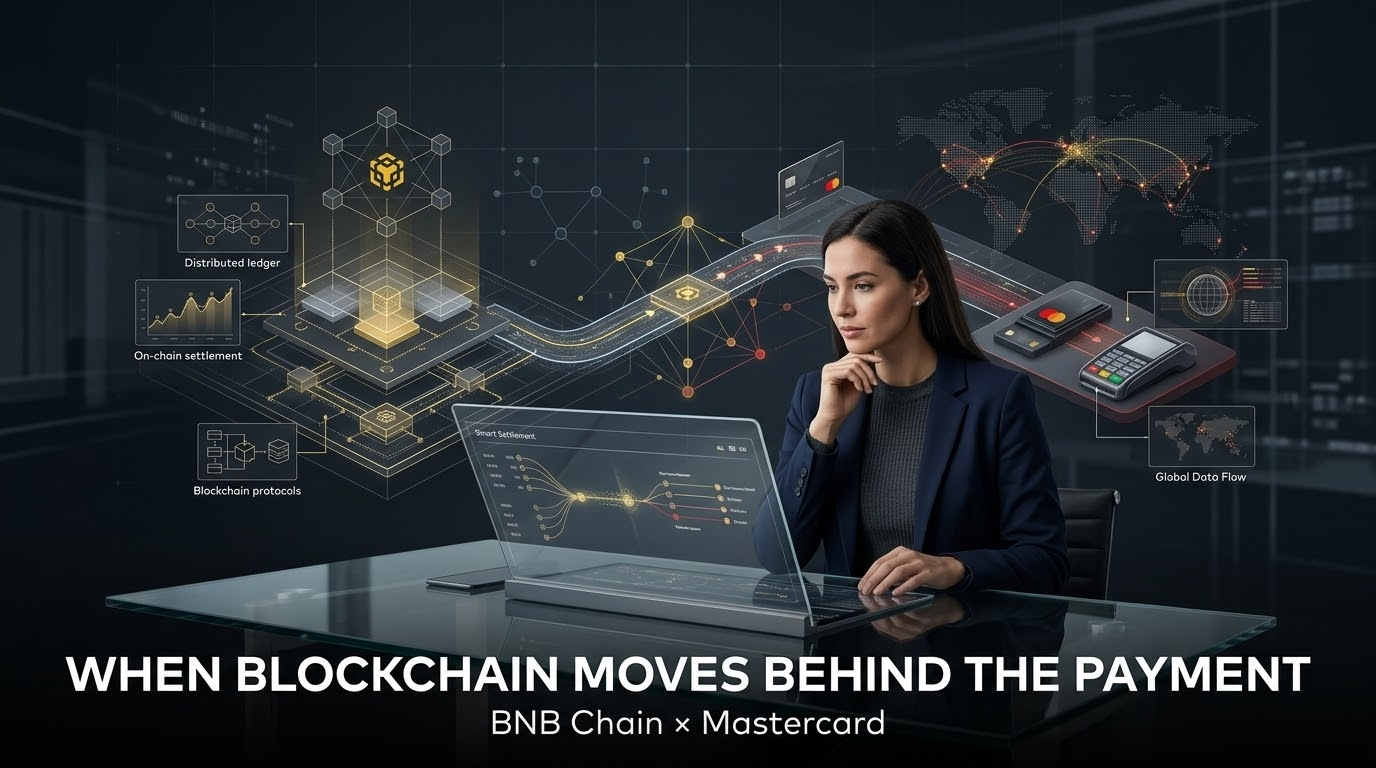
I wasn’t really focused on the partnership headline today. The part I kept thinking about was what this could change for BNB Chain.
Crypto has spent years competing on speed, fees, liquidity and users.
Payments are a different game.
A payment product doesn’t need customers to become crypto users. It needs a reliable way to move value while keeping the blockchain complexity away from the end user.
That’s why @BNB Chain joining Mastercard’s Crypto Partner Program is interesting to me.
The obvious story is access to an established payments ecosystem.
The less obvious one is who gets to decide where the transaction actually settles.
If payment applications eventually gain more choice over blockchain infrastructure, simply being compatible with a payment network won’t be enough.
The real differentiator becomes the settlement environment underneath it.
For BNB Chain, that makes things like execution cost, confirmation reliability, liquidity depth, stablecoin availability and developer tooling important factors in that competition.
And there’s a deeper consequence here.
When the payment interface becomes separated from the underlying blockchain, the chain can compete on infrastructure rather than forcing users to choose a chain first.
That changes the demand model.
Instead of
user → wallet → blockchain → application
the direction I find interesting is
financial product → payment interface → settlement infrastructure
The user may never care which chain handled the transaction.
The developer and payment provider will.
That’s why I don’t see this as proof of mainstream adoption yet.
I see it as a more interesting test
Can BNB Chain become a technically attractive settlement environment when blockchain choice moves behind the payment experience?
If it can, Mastercard’s distribution isn’t the whole story.
The bigger opportunity is competing for the financial activity underneath it. 👍
$BNB #BNB $BB $HEI @Binance Square Official
Crypto has spent years competing on speed, fees, liquidity and users.
Payments are a different game.
A payment product doesn’t need customers to become crypto users. It needs a reliable way to move value while keeping the blockchain complexity away from the end user.
That’s why @BNB Chain joining Mastercard’s Crypto Partner Program is interesting to me.
The obvious story is access to an established payments ecosystem.
The less obvious one is who gets to decide where the transaction actually settles.
If payment applications eventually gain more choice over blockchain infrastructure, simply being compatible with a payment network won’t be enough.
The real differentiator becomes the settlement environment underneath it.
For BNB Chain, that makes things like execution cost, confirmation reliability, liquidity depth, stablecoin availability and developer tooling important factors in that competition.
And there’s a deeper consequence here.
When the payment interface becomes separated from the underlying blockchain, the chain can compete on infrastructure rather than forcing users to choose a chain first.
That changes the demand model.
Instead of
user → wallet → blockchain → application
the direction I find interesting is
financial product → payment interface → settlement infrastructure
The user may never care which chain handled the transaction.
The developer and payment provider will.
That’s why I don’t see this as proof of mainstream adoption yet.
I see it as a more interesting test
Can BNB Chain become a technically attractive settlement environment when blockchain choice moves behind the payment experience?
If it can, Mastercard’s distribution isn’t the whole story.
The bigger opportunity is competing for the financial activity underneath it. 👍
$BNB #BNB $BB $HEI @Binance Square Official
ok

Sheemm
·
--
🎁🎁🎁🎁 GOOD AFTERNOON
LIKE REPOST COMMENT AND
CLAIM 🤗🤗$BNB 🎁🎁🎁🎁
$MOVR
$HEMI
#NYSilverFuturesDrop3%
#RedPacketMission 😊
LIKE REPOST COMMENT AND
CLAIM 🤗🤗$BNB 🎁🎁🎁🎁
$MOVR
$HEMI
#NYSilverFuturesDrop3%
#RedPacketMission 😊
Log in to explore more content