
Bridgewater’s Dalio: The U.S. is heading toward bankruptcy—suggests holding Bitcoin! 1️⃣
Recently, Bitcoin has surged dramatically, and many people have analyzed that the reason behind it could be that U.S. Treasuries have become unsustainable. On this issue, Ray Dalio—the founder of Bridgewater (the world’s largest hedge fund)—wrote a special article yesterday laying out this logic.
Below is a整理 and summary with a personal touch. I believe it’s easier to understand than the original article~In August 2026, U.S. national debt officially broke $40 trillion.
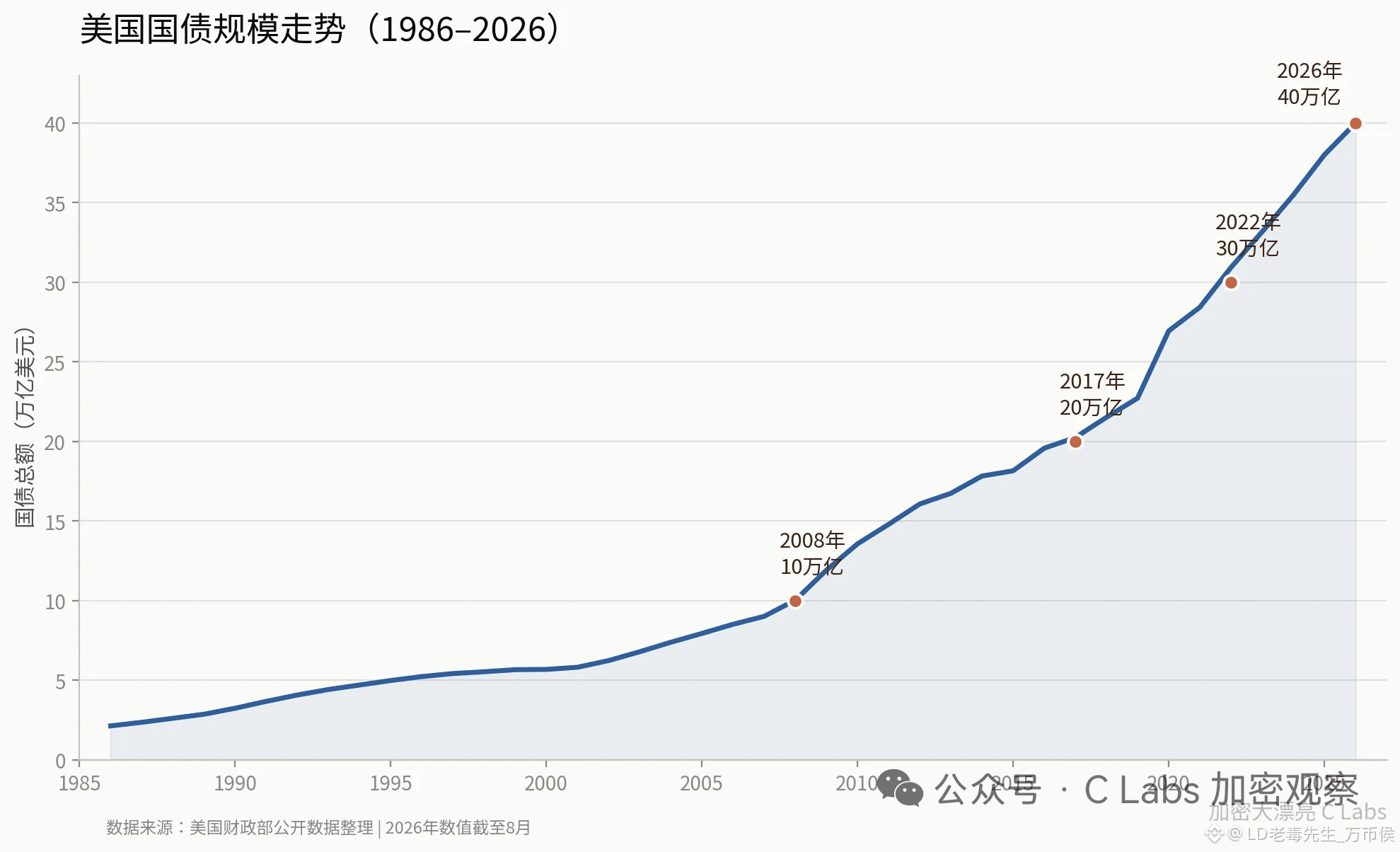
The pace is worth noting: from the founding of the country to the first $1 trillion took about 200 years; from $10 trillion to $20 trillion took 13 years; from $20 trillion to $30 trillion took 5 years; from $30 trillion to $40 trillion took only 4 years—and the final $10 trillion was reached in just 150 days.
And this week, three things happened to converge:
1. The Japanese government is selling the U.S. Treasuries it holds, converting the proceeds back into yen. The goal is to stabilize the yen exchange rate, support the domestic capital markets, and yet not raise interest rates more than it wants merely to defend the peg;
2. U.S. Treasury yields are rising, with the long end rising the most. The 30-year yield briefly touched 5.31%, while the dollar weakened;
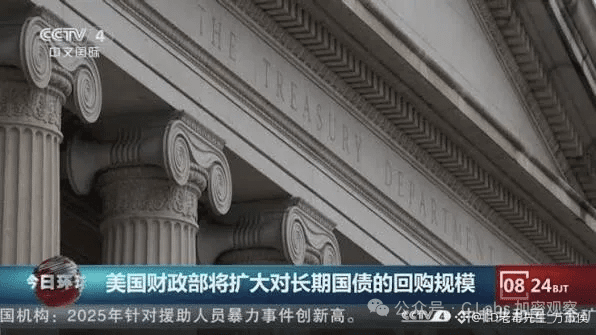
3. U.S. Treasury Secretary Bessent announced that the Treasury will step in to repurchase long-term bonds on its own, but the amount of funds it can deploy is limited—at least $4 billion every two-week period, executed from September 9 to November 4.
Dalio’s view is that if the current path isn’t changed, the U.S. debt crisis will most likely hit in about three years (with a fluctuation of plus or minus 2 years). A country’s debt system can be compared to a person’s blood circulation. Credit is the blood—supplying nourishment to different parts of the economy. If used well, it can generate enough output and income to pay back principal and interest, and the system stays healthy. If it’s not converted into sufficient income, then the principal-and-interest repayment burden becomes like plaque accumulating in blood vessels—growing thicker over time and squeezing out other money that should be spent.
Once the plaques reach a certain level, two problems emerge at the same time: first, the “share of debt repayment burden in fiscal revenue” becomes abnormally high—money that should be spent gets squeezed out; second, “the number of people who want to sell debt exceeds the number of people who want to buy it.” At that point, either you let interest rates rise (dragging the market and the economy down), or the central bank steps in to print money to buy bonds (currency depreciation, and inflation higher than it would have been otherwise).$BTC
Recently, Bitcoin has surged dramatically, and many people have analyzed that the reason behind it could be that U.S. Treasuries have become unsustainable. On this issue, Ray Dalio—the founder of Bridgewater (the world’s largest hedge fund)—wrote a special article yesterday laying out this logic.
Below is a整理 and summary with a personal touch. I believe it’s easier to understand than the original article~In August 2026, U.S. national debt officially broke $40 trillion.
The pace is worth noting: from the founding of the country to the first $1 trillion took about 200 years; from $10 trillion to $20 trillion took 13 years; from $20 trillion to $30 trillion took 5 years; from $30 trillion to $40 trillion took only 4 years—and the final $10 trillion was reached in just 150 days.
And this week, three things happened to converge:
1. The Japanese government is selling the U.S. Treasuries it holds, converting the proceeds back into yen. The goal is to stabilize the yen exchange rate, support the domestic capital markets, and yet not raise interest rates more than it wants merely to defend the peg;
2. U.S. Treasury yields are rising, with the long end rising the most. The 30-year yield briefly touched 5.31%, while the dollar weakened;
3. U.S. Treasury Secretary Bessent announced that the Treasury will step in to repurchase long-term bonds on its own, but the amount of funds it can deploy is limited—at least $4 billion every two-week period, executed from September 9 to November 4.
Dalio’s view is that if the current path isn’t changed, the U.S. debt crisis will most likely hit in about three years (with a fluctuation of plus or minus 2 years). A country’s debt system can be compared to a person’s blood circulation. Credit is the blood—supplying nourishment to different parts of the economy. If used well, it can generate enough output and income to pay back principal and interest, and the system stays healthy. If it’s not converted into sufficient income, then the principal-and-interest repayment burden becomes like plaque accumulating in blood vessels—growing thicker over time and squeezing out other money that should be spent.
Once the plaques reach a certain level, two problems emerge at the same time: first, the “share of debt repayment burden in fiscal revenue” becomes abnormally high—money that should be spent gets squeezed out; second, “the number of people who want to sell debt exceeds the number of people who want to buy it.” At that point, either you let interest rates rise (dragging the market and the economy down), or the central bank steps in to print money to buy bonds (currency depreciation, and inflation higher than it would have been otherwise).$BTC