
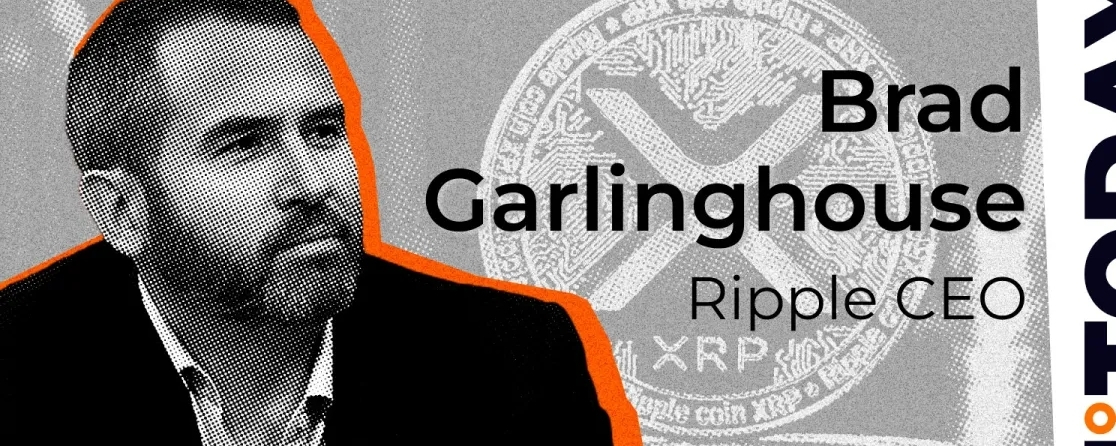
Ripple CEO Brad Garlinghouse believes the United States has become closer than ever before to establishing clear regulatory rules for the digital asset industry, according to a post on social media.
Change over the course of a decade
Garlinghouse believes Washington’s approach to digital assets has changed dramatically over the past ten years. This assessment came after the inaugural meeting of the Commodity Futures Trading Commission (CFTC) Innovation Advisory Committee in Washington on August 20. The committee was chaired by CFTC Chairman Michael Seelig, and it brought together executives from the digital asset and traditional finance sectors to advise the agency on technical, legal, and policy issues.
Garlinghouse said in a post on the X platform that everyone agreed that the written rules from a different era were no longer enough — for consumers, for businesses, or for innovation.
Ripple’s march toward legal clarity
Remember Garlinghouse that Ripple sent an open letter to Congress in July 2019. In that letter, he and co-founder Chris Larsen said that digital assets should be regulated according to their distinguishing characteristics, and that the lack of regulatory clarity could harm innovation and create fewer jobs.
Now, Garlinghouse believes America is finally moving toward regulatory clarity: In March, the Securities and Exchange Commission (SEC) and the Commodity Futures Trading Commission (CFTC) issued a joint clarification on how federal securities and commodities laws apply to different digital-currency assets, and the SEC also laid out a framework for classifying digital tokens (Token Taxonomy).
The CFTC also formed its Innovation Advisory Committee, in which Garlinghouse is one of dozens of members, along with executives from Coinbase and Uniswap Labs and BitGo, as well as Nasdaq and the CME Group and Cboe.
"This isn't the Wild West"
At an event in SALT Wyoming, Garlinghouse explained that the industry has never been opposed to regulation, and he described the idea that "digital currencies were anti-regulation" as one of the common myths. He added that the industry has already been pushing for regulation, noting that Ripple holds 75 licenses worldwide.
Garlinghouse also recalled Ripple’s legal battle, which lasted five years, with the U.S. Securities and Exchange Commission (SEC), describing it as a battle that was actually four years long, resulting in a federal court ruling stating that XRP itself is not a security — which he considered to be real legal clarity for XRP.