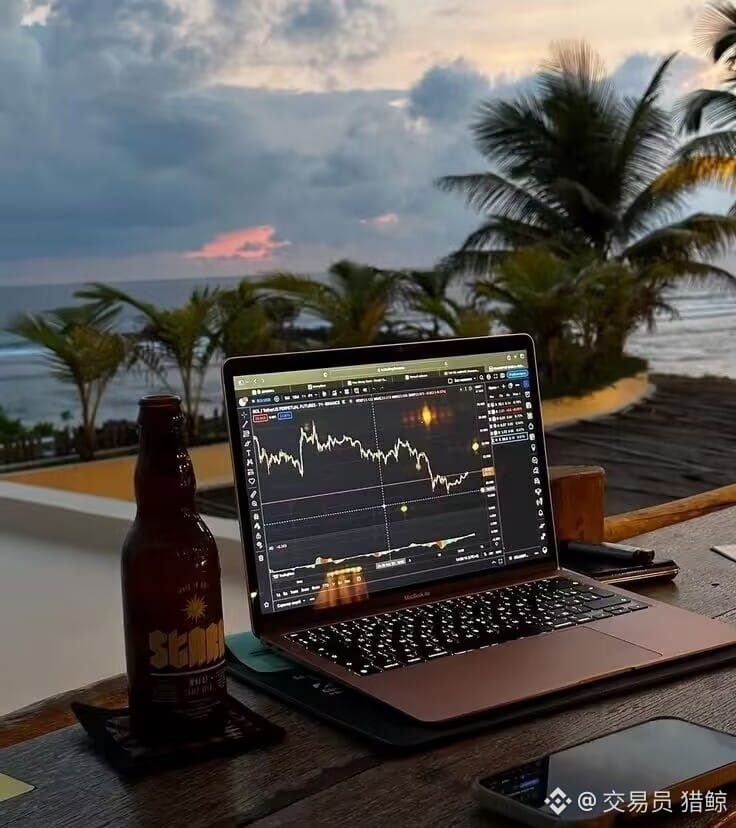
Many people learn too hard on the short-term and end up losing money, because they cram a dozen or so strategies into their heads. The moment the market moves, they get flustered first. Now I only recognize 4 steps.#币圈投资策略
I’ve also taken this detour before.
MACD, moving averages, divergence, all kinds of cycle resonance—back then I wanted to fill a single chart with indicators. Later, after doing it for a long time, I realized: more tools don’t mean a higher win rate; they often end up fighting each other.
Now my short-term logic is very simple.
First step: screen the coins.
Look at the trend on the daily chart. MACD golden cross is only the first layer of filtering. I prefer coins that are already relatively strong in structure, especially those above the zero axis.
Even if a weak coin is cheap, I’m not in a hurry to buy the dip.
If you want to make money in short-term trading, the first thing is not to look for “the one that has dropped the most,” but to find where money is actively flowing in.
Second step: wait for the position.
I won’t just charge in just because there’s a golden cross. I still need to see whether the price can hold above a key moving average. If it can hold, then I’ll consider entering. If it breaks back down right after I enter, that likely means I got the trade wrong—so I’ll accept it and exit.
In short-term trading, the biggest fear is giving yourself reasons.
Third step: think about position sizing and taking profit together.
Only when the price holds steady and the trading volume starts to cooperate will I gradually add to the position.
Once it truly starts to rise, I won’t hold from start to finish. I’ll take some profit from the first leg, reduce again as strength continues, and finally leave a bit of position so the trend can run on its own.
This way, you’re less likely to give back profits you’ve already taken, and you’re also less likely to regret selling too early.
Fourth step, and the most important: if you’re wrong, you leave.
If the buy thesis fails or the price breaks below a key level, I won’t average down to spread the cost, and I won’t bet against the market out of spite.
Many people’s big losses start from a very small unrealized loss.
At first, you could have exited with a 3% loss, but you refused to. Then you couldn’t bear to cut at 10%, and at 20% you start fantasizing about a rebound—only to end up fully trapped.
So now I’m increasingly convinced that the real difficulty in short-term trading has never been indicators.
When you should wait, can you wait? When you should leave, do you have the courage to leave? When you should hold, can you hold firm?
Practice these 4 things until they’re second nature. They work better than storing 100 sets of trading tactics in your phone.#币圈暴富密码
Follow me—no mysticism, only the things I’ve been using in my own live trading that truly work.
I’ve also taken this detour before.
MACD, moving averages, divergence, all kinds of cycle resonance—back then I wanted to fill a single chart with indicators. Later, after doing it for a long time, I realized: more tools don’t mean a higher win rate; they often end up fighting each other.
Now my short-term logic is very simple.
First step: screen the coins.
Look at the trend on the daily chart. MACD golden cross is only the first layer of filtering. I prefer coins that are already relatively strong in structure, especially those above the zero axis.
Even if a weak coin is cheap, I’m not in a hurry to buy the dip.
If you want to make money in short-term trading, the first thing is not to look for “the one that has dropped the most,” but to find where money is actively flowing in.
Second step: wait for the position.
I won’t just charge in just because there’s a golden cross. I still need to see whether the price can hold above a key moving average. If it can hold, then I’ll consider entering. If it breaks back down right after I enter, that likely means I got the trade wrong—so I’ll accept it and exit.
In short-term trading, the biggest fear is giving yourself reasons.
Third step: think about position sizing and taking profit together.
Only when the price holds steady and the trading volume starts to cooperate will I gradually add to the position.
Once it truly starts to rise, I won’t hold from start to finish. I’ll take some profit from the first leg, reduce again as strength continues, and finally leave a bit of position so the trend can run on its own.
This way, you’re less likely to give back profits you’ve already taken, and you’re also less likely to regret selling too early.
Fourth step, and the most important: if you’re wrong, you leave.
If the buy thesis fails or the price breaks below a key level, I won’t average down to spread the cost, and I won’t bet against the market out of spite.
Many people’s big losses start from a very small unrealized loss.
At first, you could have exited with a 3% loss, but you refused to. Then you couldn’t bear to cut at 10%, and at 20% you start fantasizing about a rebound—only to end up fully trapped.
So now I’m increasingly convinced that the real difficulty in short-term trading has never been indicators.
When you should wait, can you wait? When you should leave, do you have the courage to leave? When you should hold, can you hold firm?
Practice these 4 things until they’re second nature. They work better than storing 100 sets of trading tactics in your phone.#币圈暴富密码
Follow me—no mysticism, only the things I’ve been using in my own live trading that truly work.