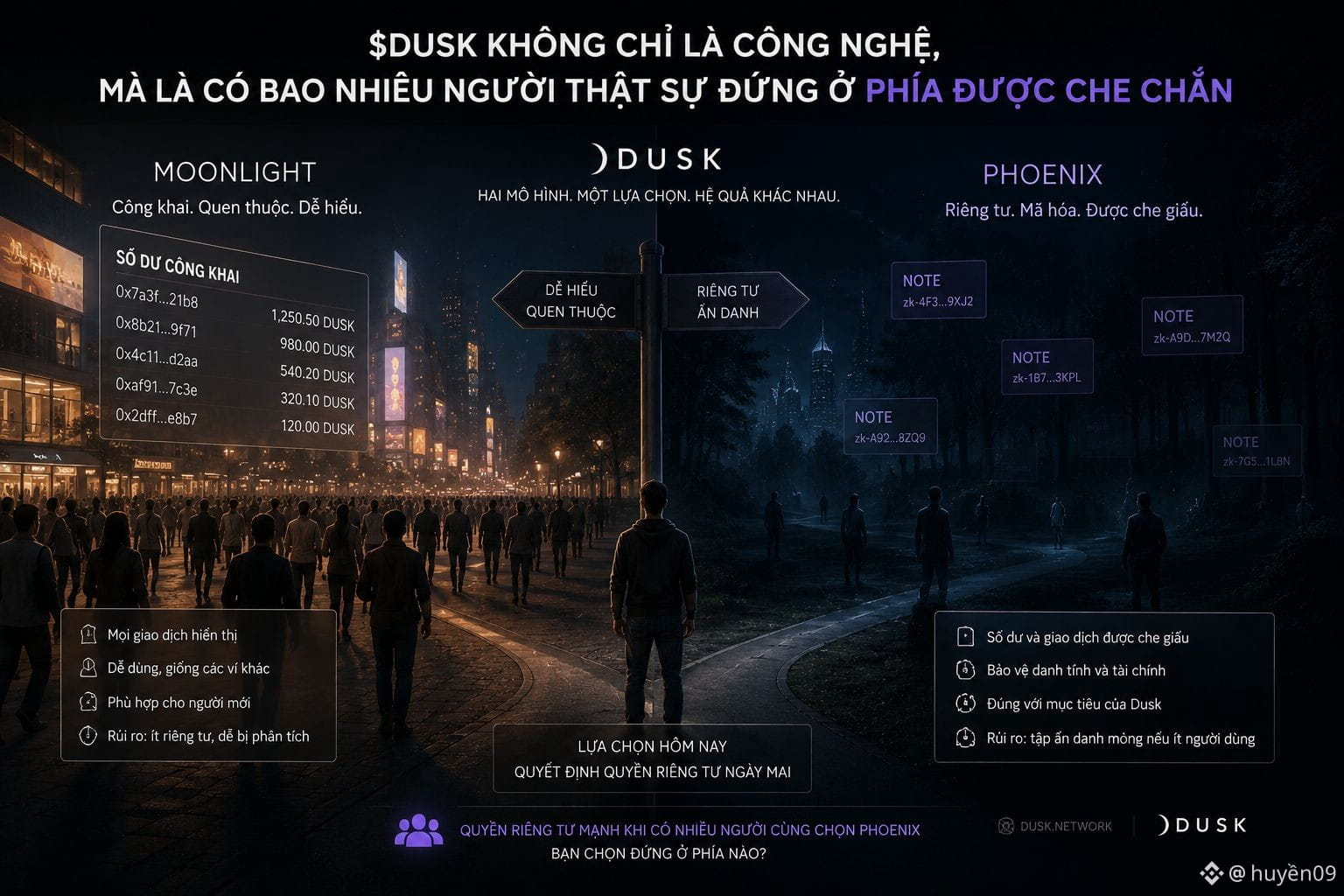
I keep thinking that if @Dusk c has two parallel models, then one of them must be considered the default. Moonlight is there with the publicly visible balance—familiar, like every app I’ve ever used. Phoenix is there with the encoded notes, the output concealed—what this whole architecture was built to do.
So which one is the real one? That’s the part I keep mixing up. Because if Phoenix is the default, then Moonlight is just compatibility for people who aren’t used to it yet—a door you walk through, not a place to stay. And if Moonlight is the default, then privacy becomes an optional feature, and every optional feature in software history shares the same fate: very few people turn it on.
Turns out the design doesn’t answer that question. It leaves it open, and lets the user choose. It sounds very respectful. But choices without guidance in practice always lean toward what’s familiar. It doesn’t sound right, because I keep hoping that a private chain by default would place privacy in the default position. But it seems that’s something I’ve been adding to my own thoughts. And this is where I see the real risk: if most users stay on the public side because it’s the easier one to understand, then the anonymous side on the other side gets thinner.
And thin privacy is almost not privacy. If you’re hiding among a crowd of a few hundred people, how much can you actually hide? So the real question with $DUSK isn’t whether the technology is good—it’s how many people are truly standing on the shielded side.
#dusk $BTC $ETH