
橙子Joyce
297 Posts

橙子Joyce
 Square Verified+
价值投资者:以十年为单位投资美股及BTC.ETH.BNB.SOL.推特X:@Joyce88ai

SOL Holder
Frequent Trader
8.7 Years
769 Following
33.6K+ Followers
41.7K+ Liked
Posts
All
Quotes
Videos
Live
PINNED
PINNED
Verified

心悦Joy
·
--
BullishBitcoin BTC has a four-year cycle. Personally, I believe this round of the Bitcoin BTC price has already bottomed out, and as the next halving event approaches, the price will start to rise over the next one to two years.
In the crypto industry, “regulatory clarity is improving significantly.” The “Clear Act” has “entered the final stages of implementation.”
This will be an important milestone for the crypto sector. To be frank, even if the bill doesn’t pass, the U.S. regulators—the U.S. Securities and Exchange Commission (SEC) and the U.S. Commodity Futures Trading Commission (CFTC)—have already indicated that, in any case, they are prepared to issue clear rules. So I think within the next one to two weeks, the relevant rules will either be introduced by the Senate or published by the regulators.
I hope “very soon” tokenized stocks will be rolled out in the United States.
I’m very bullish on stablecoin payments. This is one of the core trends I’m most looking forward to. In addition, there are tokenization of stocks and various assets, prediction markets, and smart-agent finance. I believe these four directions are the mainstream trends I’m most confident in through 2027.
From 2015 to 2026—after eleven years in the crypto space—I remain steadfast in continuing to invest in BTC and ETH, BNB
SOL
$BTC
$BNB
$ETH
In the crypto industry, “regulatory clarity is improving significantly.” The “Clear Act” has “entered the final stages of implementation.”
This will be an important milestone for the crypto sector. To be frank, even if the bill doesn’t pass, the U.S. regulators—the U.S. Securities and Exchange Commission (SEC) and the U.S. Commodity Futures Trading Commission (CFTC)—have already indicated that, in any case, they are prepared to issue clear rules. So I think within the next one to two weeks, the relevant rules will either be introduced by the Senate or published by the regulators.
I hope “very soon” tokenized stocks will be rolled out in the United States.
I’m very bullish on stablecoin payments. This is one of the core trends I’m most looking forward to. In addition, there are tokenization of stocks and various assets, prediction markets, and smart-agent finance. I believe these four directions are the mainstream trends I’m most confident in through 2027.
From 2015 to 2026—after eleven years in the crypto space—I remain steadfast in continuing to invest in BTC and ETH, BNB
SOL
$BTC
$BNB
$ETH

周周1688
·
--
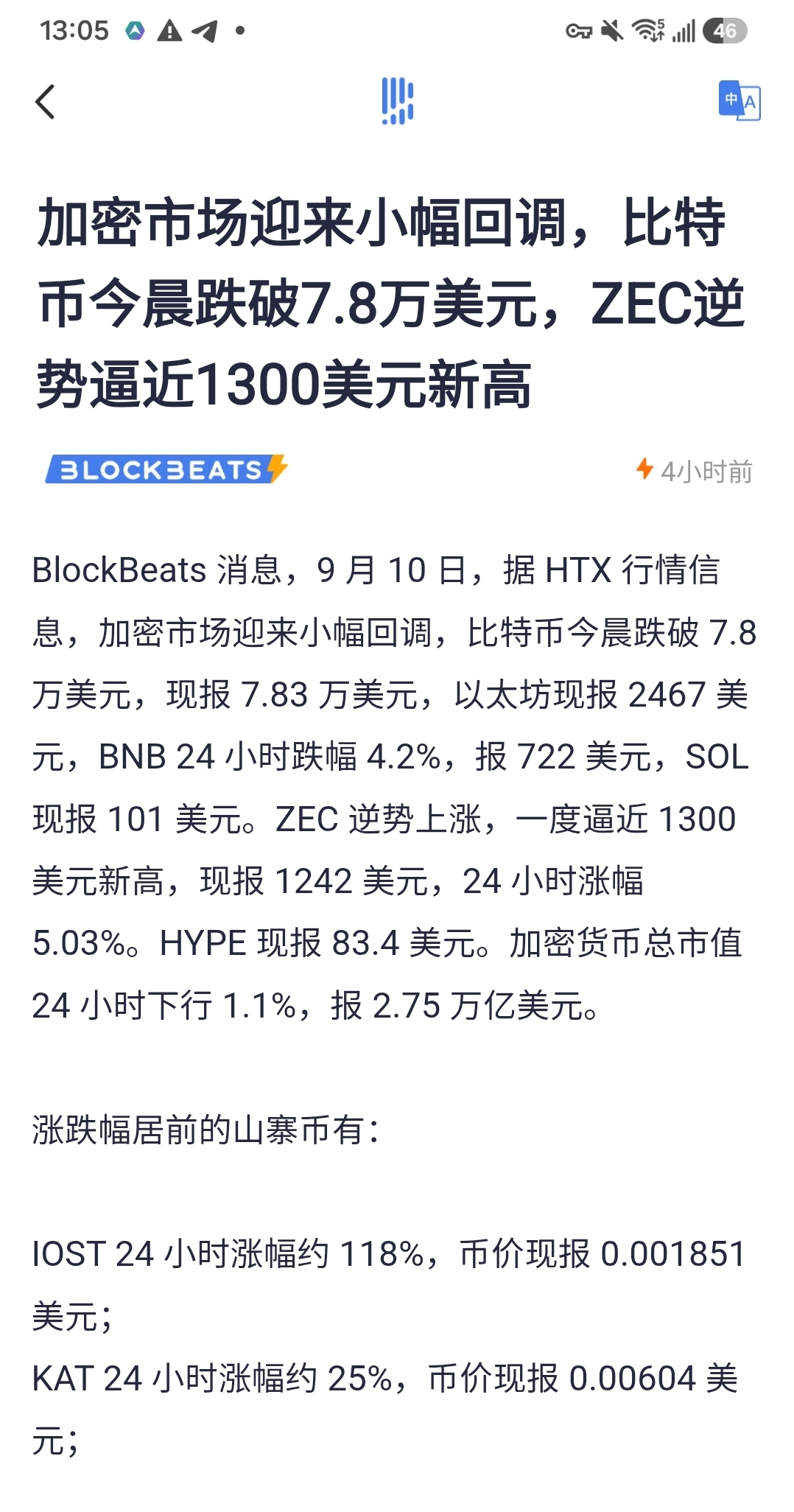
【Crypto market sees a modest pullback, ZEC squeezes higher against the trend】
🚀🚀$BNB 🧧
On September 10, BTC broke below $78,000 (currently $78.3k). ETH was at 2,467, BNB fell 4.2%, and SOL was at 101. Total market cap dropped to $2.75 trillion.
⚡ Standout upside despite the trend:
1️⃣ ZEC is approaching a new high of $1,300 (currently 1,242, +5.03%)
2️⃣ IOST surges 118% in 24 hours (currently 0.001851)
3️⃣ KAT up 25%, HYPE at 83.4
Mainstream shakeout—are altcoins running wild? Beware of buying the top! ⚠️
#zec
🚀🚀$BNB 🧧
On September 10, BTC broke below $78,000 (currently $78.3k). ETH was at 2,467, BNB fell 4.2%, and SOL was at 101. Total market cap dropped to $2.75 trillion.
⚡ Standout upside despite the trend:
1️⃣ ZEC is approaching a new high of $1,300 (currently 1,242, +5.03%)
2️⃣ IOST surges 118% in 24 hours (currently 0.001851)
3️⃣ KAT up 25%, HYPE at 83.4
Mainstream shakeout—are altcoins running wild? Beware of buying the top! ⚠️
#zec

币圈淘金小旋风
·
--
$ZEC $SOL $BNB Recently, the US stock market has basically been a dead pond—no energy or momentum. Yesterday, all three major indexes closed lower across the board. It looks like a simple pullback at first glance, but what really matters is where the money is going. At the market’s foundation, trading logic is undergoing a major shift.💥
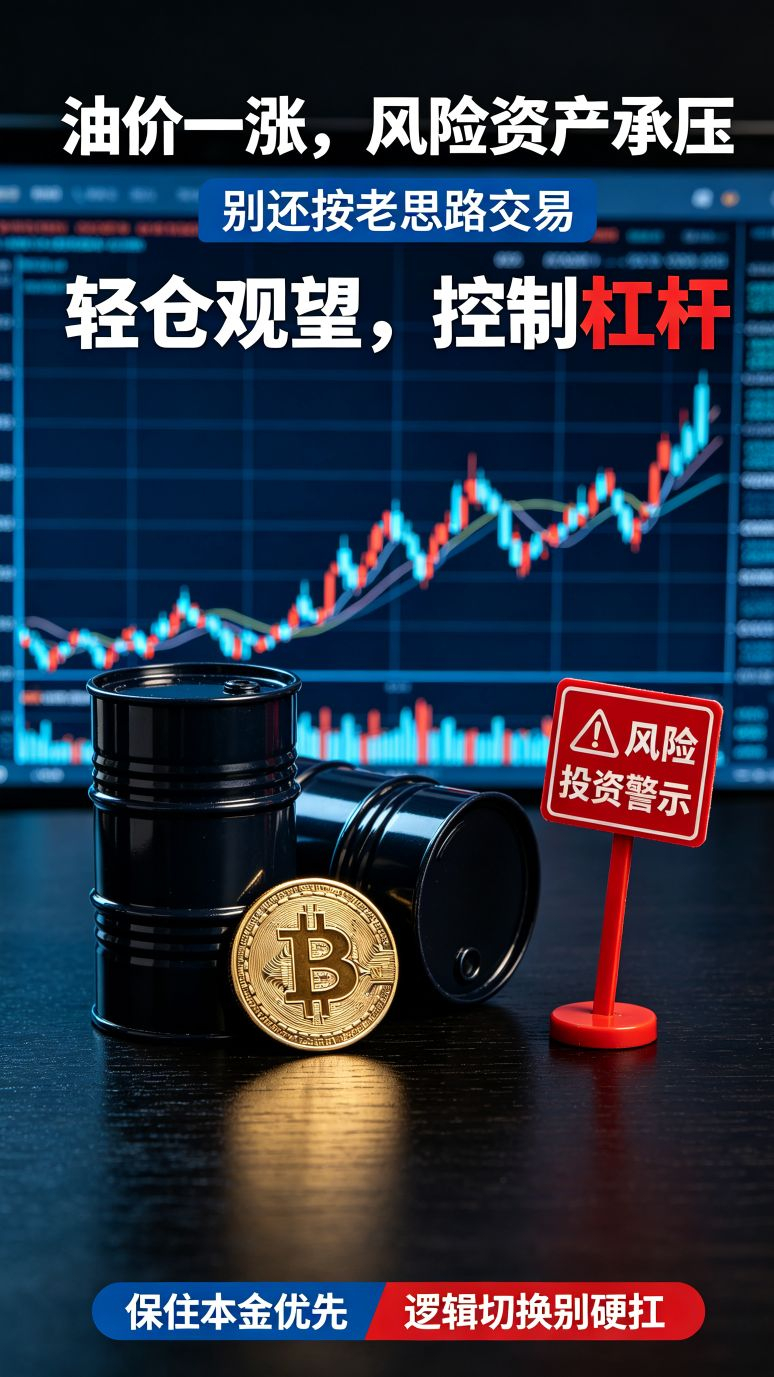
Once oil prices firmly hold above 100, inflation pressure will rise again—giving the Federal Reserve a stronger pretext to keep hiking rates. As long as rate-hike expectations heat up and liquidity tightens, the crypto market will definitely feel the pressure too.💥
Previously, the market was driven forward by AI-related hot themes. Now, funds are taking priority and focusing on macro data like inflation and oil prices. Money is shifting to risk avoidance instead of blindly chasing high-risk assets. For coins like BTC and ETH, it’s therefore hard to sustain a continuous rally. Choppy, back-and-forth price action will become the norm.💥
Fellow retail traders, don’t keep using old ways of trading. Don’t assume you can just go all-in simply because it’s a bull market. Once the macro wind changes, needle-like spikes through the chart will happen more frequently. Keep leverage under control—don’t rush in just because you see a small rebound.💥
Right now, the priority is to stay on the sidelines, watch more and move less. Keep an eye on oil prices and Fed-related news. The market logic has already changed—old experience is more likely to get you into a big pitfall. Preserving capital comes first.💥#原油涨至7月来最高 #灰度ZcashETF资产突破5亿美元 #美国银行集团完成USBDC稳定币试点
Once oil prices firmly hold above 100, inflation pressure will rise again—giving the Federal Reserve a stronger pretext to keep hiking rates. As long as rate-hike expectations heat up and liquidity tightens, the crypto market will definitely feel the pressure too.💥
Previously, the market was driven forward by AI-related hot themes. Now, funds are taking priority and focusing on macro data like inflation and oil prices. Money is shifting to risk avoidance instead of blindly chasing high-risk assets. For coins like BTC and ETH, it’s therefore hard to sustain a continuous rally. Choppy, back-and-forth price action will become the norm.💥
Fellow retail traders, don’t keep using old ways of trading. Don’t assume you can just go all-in simply because it’s a bull market. Once the macro wind changes, needle-like spikes through the chart will happen more frequently. Keep leverage under control—don’t rush in just because you see a small rebound.💥
Right now, the priority is to stay on the sidelines, watch more and move less. Keep an eye on oil prices and Fed-related news. The market logic has already changed—old experience is more likely to get you into a big pitfall. Preserving capital comes first.💥#原油涨至7月来最高 #灰度ZcashETF资产突破5亿美元 #美国银行集团完成USBDC稳定币试点


WOLF 狼
·
--
Every day in crypto brings a new lesson, a new opportunity, and a new challenge 🎁🎉
I’m grateful to everyone who takes the time to support my posts, share ideas, and stay connected with this journey.
The goal is simple: keep learning, stay consistent, and keep improving.
Thank you for being part of the journey.
Your support means a lot. 💗🚀
$BTC
#Congratulations😊😍 #BTC🔥🔥🔥🔥🔥
I’m grateful to everyone who takes the time to support my posts, share ideas, and stay connected with this journey.
The goal is simple: keep learning, stay consistent, and keep improving.
Thank you for being part of the journey.
Your support means a lot. 💗🚀
$BTC
#Congratulations😊😍 #BTC🔥🔥🔥🔥🔥

灰s1688
·
--
🧧Come claim $SOL 🧧
🌟Like, follow, share, and join the group chat
🌟Like, follow, share, and join the group chat


心月势不可挡
·
--
BullishTeachers' Day gift; in the almond grove, rain nourishes brilliance—on a three-foot podium, the years bloom.
With a light stroke of chalk, we sketch the days and months; with devoted hearts, we silently nurture mulberry and hemp.
With a bit of love, for thousands of families, spring breeze turns rain into passing years.
Don’t say you can’t repay a teacher’s kindness—one sheet of heartfelt prose, respectfully toasting tea.
With a light stroke of chalk, we sketch the days and months; with devoted hearts, we silently nurture mulberry and hemp.
With a bit of love, for thousands of families, spring breeze turns rain into passing years.
Don’t say you can’t repay a teacher’s kindness—one sheet of heartfelt prose, respectfully toasting tea.



·
--
🎙️ Binance is becoming more and more like a super app now—BNB is definitely worth owning

End
02 h 10 m 26 s
7.2k
19

幸运雨Rain
·
--
🧧🔥🧧🔥🧧🧧🔥迎着清晨微光,调整好心态开启新的交易日🍃
The market rises and falls in cycles—there’s no need to obsess over capturing every swing📊。
The core of trading is knowing how to restrain impulsiveness, and keeping the rhythm that belongs to you🕊️。
Block out the chaos and noise in the market; don’t follow the crowd, don’t blindly follow trends✨。
Keep refining your understanding, and patiently wait for high-quality opportunities—the time won’t disappoint those who quiet their mind and settle in💎。
Wishing all fellow travelers—stay true to yourself, and move forward steadily🌌
Follow me and answer 1 to get double the red packets🧧🧧🧧🧧🧧🧧🧧🧧
#原油涨至7月来最高
The market rises and falls in cycles—there’s no need to obsess over capturing every swing📊。
The core of trading is knowing how to restrain impulsiveness, and keeping the rhythm that belongs to you🕊️。
Block out the chaos and noise in the market; don’t follow the crowd, don’t blindly follow trends✨。
Keep refining your understanding, and patiently wait for high-quality opportunities—the time won’t disappoint those who quiet their mind and settle in💎。
Wishing all fellow travelers—stay true to yourself, and move forward steadily🌌
Follow me and answer 1 to get double the red packets🧧🧧🧧🧧🧧🧧🧧🧧
#原油涨至7月来最高


远方1688BNB
·
--
As long as you keep getting better, it’s okay to go slowly. Believe that every day is a good day, and everything is good news!
#定投BTC #DCA into BNB
#定投BTC #DCA into BNB


只会呐喊的尖刀手
·
--
BearishZEC’s sudden surge—put simply, it’s “ETF buy pressure + short liquidations + the privacy narrative” all blowing in the same direction. It’s not that there are really that many people using ZEC for transfers. The price went from 50 to 1200, but the pool’s share only rose by 5 percentage points—showing that the money is trading the story, not the product.
The shorts have already been liquidated in a first round. Anyone who was going to get cut has already been cut. After that, there are no fresh shorts left to squeeze. Bulls now have to hold the bag themselves. Futures positions are about $2 billion, roughly half the entire equity value on top—so when it drops, it becomes a ruthless cascade of liquidations, even worse than the rally.
Grayscale’s ZCASH is currently being pulled up by big institutions, but ETFs aren’t a money-printing machine. The day net inflows turn negative, the market will instantly flip from “institutional bull” to “good news already priced in.” Add the EU’s 2027 ban on privacy coins, and the fact that in the US the moment regulation changes, exchanges can delist this stuff—so it’s inherently policy-sensitive.
On the macro side, no one takes a side: oil is heading toward $100, the 10-year Treasury is at 4.8, and the Fed is set to keep hiking. Even gold’s safe-haven hedge isn’t working. If that’s the environment, who would still treat a high-leverage alt as a treasure? BTC hasn’t even returned to $80k, yet ZEC jumps 24x first—that’s liquidity illusion.
Don’t learn from the big shots and stubbornly hold short positions to lose tens of millions. Smart people aren’t in a rush to short right now—wait for three signals: ZCASH inflows turn negative, a 4-hour long upper wick appears, and BTC breaks above $78k. Once it hits, place your sell orders. Targets first at 800, then 500. Going long ZEC is chasing the story; shorting ZEC is waiting for the story to run out of oxygen: the wind stops, the pigs fall first—and privacy coins fall the hardest.
This isn’t a bargain-hunting moment—it’s a hunter waiting for prey. $ZEC
The shorts have already been liquidated in a first round. Anyone who was going to get cut has already been cut. After that, there are no fresh shorts left to squeeze. Bulls now have to hold the bag themselves. Futures positions are about $2 billion, roughly half the entire equity value on top—so when it drops, it becomes a ruthless cascade of liquidations, even worse than the rally.
Grayscale’s ZCASH is currently being pulled up by big institutions, but ETFs aren’t a money-printing machine. The day net inflows turn negative, the market will instantly flip from “institutional bull” to “good news already priced in.” Add the EU’s 2027 ban on privacy coins, and the fact that in the US the moment regulation changes, exchanges can delist this stuff—so it’s inherently policy-sensitive.
On the macro side, no one takes a side: oil is heading toward $100, the 10-year Treasury is at 4.8, and the Fed is set to keep hiking. Even gold’s safe-haven hedge isn’t working. If that’s the environment, who would still treat a high-leverage alt as a treasure? BTC hasn’t even returned to $80k, yet ZEC jumps 24x first—that’s liquidity illusion.
Don’t learn from the big shots and stubbornly hold short positions to lose tens of millions. Smart people aren’t in a rush to short right now—wait for three signals: ZCASH inflows turn negative, a 4-hour long upper wick appears, and BTC breaks above $78k. Once it hits, place your sell orders. Targets first at 800, then 500. Going long ZEC is chasing the story; shorting ZEC is waiting for the story to run out of oxygen: the wind stops, the pigs fall first—and privacy coins fall the hardest.
This isn’t a bargain-hunting moment—it’s a hunter waiting for prey. $ZEC
Verified
SPCXUS+0.27%

慢就是快Mike
·
--
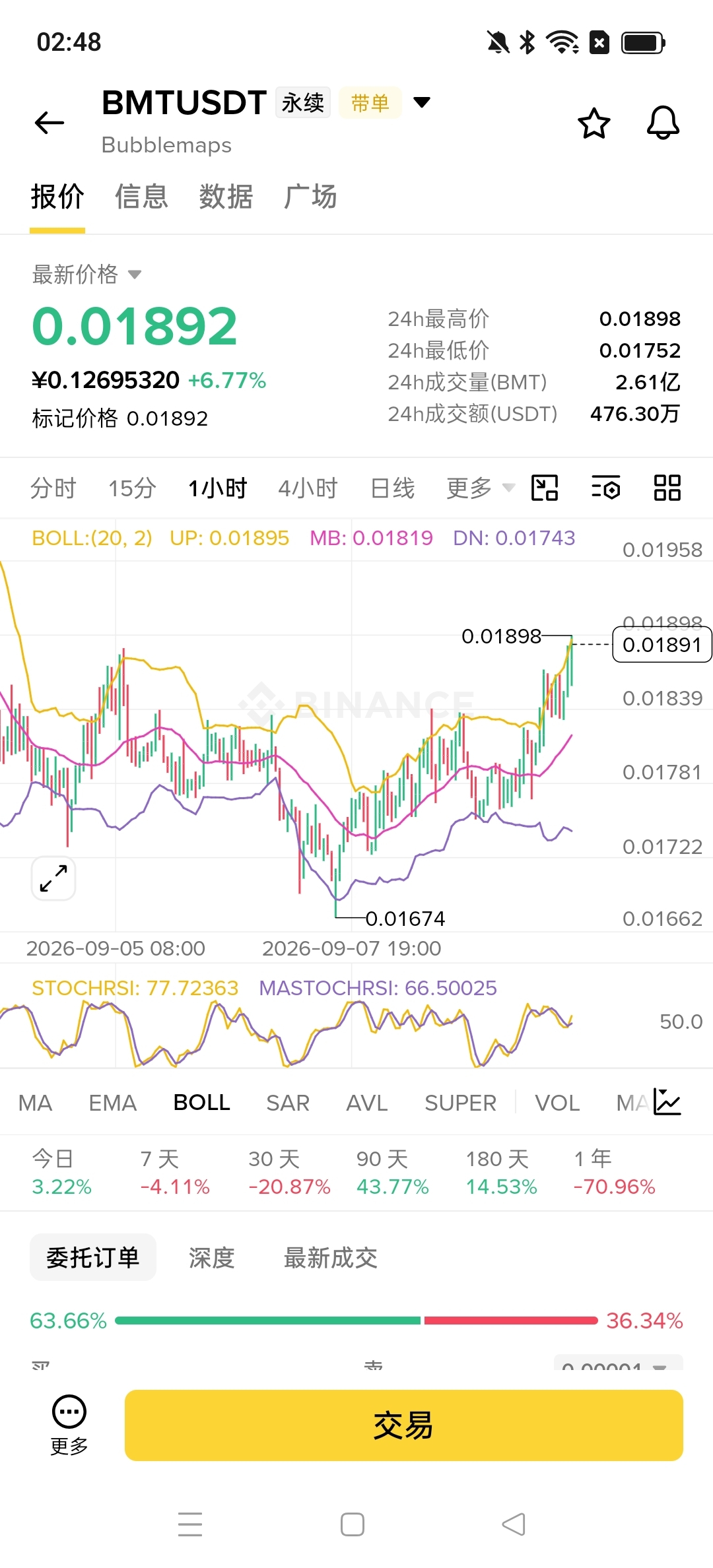
$BMT ! Great!

花涧空
·
--
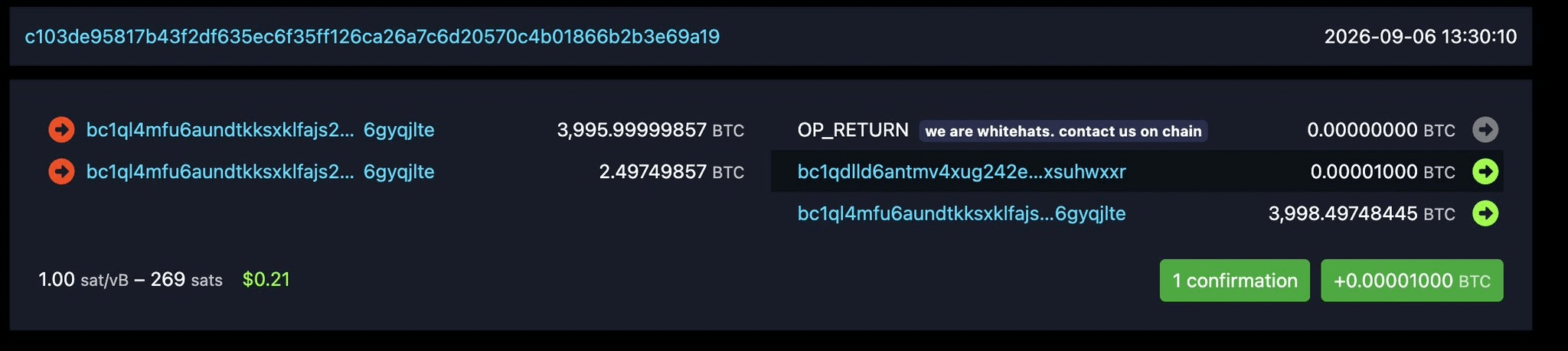
📢4000 BTC Large-Amount Activity on the Blockchain!
About 4,000 BTC were transferred out from the Liquid Network bridge in one go. The transaction includes an OP‑RETURN inscription: “we are whitehats. contact us on chain”(We are white-hats. Please contact us on-chain)
Starting in the early morning, major social groups erupted. At one point, the market spread rumors that a large amount of Bitcoin had been stolen.
But here’s the interesting part: on the order book, $BTC shows almost no movement—the price is rock steady, like an old dog.
Even a “suspected stolen” message at the level of 4,000 BTC couldn’t shake the market.
The market’s ability to absorb is clearly evident—the liquidity in this bull market is completely different 🧊
#Liquid网络遭3.2亿美元攻击
About 4,000 BTC were transferred out from the Liquid Network bridge in one go. The transaction includes an OP‑RETURN inscription: “we are whitehats. contact us on chain”(We are white-hats. Please contact us on-chain)
Starting in the early morning, major social groups erupted. At one point, the market spread rumors that a large amount of Bitcoin had been stolen.
But here’s the interesting part: on the order book, $BTC shows almost no movement—the price is rock steady, like an old dog.
Even a “suspected stolen” message at the level of 4,000 BTC couldn’t shake the market.
The market’s ability to absorb is clearly evident—the liquidity in this bull market is completely different 🧊
#Liquid网络遭3.2亿美元攻击

大丽7613
·
--
[Replay] 🎙️ Market pullback, DCA into BNB
02 h 15 m 31 s · 14.6k listens

奕澤YiiiiiZze
·
--
🧧Using decentralized consensus to gather the strength to move forward—together, we open up an infinitely broad future for Web3.
Follow, like, and share🎁
———LUCiC
Follow, like, and share🎁
———LUCiC

Log in to explore more content