On January 29, the traditional financial market was in a state of panic, but Bitcoin holders on the blockchain remained calm.
To be honest, January 29 was quite terrifying. Once the geopolitical conflict broke out, the global market suffered, risk assets were sold off frantically, and Bitcoin was no exception; some people started selling early and did so very aggressively. However, what many people failed to realize is that the real panic didn't come from those holding coins on the blockchain. This contrast is much more significant than that large bearish candlestick on the chart.
Core judgment
Regarding the events of January 29, to put it simply, traditional finance was setting the tone. The Bitcoin ETF became the main force in the sell-off, while the seasoned players in Web3 on the blockchain hardly moved. Although the price collapsed, everyone's confidence remained.
Who is behind this wave of selling?
1. ETFs are the main force behind the crash
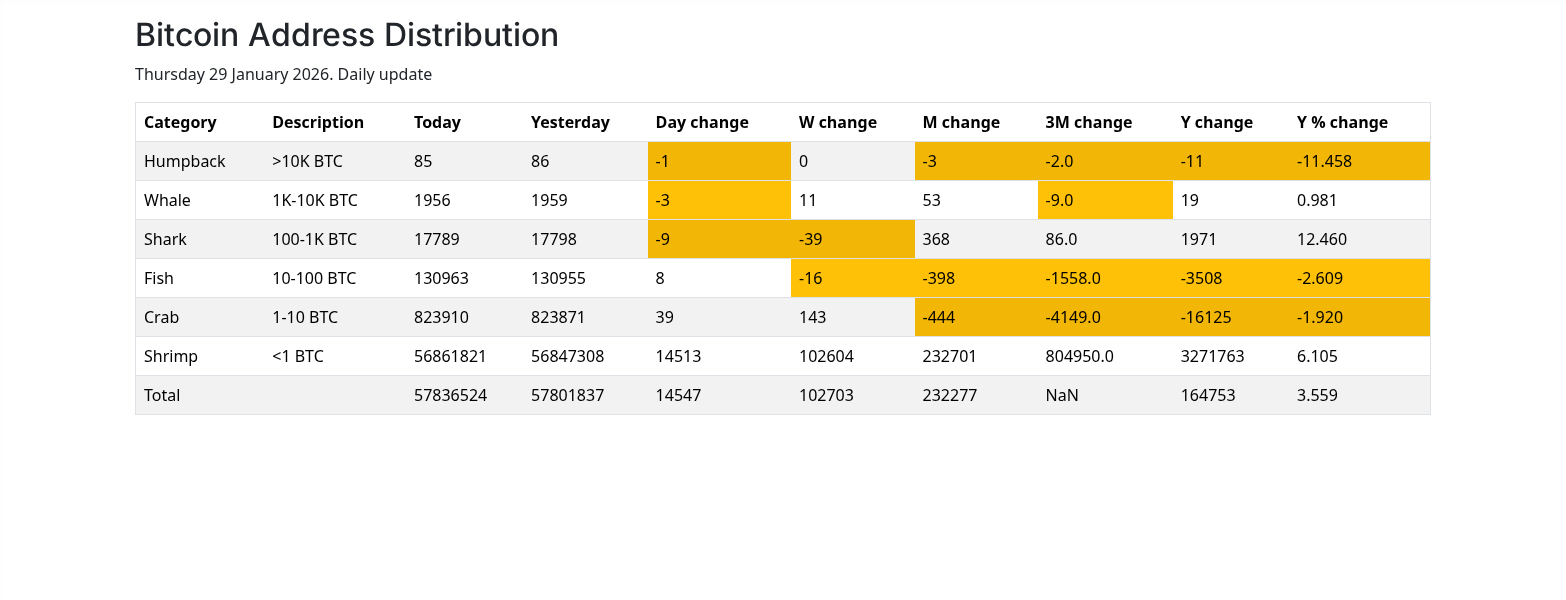
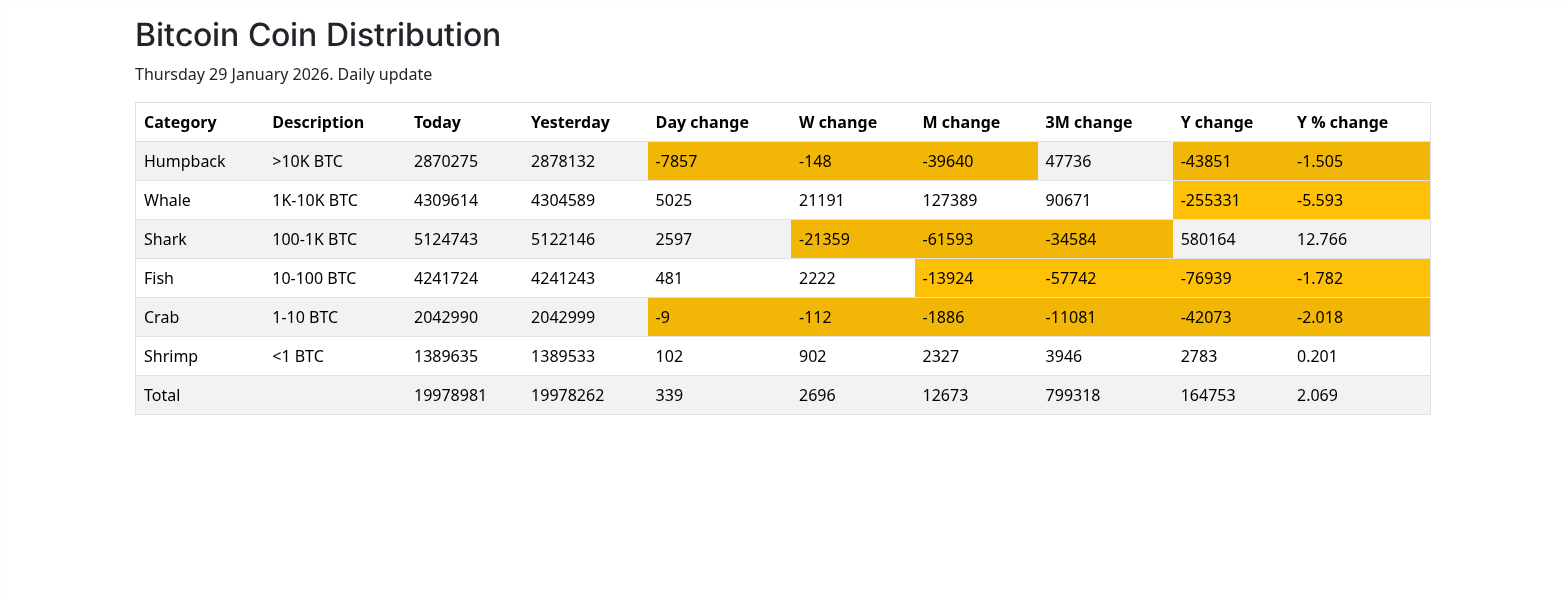
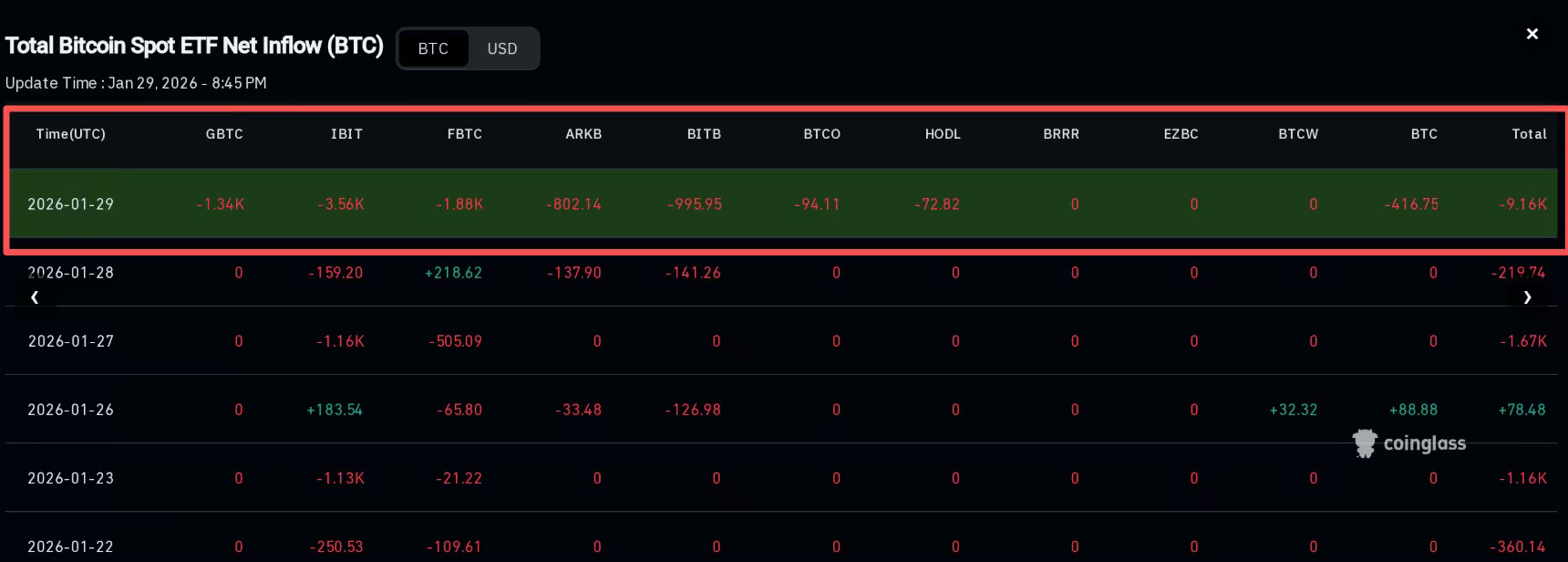
On that day, nearly 10,000 BTC net flowed out of the Bitcoin ETF. These redemption orders were real spot sell orders—without any strategy, without considering timing, just executed according to procedure. On-chain data also confirms this: those 'whale wallets' holding more than 10,000 coins indeed decreased by 7,800 BTC, but the number of addresses hardly changed. This indicates that custodial institutions or ETFs are selling, not long-term holders panicking.
2. Options are adding fuel to the fire
The price of Bitcoin fell below the $85,000 bearish options concentration area. In order to hedge risks, market makers instead engaged in a 'sell more as it falls' pro-cyclical operation, and the original support level suddenly disappeared. Panic was thus amplified into a stampede.
But what hasn't happened on-chain is the real signal
3. Small retail investors did not follow the trend
Those with a small amount of coins, like 'shrimp', 'crabs', and 'small fish', basically did not see concentrated selling, the number of addresses did not experience a cliff-like drop, and it did not trigger a chain reaction. Even the retail investors who are easily influenced by emotions did not panic this time.
4. Data proves it is a 'stress test', not 'cutting losses and leaving'
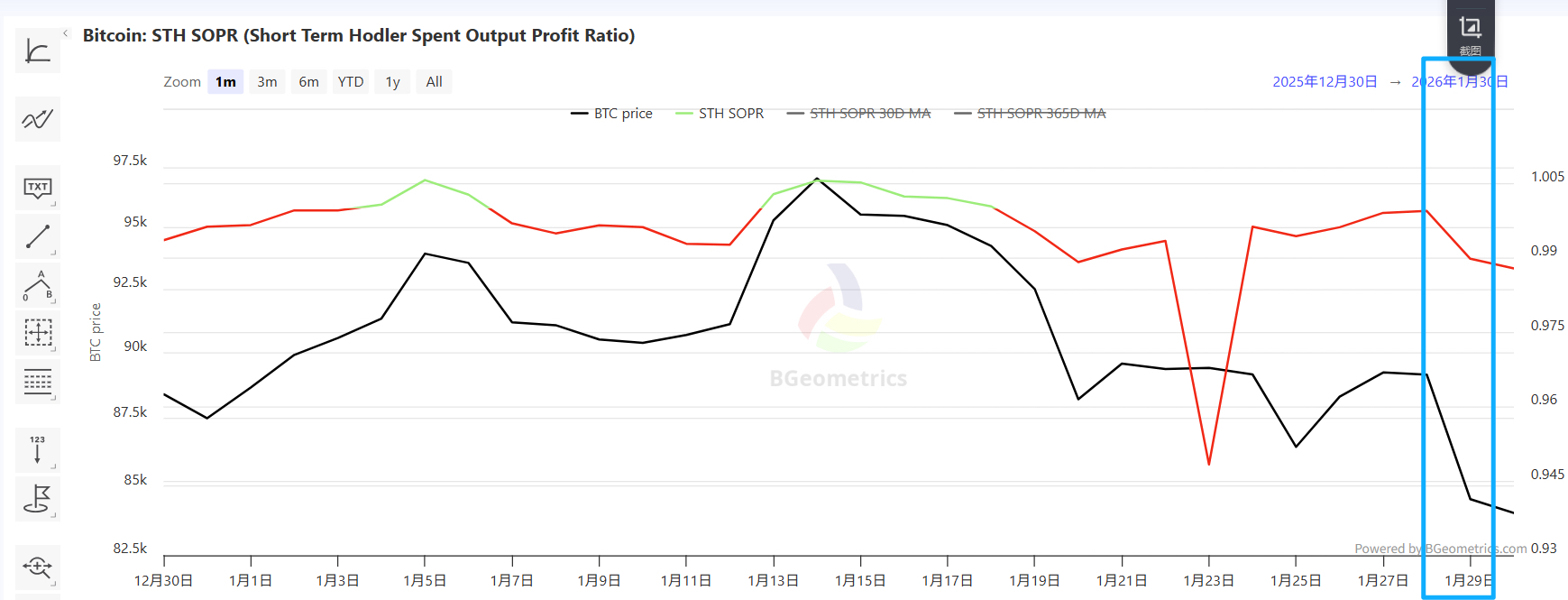
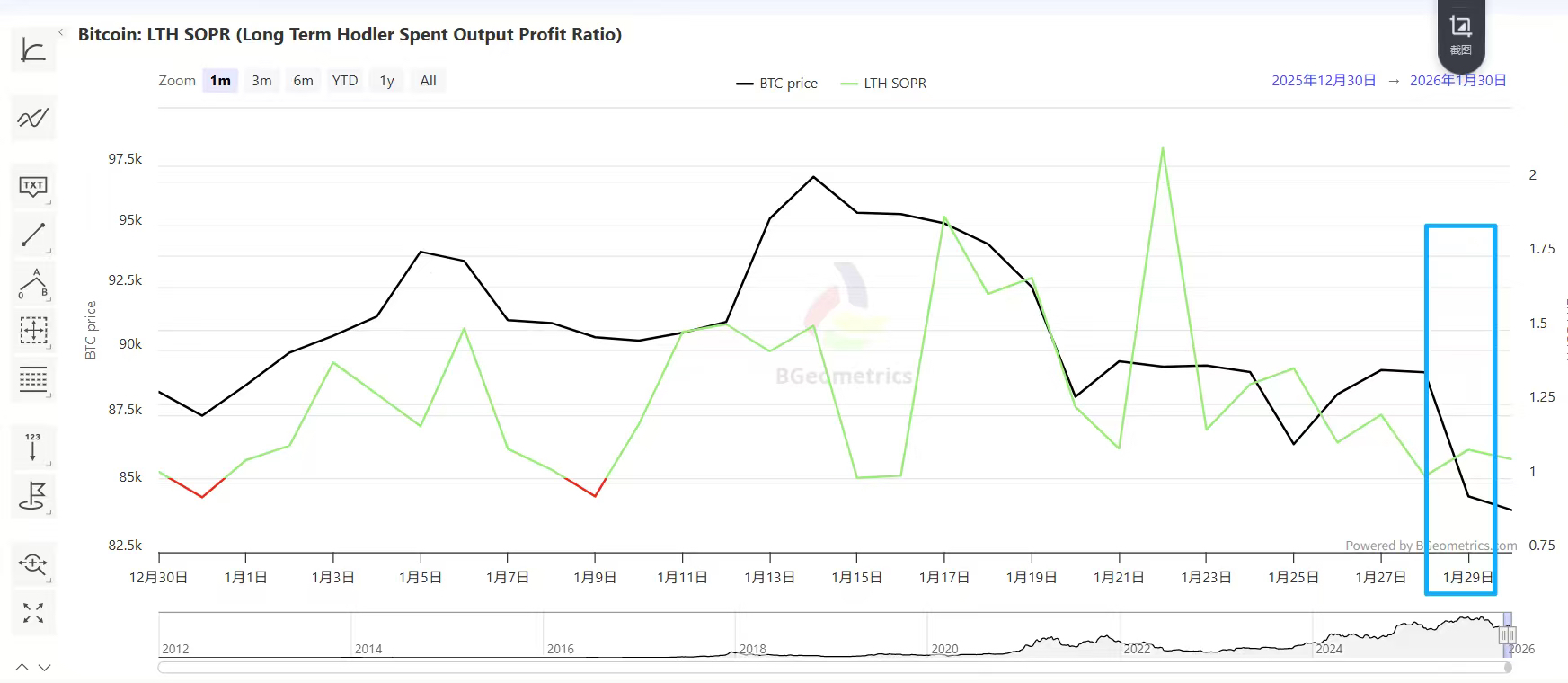
The SOPR (Spent Output Profit Ratio) of short-term holders dropped to 0.989, indicating that some are selling at a loss, but not to the extent of 'blood losses'; the SOPR of long-term holders remains as stable as an old dog. The old money has hardly moved.
5. Old coins haven't run away
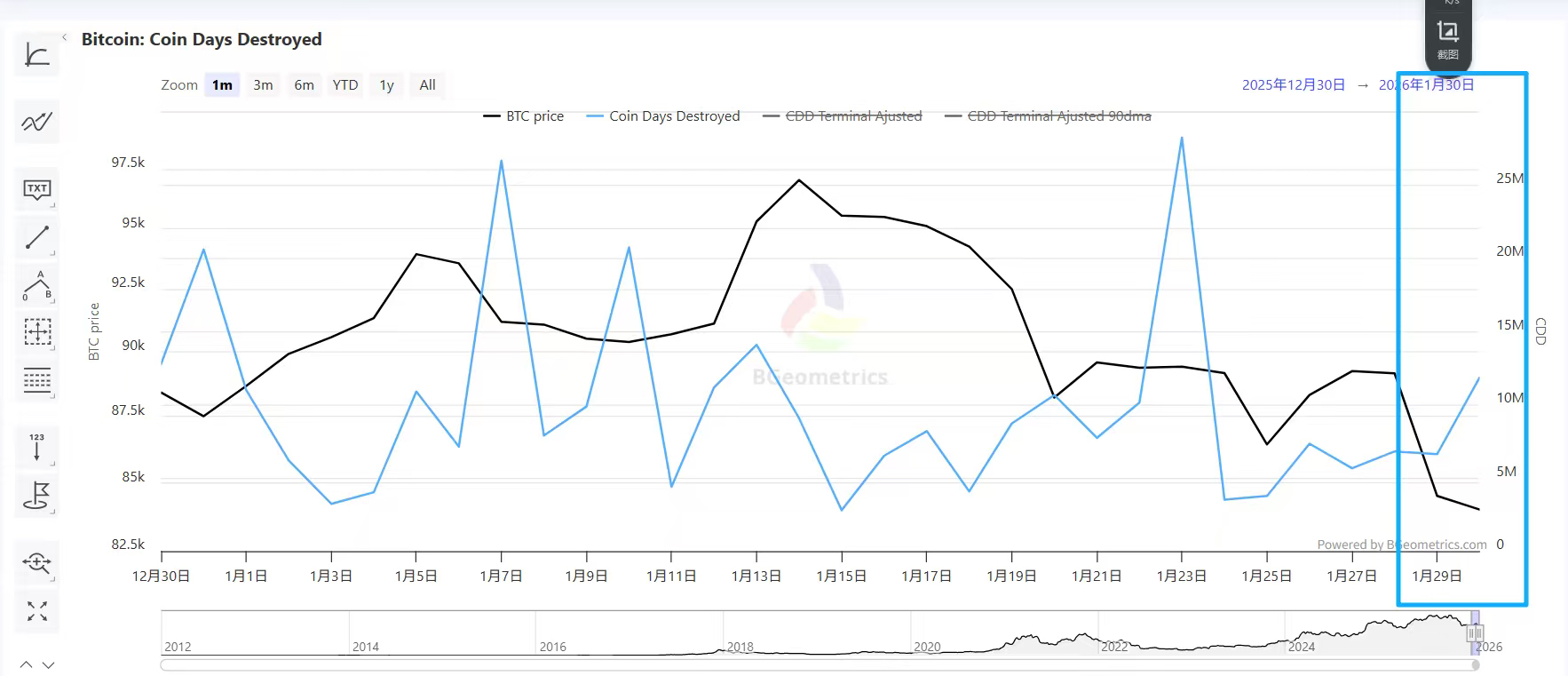
The Coin Days Destroyed (CDD) indicator has not shown any abnormal movement, indicating that not many 'old coins' have been sold. This is not 'distribution' (large holders selling), but more like 'passing the baton'.
January 29 in my eyes
In a global panic, traditional finance still treats Bitcoin as 'risk garbage'—sell first and think later. The ETF directly transmitted this fear to the spot market, and derivatives added fuel to the fire, making the snowball grow larger and larger. However, the on-chain data tells a completely opposite story.
Next, focus on two variables
Whether this market structure can be established depends on two things:
• After the panic, will the outflow of ETFs stop?
• With the market still fluctuating, can on-chain players remain stable?
On-chain holders have already voted with their feet, now we just wait to see how traditional finance responds.