


IT Home reported on August 23 that earlier this month Tesla invited JPMorgan analysts to visit one of its factories. The Wall Street bank later disclosed the findings from the visit in its latest published investor report. One notable piece of information is that Tesla admitted it is slowing down the pace of adding the Model Y to its Robotaxi fleet, but the company says it has ample reasons.
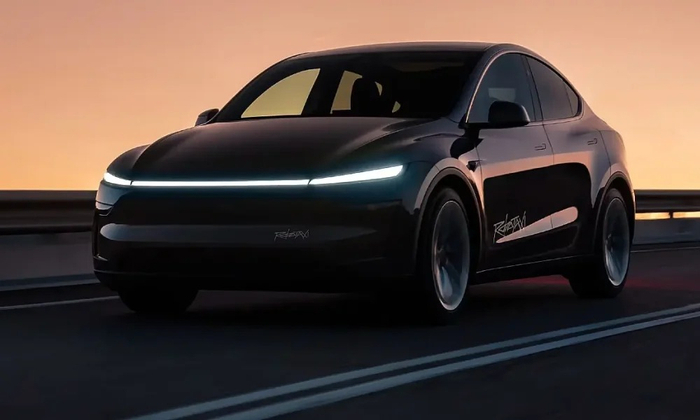
JPMorgan analyst recently visited Tesla's Fremont factory and met with the company's investor relations team. Through this inspection, the analyst gained a clearer understanding of Tesla's Robotaxi strategy.
According to a report by JPMorgan, Tesla is currently looking to control the pace at which the Model Y is added to the Robotaxi fleet.
A line analyst said: “Tesla states that it is intentionally slowing down the pace of adding Model Y to the Robotaxi fleet because it believes Cybercab can enable rapid, large-scale deployment in the short term. For FSD V15, Tesla believes this is a major leap in performance, with improvements comparable to the upgrade from V13 to V14. The V15 upgrade includes seven core technologies, and about 40% of them are currently being tested in the Robotaxi fleet; early feedback is encouraging.”
This approach does not mean that Tesla’s autonomous driving plan is delayed or that the company has lost confidence in autonomous driving technology. On the contrary, it reflects Tesla management’s confidence that the Cybercab built specifically for Robotaxi can quickly scale up in the short term.
IT Home has noted that since Tesla launched its Robotaxi service in Austin and expanded its business to other markets, its Robotaxi fleet has mainly relied on modified Model Ys. However, the company now intends to slow down further modifications to the Model Y.
The reason is actually quite simple. Tesla management believes that the Cybercab is a vehicle specifically designed for Robotaxi operations, featuring a two-seat layout with no steering wheel or pedals, making it better suited to high-frequency operating needs. Therefore, over the next few months, Cybercab’s production and deployment efficiency may be higher than that of modified Model Ys.
For most travel orders that typically involve only one or two passengers, this dedicated vehicle is also expected to deliver better per-vehicle operating economics. At the same time, reducing the conversion of Model Y into the Robotaxi fleet could allow more vehicles to remain for sales in the consumer market.
One of the key factors supporting this strategic adjustment is FSD V15. Tesla describes it as a truly meaningful leap in performance, with an upgrade magnitude comparable to the shift from V13 to V14.
FSD V15 introduces seven core technologies, of which about 40% have already been undergoing real-road testing in the existing Robotaxi fleet. Early feedback has been described as “encouraging.”
Tesla is currently proceeding cautiously with software development. While adding new features continuously, it is also doing its best to avoid affecting existing core driving functions. Management views FSD V15 as a key entry point to enable large-scale promotion of supervised-free FSD.
It is worth noting that Tesla’s existing AI computing platform and its Hardware 4 hardware system are already able to run FSD V15 and support autonomous driving functions without supervision.
The Cybercab itself is also only the first model in Tesla’s autonomous driving platform. Tesla has reiterated that it will release more products in different forms in the future, and it cited concepts previously shown—such as the “Robovan”—to illustrate how this platform could be expanded to more types of autonomous vehicles.
Meanwhile, Tesla’s humanoid robot project, Optimus, continues to move forward. The project still plans to start production within the next few months, with commercial sales possibly beginning as early as the second half of 2027.
As for Optimus Gen 3, Tesla plans to disclose more details when it is closer to mass production, to protect its competitive advantage. The scope of R&D and feature design for the next-generation Gen 4 will rely more on the real-world operational experience gained from Gen 3.
After this round of communication, JPMorgan gained deeper insight into Tesla’s manufacturing automation capabilities and maintained its target share price of $475 for Tesla.
Therefore, slowing down the pace of incorporating the Model Y into the Robotaxi fleet is not a setback to Tesla’s Robotaxi strategy. Rather, it is a strategic choice made after weighing the trade-offs. Tesla management clearly wants to put more resources into Cybercab, which is more efficient and specifically built to serve autonomous taxis, and it believes this vehicle already has the conditions to scale up rapidly in the future.