
The crypto market in 2026 is no longer just 'buy-sell', but a whole ecosystem where earning methods range from passive waiting to complex algorithmic operations.
Here is a detailed overview of all key strategies and methods:

1. Investment Strategies (Long-term)
These are methods for those who do not want to spend 24/7 in front of the monitor.
• HODL (Hold On for Dear Life): A classic. Buying an asset for years. The main thing is belief in the project and 'iron' endurance during downturns.
• DCA (Dollar Cost Averaging): Regularly buying crypto for the same amount over equal intervals of time (for example, $50 weekly). This mitigates the impact of volatility: you buy more when the price is low and less when it is high.
• Investing in ecosystems: Choosing a promising network (Solana, Ethereum, Layer 2 solutions) and buying not only the base coin but also the tokens of its leading projects.

2. Trading strategies (Active)
Here, profit depends on your activity and analytical skills.
• Scalping: The fastest method. A trader makes dozens or hundreds of trades a day, catching minimal price fluctuations (timeframes of 1-5 minutes).
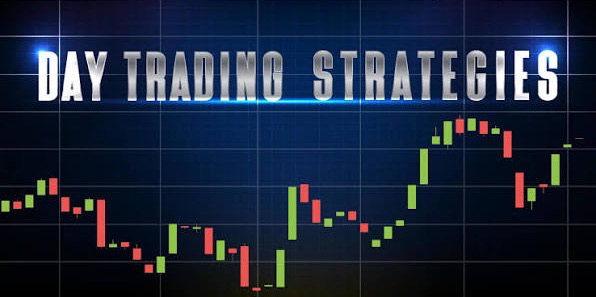
• Day Trading: All positions are opened and closed within one day. The goal is to avoid risks associated with overnight market movements.
• Swing Trading: Holding a position from several days to weeks. A trader tries to 'break' the wave (trend) and take a significant price movement.
• Arbitrage: Buying a coin on one exchange where it is cheaper and selling on another where it is more expensive. It can be inter-exchange or intra-exchange.

3. Passive income methods (DeFi and Staking)
Your money works for you without direct trading.
• Staking: Locking coins in the network (Proof-of-Stake) to support its operation. In return, you receive 'dividends' in the form of new coins (for example, ETH, SOL, DOT).
• Yield Farming: Providing liquidity to decentralized exchanges (DEX). You deposit a pair of coins (for example, USDT/BTC) into a pool and receive a share of transaction fees in return.
• Crypto Lending: You lend your crypto to other users through special platforms (Aave, Compound) for interest.
 4. Specific and low-budget methods
Methods for those who want to start with minimal investments or are looking for 'x's.
• Airdrops & Testnets: Receiving free tokens from new projects for completing certain actions (network testing, subscriptions, activity on Discord). In 2025–2026, this became a professional activity ('drop hunting').
• IDO/IEO (Token Sales): Purchasing project coins in the early stages, before listing on major exchanges.
• Launchpads: Participation in exchange launch platforms (for example, Binance Launchpad), where holding the exchange's base coin gives you the right to buy a new token at a low price.
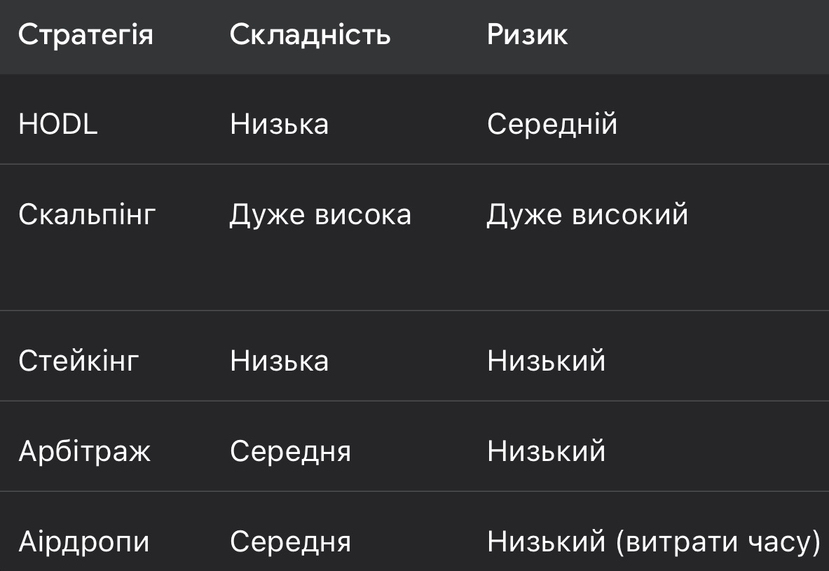
Comparison table of risk and profitability
Where is it best to start?
For beginners in 2026, the optimal combination is DCA (for stability) and Staking (for passive income). If there is a desire to trade, it is better to start with the spot market (without borrowed funds) to avoid losing everything due to one mistake.
Step-by-step learning system: from basic and technical analysis to the first conscious trades. Suitable for those who want to enter crypto trading correctly and without common beginner mistakes:
🚀 Crypto Trading from Scratch in 30 Days — a step-by-step plan to learn and trade confidently