
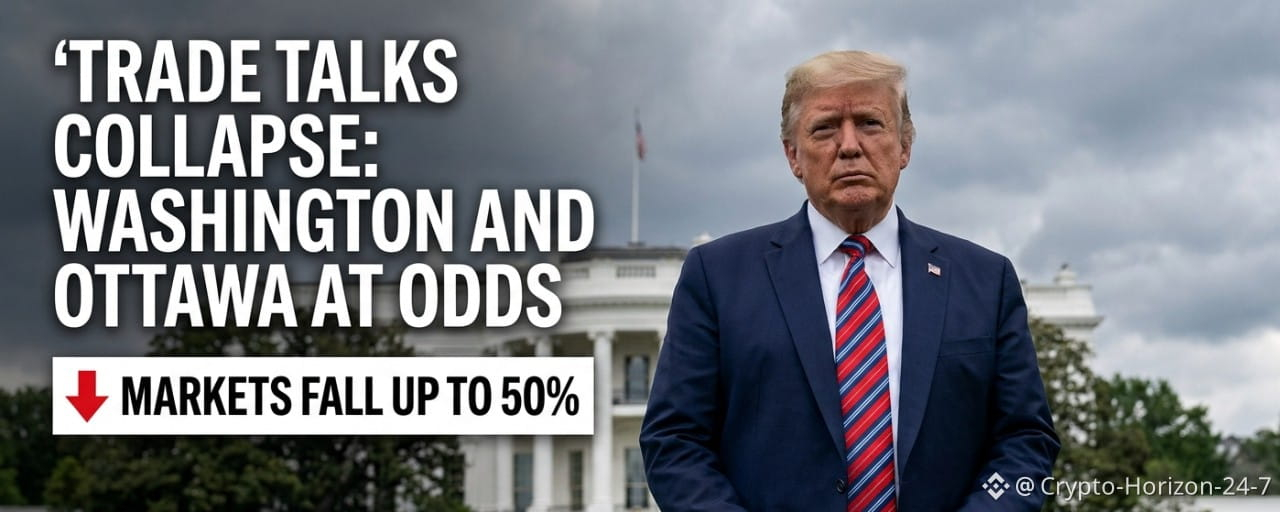
In a pivotal moment that redrew the economic map of North America, crucial trade negotiations between the United States and Canada collapsed in the corridors of Washington, extinguishing hope that the historic allies could reach a settlement formula. It did not stop at the bounds of diplomatic failure; it quickly turned into an exposed economic confrontation after the U.S. administration announced imposing hefty tariffs of 50% on Canadian goods worth $20 billion—equivalent to 5% of Canada’s total exports to U.S. markets. This sudden clash did not only change the rules of the game between the two neighbors, but also sent swift shockwaves through global financial markets.
Behind the scenes of the collapse: were the conditions onerous, or was there a retreat from commitments?
Behind closed doors, the gap between the two sides seemed too wide to bridge, as both sides traded accusations over who caused the stalemate:
The Canadian position: Canadian Prime Minister Mark Carney attributed the failure to Washington’s last-hour insertion of onerous terms that threaten the country’s economic sovereignty. These points included reducing tariff exemptions for Canada’s auto sector, imposing limits on Canada’s sovereignty in signing future trade agreements with other countries, and undermining changes noted to historical protections for culture and language.
The U.S. position: In response, the U.S. Trade Representative, Jamieson Grier, said Ottawa backed away from previous commitments and issued new demands that violated reciprocal rules. He stressed that Washington had offered historical exemptions and reductions for steel, automobiles, and lumber, but it met with Canadian refusal of trade-exchange flexibility.
A map of the impact on financial markets and the global economy
Sector / market Nature of impact Details and economic repercussions Equity markets: A sell-off wave and turmoil; sharp pullbacks in the Toronto Stock Exchange (TSX) index and U.S. markets, with shares of auto, manufacturing, and mining companies falling. Currency markets: Pressure on the “loonie”; a notable drop in the value of the Canadian dollar versus the U.S. dollar amid fears of declining export revenues and slower growth. Supply chains: A jump in costs; a direct increase in the cost of steel, aluminum, and lumber assets, raising companies’ final production costs. Interest rates and inflation: Complex banking tasks; renewed inflationary pressure from tariffs, disrupting the plans of the federal authorities and the Bank of Canada regarding rate cuts.
Where is the crisis headed?
With Canada announcing a retaliatory tariff package in kind to protect its domestic sectors, pressure is mounting on the future of the upcoming North American Free Trade Agreement (USMCA), which is set to be reviewed. Analysts believe this confrontation is not just a temporary dispute over tariffs, but a comprehensive reshaping phase for cross-border trade. While Washington seeks to force partners to accept stricter terms, Ottawa refuses to give up its sovereign gains. Meanwhile, financial markets remain cautiously on alert for what the coming days may bring—scenarios whose effects could last for years.
$BTC #USCanadaTradeTalksCollapseCanadaVowsRetaliation
