
酷酷的腾
3.1k Posts

酷酷的腾
公众号:腾家军 🔸23年币安实盘150倍700w油🔸量价配合打事件 框线交易法打都可以付费学习🔸每晚9点直播打事件合约。
Open Trade
Frequent Trader
3 Years
686 Following
34.0K+ Followers
23.7K+ Liked
Posts
Portfolio
All
Quotes
Videos
Live
PINNED
I played a 7-day event contract and I’ll share my thoughts. I hope it’s useful for brothers who like playing these events.
First of all, an event contract is basically a probability game. With the platform odds at 0.8, then the higher your win rate, the more you earn. So overall, if you play straight through, with about a 65% win rate, we can make money.
But in the long run, if you do enough rounds, you’ll make more mistakes than correct ones, and in the end everything will go back to zero. Especially after a losing streak, everyone’s idea is to win it back in the next round after losing in the previous one. That leads to going all-in while emotionally fired up, and then you lose the original intention of making money.
I think the people who play events are probably brothers who want perpetual income. Most people want to earn a few hundred dollars every day steadily. If that’s the case, then personally I think if you go all-in, you’re deviating from your original goal of making a few hundred dollars.
I played 7 days myself. Day 1: +2000. Day 2: +2000. Day 3: +800. Day 4: +200. Day 5: +4000. Day 6: +1000. Day 7—today: +2000.
I’ll share my playstyle and thought process for everyone to refer to and see if it can help you. My principal is 2000 USD. For the first 5 days I did 200 straight through. After 2–3 consecutive wins, I would all-in the profit. After going all-in, no matter whether I was winning or losing, I continued to do 200 straight through. Maybe it was because my win rate was high, or maybe I was just lucky. In the first 5 days, I made 9000u profit.
On Day 6, I had three consecutive losses, so I changed my strategy. My first bet is 100. If I lose, my next bet is 200. If I lose again, the third bet is 400. After the third bet, regardless of the outcome, I start again from 100.
Also, if I get 2–3 consecutive wins, I’ll all-in the profit.
Using this method, over 7 days with 2000u, I got to 12000u. It could be luck, or maybe I was favored by the heavens, but I still want to share it with everyone. I also want to say a few things to you: ban all-ins, ban getting carried away, and don’t back-push more than three times.
Finally, I hope you can all make it back safely to the shore, and all get rich. I wish you have good health to support you, and that you can stop pulling all-nighters and burning the candle at both ends.
First of all, an event contract is basically a probability game. With the platform odds at 0.8, then the higher your win rate, the more you earn. So overall, if you play straight through, with about a 65% win rate, we can make money.
But in the long run, if you do enough rounds, you’ll make more mistakes than correct ones, and in the end everything will go back to zero. Especially after a losing streak, everyone’s idea is to win it back in the next round after losing in the previous one. That leads to going all-in while emotionally fired up, and then you lose the original intention of making money.
I think the people who play events are probably brothers who want perpetual income. Most people want to earn a few hundred dollars every day steadily. If that’s the case, then personally I think if you go all-in, you’re deviating from your original goal of making a few hundred dollars.
I played 7 days myself. Day 1: +2000. Day 2: +2000. Day 3: +800. Day 4: +200. Day 5: +4000. Day 6: +1000. Day 7—today: +2000.
I’ll share my playstyle and thought process for everyone to refer to and see if it can help you. My principal is 2000 USD. For the first 5 days I did 200 straight through. After 2–3 consecutive wins, I would all-in the profit. After going all-in, no matter whether I was winning or losing, I continued to do 200 straight through. Maybe it was because my win rate was high, or maybe I was just lucky. In the first 5 days, I made 9000u profit.
On Day 6, I had three consecutive losses, so I changed my strategy. My first bet is 100. If I lose, my next bet is 200. If I lose again, the third bet is 400. After the third bet, regardless of the outcome, I start again from 100.
Also, if I get 2–3 consecutive wins, I’ll all-in the profit.
Using this method, over 7 days with 2000u, I got to 12000u. It could be luck, or maybe I was favored by the heavens, but I still want to share it with everyone. I also want to say a few things to you: ban all-ins, ban getting carried away, and don’t back-push more than three times.
Finally, I hope you can all make it back safely to the shore, and all get rich. I wish you have good health to support you, and that you can stop pulling all-nighters and burning the candle at both ends.
PINNED
Complete hands-on trading tips for 10-minute event contracts
I only trade two types of signals:
1. Sell short at pressure levels
1. Price pushes into a key pressure zone
2. A long upper wick appears or a large bearish candle closes
3. Trading volume is clearly larger than the previous few candles (a rally then rejection with volume expansion—NOT volume expansion from a mid-way drop)
4. After the close breaks below the pressure level, then place the order. Don’t bet on a bounce before it confirms.
2. Go long at support levels
1. Price hits a key support level;
2. A long lower wick / a large bullish candle forms;
3. Volume expands, but it can’t be driven down—buyers step in;
4. After the close holds above support, then go long.
❌ Forbidden: trading at the middle of a sideways range, chasing breakouts or selling into rallies, and “micro-step” grind/whipsaw action. Give them all up.
3. The core of 10-minute event contracts
1. First look at the 3-minute candles to find the signal. Once the signal appears, then open the 10-minute contract—don’t randomly scan with 1-minute candles.
2. Place the order exactly when the signal candle closes. Don’t anticipate before the candle finishes.
3. Near major time nodes (on the hour, half hour), do it as little as possible—there will be more pin/needle false signals.
4. Focus on trading volume
1. Volume expansion is only valid when it happens at pressure/support levels.
• Volume expansion during a mid-way drop or mid-way rise = invalid; it easily turns into a reversal.
• Volume expansion after a high gets smashed down, or after the bottom gets hammered and then pulled up = valid signal.
2. Compare with the most recent 3–5 candles: the candle must be noticeably higher in volume—by a clear margin.
3. If the pattern is in place but volume isn’t expanding, it’s better to skip this trade.
5. Filter out false signals
If any of the following happens, give up immediately—don’t place an order:
1. Fast pin/needle behavior with very long wicks and a very small real body;
2. Volume is flat—no clear expansion;
3. There’s still a small distance left to the pressure/support level;
4. A large bullish candle breaks above the pressure—don’t force a short; a large bearish candle breaks below support—don’t force a long.
Summary: When the position is right and the pattern is right, and volume expands—wait for the candle to finish before placing the order.
Don’t chase mid-way rises or drops; don’t trade pin/needle consolidation.
I only trade two types of signals:
1. Sell short at pressure levels
1. Price pushes into a key pressure zone
2. A long upper wick appears or a large bearish candle closes
3. Trading volume is clearly larger than the previous few candles (a rally then rejection with volume expansion—NOT volume expansion from a mid-way drop)
4. After the close breaks below the pressure level, then place the order. Don’t bet on a bounce before it confirms.
2. Go long at support levels
1. Price hits a key support level;
2. A long lower wick / a large bullish candle forms;
3. Volume expands, but it can’t be driven down—buyers step in;
4. After the close holds above support, then go long.
❌ Forbidden: trading at the middle of a sideways range, chasing breakouts or selling into rallies, and “micro-step” grind/whipsaw action. Give them all up.
3. The core of 10-minute event contracts
1. First look at the 3-minute candles to find the signal. Once the signal appears, then open the 10-minute contract—don’t randomly scan with 1-minute candles.
2. Place the order exactly when the signal candle closes. Don’t anticipate before the candle finishes.
3. Near major time nodes (on the hour, half hour), do it as little as possible—there will be more pin/needle false signals.
4. Focus on trading volume
1. Volume expansion is only valid when it happens at pressure/support levels.
• Volume expansion during a mid-way drop or mid-way rise = invalid; it easily turns into a reversal.
• Volume expansion after a high gets smashed down, or after the bottom gets hammered and then pulled up = valid signal.
2. Compare with the most recent 3–5 candles: the candle must be noticeably higher in volume—by a clear margin.
3. If the pattern is in place but volume isn’t expanding, it’s better to skip this trade.
5. Filter out false signals
If any of the following happens, give up immediately—don’t place an order:
1. Fast pin/needle behavior with very long wicks and a very small real body;
2. Volume is flat—no clear expansion;
3. There’s still a small distance left to the pressure/support level;
4. A large bullish candle breaks above the pressure—don’t force a short; a large bearish candle breaks below support—don’t force a long.
Summary: When the position is right and the pattern is right, and volume expands—wait for the candle to finish before placing the order.
Don’t chase mid-way rises or drops; don’t trade pin/needle consolidation.
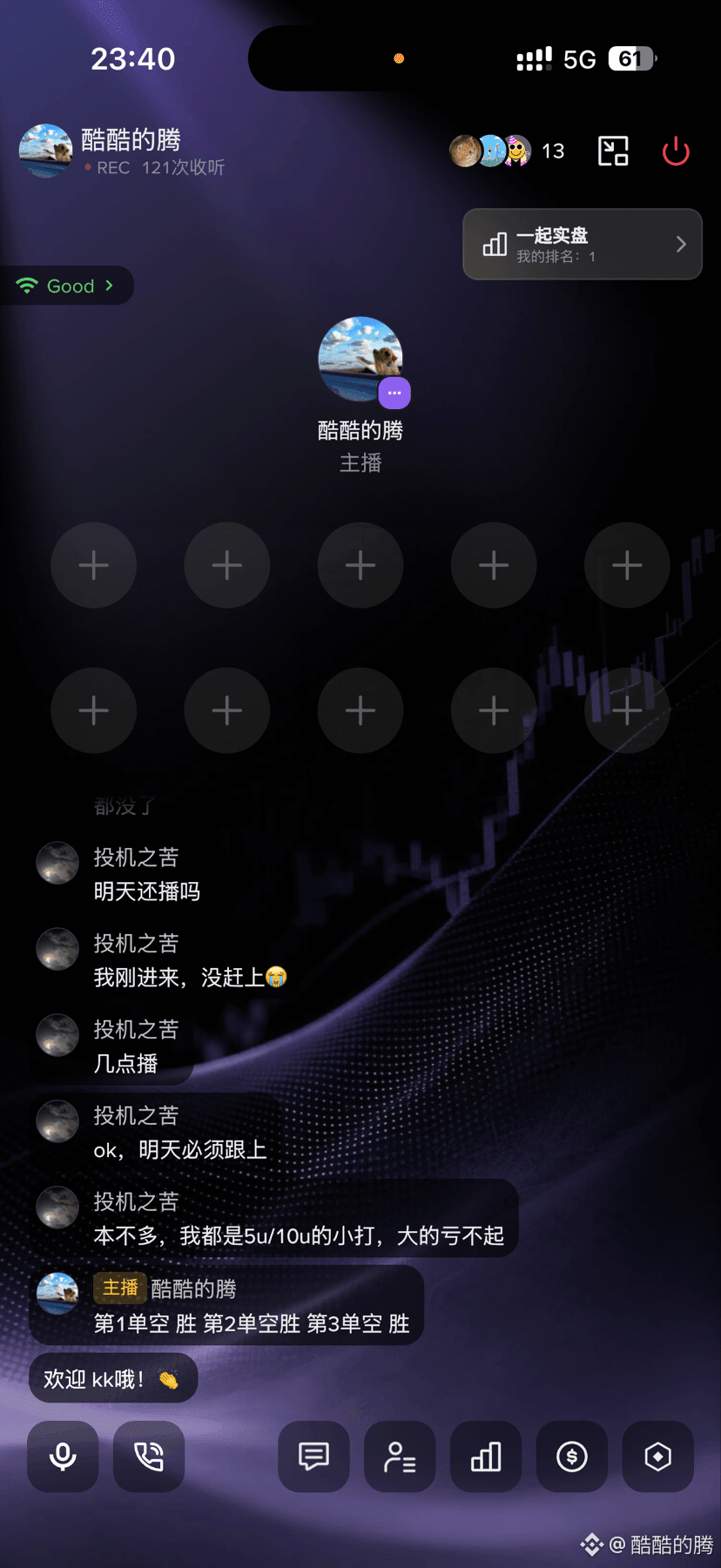
Went live and won all three orders; streaming again tomorrow at 9 PM—time to sleep, sleep.
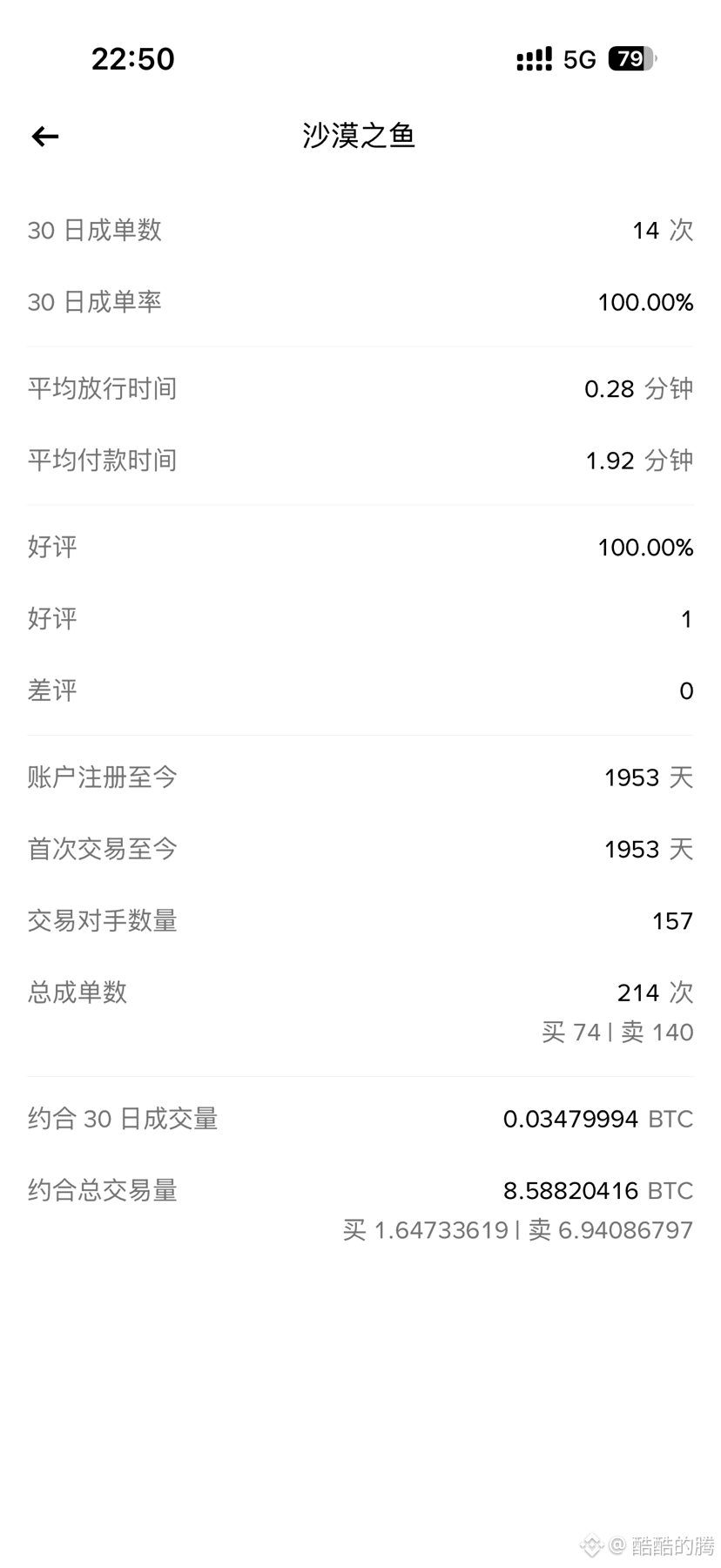
Feeding-on-schedule single-signal style should mean everyone can get good food; stop eating the 9.9 yuan pig trotter rice.
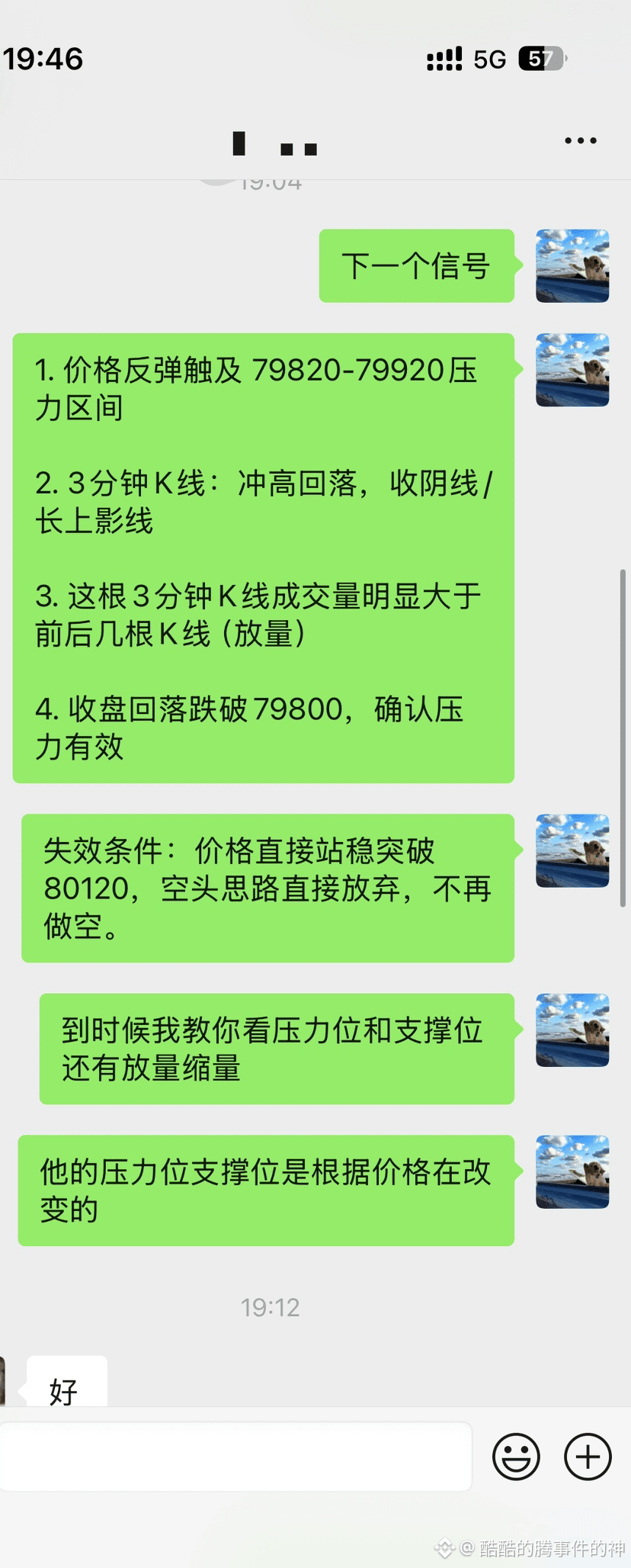
Only after waiting for the event signal can you enter
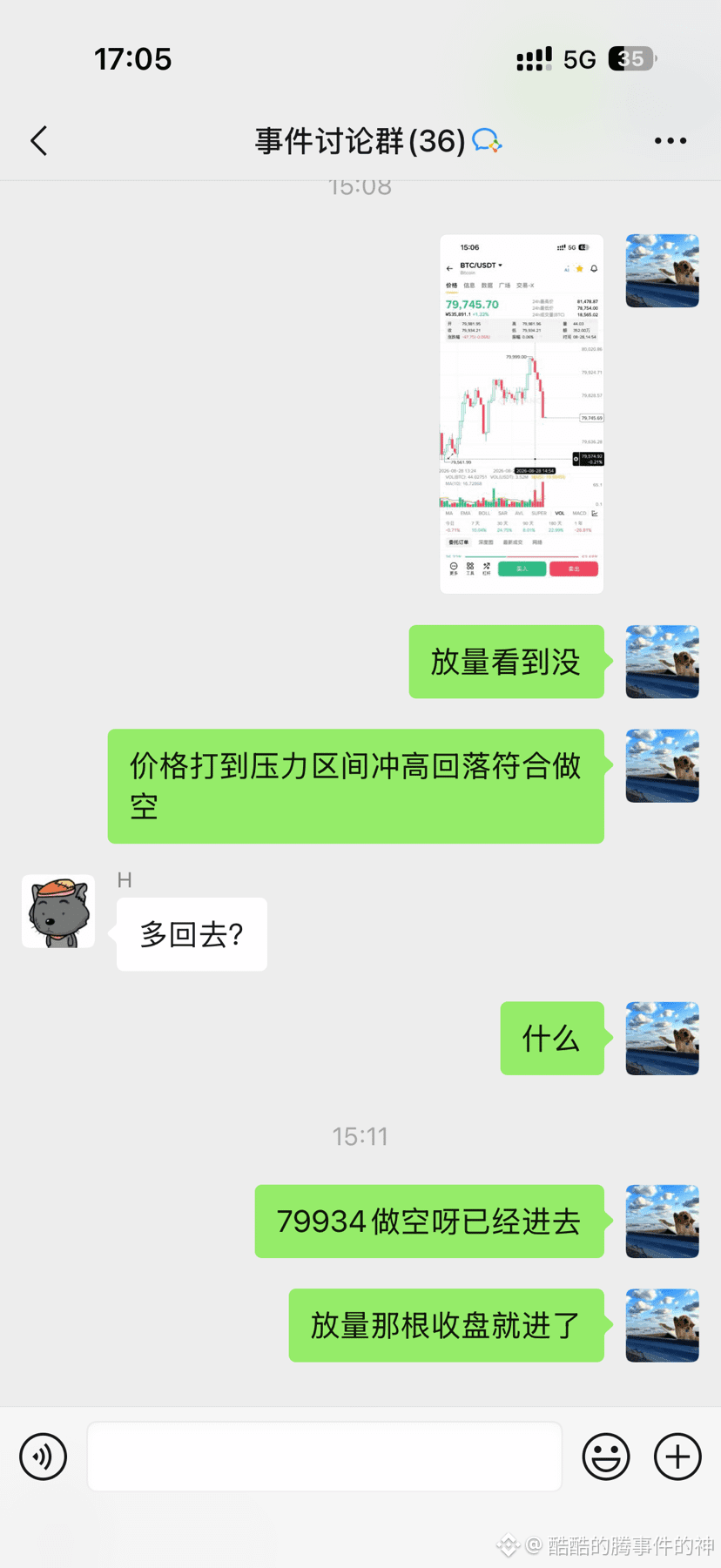
The volume is an expansion.
The price is pushed up to break through the resistance pressure and then rebounds.
It meets the short-selling signal: 79934 short.
The price is pushed up to break through the resistance pressure and then rebounds.
It meets the short-selling signal: 79934 short.
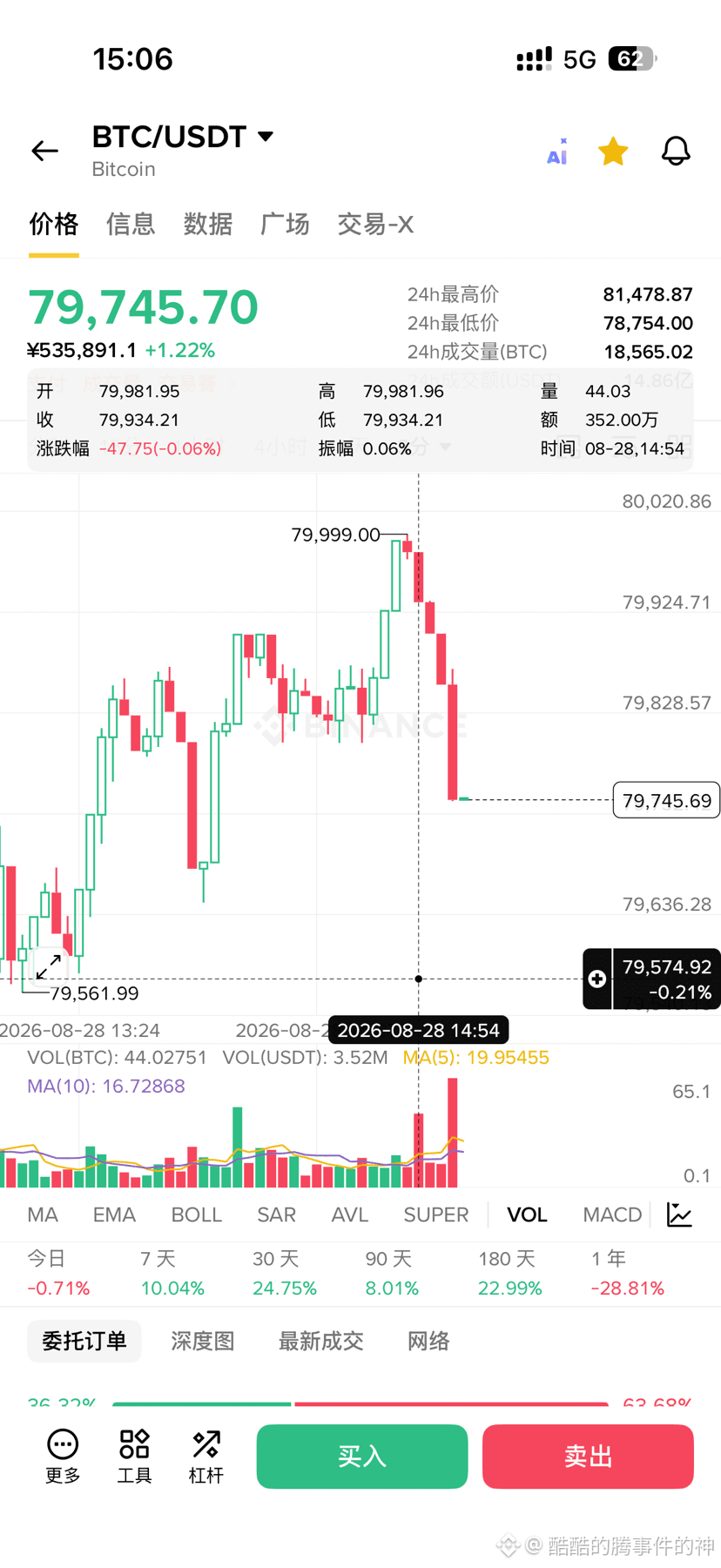
Price pushed into the pressure zone between 79100-79250. The market closed with a bearish candle; the corresponding candlestick shows increased volume, and the closing price is below the pressure zone.
Short-selling signal. I tested it myself and am using it as a record—don’t all go crazy and follow blindly, okay?
Short-selling signal. I tested it myself and am using it as a record—don’t all go crazy and follow blindly, okay?
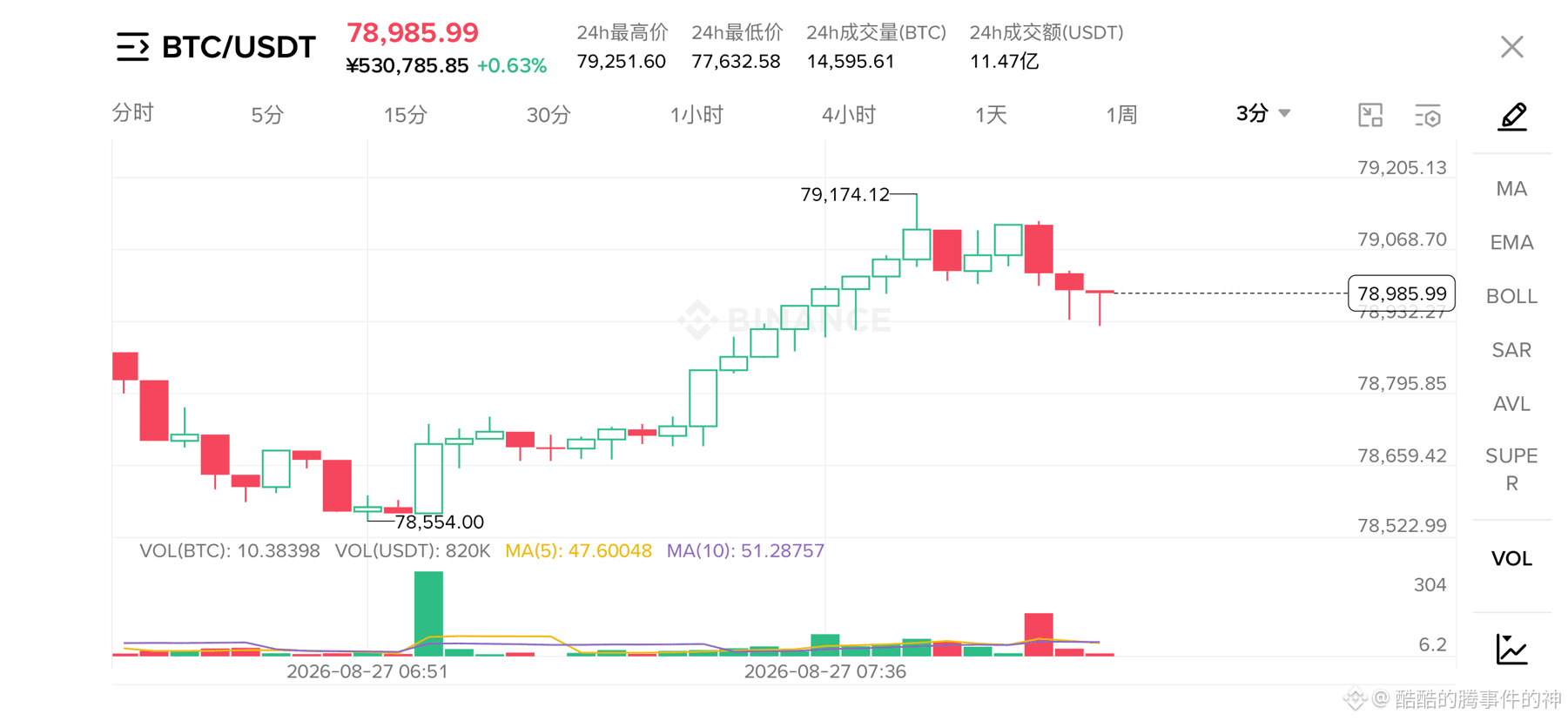
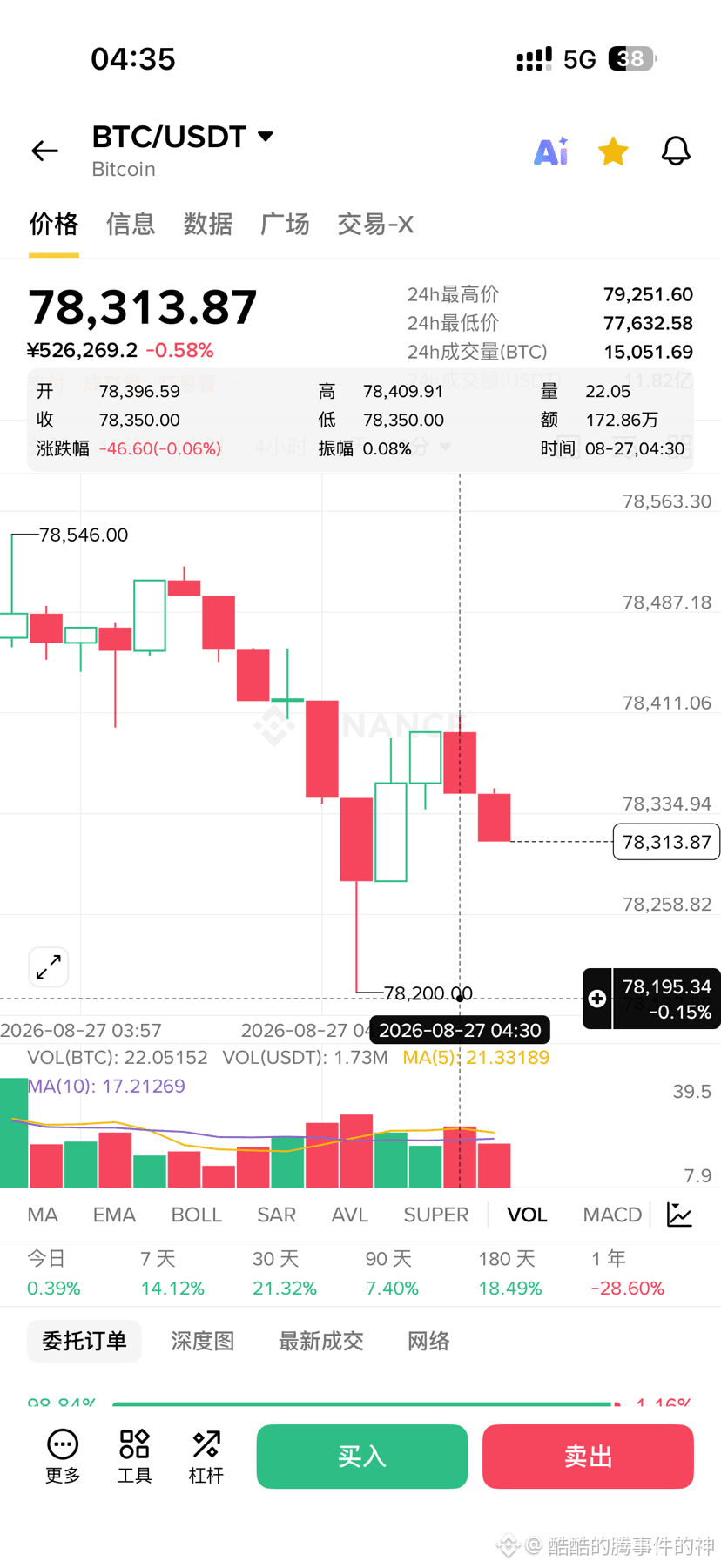
Price-quantity is the king of forecasting. Is there any good brother out there with better technical skills willing to share so we can learn from each other? What I have here is a straightforward price-quantity relationship chart that combines strength/support/resistance. It’s simple, but it can produce false signals, with a win rate between 70–80%. If you further combine it with capital re-picking/tactical倍投, then there’s nobody better—it’s that useful. I want to write a quantitative model based on this strategy signal, and I don’t want to constantly watch the board. If anyone has the skills, please come and let’s work together.
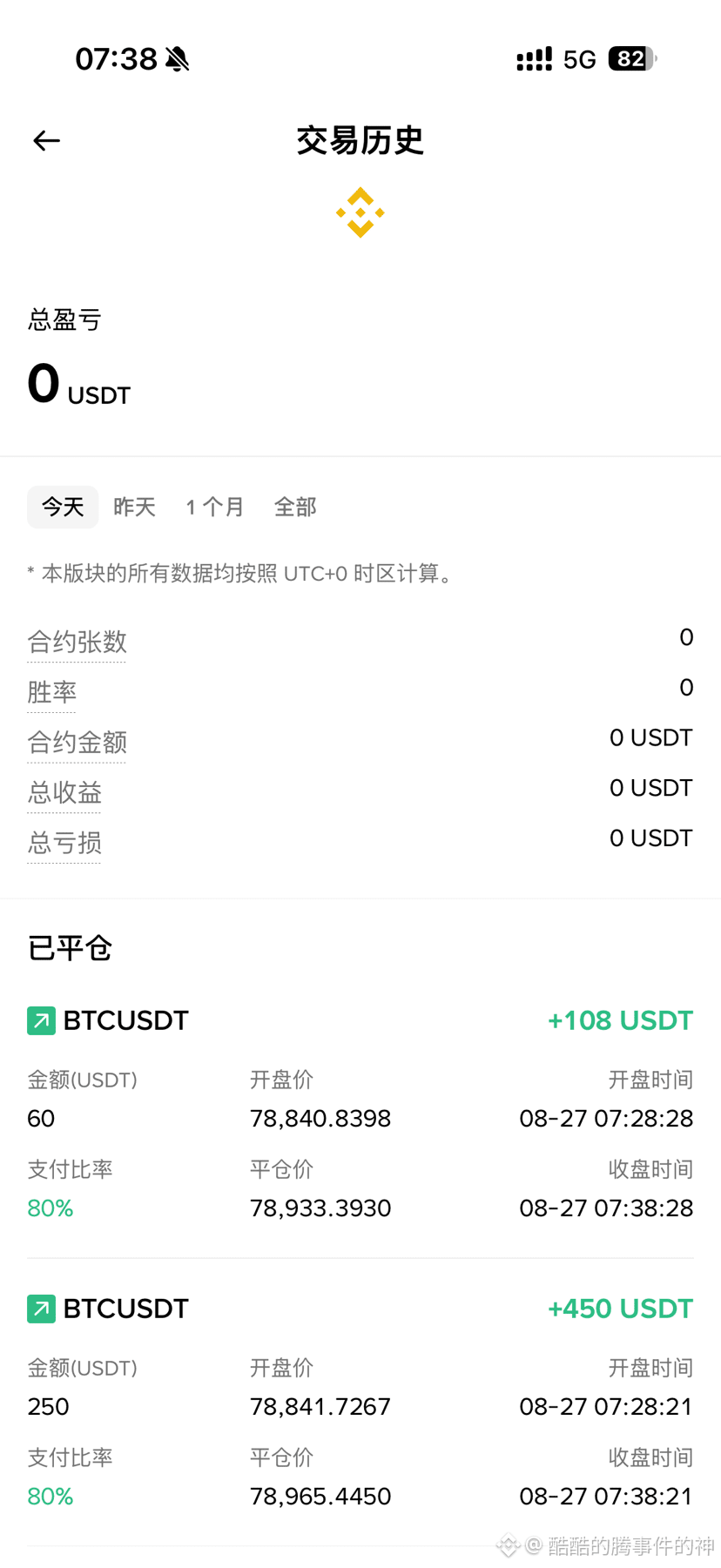
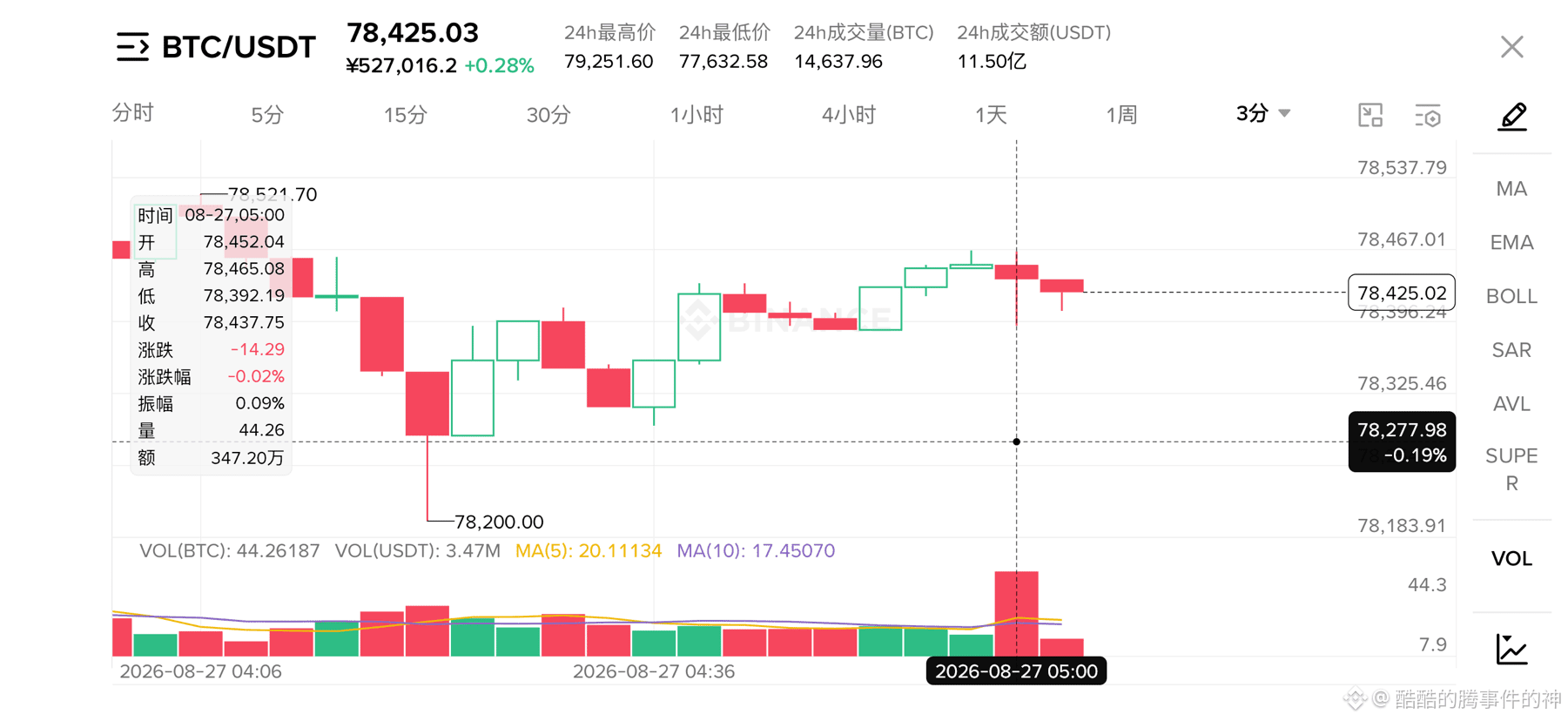
I came in here and have been testing win rates and feasibility with small amounts the whole time. Brothers, wait for me! Addicted, addicted—once I learned it, making a profit feels incredibly rewarding.
10-minute event contract: high-quality signal evaluation (what is a “best signal”?)
There is no perfect signal—only high-probability signals. Only when all of the following conditions are met, the win rate is relatively the highest:
1. The price precisely hits the box’s pressure/support range—not the middle of the box;
2. 3-minute K close: standard long upper wick (short) / long lower wick (long) + increased volume at this position;
3. Also check the 5-minute K—ideally the same-direction K-line signal appears synchronously (bonus, not mandatory);
4. On the 15-minute K, no breakdown has occurred, and the large candle body remains intact;
5. Avoid the windows around exact hour marks, data releases, and news events;
6. Not the trade made in a hurry to get back after consecutive losses.
There is no perfect signal—only high-probability signals. Only when all of the following conditions are met, the win rate is relatively the highest:
1. The price precisely hits the box’s pressure/support range—not the middle of the box;
2. 3-minute K close: standard long upper wick (short) / long lower wick (long) + increased volume at this position;
3. Also check the 5-minute K—ideally the same-direction K-line signal appears synchronously (bonus, not mandatory);
4. On the 15-minute K, no breakdown has occurred, and the large candle body remains intact;
5. Avoid the windows around exact hour marks, data releases, and news events;
6. Not the trade made in a hurry to get back after consecutive losses.
Research quantity-price plays events contract addiction
1. Hit the pressure level
2. Close with a long upper shadow or a bearish candle, closing below the pressure level
3. After the current candlestick closes, volume expands (significantly more than the volume of the previous 3–5 candlesticks)
All three are required—then you can confirm a bearish signal. Take a look at the chart.
1. Hit the pressure level
2. Close with a long upper shadow or a bearish candle, closing below the pressure level
3. After the current candlestick closes, volume expands (significantly more than the volume of the previous 3–5 candlesticks)
All three are required—then you can confirm a bearish signal. Take a look at the chart.
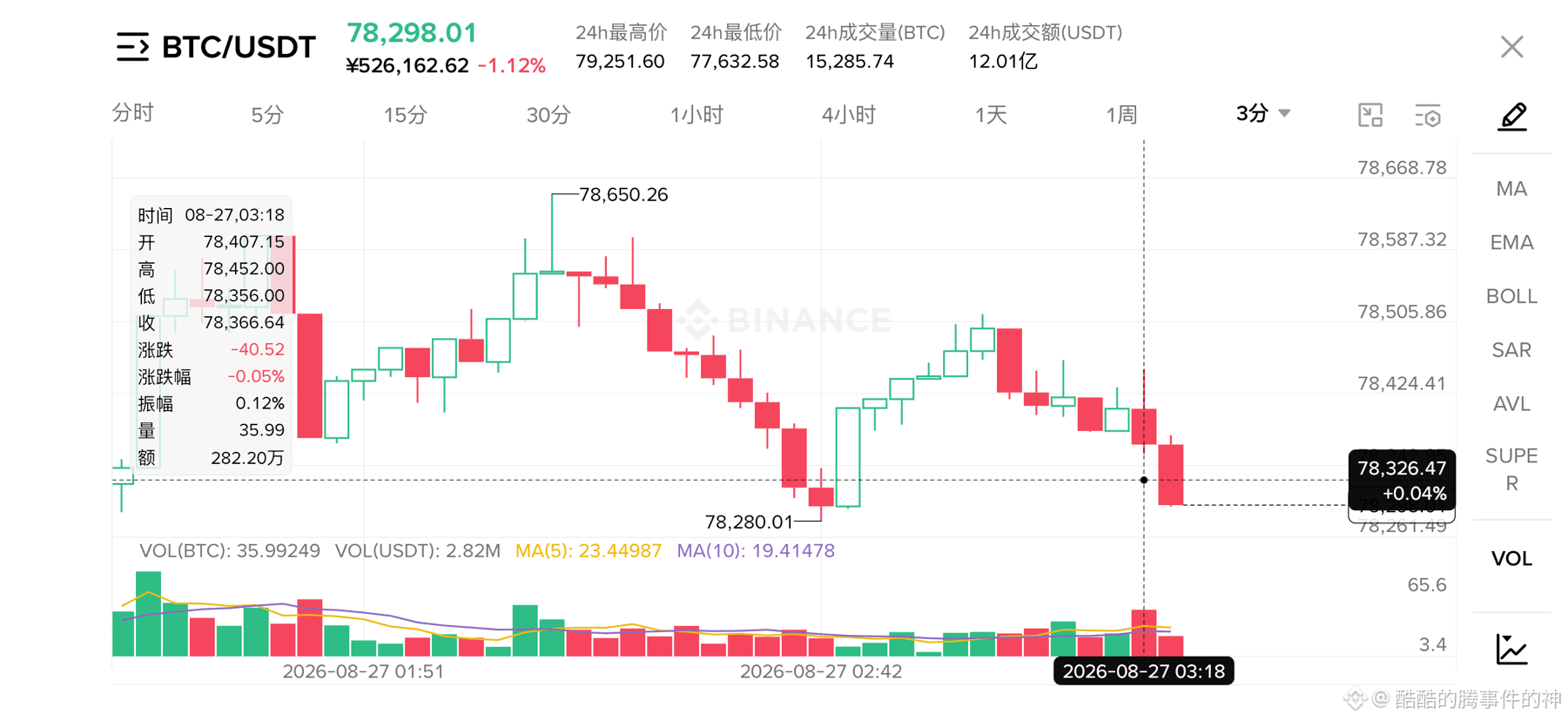
Go long based on the position shown in the picture. I’m continuously testing the method.
Wait for my real-world data.
Wait for my real-world data.
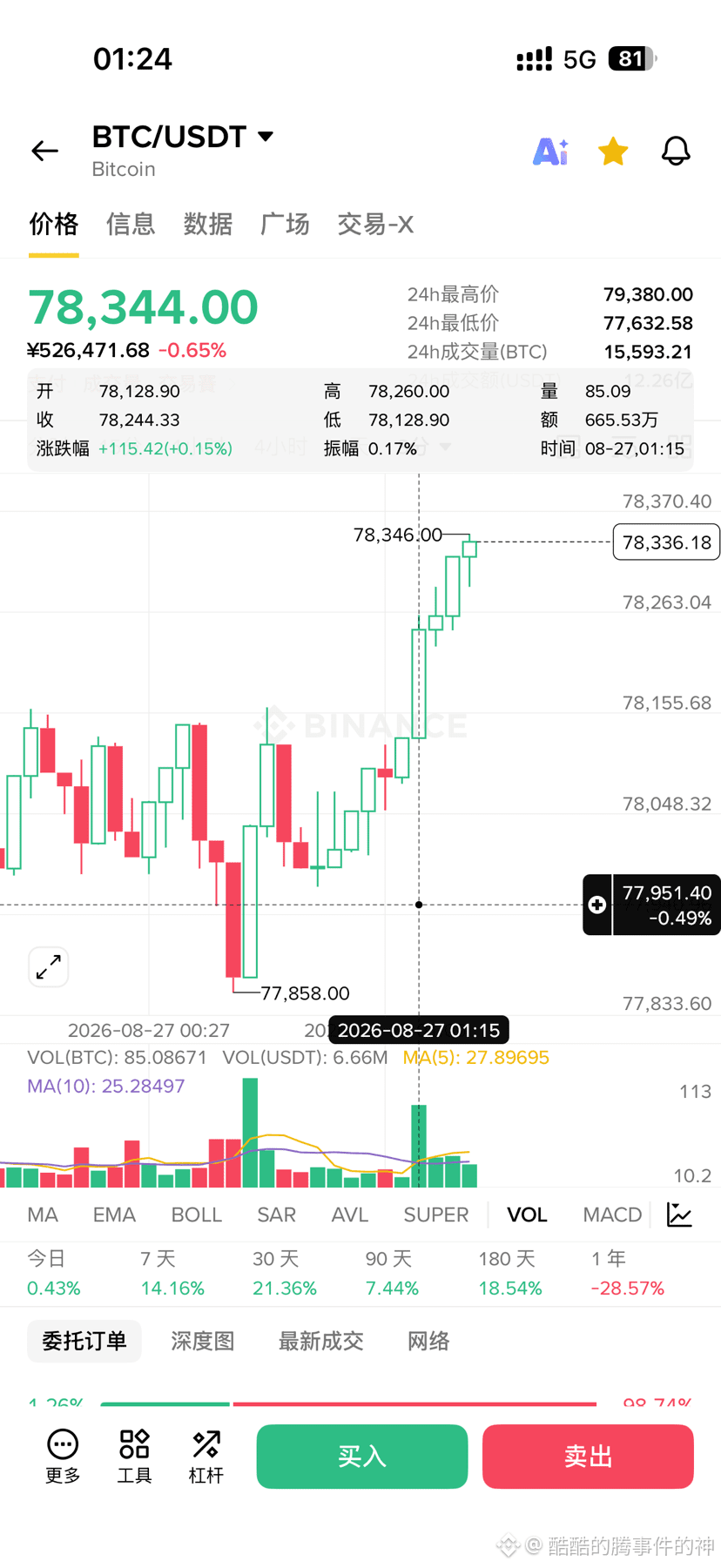
You just sent it and hit me in the face. You dog bookie, this isn’t fair.
酷酷的腾
·
--
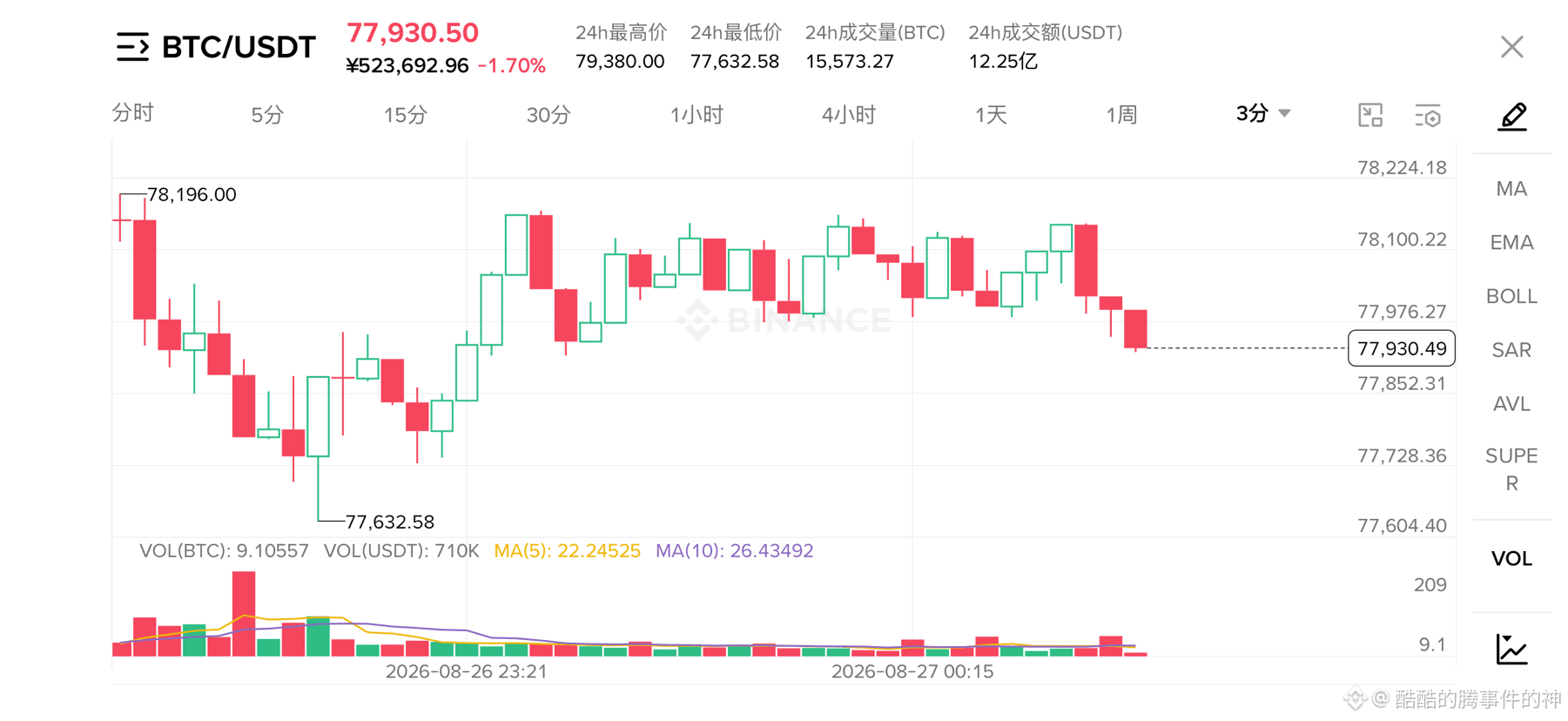
Here the pressure zone is 78100-78200. After the price rebounds to the pressure level, it falls back. Meanwhile, volume increases, and the candlestick closes below 78000. If all conditions are met at the same time, it is a short signal.
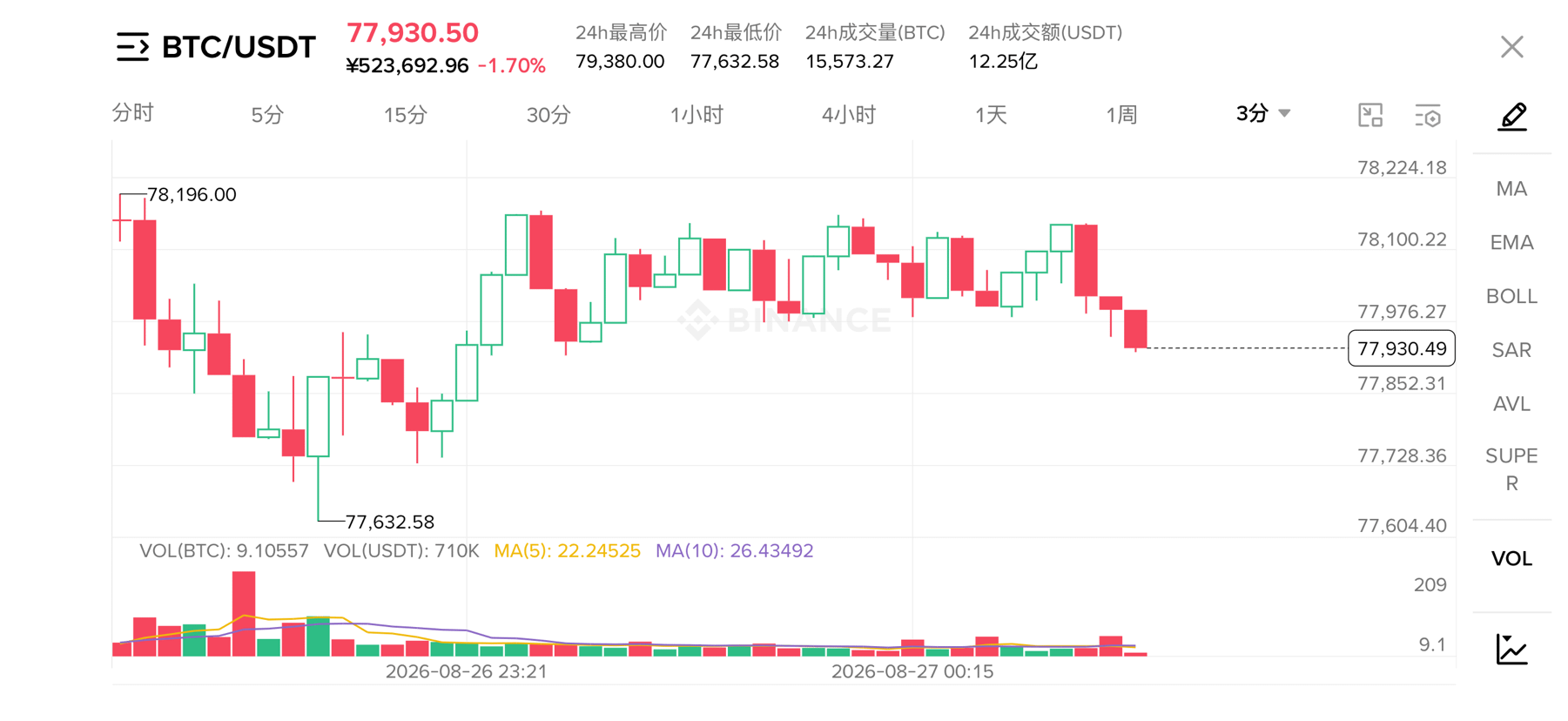
Here the pressure zone is 78100-78200. After the price rebounds to the pressure level, it falls back. Meanwhile, volume increases, and the candlestick closes below 78000. If all conditions are met at the same time, it is a short signal.
Log in to explore more content