
With Bitcoin surging recently, many people have analyzed that the underlying reason may be that U.S. Treasuries are no longer sustainable.
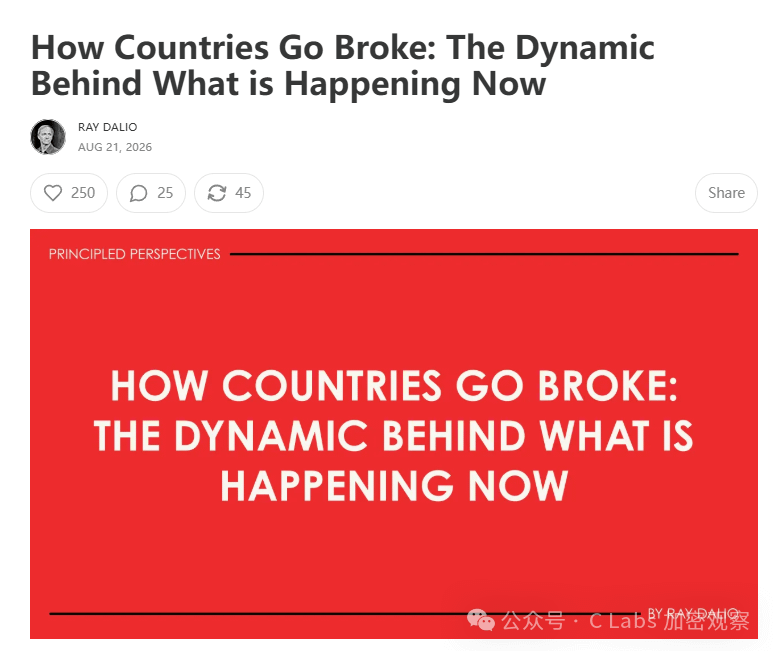
As for this issue, Darío, the founder of Bridgewater (the world’s largest hedge fund)—roughly equivalent to China’s Zhang Lei of Hillhouse + Gao Shanjun—wrote a piece specifically about this logic yesterday.
Below is a personalized, curated summary and conclusion—I believe it’s easier to understand than the original text ~
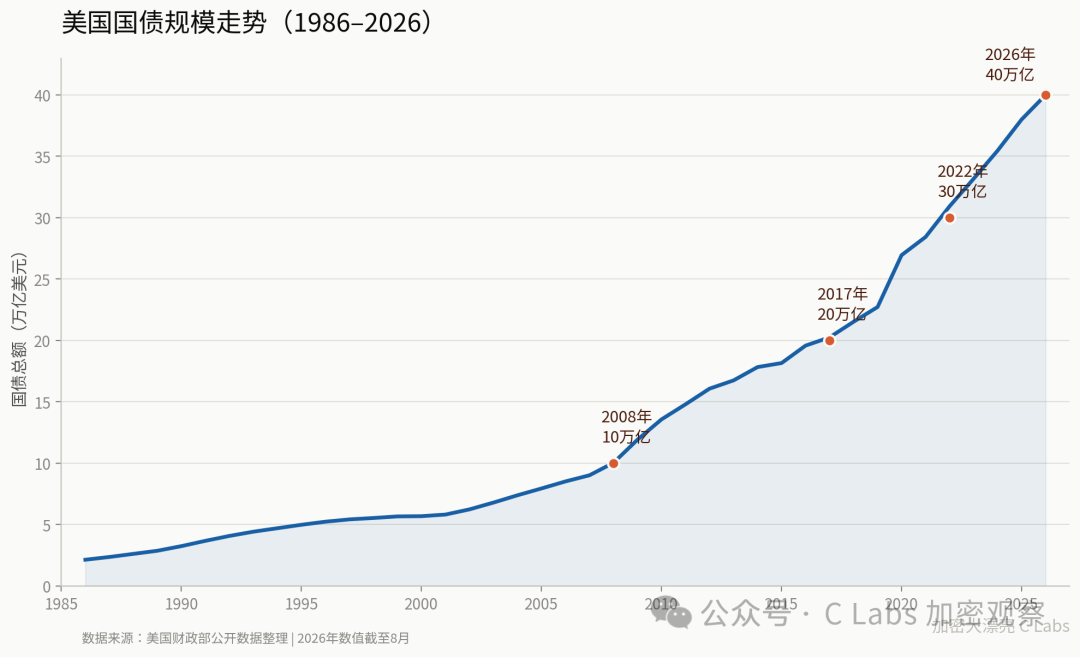
In August 2026, U.S. government debt officially broke through $40 trillion.
This pace is worth talking about: from the founding of the PRC to the first time it broke 1 trillion, it took about 200 years; from 10 trillion to 20 trillion took 13 years; from 20 trillion to 30 trillion took 5 years; from 30 trillion to 40 trillion took only 4 years—and the last 10 trillion surged in just 150 days.
And this week, three things collided:
1. The Japanese government sells the U.S. government bonds it holds, exchanges the money back into yen. The goal is to stabilize the yen exchange rate and support the domestic capital market—while not raising interest rates higher than it wants just to defend the peg;
2. U.S. Treasury yields are rising—especially the long end. At one point, the 30-year term touched 5.31%, while the U.S. dollar was weakening at the same time;
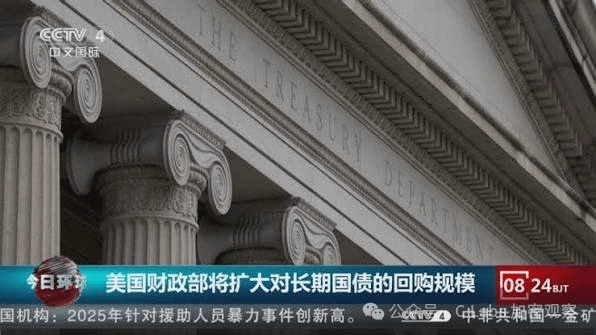
3. U.S. Treasury Secretary Bessent announced that the Treasury will step in itself to repurchase long-term bonds, but the available pool of funds is limited: at least $4 billion every two weeks, executed from September 9 to November 4.
And Darío’s view is that if the U.S. doesn’t change course now, its debt crisis will most likely hit in about 3 years (plus or minus 2 years).
A country’s debt system can be compared to the human body’s blood circulation. Credit is the blood—nourishing different parts of the economy.
Used well, it can create enough output and income to cover principal and interest—then the system is healthy.
If not handled well, it won’t be converted into enough income; then principal and interest payments will keep accumulating like plaque in blood vessels, crowding out other spending that should have happened.

When the plaque builds up to a certain level, two problems emerge at the same time:
First, the "debt service burden as a proportion of fiscal revenue" is so high it’s abnormal—money that should be used elsewhere gets squeezed out;
Second, "there are more people who want to sell bonds than people who want to buy them." In this situation, either you let interest rates rise (the market and the economy get smashed downward), or the central bank itself prints money to come in and buy bonds (the currency depreciates, and inflation ends up higher than it otherwise would be).
Both of these routes are painful. And once the central bank buys a large amount of bonds, if interest rates still keep rising, the central bank itself also loses money. With heavy losses, net assets turn negative. In the end, the government and the central bank borrow together and print money to plug the hole, rolling into a self-reinforcing death spiral that it can’t stop on its own.
When this cycle reaches its final stage, the market will first see the long-end interest rates rise, the currency relative to gold will weaken, and the Ministry of Finance, unable to sell long bonds, will have to issue short bonds instead to plug the gap. If things deteriorate further, some countries in history have reached the point of capital controls—forcing bondholders to only buy and not sell.

Japan is the example to learn from:
Before 2013, Japanese government bonds were mainly bought by private institutions. Starting in 2013, private buyers could no longer keep up; the Bank of Japan had to step in and print money to buy the bonds itself. The holding ratio rose steadily from 11.6% to 53.3%.
The cost is borne by the holders: over these past decades, Japanese government bonds translated into U.S. dollar terms depreciated by 51%, and in gold terms depreciated by 76%. Meanwhile, Japanese ordinary workers’ wages, when converted into the same currency, fell by 55% relative to U.S. workers over these decades.
For the United States, there are basically three options on the table: printing money to dilute, fixing the fiscal situation, and defaulting and restructuring the debt.
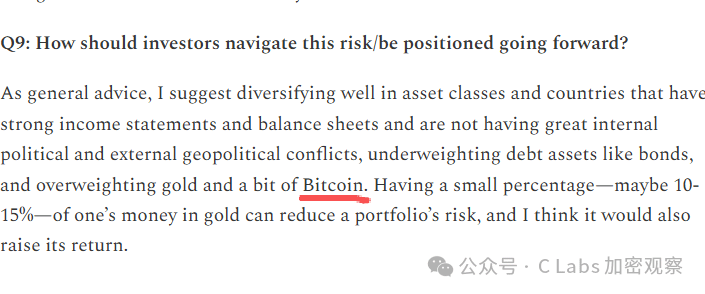
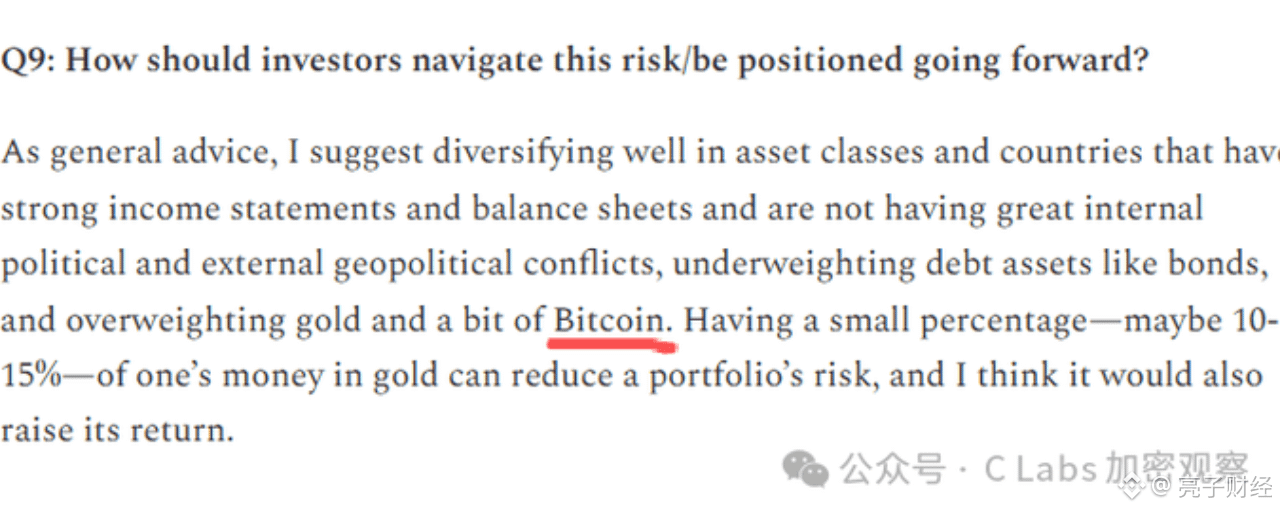
The U.K., the EU, and China also all face similar debt and deficit problems. So he expects that similar debt and currency-depreciation adjustments will unfold in sync across several economies—this is also why Darío recommends allocating to gold and Bitcoin. These two things cannot be printed by governments.
Darío’s proposed plan is to bring the U.S. fiscal deficit down to 3% of GDP—cut spending and increase taxes to reduce each by about 5% (relative to current plans)—and at the same time let interest rates naturally fall by 1% to 1.5%. With these three legs working together, no one can push too hard, otherwise the adjustment would be extremely violent.
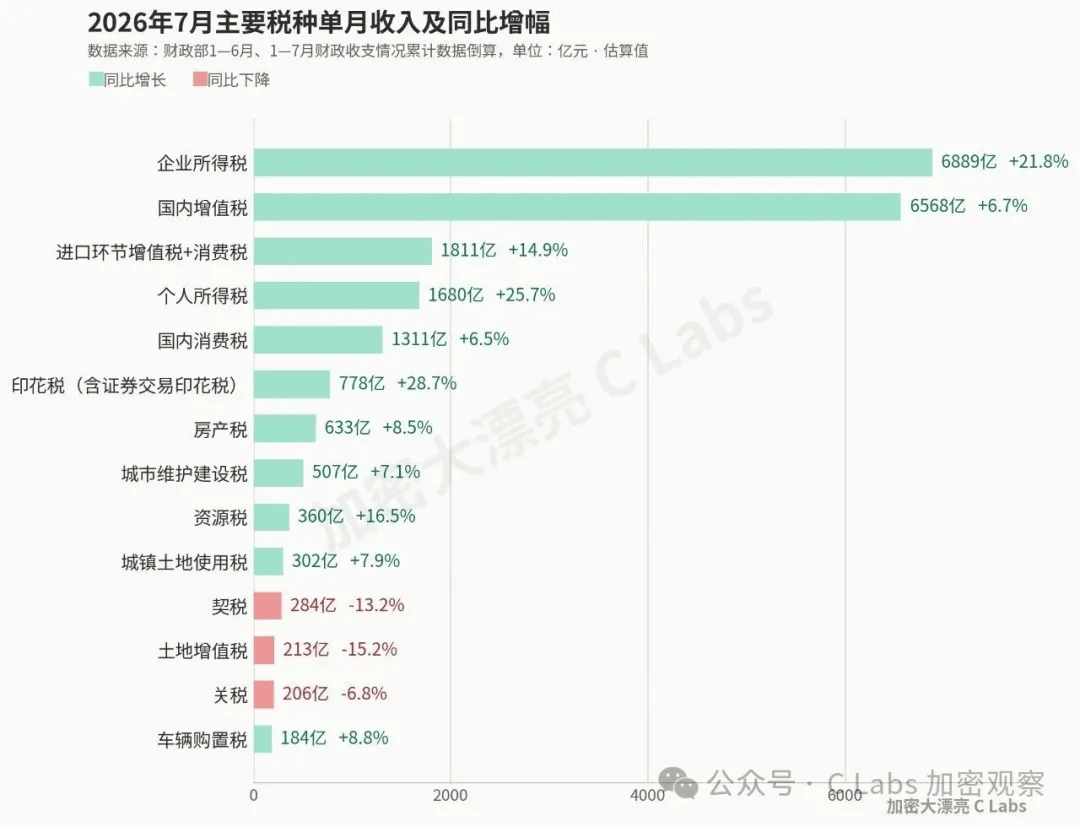
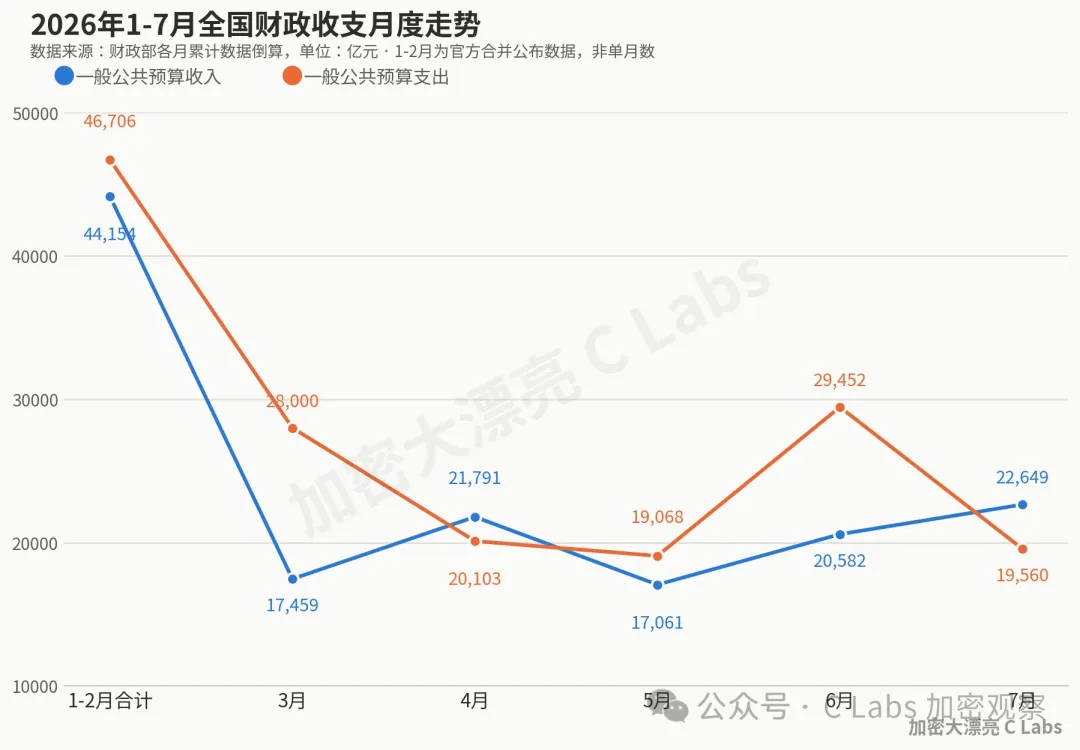
However, China is now moving in this direction: it is vigorously increasing revenue while compressing spending.
In July this year, China’s fiscal revenue surged year-on-year by 12%, and the month already turned a profit.