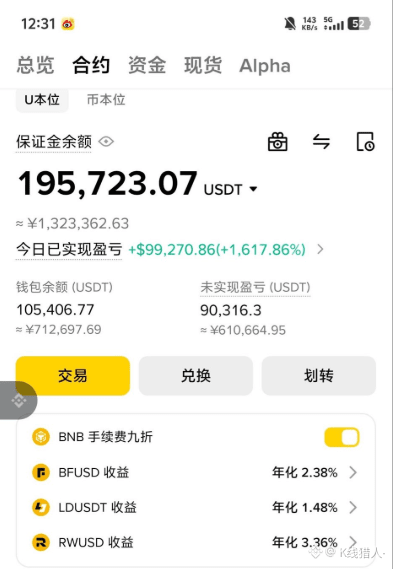
“With less than 1000U in hand, can you really make 100,000U?”
Don’t rush to ask whether it’s possible. First ask yourself: do you have the ability to keep these 1000U alive?
Small capital is easiest to fall into a trap—too eager for speed. 500U thinking about doubling in a day, 800U aiming to catch a hundred-bagger, and 1000U hoping to reach 10,000 in a month. To achieve that kind of pace, positions get heavier and leverage gets higher. Once you see a hot trend, you charge in. The result: if your direction is off even slightly once, your principal gets wiped out by a large chunk.
So the real strategy for small capital isn’t about attacking first—it’s about keeping your exit route safe.
First, control risk per trade.
Before entering, decide your stop-loss level and maximum loss in advance. Don’t wait until your account has already shrunk before figuring out what to do. A small loss once isn’t scary; what’s dangerous is repeatedly “holding on” to losing trades.
Second, consider expanding only after you’re profitable.
If the market develops as expected and your account has a safety buffer, then gradually adjust your position according to your plan. Never treat “averaging down” as a life raft. Constantly adding after losses only makes one mistake more expensive.
Third, don’t make things complicated.
Small capital doesn’t need to study dozens of indicators at the same time. Find a logic you can understand, then trade it repeatedly and review it repeatedly. If the trend is unclear, wait. If the entry level isn’t good, wait. If the risk isn’t worth it, wait.
Finally, remember: your unrealized gains in the account are not money that truly belongs to you.
If you earn money and still leave it all in the market, the next bout of volatility can take your profits away just the same. Lock in gains appropriately and protect your results matters more than the numbers in account screenshots.
Having less than 1000U doesn’t mean there’s no opportunity—but it definitely doesn’t mean you can change your situation by betting it all on one try. People who can truly grow a small account gradually are usually just a bit more patient than others, and they make fewer fatal mistakes.@K线猎人- $TRUMP
Don’t rush to ask whether it’s possible. First ask yourself: do you have the ability to keep these 1000U alive?
Small capital is easiest to fall into a trap—too eager for speed. 500U thinking about doubling in a day, 800U aiming to catch a hundred-bagger, and 1000U hoping to reach 10,000 in a month. To achieve that kind of pace, positions get heavier and leverage gets higher. Once you see a hot trend, you charge in. The result: if your direction is off even slightly once, your principal gets wiped out by a large chunk.
So the real strategy for small capital isn’t about attacking first—it’s about keeping your exit route safe.
First, control risk per trade.
Before entering, decide your stop-loss level and maximum loss in advance. Don’t wait until your account has already shrunk before figuring out what to do. A small loss once isn’t scary; what’s dangerous is repeatedly “holding on” to losing trades.
Second, consider expanding only after you’re profitable.
If the market develops as expected and your account has a safety buffer, then gradually adjust your position according to your plan. Never treat “averaging down” as a life raft. Constantly adding after losses only makes one mistake more expensive.
Third, don’t make things complicated.
Small capital doesn’t need to study dozens of indicators at the same time. Find a logic you can understand, then trade it repeatedly and review it repeatedly. If the trend is unclear, wait. If the entry level isn’t good, wait. If the risk isn’t worth it, wait.
Finally, remember: your unrealized gains in the account are not money that truly belongs to you.
If you earn money and still leave it all in the market, the next bout of volatility can take your profits away just the same. Lock in gains appropriately and protect your results matters more than the numbers in account screenshots.
Having less than 1000U doesn’t mean there’s no opportunity—but it definitely doesn’t mean you can change your situation by betting it all on one try. People who can truly grow a small account gradually are usually just a bit more patient than others, and they make fewer fatal mistakes.@K线猎人- $TRUMP