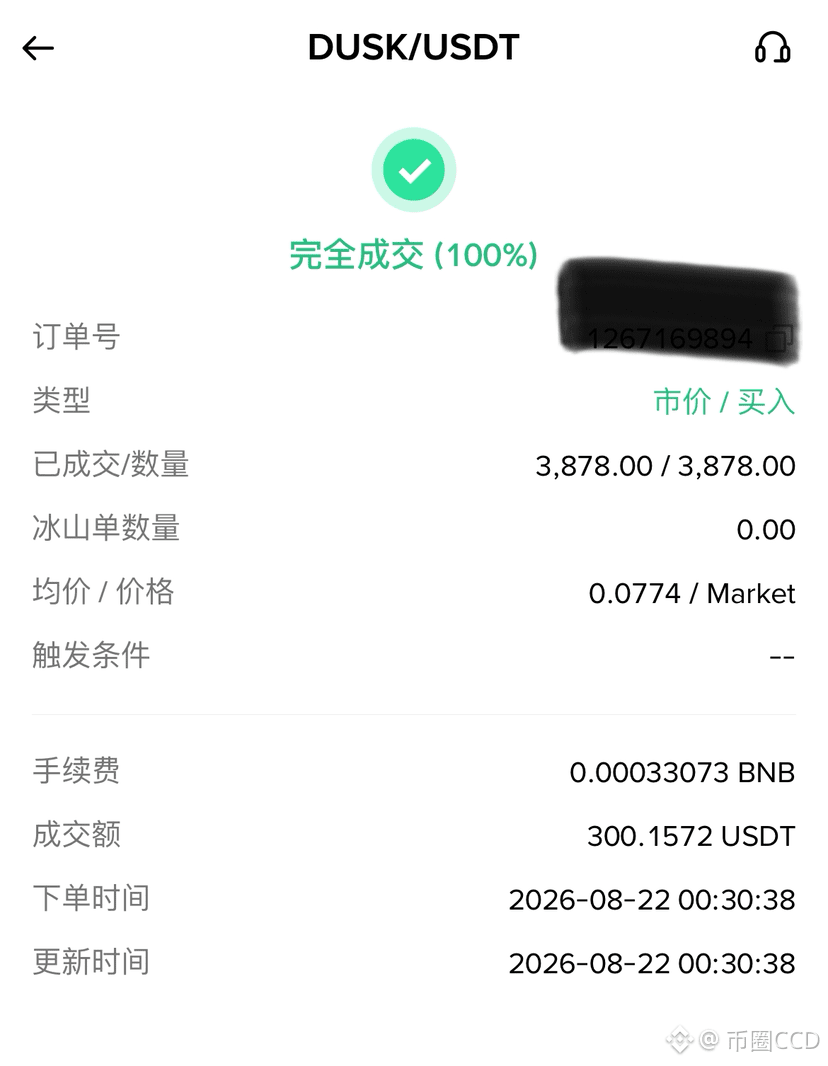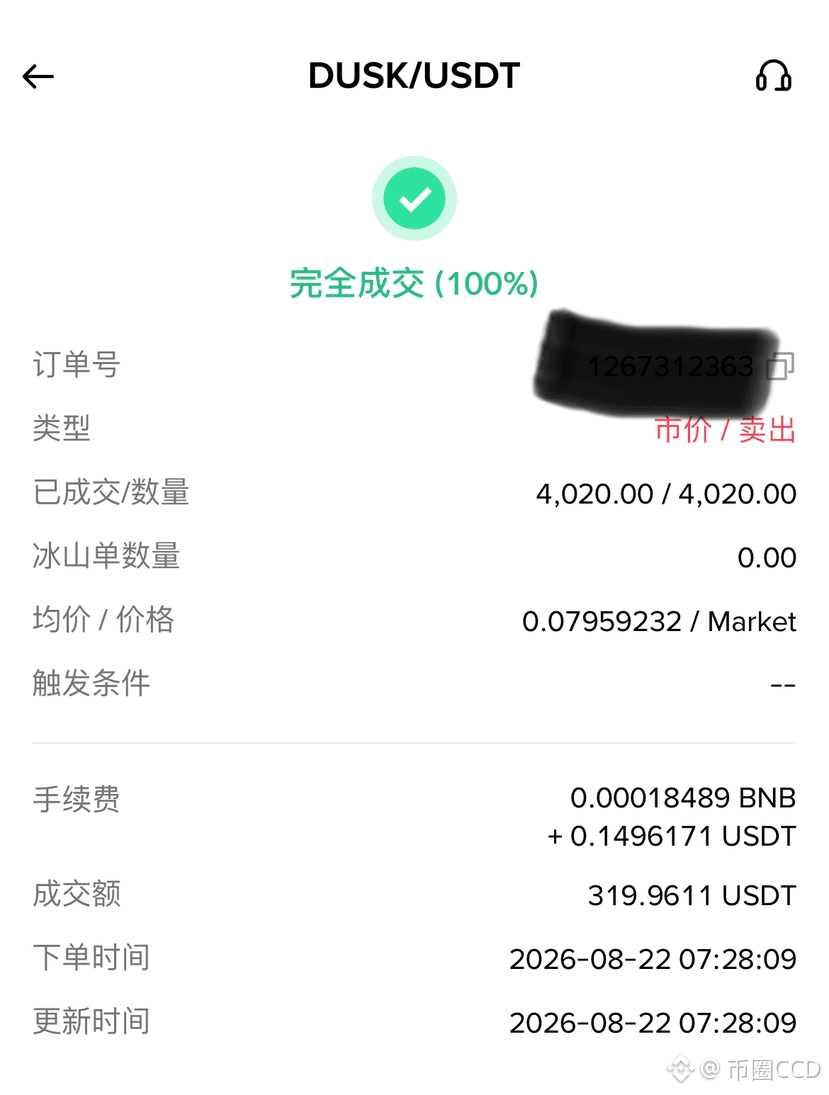
$DUSK lost my mind—I'm going to break my thigh! Last night I was too sleepy when posting as a creator. During the trading, I made a misoperation and bought everything (300U), then I tried to sell but it didn’t go through. This morning I woke up to 20U more—sold at 0.0079. Pretty happy about it. Then I checked again and it was already 0.0883! (when I posted) How much profit did I miss on this round?
I’ve been writing for 10 days, but I still haven’t made it onto the leaderboard. But I’ll keep going.
I think the most sinister kind of withdrawal failure is one that a block explorer can’t even show. Anyone feel the same?
The exchange’s hot wallet was supposed to send the 101st transaction first, but it sent 102, 103, 104 ahead of time. Those transactions won’t enter the normal mempool, and they won’t line up together with the others. Dusk marks them as deferred and puts them aside. When the 101st gets filled in, only then do the later ones become eligible to move forward.
The first time I applied this rule to the exchange’s withdrawal process, I was honestly pretty conflicted. If the order is wrong, they just hold them back—at least the books won’t get messed up, and that’s definitely stable. But from the user’s side, one missing nonce can lock up a long chain of withdrawals. There are still empty slots on-chain, and TPS still looks normal. Yet people on the platform still can’t receive their coins for ages.
At that point, continuing to watch for network congestion across the whole web was already the wrong direction. First check whether the transactions actually entered the real mempool; then check whether there are deferred ones. Finally, verify the nonce sequence in the hot wallet. Without 101, no matter how high the gas is, it can’t rescue 102.
I feel that this small rule reveals another side of the exchange’s funds management: the more a single hot wallet manages, the easier it is to adjust inventory. But once it skips a nonce, the number of people affected also grows. Opening multiple hot wallets can isolate failures—the tradeoff is more private keys, more standby inventory, and more complicated reconciliation.
For $DUSK , an empty mempool also can’t directly be explained as weak demand. A batch of withdrawal requests might still be stuck in an invisible queue. But since they haven’t made it into blocks, they won’t consume gas and won’t create real capital turnover.
So, beyond TPS, what’s worth making public even more is: the number of deferred transactions, the largest nonce gap, how widely the hot wallets are distributed, and the recovery time. I’ll keep watching.
The most troublesome congestion on-chain sometimes isn’t actually congestion on-chain at all. Who says it isn’t?
@Dusk #dusk
$BTC
I’ve been writing for 10 days, but I still haven’t made it onto the leaderboard. But I’ll keep going.
I think the most sinister kind of withdrawal failure is one that a block explorer can’t even show. Anyone feel the same?
The exchange’s hot wallet was supposed to send the 101st transaction first, but it sent 102, 103, 104 ahead of time. Those transactions won’t enter the normal mempool, and they won’t line up together with the others. Dusk marks them as deferred and puts them aside. When the 101st gets filled in, only then do the later ones become eligible to move forward.
The first time I applied this rule to the exchange’s withdrawal process, I was honestly pretty conflicted. If the order is wrong, they just hold them back—at least the books won’t get messed up, and that’s definitely stable. But from the user’s side, one missing nonce can lock up a long chain of withdrawals. There are still empty slots on-chain, and TPS still looks normal. Yet people on the platform still can’t receive their coins for ages.
At that point, continuing to watch for network congestion across the whole web was already the wrong direction. First check whether the transactions actually entered the real mempool; then check whether there are deferred ones. Finally, verify the nonce sequence in the hot wallet. Without 101, no matter how high the gas is, it can’t rescue 102.
I feel that this small rule reveals another side of the exchange’s funds management: the more a single hot wallet manages, the easier it is to adjust inventory. But once it skips a nonce, the number of people affected also grows. Opening multiple hot wallets can isolate failures—the tradeoff is more private keys, more standby inventory, and more complicated reconciliation.
For $DUSK , an empty mempool also can’t directly be explained as weak demand. A batch of withdrawal requests might still be stuck in an invisible queue. But since they haven’t made it into blocks, they won’t consume gas and won’t create real capital turnover.
So, beyond TPS, what’s worth making public even more is: the number of deferred transactions, the largest nonce gap, how widely the hot wallets are distributed, and the recovery time. I’ll keep watching.
The most troublesome congestion on-chain sometimes isn’t actually congestion on-chain at all. Who says it isn’t?
@Dusk #dusk
$BTC