@TermMax $TMX #TermMax
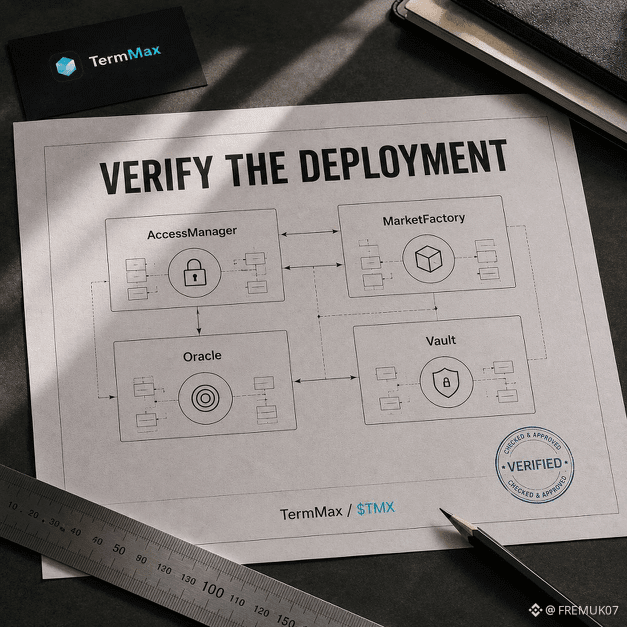
One thing I value more than a polished protocol landing page is a clear contract-address page. TermMax publicly lists core components such as its AccessManager, MarketFactory, Oracle Aggregator, router, viewer and vault infrastructure across supported networks.
That does not prove a protocol is safe. It does give a user a starting point to verify what they are interacting with instead of trusting an interface alone.
For me, that is the kind of transparency that should feel normal in DeFi: the product page explains the idea, while the contract map shows where the implementation lives. Even if I am not reading code, I can still verify that I am using the intended deployment.
Would you check a contract address before depositing into a DeFi product?