


Caixin press August 21 News (Editor Zhao Hao) Wall Street analysts are纷纷 lowering the target prices for spacecraft and satellite manufacturer York Space Systems.
Analysts said that against the backdrop of ongoing supply-chain issues and a slowdown in the pace of government contract signings, the company’s future growth path has become increasingly unclear.
According to the compiled data, since August 14, at least 6 analysts—about half of the total number covering the company—have lowered their average target price by 54%.
Among them, Canaccord Genuity and JPMorgan also cut their stock ratings. Currently, the stock has five “buy” ratings and five “hold” ratings, with no “sell” ratings.
Last week, York reported weak second-quarter results and lowered the midpoint of its full-year revenue guidance by 32%, citing changes in U.S. government procurement methods.
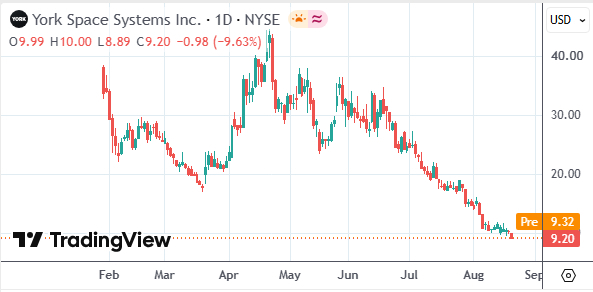
As of Thursday’s close, York Space Systems (stock ticker: YSS) shares were down 38% for the month, and have fallen 73% from the IPO offer price in January this year.
In a report to clients, JPMorgan analyst Seth Seifman wrote: “We’ve heard from multiple defense contractors that the pace of contract awards remains slow, but York has cut its earnings outlook significantly more than what we’ve seen with other companies.” He downgraded York’s rating from the equivalent of “Buy” to the equivalent of “Hold.”
Canaccord analyst Austin Moeller also downgraded the stock rating from “Buy” to “Hold” and sharply cut his price target from $36 to $13.50. He said that currently “there is still no clear resolution” regarding “the parts shortages in the supply chain and the timing to fix the issue,” and that information would be helpful for assessing the company’s delivery timeline.
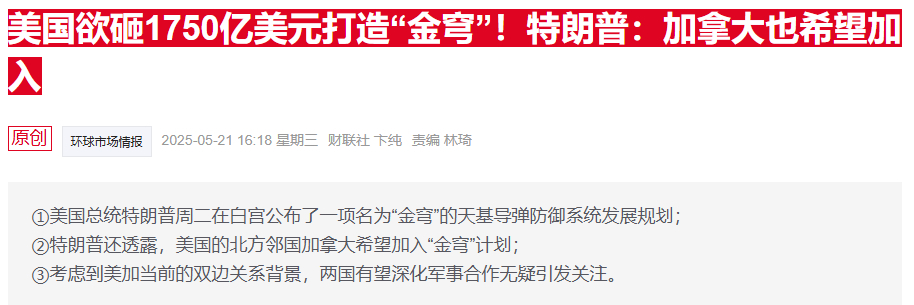
York’s key selling point during its IPO was that it could produce satellites at lower cost and benefit from the U.S. Department of Defense’s space-based missile defense system, “Golden Dome.” In May of last year, Trump, when unveiling the development plan for “Golden Dome,” said the entire program would cost about $175 billion—an investment rationale that made York particularly attractive.
York’s IPO attracted demand roughly 20 times the number of shares that were available to be sold. The stock then climbed steadily, rising as much as 28% to a high point in late April, but has since continued to slide. SpaceX’s record IPO in June also added further pressure to York’s share price, which closed Thursday at a new all-time low.
Analyst George Ferguson said, “The market is currently confused and concerned about the growth trajectory of this business. They’re in a low-volume market, which makes profitability difficult.”
“And to achieve profitable growth, any delays to high-margin government contracts would push out the timeline for hitting earnings targets even further.”
Even though Wall Street’s bullishness on the stock has fallen to a record low, the average price target is still about $20—implying that, despite the recent steep selloff, York’s share price still has roughly 120% upside over the next 12 months.
Seifman at JPMorgan said that to achieve York’s original goal of producing low-orbit (LEO) satellites at low cost, “it would require sustained large-scale production capacity and to be the market share leader.”
“York might be able to do that,” but he said that “at this point, the path to achieving that goal is not clear.”