@TermMax #TermMax
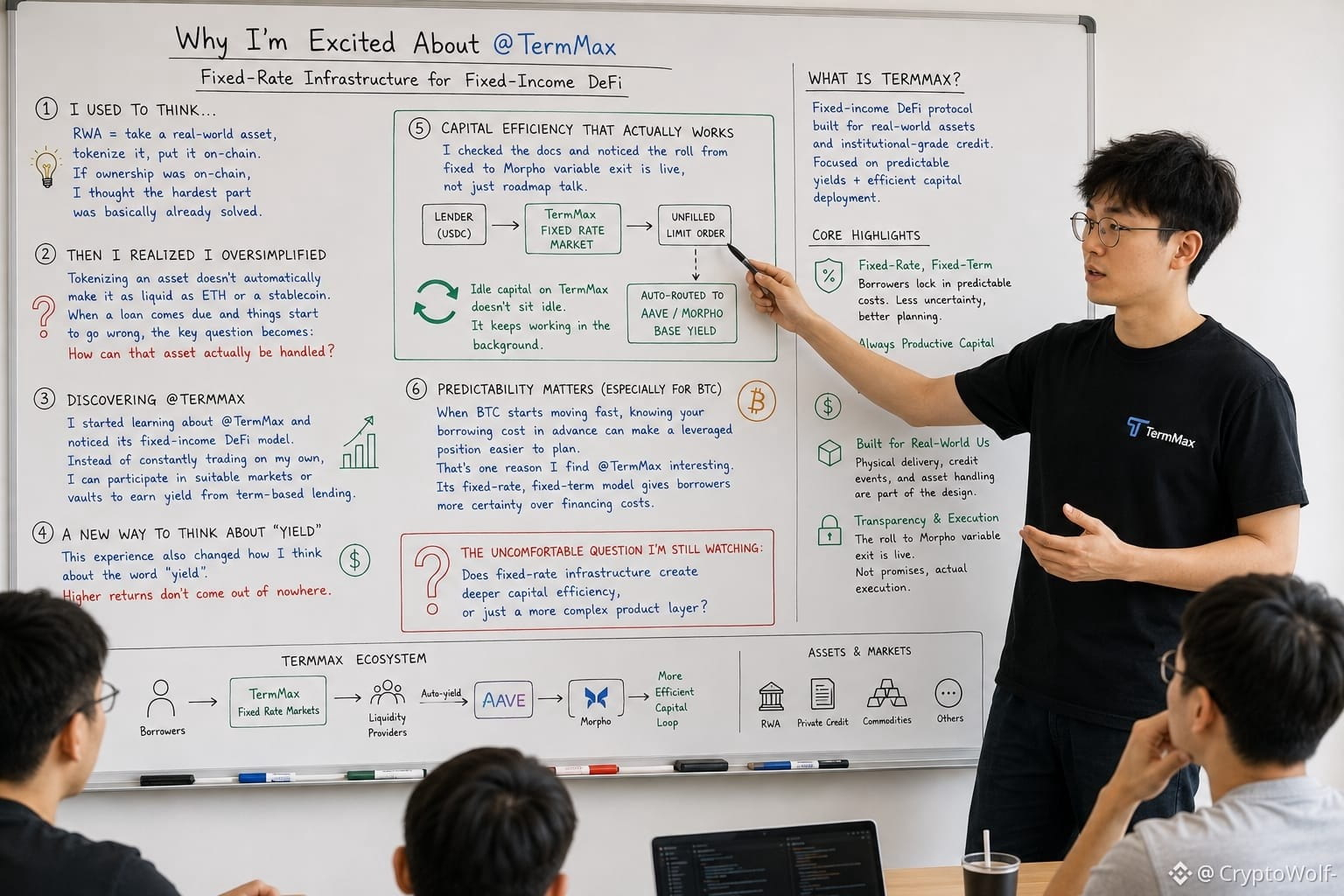
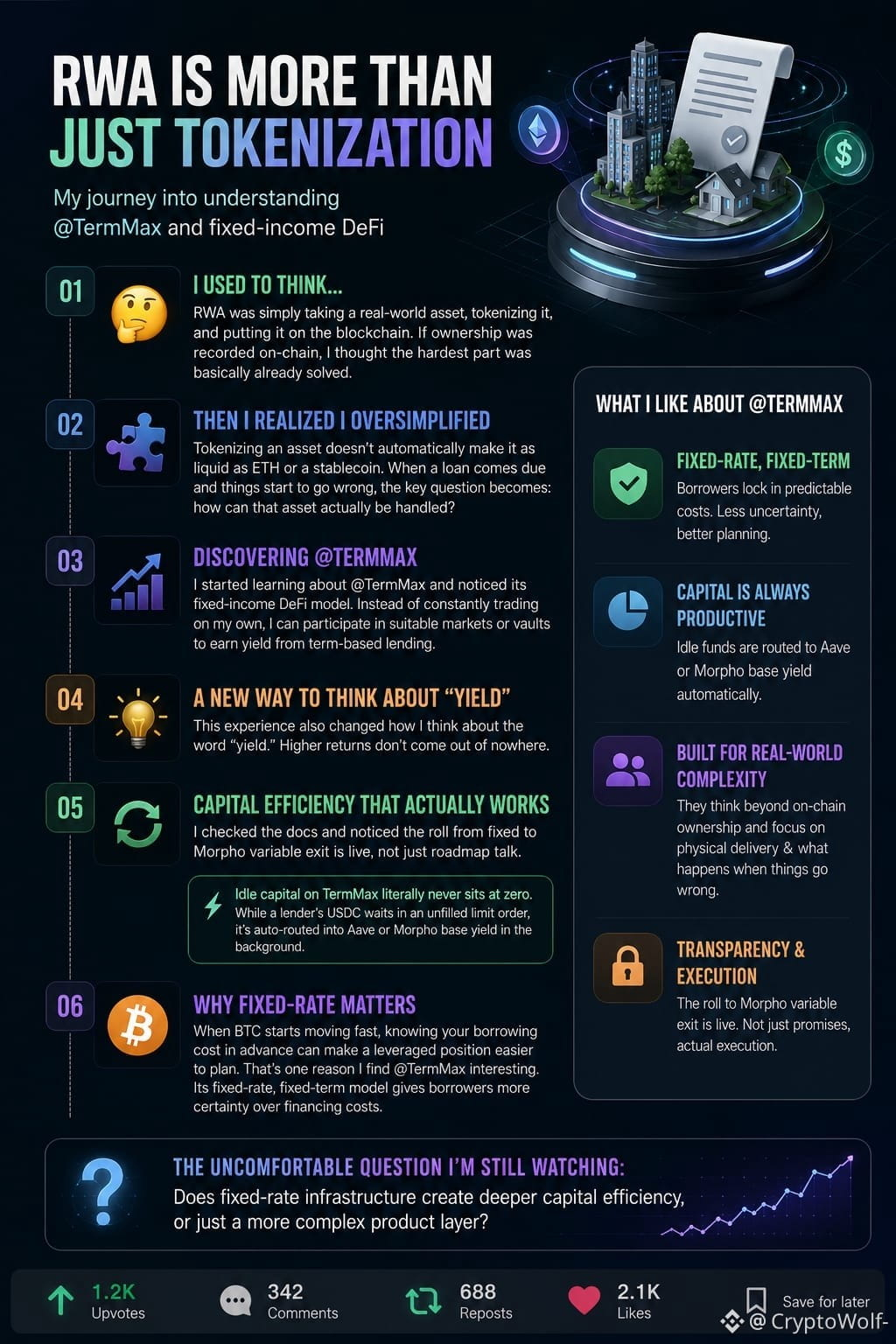
I used to think RWA was simply taking a real-world asset, tokenizing it, and putting it on the blockchain. If ownership was recorded on-chain, I thought the hardest part was basically already solved.
But when I looked at @TermMax—especially how they approach physical delivery—I realized I had oversimplified the problem. Tokenizing an asset doesn’t automatically make it as liquid as ETH or a stablecoin. When a loan comes due and things start to go wrong, the key question becomes: how can that asset actually be handled?
Then I started learning about @TermMax and noticed its fixed-income DeFi model. Instead of constantly trading on my own, I can participate in suitable markets or vaults to earn yield from term-based lending.
However, this experience also changed how I think about the word “yield.” Higher returns don’t come out of nowhere.
I checked the docs and noticed the roll from fixed to Morpho variable exit is live, not just roadmap talk. Idle capital on TermMax literally never sits at zero. While a lender’s USDC waits in an unfilled limit order, it’s auto-routed into Aave or Morpho base yield in the background.
One more thing I noticed last night: when BTC starts moving fast, knowing your borrowing cost in advance can make a leveraged position easier to plan. That’s one reason I find @TermMax interesting. Its fixed-rate, fixed-term model gives borrowers more certainty over financing costs.