#termmax @TermMax I used to think the interesting part of TermMax was simply fixed-rate borrowing. The more I looked at how its products connect, the more I realized that was only the surface.
A borrower can use ETH as collateral without selling it, while lenders can have capital working elsewhere even before an order is fully matched. But large protocol TVL doesn’t necessarily mean deep liquidity or easy execution in every market.
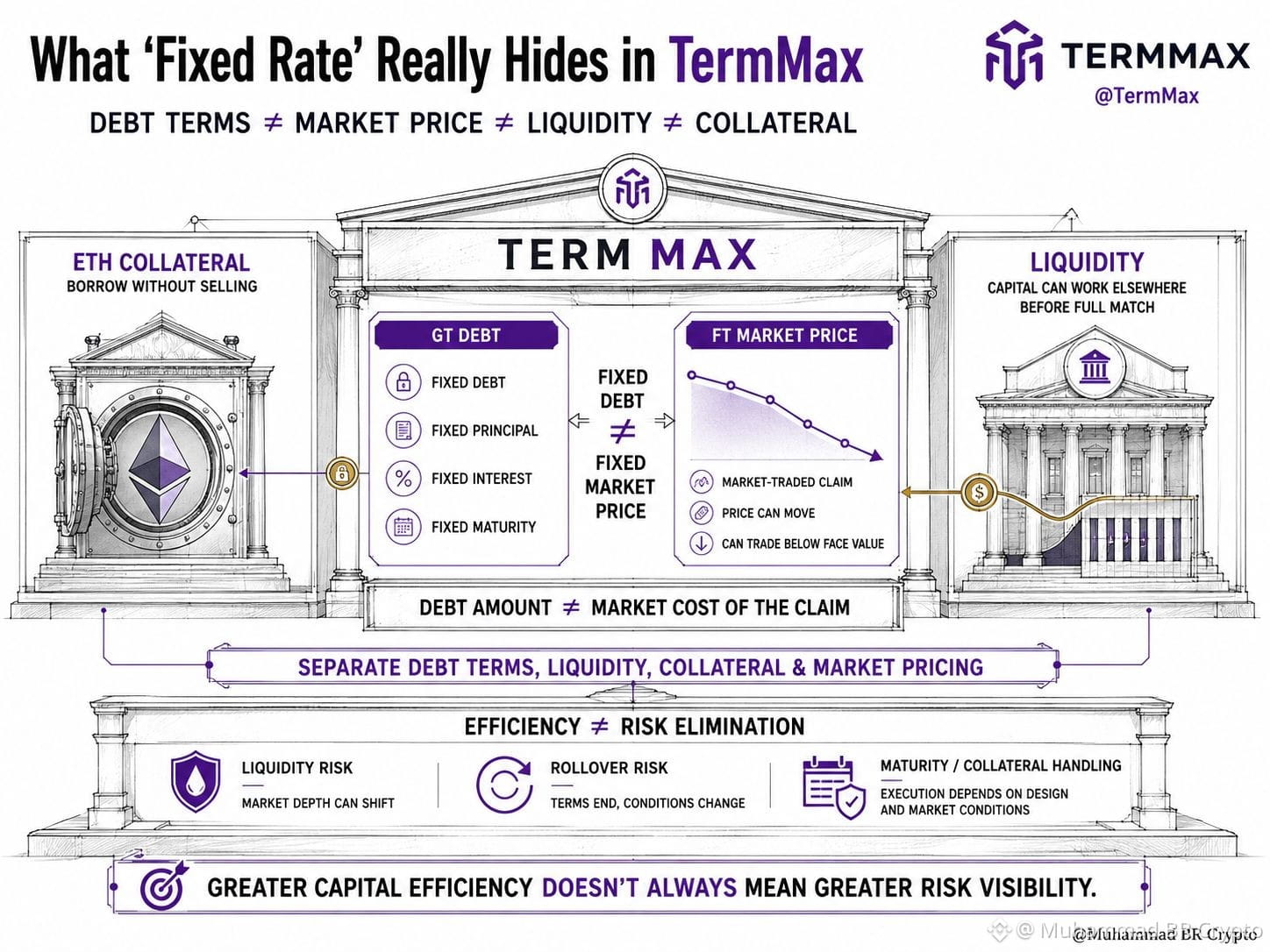
What really changed my view was seeing how differently capital behaves depending on where it sits. A GT debt can remain fixed while the FT linked to that debt trades below face value — so the amount of debt and the market cost of acquiring the claim are not necessarily the same.
That made me see @TermMax less as a simple lending market and more as an attempt to separate debt terms, liquidity, collateral and market pricing instead of treating them as one thing.
The trade-off is that this can improve capital efficiency, but it doesn’t automatically remove liquidity or rollover risk — especially as a position approaches maturity or collateral needs to be handled after a default.
The bigger question, then, isn’t simply whether @TermMax makes capital more efficient. It’s whether separating debt, liquidity, collateral and market pricing makes capital easier to manage — or simply makes the risks harder to see.
A borrower can use ETH as collateral without selling it, while lenders can have capital working elsewhere even before an order is fully matched. But large protocol TVL doesn’t necessarily mean deep liquidity or easy execution in every market.
What really changed my view was seeing how differently capital behaves depending on where it sits. A GT debt can remain fixed while the FT linked to that debt trades below face value — so the amount of debt and the market cost of acquiring the claim are not necessarily the same.
That made me see @TermMax less as a simple lending market and more as an attempt to separate debt terms, liquidity, collateral and market pricing instead of treating them as one thing.
The trade-off is that this can improve capital efficiency, but it doesn’t automatically remove liquidity or rollover risk — especially as a position approaches maturity or collateral needs to be handled after a default.
The bigger question, then, isn’t simply whether @TermMax makes capital more efficient. It’s whether separating debt, liquidity, collateral and market pricing makes capital easier to manage — or simply makes the risks harder to see.