High annual returns in TermMax double investments are not pulled out of thin air.
A specific second side of the market underlies this portion of the income.
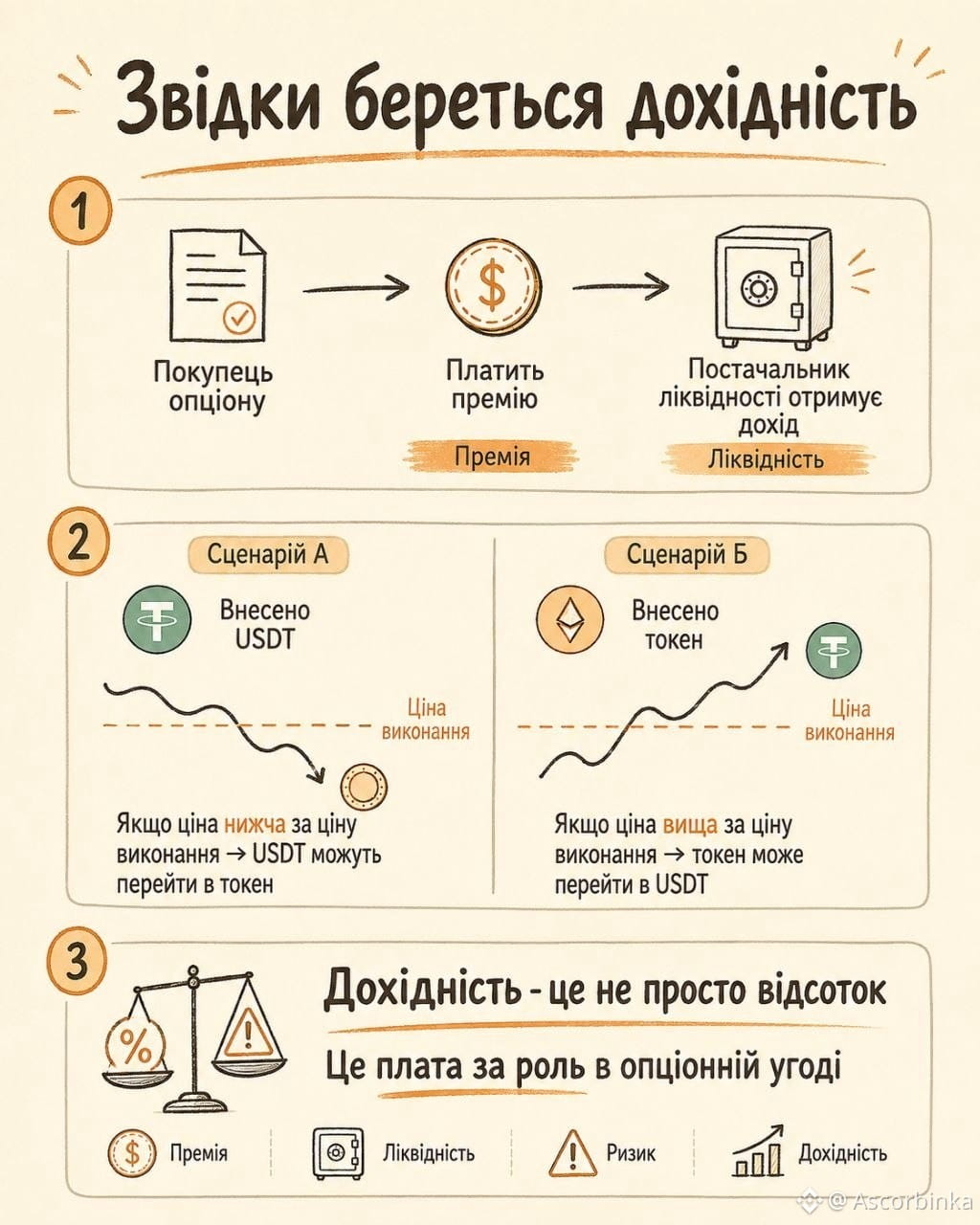
When a user deposits USDT or a token into double investments, they become a liquidity provider and, in effect, a seller of an option.
Option buyers use this liquidity and pay a premium. That premium is one of the sources of the investor’s income.
But they don’t pay it just like that.
If USDT are deposited and on the settlement date the token’s price is lower than the strike price, the USDT can be converted into the token at the strike price.
The premium remains, but if the market drops significantly below, the obtained token is already worth less.
If a token is deposited, a different side of the mechanism applies.
When its price rises above the strike price, the token can be converted into USDT at the strike price.
Income is received, but any further increase in the token above this level happens past the position.
That’s why I look here not only at the annual return number.
First question: how much they pay.
And second, much more importantly: what exact risk they are paying for?
In double investments, the income has a specific economic source.
@TermMax #TermMax
A specific second side of the market underlies this portion of the income.
When a user deposits USDT or a token into double investments, they become a liquidity provider and, in effect, a seller of an option.
Option buyers use this liquidity and pay a premium. That premium is one of the sources of the investor’s income.
But they don’t pay it just like that.
If USDT are deposited and on the settlement date the token’s price is lower than the strike price, the USDT can be converted into the token at the strike price.
The premium remains, but if the market drops significantly below, the obtained token is already worth less.
If a token is deposited, a different side of the mechanism applies.
When its price rises above the strike price, the token can be converted into USDT at the strike price.
Income is received, but any further increase in the token above this level happens past the position.
That’s why I look here not only at the annual return number.
First question: how much they pay.
And second, much more importantly: what exact risk they are paying for?
In double investments, the income has a specific economic source.
@TermMax #TermMax