As we discussed yesterday, besides the bullish factors brought by the macro side and policies, the next leg of upside should be judged more by data—especially the BTC ETFs and mainstream capital flows in the crypto market.
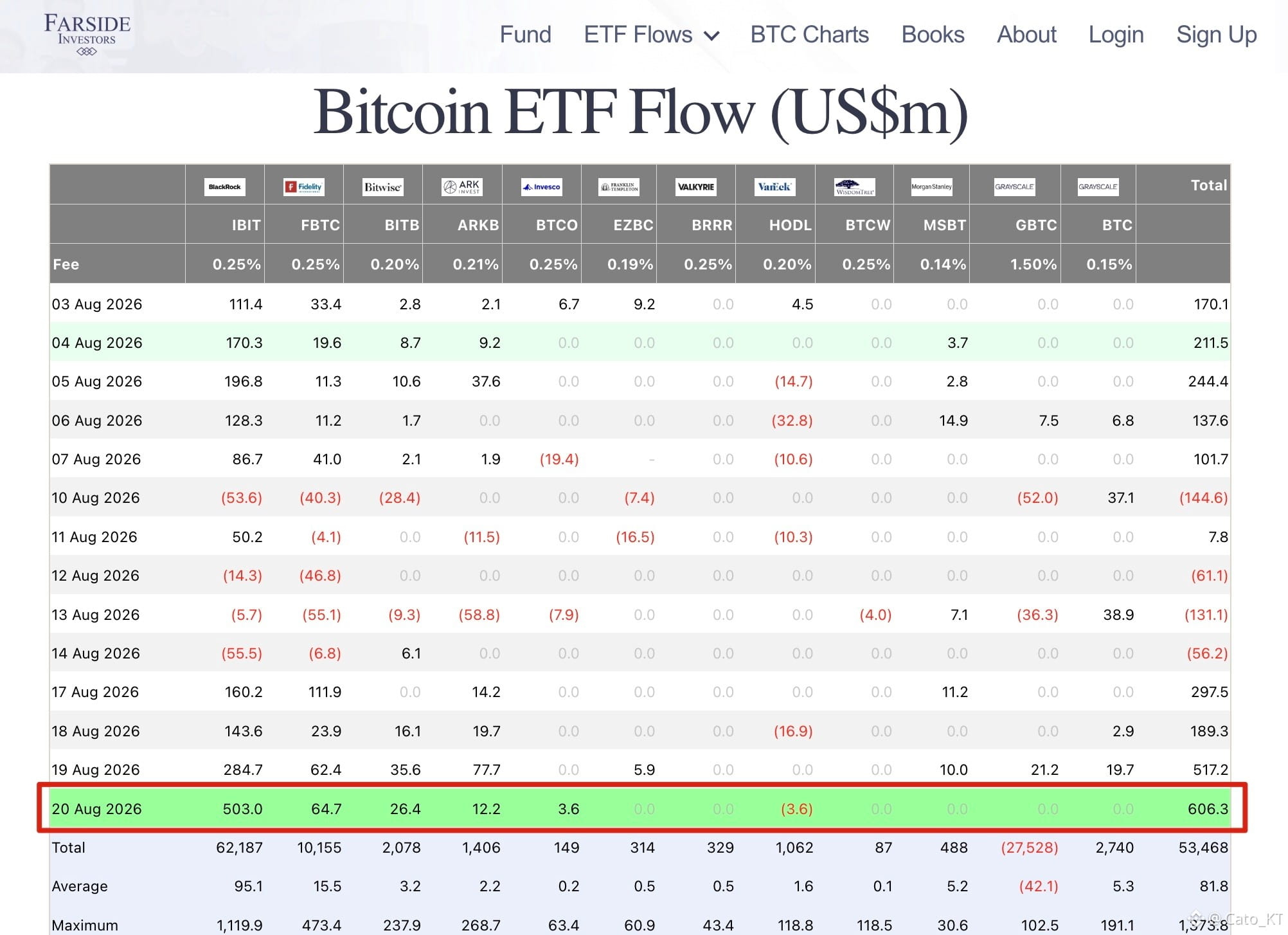
On August 20, net inflows into BTC ETFs reached 606.3 million yuan, higher than 517 million yuan on August 19. Net ETF inflows were higher than the previous day, and also set a new three-month high record. Obviously, buying sentiment remains hot.
Crypto market data on August 20:
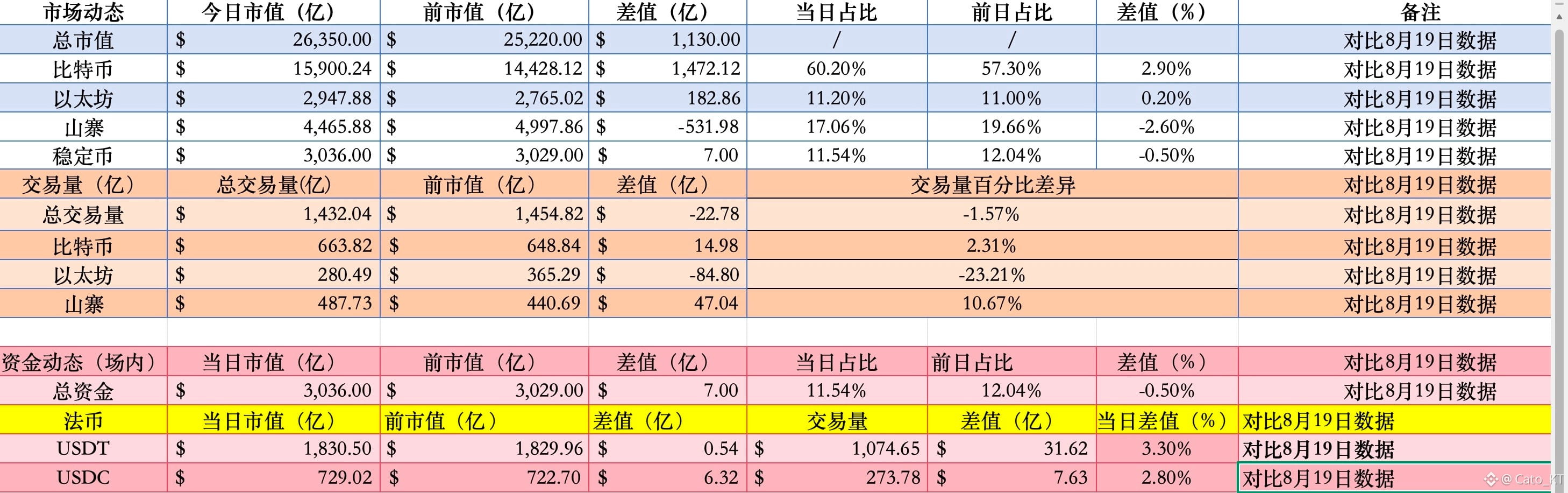
1. Market cap gains are still concentrated in #BTC and #ETH, with their share increasing. The altcoin share is being compressed. Overall market optimism has not further spread—of course, mainly because the altcoin narrative is just too weak.
2. Trading volume is flat versus yesterday, concentrated in $BTC and ETH. Trading activity remains strong.
3. Total net inflows of funds were 700 million yuan. USDC saw net inflows of 632 million yuan, while USDT net inflows were 54 million yuan. Compared with yesterday, net inflow capital remains concentrated in mainstream funds—this is a good sign.
Summary of today’s data:
Based on the ETF and crypto market data, the current trend can no longer be judged simply as a short covering rally. Although the macro environment is unfavorable and policy uncertainty remains very high, market sentiment is still willing to buy into it—this is important.
Next, watch the ETF data to be released tomorrow. If net inflows continue to hold at 300–500 million yuan and the crypto market’s trading volume and net fund inflows also remain stable, it would further validate the price action and become the main driver for short-term price stabilization.
From the crypto data perspective, the main driving force comes from U.S. market capital in USDC as well as ETF net inflows. The main risk point for ETFs is that net inflows are overly concentrated in IBIT. IBIT accounted for 55% of net inflows on the day before yesterday, but 83% yesterday. In theory, only when ETF net inflows become more broadly distributed can we prove that institutional demand is increasing and institutional risk appetite is rising. Over-concentration means net inflows are overly dependent on a single channel!
On August 20, net inflows into BTC ETFs reached 606.3 million yuan, higher than 517 million yuan on August 19. Net ETF inflows were higher than the previous day, and also set a new three-month high record. Obviously, buying sentiment remains hot.
Crypto market data on August 20:
1. Market cap gains are still concentrated in #BTC and #ETH, with their share increasing. The altcoin share is being compressed. Overall market optimism has not further spread—of course, mainly because the altcoin narrative is just too weak.
2. Trading volume is flat versus yesterday, concentrated in $BTC and ETH. Trading activity remains strong.
3. Total net inflows of funds were 700 million yuan. USDC saw net inflows of 632 million yuan, while USDT net inflows were 54 million yuan. Compared with yesterday, net inflow capital remains concentrated in mainstream funds—this is a good sign.
Summary of today’s data:
Based on the ETF and crypto market data, the current trend can no longer be judged simply as a short covering rally. Although the macro environment is unfavorable and policy uncertainty remains very high, market sentiment is still willing to buy into it—this is important.
Next, watch the ETF data to be released tomorrow. If net inflows continue to hold at 300–500 million yuan and the crypto market’s trading volume and net fund inflows also remain stable, it would further validate the price action and become the main driver for short-term price stabilization.
From the crypto data perspective, the main driving force comes from U.S. market capital in USDC as well as ETF net inflows. The main risk point for ETFs is that net inflows are overly concentrated in IBIT. IBIT accounted for 55% of net inflows on the day before yesterday, but 83% yesterday. In theory, only when ETF net inflows become more broadly distributed can we prove that institutional demand is increasing and institutional risk appetite is rising. Over-concentration means net inflows are overly dependent on a single channel!