



Let me first present the hardest data of today.
Gold futures fell to about $4,745 in a single day, with a drop of about 11%, one of the 'historical level' single-day declines.
Silver futures fell to about $78.53, with a single-day drop of about 31%, this is the kind of drop that makes you think the software has frozen.
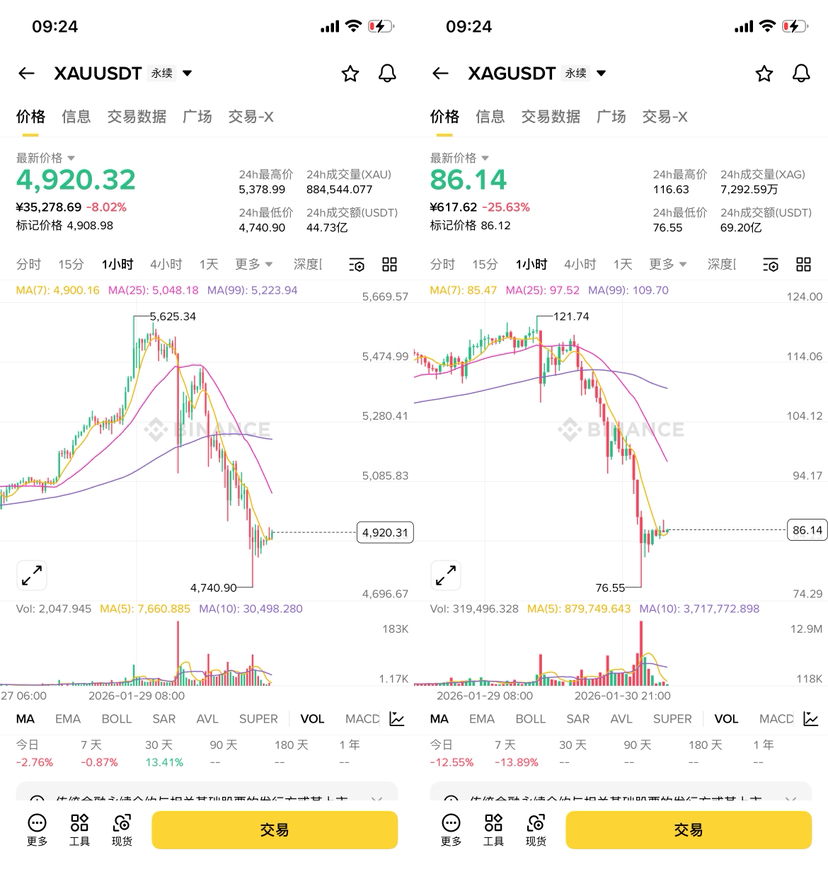
The US dollar index also strengthened on the same day (reported to have risen by about +0.7%), which is a direct pressure on metals priced in dollars.
Not only precious metals, but industrial metals are also pulling back: The Shanghai Futures Exchange copper has fallen from recent highs, dropping to 103,680 yuan/ton (-2.82%); LME copper dropped to $13,278.50/ton (-2.78%).
Okay, here's the question: what exactly do today's "hot topics" and "data" point to?
The core trigger is actually very specific—the market is treating today as a catalyst for a "macroeconomic pricing reshuffle":
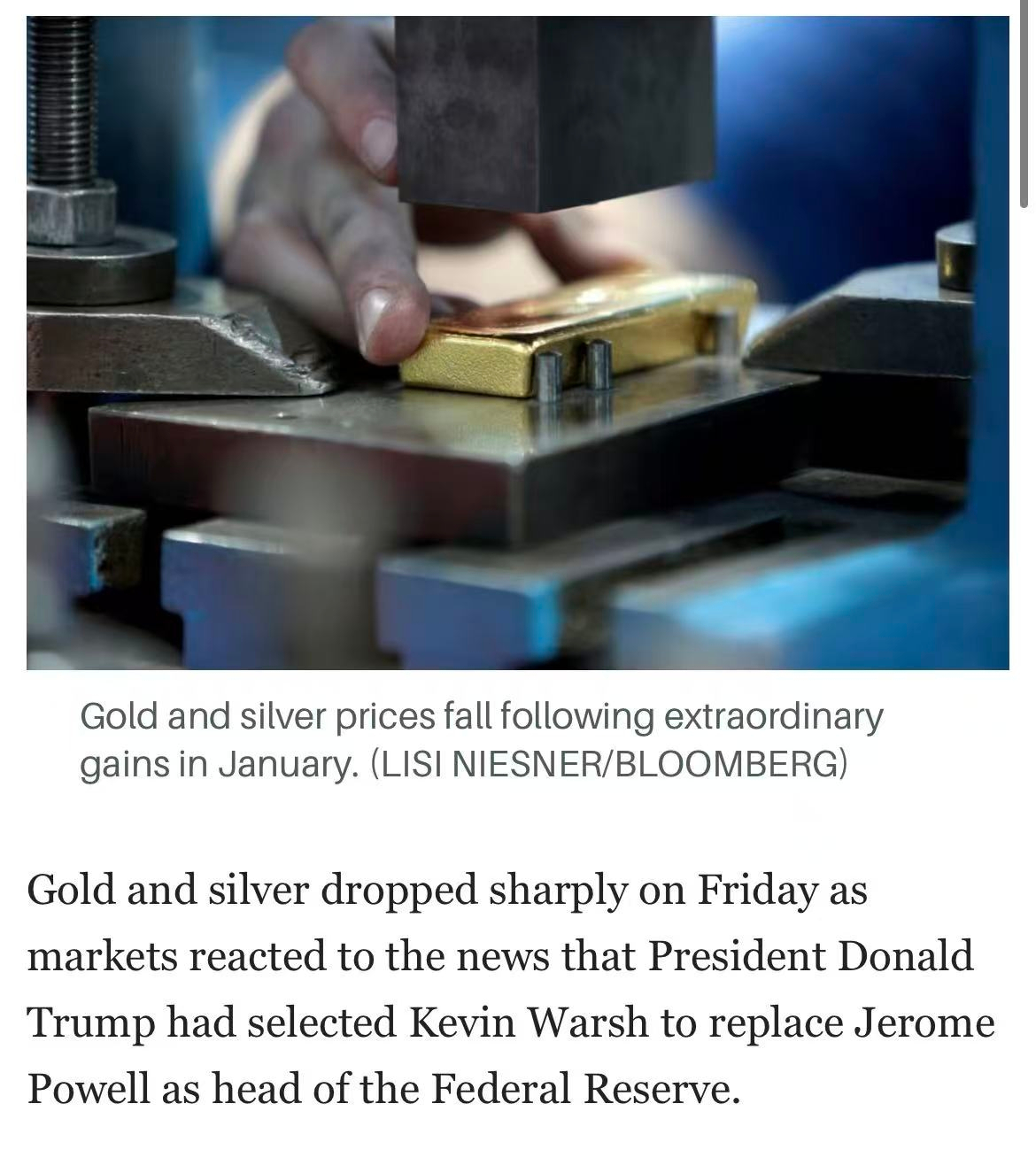
The media widely attributed the surge in the dollar and the sharp decline in gold and silver prices to Donald Trump's announcement that he would nominate Kevin Warsh to succeed Jerome Powell as chairman of the Federal Reserve.
This isn't gossip; it's a very "hard" transaction chain:
"Who will steer interest rates?" → "How will the US dollar and real interest rate expectations change?" → "How should non-interest-bearing gold and silver be repriced?"
1) Today's sharp drop is because the previous rise in gold and silver prices "looked too certain."
Looking back at the price movements this week/month, you'll find that the rise in gold and silver wasn't just ordinary; it was a rise that "preemptively priced in the risk aversion sentiment expected for the next few months." Reuters' article on January 29th put it bluntly: after gold reached a record high of $5,594.82, it immediately fell back to $5,109.62 (dropping more than 5% intraday), indicating that the high levels were already very "fragile."
What happens when this structure encounters a "macro-narrative shift"?
It's not a slow decline, it's a direct run on investors: everyone's afraid of not being the first to run.
2) The real switch: The market suddenly reassesses the "direction of interest rates" and the "strength of the US dollar".
Many people view gold and silver prices as a conditioned reflex of "inflation drives up prices, geopolitical factors drive up prices," but professional traders are more honest:
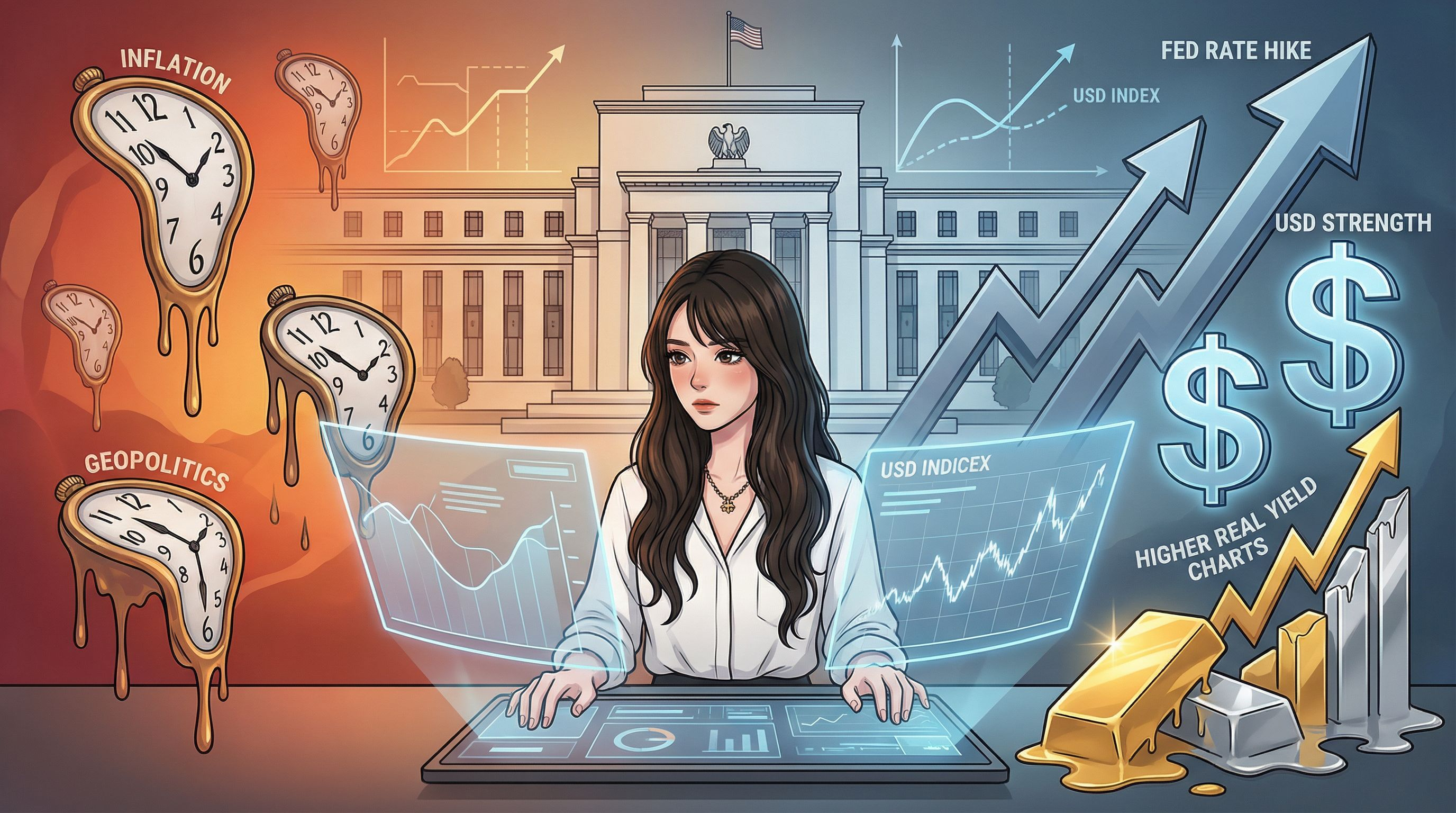
The biggest enemy of gold and silver has never been inflation itself, but rather "higher/longer real interest rates + a stronger dollar".
The reason today's news was able to shake up the market is because it changed one expectation:
The market is beginning to reassess—the future path of monetary policy, the Fed's independence, and whether the dollar will strengthen. Related reports directly mention the rising dollar index, which is putting pressure on gold and silver.
The recent surge in gold and silver prices was driven by fear among others; however, today's drop was triggered by a sudden change in public sentiment, with people no longer showing any fear (or at least not as much fear).
You may not like this statement, but just look at that drop in price, and you'll know how violently market sentiment shifts.
3) Why is it a "crash" and not a "correction"? — Because leverage and crowded trades both crashed in the same second.
If the fundamentals only changed by 1%, the price wouldn't jump by 11% or 31% in a single day.
This magnitude almost always indicates the convergence of three events:
1. Overcrowded positions: Funds of the same type are all on the same side (long), and everyone is holding similar "hedging reasons".
2. Too much leverage: In futures/options/structured products, leverage can amplify "drawdowns" into a "chain reaction of margin calls".
3. Liquidity deteriorates rapidly: Liquidity is already thin at high levels, and once the market crashes, buying pressure will disappear faster than selling pressure.
You can think of it as a very realistic scenario:
Everyone is crammed into one doorway (trading on the same side), and the doorway is quite narrow (liquidity is generally low). Suddenly someone shouts "It's hot!" (a change in macroeconomic expectations). That's not "orderly exit," but a stampede.
Today's 31% drop in silver prices is essentially a reflection of the intensity of the sell-off.
4) Why is even copper falling? — This indicates that today's market is not a "precious metals story," but rather a retreat in "overall risk appetite in the metals sector."
If the downside is only for gold itself, copper may not follow suit.
However, copper prices also clearly retreated from their highs today: both the Shanghai Futures Exchange and the LME saw a single-day pullback of nearly 3%.
What does this resemble more? It resembles a "unified macro-level risk reduction effort":
A stronger US dollar puts pressure on commodities across the board.
The price had risen too much in the early stages → everyone took profits.
Shifting risk sentiment → Sell first those with high liquidity and the most crowded positions.
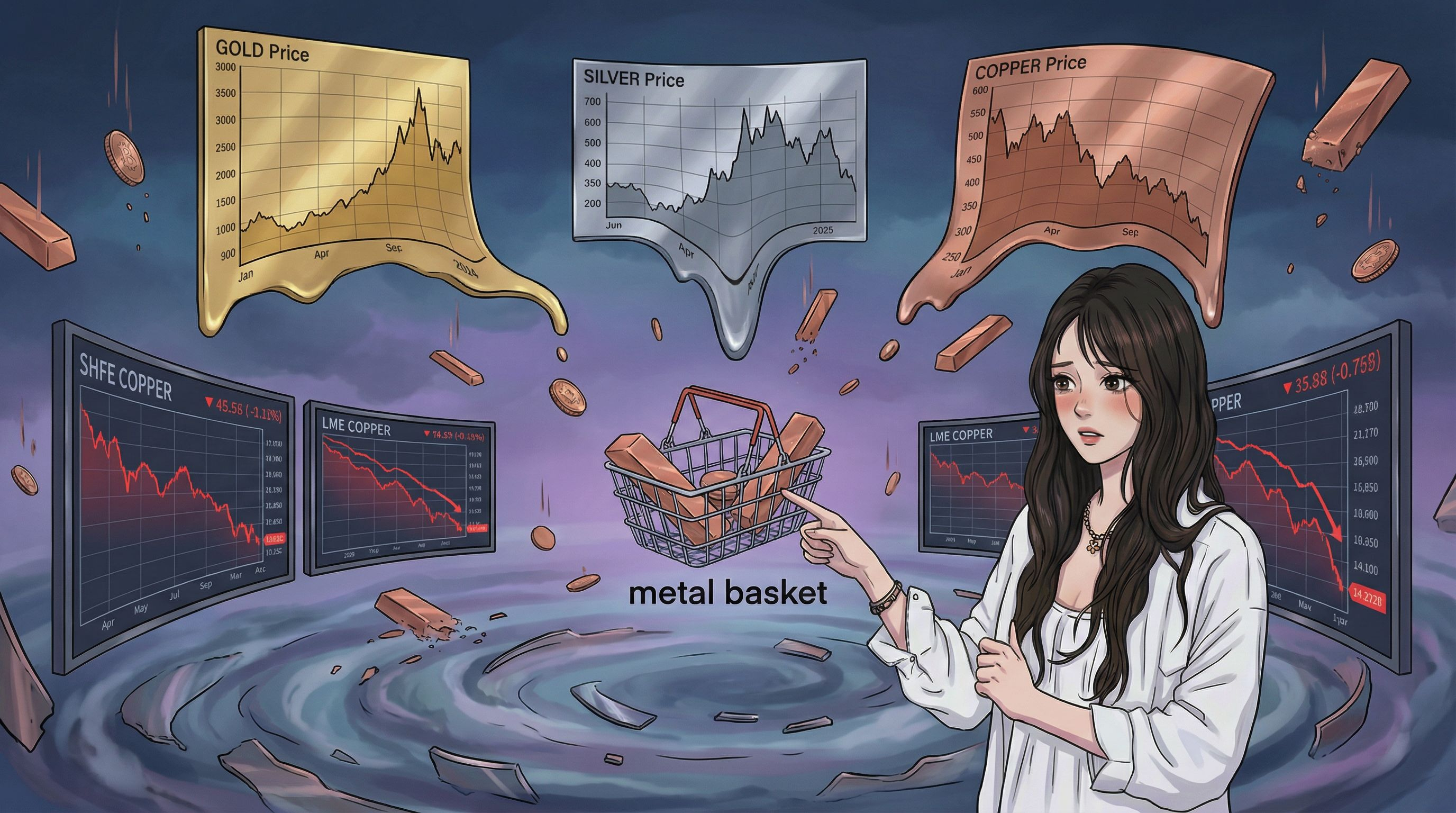
So you'll see that it's not that a particular metal is bad, but that the "basket of metals" has suddenly become less appealing.
5) The most insightful point I think deserves to be included in the post-mortem: This time, the market is punishing laziness.
What laziness?
We're just too used to treating gold and silver as assets that we can "hedging against" by simply pressing a button.
But the most ruthless thing about the market is that when something becomes a "certainty that everyone knows," it will kick you out of your comfort zone in the most extreme way.
Today's sharp drop is actually telling everyone:
You can use gold and silver as a hedge, but don't treat it as a religion;
You can talk about the hedging narrative, but don't ignore the "master switch" of interest rates/dollars;
You can trade trends, but when the decline starts to approach "historical levels," it's no longer a "logical discussion," it's "risk control execution."
Here's a very useful piece of advice for everyone:
Metals aren't immune to price increases; they're just a reminder that when the macro narrative shifts, prices react faster than you do.
I hope we can stay on the table forever!!!