
By Future Trace (FutureBeauty) | Liu Jiaxui
Edited by Wu Sixin
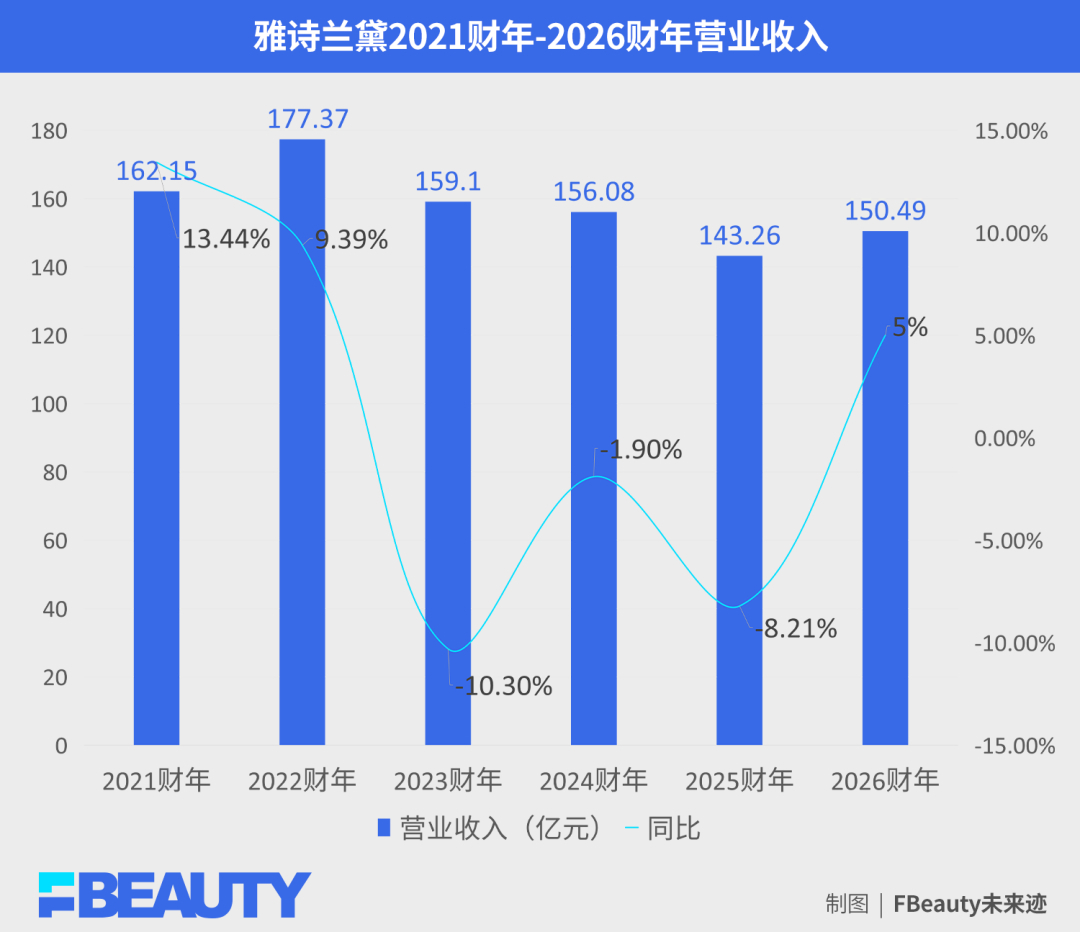
Yesterday (August 19), Estée Lauder Companies released its fiscal 2026 performance report (2025.7.1–2026.6.30). Full-year net sales increased by 5%, and organic growth rose 3% to $15.049 billion (about RMB 101.2 billion).
(FBeauty Future Trace) found that this earnings report has three core highlights:
? For full fiscal year, Estée Lauder Companies’ revenue in China was $3.058 billion (about RMB 20.55 billion). It achieved 9% organic growth year over year, and continued to grow its market share in China for six consecutive quarters.
? Jo Malone London and TOM FORD achieved performance breakthroughs, joining the billion-dollar brand matrix (6 brands in total).
? The group achieved full-year operating profit of $780 million (about RMB 5.256 billion), turning from losses to profits compared with the previous fiscal year.
Looking back at performance trends from fiscal 2021 to 2026, Estée Lauder Companies went through the full cycle fluctuations of the industry and the pains of strategic adjustments. In fiscal 2021–2022, revenue stayed on a high-growth track; in fiscal 2022, revenue reached a temporary peak of $17.737 billion, with a year-over-year growth rate of 9.39%. But starting from fiscal 2023, performance fell into negative growth for three consecutive years, and growth bottlenecks became increasingly apparent.
Fiscal 2026 became a key turning point. The group successfully ended a three-year run of revenue decline, delivering positive revenue growth.
Stéphane de La Faverie, President and CEO of the Estée Lauder Companies, gave high praise for the year’s performance: “I am extremely proud of the team’s performance for fiscal 2026. The actual results exceeded our expectations at the beginning of the year. Our organic net sales grew 3%—growth was back on track. Every brand delivered broad-based growth, and our operating margin improved significantly.”
Estée Lauder China’s total net revenue surpassed RMB 20 billion, with 11 brands growing
Fiscal 2026 was also a crucial year for the successful implementation and results of Estée Lauder Companies’ China market strategy.
The most direct signal is that the group officially listed the China mainland market as an independent reporting region for performance, alongside traditional core regions such as the Americas and Europe. This change not only confirms China’s core strategic position in the group’s global layout, but also allows the industry to clearly observe the operating performance and growth potential of the China business.
From the quarterly performance trend, the China market shows a steady growth trajectory. The group’s CEO disclosed in the earnings report meeting that in China, each quarter and every category is continuously expanding its market share, and it has achieved share growth for six consecutive quarters.
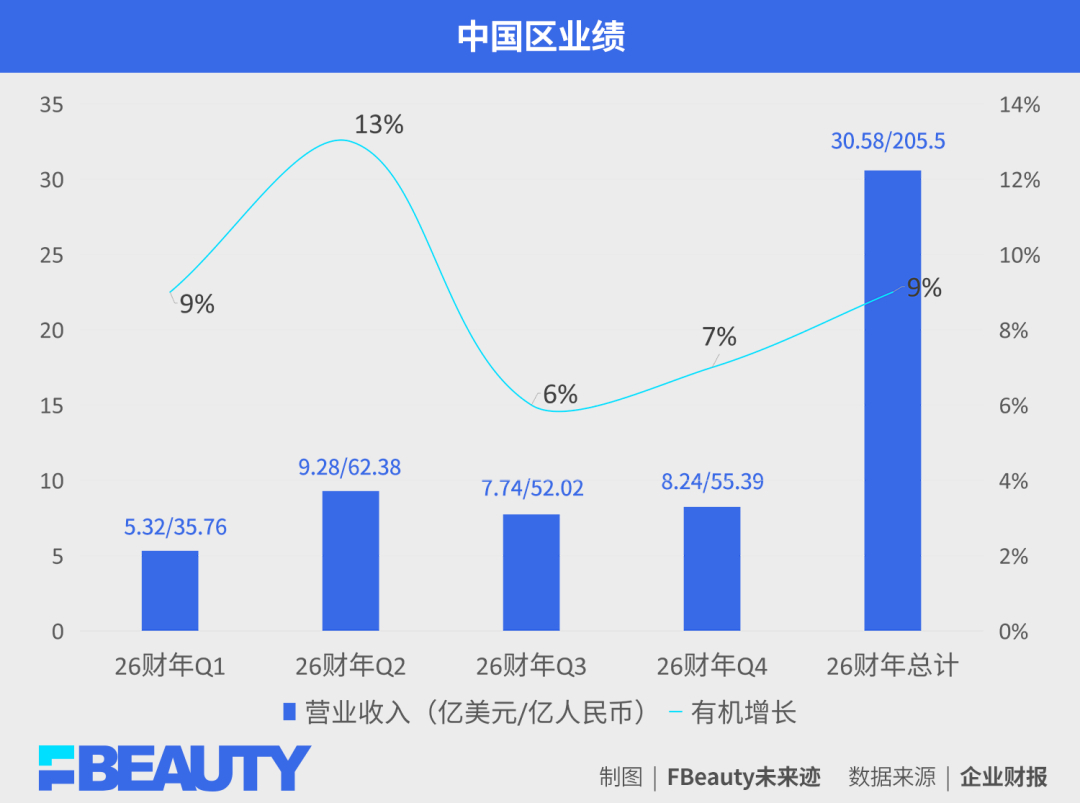
Among them, in China, net sales in the fourth quarter of fiscal 2026 reached $824 million, surging 12% year over year. Organic growth was 7%, making it the core region with the fastest growth globally. On the brand side, 11 brands grew, with 6 brands achieving double-digit growth rates. La Mer maintained strong performance, while Le Labo’s annual increase exceeded 50%, demonstrating strong growth momentum.
In addition, during shopping events such as “Double 11” and “618,” Estée Lauder Companies performed ahead of the competition. Led by Estée Lauder (Estée Lauder), La Mer, and Jo Malone London, multiple brands ranked first across different platforms in high-end beauty, luxury makeup, and high-end fragrance categories.
Looking back at this round of growth in the China market, the core drivers are channel-structure innovation and精细全域数字化 (full-domain digital and precision) operations. During the earnings report meeting, Stéphane de La Faverie disclosed that online business has already accounted for 50% or more of Estée Lauder Companies’ total business in China. On the Douyin platform, the group has completed the rollout of 11 brands, and the online performance of each brand has been outstanding—becoming an important incremental channel for performance growth.
In the second half of fiscal 2026 (2026.1.1–6.30), Estée Lauder Companies’ performance in China’s online market was particularly impressive.
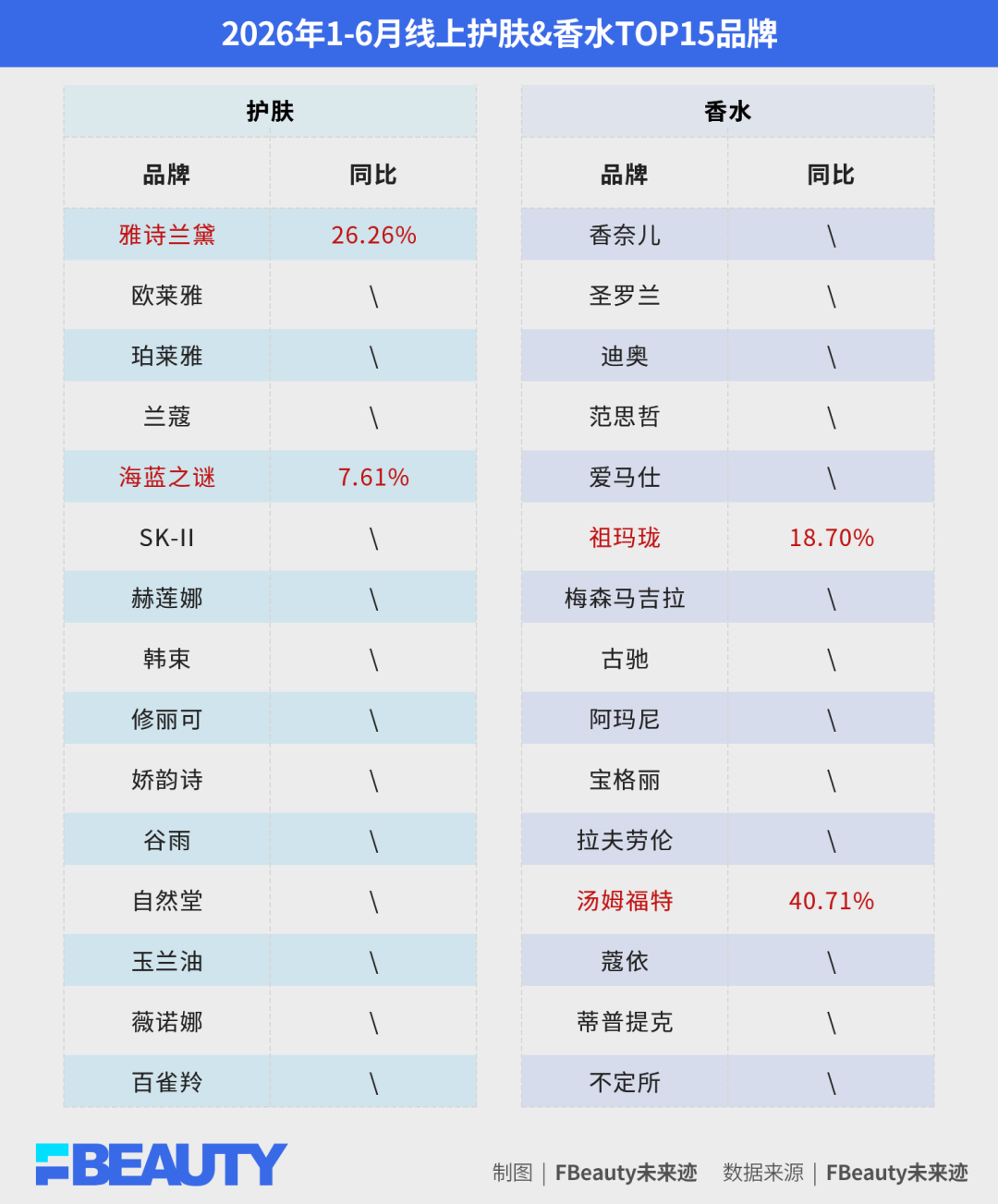
According to data compiled by (FBeauty Future Trace) for the TOP 15 online skincare rankings in the first half of 2026, Estée Lauder and La Mer saw year-over-year increases of 26.26% and 7.61% in online sales, respectively. Among them, Estée Lauder outperformed many other brands and ranked first in the skincare category.
Meanwhile, the fragrance portfolio continues to unlock growth potential. In the fast-growing fragrance track, Jo Malone London and TOM FORD, as representatives of salon fragrance and commercial fragrance respectively, cover mass and high-end customer segments and both delivered double-digit growth. Among them, TOM FORD achieved rapid 40% growth in mainland China, further strengthening the group’s competitiveness in the high-end perfume market.
This growth is not simply dependent on channel tailwinds or short-term marketing. A deeper reason is that brands are accelerating their ability to understand Chinese consumers’ needs, keeping pace with changes in the China market, and truly converting global advantages into capabilities that fit the China market.
Fan Jiayu, President and CEO of Estée Lauder Companies’ China region, previously said: “In the group’s global layout, the China market is no longer just a single growth engine. It is also a key source of the group’s global innovation, a benchmark market for digital transformation, and a front-line position for insights into trends in high-end beauty development.”
This judgment is continuously being translated into localized innovation practice. The group has established an R&D team in Zhangjiang, Shanghai since 2005. At the end of 2022, it launched a China innovation R&D center, giving it end-to-end innovation capabilities from consumer insights to product launch.
In March 2026, Estée Lauder Companies was successfully recognized as one of the first batch of large-enterprise open innovation centers in Minhang District, Shanghai. Leveraging platform resources, it fully realized the dual value of an “innovation incubator” and a “resource connector,” deep-linking local R&D resources, its supply-chain system, and the industry ecosystem, driving localized product innovation, technical implementation, and collaborative development across the industry.
The earnings report meeting revealed that currently 30% of the company’s global innovations come from China, and they are tailored specifically for the Chinese market. This enables the group to meet Chinese consumers’ personalized needs more precisely in both skincare and makeup, strengthening the brand’s confidence to continue deepening its focus on the China market.
With Jo Malone and Tom Ford joining, the number of billion-dollar brands rose to 6
Driven by continuous product innovation, precision operations, and long-term track layout, Estée Lauder Companies achieved a structural rebound across all categories in fiscal 2026. Except for a transitional adjustment in haircare, skincare, makeup, fragrance, and other businesses delivered positive growth across the board. Within that, the fragrance track led all categories with a 12% year-over-year growth rate, becoming the company’s biggest growth highlight of the year.
The fragrance business growth at Estée Lauder Companies is the result of its precise M&A strategy and its long-term commitment to a high-end fragrance runway.
Since acquiring niche salon fragrance benchmark Le Labo in 2014, incorporating the Kilian brand in 2016, and then investing $2.8 billion in 2022 to acquire TOM FORD’s end-to-end full-category business, Estée Lauder Companies’ fragrance strategy logic broadly includes: continuously filling gaps in ultra-premium and niche salon fragrance as well as designer fragrance sub-segments; completing shortcomings in the premium fragrance portfolio; building an all-tier product system covering “classic commercial fragrance—light-luxury designer fragrance—top-luxury salon fragrance”; and continuously strengthening brand assets and its discourse power in the high-end fragrance arena.
Building on its advantages in a mature portfolio matrix, Estée Lauder Companies continues to invest more in the fragrance business, constantly improving its track layout and operating system. In November 2025, the group made a strategic investment in XINú, a luxury fragrance brand in Mexico, further strengthening its presence in niche premium fragrance. In June 2026, it established a new North America Fragrance Cluster and recruited an experienced fragrance operator from L’Oréal to lead the new department, completing a professionalized and centralized organizational upgrade for fragrance operations. In July 2026, after nearly five years, Estée Lauder (Estée Lauder) launched its mainline new high-end fragrance for beauty culinary scent line, Glimmer.
From capital acquisitions and organization restructuring to new product iteration, Estée Lauder Companies is stepping up investment across the fragrance arena in all directions, continuously strengthening the growth curve of perfume.
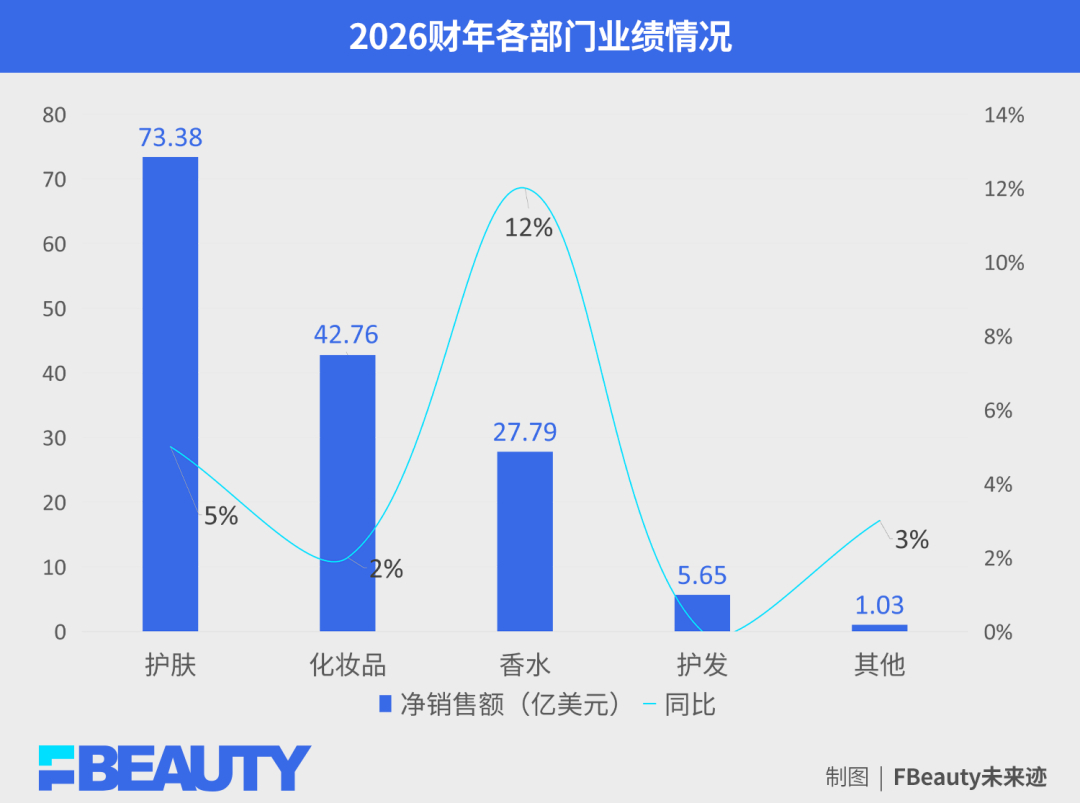
Specifically, the value of the brand matrix continues to be released. In fiscal 2026, Jo Malone London and TOM FORD successfully entered the billion-dollar brand club. With this, Estée Lauder Companies now has six 1-billion-dollar brands: La Mer, Estée Lauder, Clinique, Jo Malone London, and TOM FORD. The strength of the high-end brand cluster has been further solidified. Meanwhile, The Ordinary’s growth momentum is surging, rapidly moving toward the billion-dollar revenue threshold.
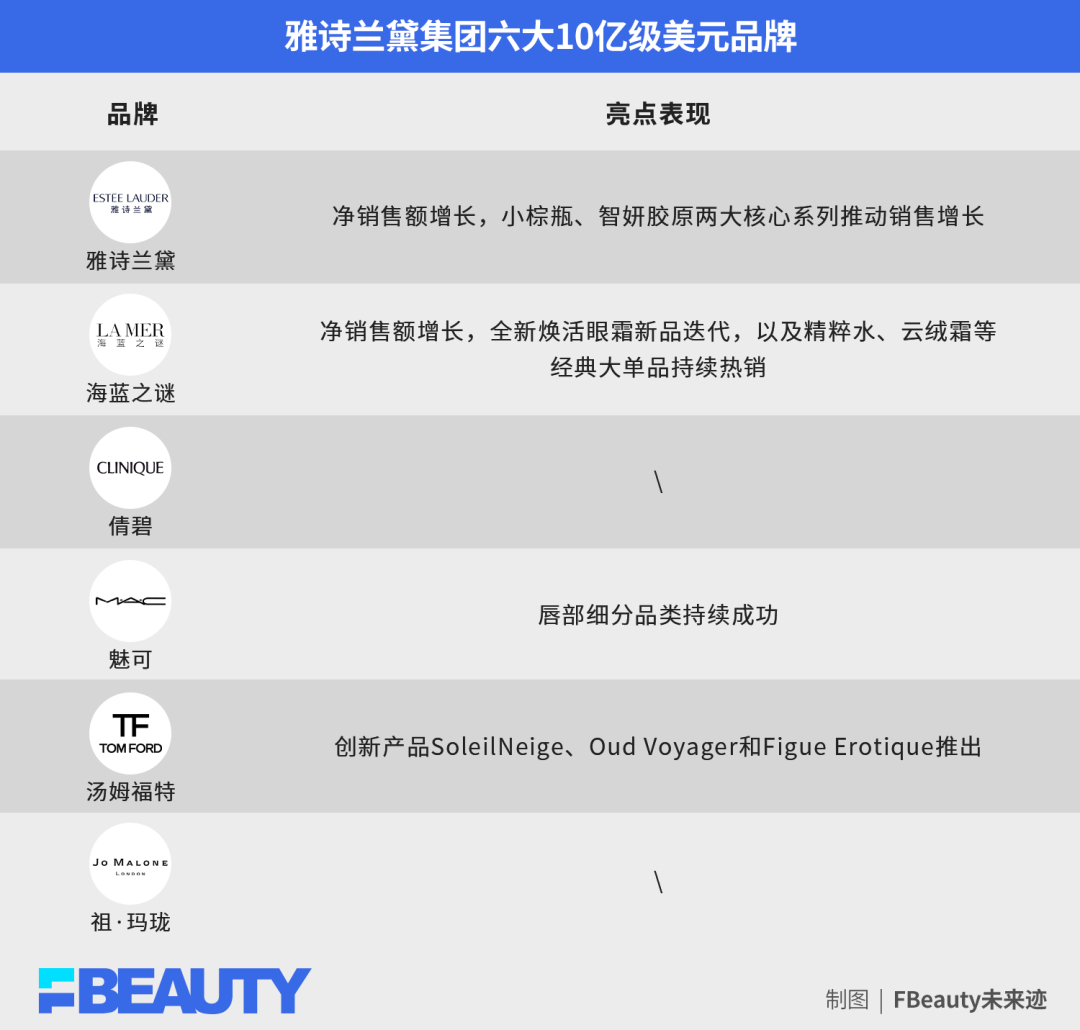
Each of the core brands achieved steady growth driven by product innovation and marketing upgrades. In high-end skincare, the flagship La Mer leverages continuous product iterations, such as the newly refreshed eye cream, along with sustained strong sales of classic hero products like Concentrated Essence and Creme Cloud Cream, delivering performance bursts during major promotional events and solidifying its base in high-end skincare.
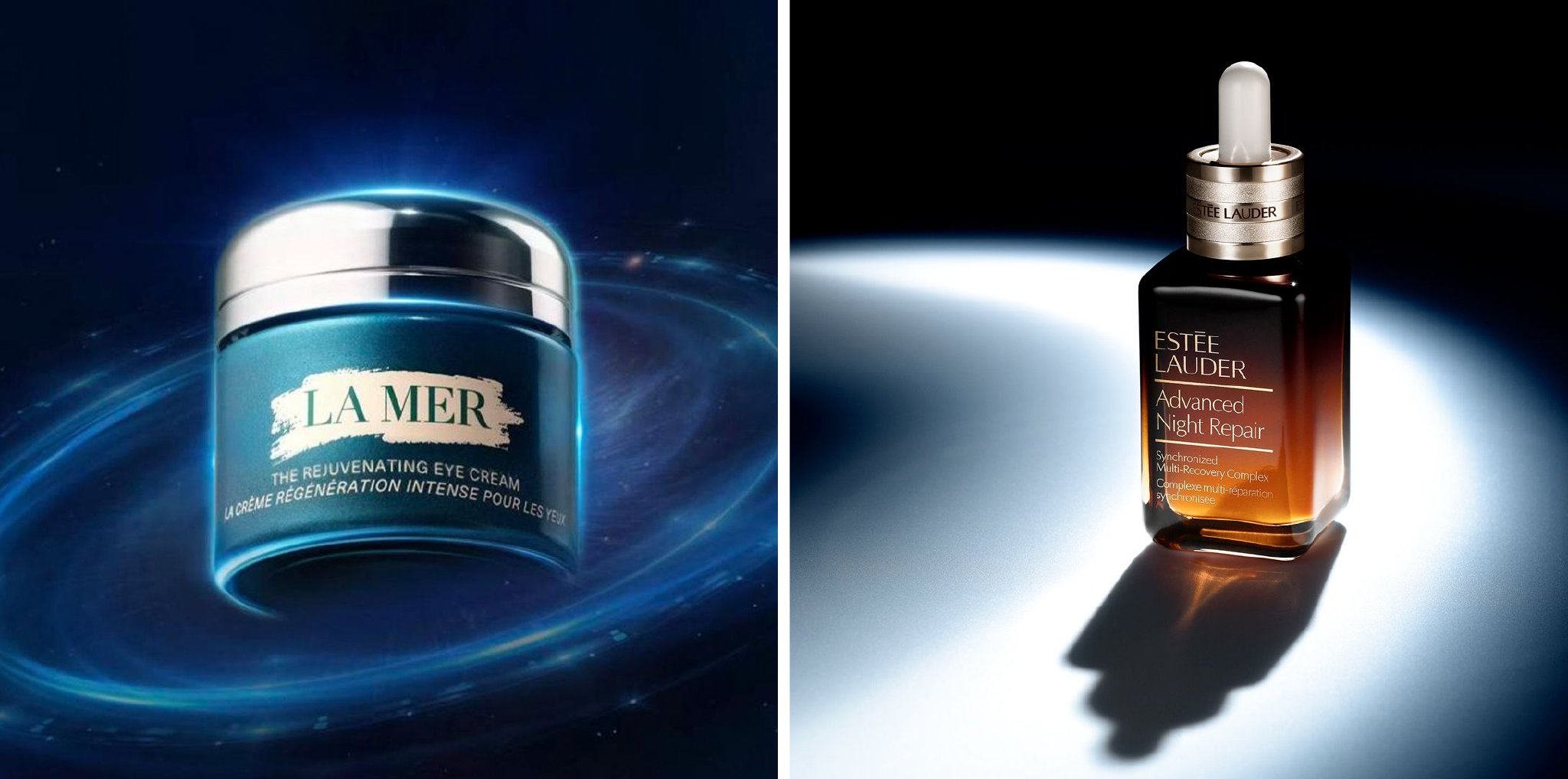
Estée Lauder (Estée Lauder) relies on product upgrades and marketing empowerment for its two core lines—its iconic Little Brown Bottle and the Advanced Night Repair collagen line—continuing to capture more market share in the mass high-end skincare sector.
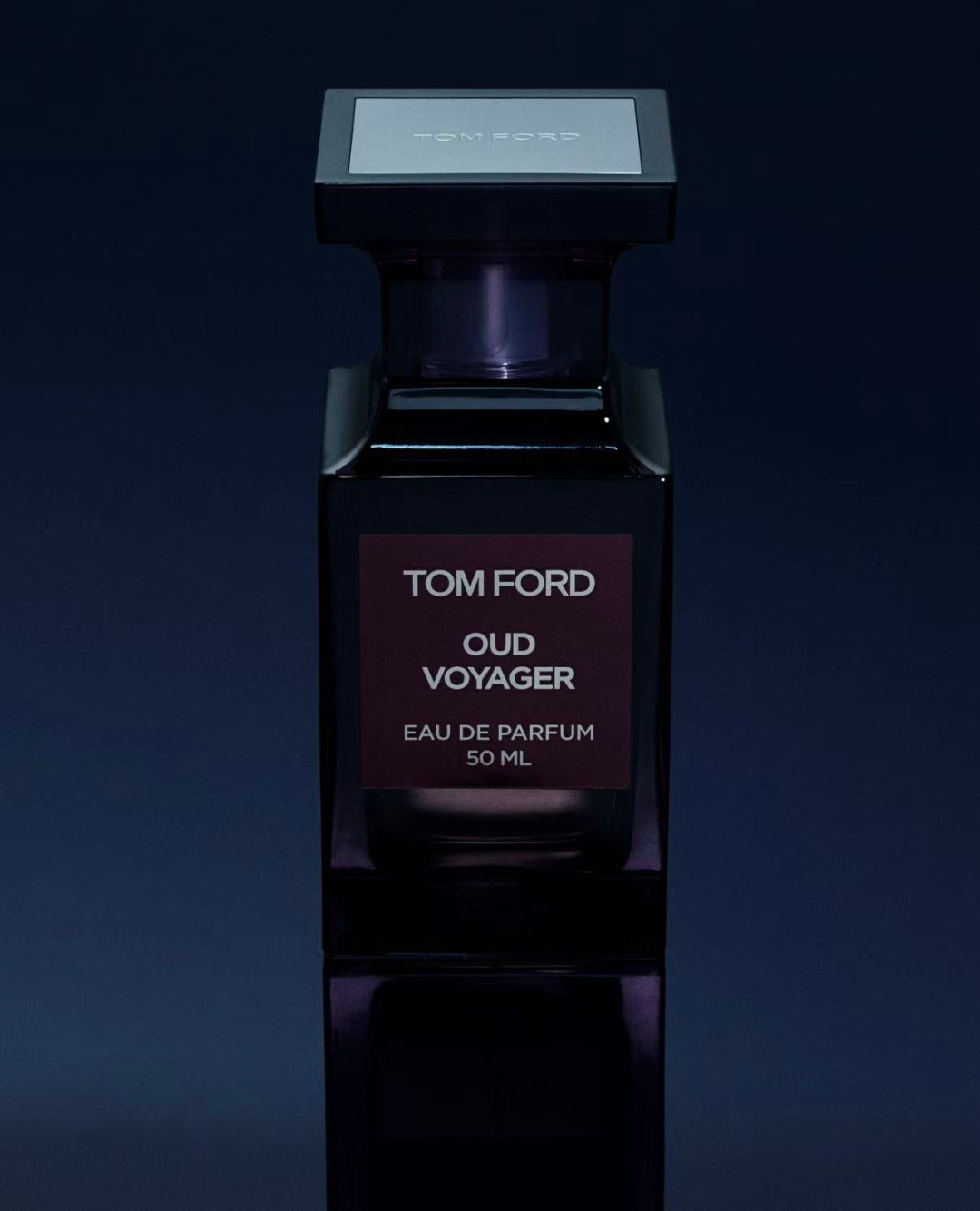
The makeup brand M·A·C leverages star products such as bullet lipsticks and lip liner pens, combined with the trend-based layout of newly launched blush products, continuing to lead the global makeup sub-segment. TOM FORD, meanwhile, drives hot sales across the entire product line with innovative fragrance products such as Soleil Neige, Oud Voyager, and Figue Erotique, helping the brand achieve growth.
The “Beauty Reimagined” strategy enters the harvest period
The strong recovery of performance in fiscal 2026 is not simply due to a broader market rebound. It is a core result of the deep execution of Estée Lauder Companies’ “Beauty Reimagined” strategy and the sustained release of its effectiveness. Leveraging a dual engine of cost reduction and efficiency improvement, along with integrated operations, the group completed a systematic transformation and upgrade, delivering both a jump in profitability and improvements in the quality of growth.
Stéphane de La Faverie said: “We closed fiscal 2026 with results that exceeded expectations, achieving organic sales growth for the fourth consecutive quarter and continuing to strengthen our profitability. The ‘Beauty Reimagined’ vision is being implemented steadily. The One ELC integrated operating model makes the entire organization more disciplined and efficient.”
Specifically, the PRGP profit restoration and growth plan continues to advance, achieving a two-way balance between cost reduction and revenue growth. As of June 30, 2026, the company has completed the PRGP restructuring approval process in full, with overall progress ahead of schedule. For the full year, it delivered total pre-tax earnings of $1.2 billion, exceeding the previously expected range; it cumulatively recognized restructuring costs of $1.4 billion, with the overall expense level at the high end of the target range.
Through initiatives such as refined workforce optimization, process simplification, procurement cost reduction, and clearing low-efficiency channels, Estée Lauder Companies cumulatively reduced headcount by 10,000 employees, and employee productivity in corporate functional departments increased by 50%.
It is understood that all the funding released from cost reductions was reinvested into the end-market. For the full year, the investment made toward consumers grew 7% year over year (excluding exchange-rate impact, growth of 4%–5%). While strictly controlling spending on non-consumer-facing areas, the company continued to increase investment in new product R&D, marketing and seeding, and channel expansion, achieving “cost reductions without reducing growth, and efficiency improvements while continuing to enhance quality.” This directly drove a 150-basis-point increase in full-year gross margin and a 320-basis-point increase in adjusted operating margin.
At the same time, the One ELC integrated operating model has been fully rolled out, driving a systematic upgrade in organizational efficiency.
In April 2026, Estée Lauder Companies announced that the One ELC operating model has been established. ELC is an abbreviation for The Estée Lauder Companies, and in Chinese One ELC can be translated as “an integrated Estée Lauder Companies.”
The official framework divides it into three parts: one team, one culture, and an operating ecosystem. By reducing hierarchies and organizational barriers, it clarifies decision-making authority. Through shared platforms, data, and partners, it improves collaboration efficiency across different brands, regions, and functions, strengthens alignment between global and regional operations, enhances market responsiveness, and improves cost efficiency—driving a significant improvement in operating profitability.
This is also one of the key reasons management specifically emphasized “exceeding expectations at the beginning of the year” in the earnings report.
For fiscal 2027, the group’s management provided a positive and optimistic growth outlook, with overall growth momentum expected to continue strengthening. Specifically, the group expects organic net sales growth in fiscal 2027 to remain within the 3%–5% range, delivering diversified and balanced growth across categories and regions.
This confidence comes not only from the continued rise in China’s market share, but also from an optimized organizational system, a refined brand matrix, and mature full-domain channel capabilities after strategic adjustments.
Annual sales of $15.049 billion, a growth curve of consecutive four quarters, and a strong catch-up in China’s online market fully confirm that Estée Lauder Companies’ strategic transformation is not just talk—“Beauty Reimagined” has already become tangible incremental performance.
But the long-term test is still ongoing: in the new stage where the industry shifts toward competition in a mature market, whether the company can continue to deepen localized innovation, optimize the full-domain channel layout, and precisely manage the product price体系 (pricing system) will determine whether this key turnaround can be fully transformed into the starting point of a new long-term growth cycle—posing a new question for the Estée Lauder Companies’ future development.