


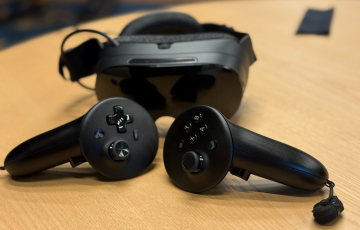
Valve’s Steam Frame might be the most underrated gaming hardware this year.
And this product is already closer than we think.
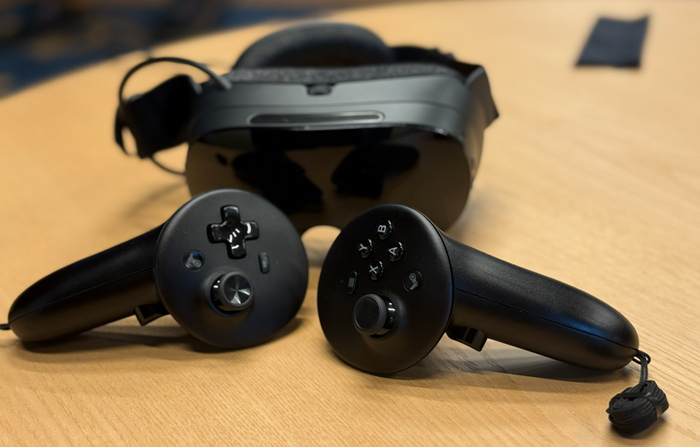
A player has discovered that Valve has uploaded eight segments of Steam Frame consumer onboarding videos to Steam Store’s resource servers. The content covers unboxing, wearing, IPD adjustment, login, wireless streaming, and accessory installation.
These materials were quickly taken down by the official source, but they are completely different from typical promotional trailers. They look more like official onboarding materials prepared for consumers after product delivery, with detailed demonstrations of how to wear, adjust, and connect the device upon first hand. They cover the full, basic onboarding process from start to finish.
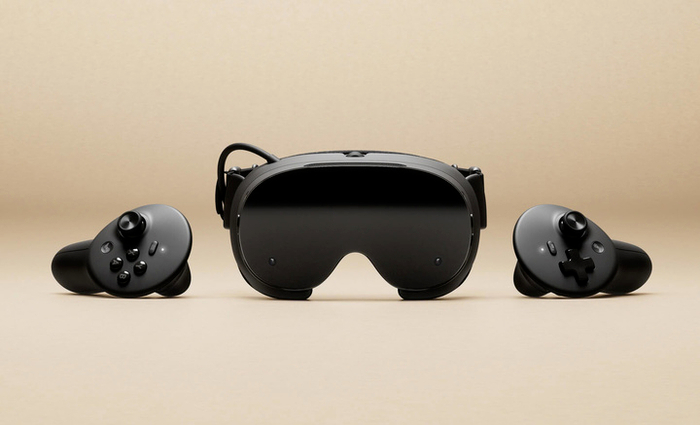
Combined with Valve’s previously announced summer launch plan, now even the complete user tutorial system is ready, and the hardware and software wrap-up work is basically complete. All signs point to the official debut of Steam Frame entering its final countdown.
Steam Frame, the most polished gaming VR headset
Steam Frame may be the most polished gaming headset today, both in hardware design and software ecosystem—
Let’s start with the hardware specs: Steam Frame is powered by the Snapdragon 8 Gen 3, comes with 16GB of LPDDR5X memory, and offers 256GB and 1TB UFS storage versions, while also supporting microSD expansion.
Optically, it uses dual LCD screens with Pancake lenses, with a per-eye resolution of 2160×2160 and a horizontal field of view of about 110°.
The device supports dual-mode use: it can function as a PC streaming headset, or it can run VR content and Steam games independently without a computer. Valve defines this experience architecture as "streaming-first."
The official video revealed this time fills in many practical details that parameter pages can’t show.
The package includes a 6GHz wireless receiver. Once connected to a PC, it can create a dedicated streaming channel, letting game video travel over a high-frequency exclusive link while the home Wi‑Fi handles only regular network traffic, effectively avoiding unstable streaming caused by congestion and interference at home.
For a headset centered on streaming, this kind of targeted underlying optimization is far more practical and better suited to real-world use than simply piling on wireless specs.
Wearability tuning also pays close attention to detail. The top of the device has a physical IPD wheel, allowing you to fine-tune interpupillary distance while wearing it. Once adjusted, you can enable the side IPD lock to prevent accidental shifts during daily wear and removal, keeping the viewing experience precise every time.
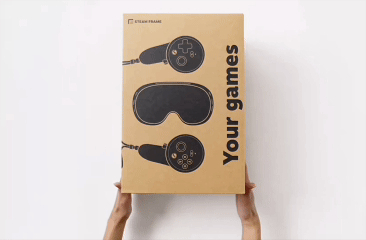
A restrained design and precise functionality—that’s classic Valve style.
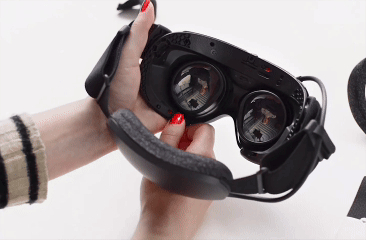
The face mask uses a modular detachable structure, paired with a dedicated eyeglass spacer. For users who wear glasses, it can effectively increase the distance between the lenses and the eyes, easing pressure and reducing fogging and lens contact issues. Even niche, tiny pain points like nose-bridge light leakage have been fully optimized by Valve.
The official ergonomic accessory kit includes a reinforced top strap, controller wrist straps, and an extended light blocker for low nose bridges. The pivot mounts on both sides of the headset support independent adjustment, making it suitable for all kinds of head and face shapes while balancing fit and light blocking.
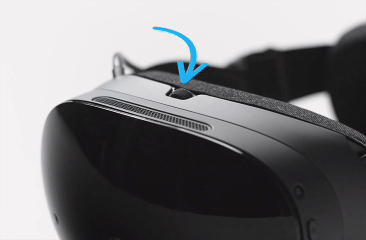
Looking at each individual spec, none of them is revolutionary. But for a device that has not even been released yet, official tutorials for eyewear fitting, light leak handling, interpupillary distance locking, and other small but important user experiences are already prepared ahead of time. The signal is very clear:
The hardware and experience system of Steam Frame is basically finished and ready to go.
This headset is paving the way for SteamOS on Arm
What makes Steam Frame special is its Snapdragon 8 Gen 3 chip.
Whether it’s the handheld Steam Deck or the new Steam Machine, both use AMD x86-64 platforms. In other words, the early third-party Steam Machines did not have a unified configuration, while Steam Frame is the first Qualcomm Arm device to run the full SteamOS.
This architecture is very close to today’s Android flagship phones, but Valve’s goal is not just to make SteamOS run normally—it is to support a massive library of older Windows x86 PC games.
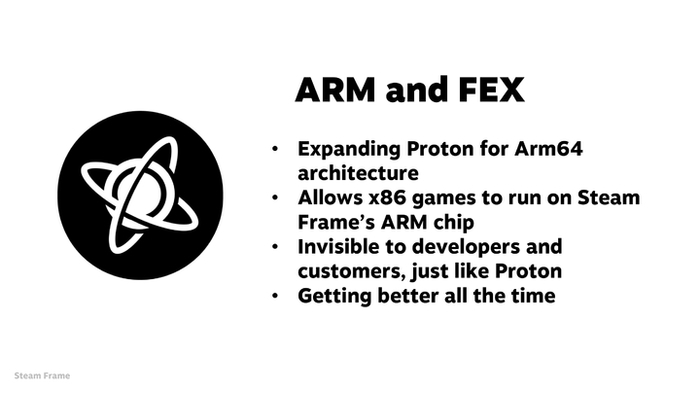
To that end, it has built a complete layered compatibility logic: Windows games rely on Proton to adapt to the Linux environment, x86 instructions are translated for Arm through FEX, and Android apps run via Lepton. These three paths break down the content barriers across architectures.
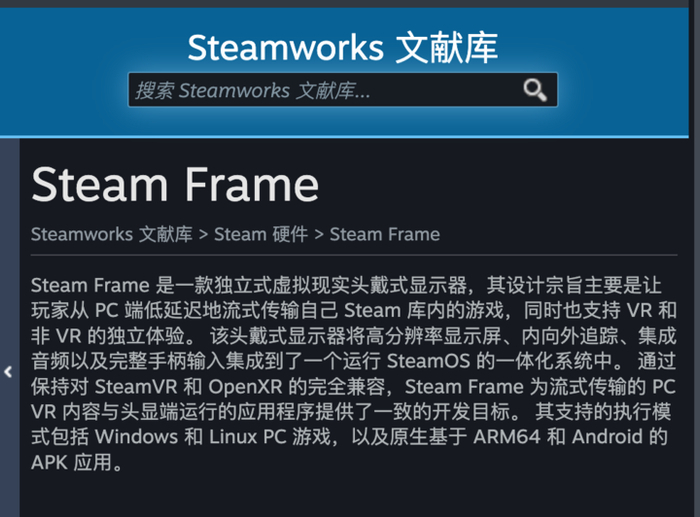
Valve also clearly defined the adaptation rules in the Steamworks developer documentation: traditional PC games still submit Windows x86 versions, which are translated and run on the Snapdragon platform via Proton+FEX; content that natively supports Android Arm64 is deployed directly through the Lepton channel.
Simply put, Steam Frame opens up three execution paths on the same SteamOS device:
Valve is not merely dabbling in mobile.
When discussing Arm gaming technology, the official team said that long-term investment in FEX translation was meant to reduce the cost of cross-architecture porting. This solution is not limited to VR devices; it is equally suited to Arm handhelds, thin-and-light laptops, and even smartphones.
What is certain is that running Steam PC games on phones has long been Valve’s established technical direction.
Before Valve officially stepped in, the Android community had already proven the feasibility of this approach—independent developers using Winlator and Box86/64 together with the Vulkan graphics layer have already been able to run Windows x86/x64 games directly on phones, and with third-party tools they can also sync access to the Steam game library.
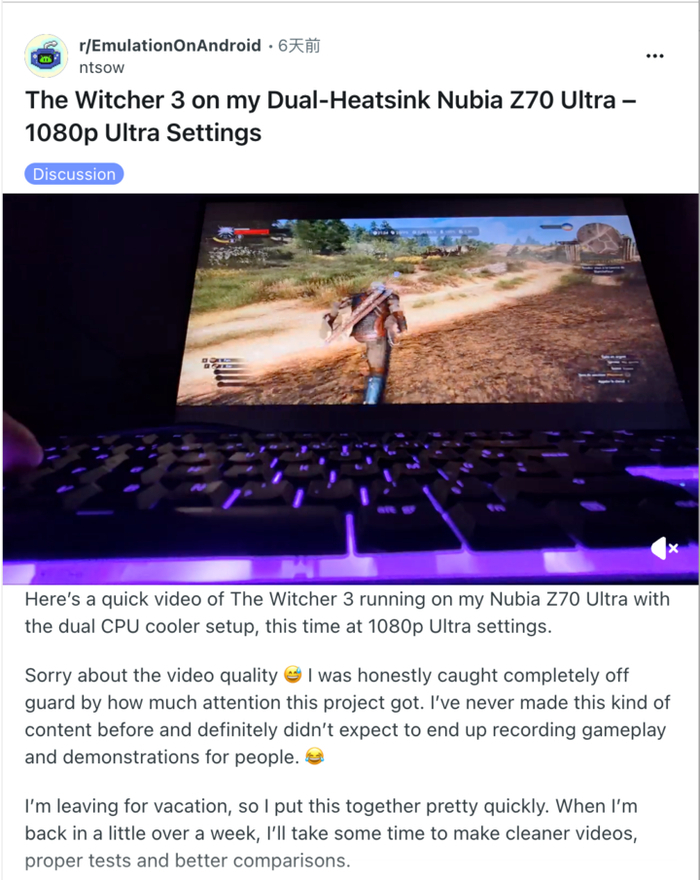
Today, flagship Snapdragon phones can even smoothly run AAA titles like The Witcher 3. With cooling modifications, hardcore players have achieved a stable 1080p high-quality 20–30 fps in a Linux translation environment.
These extreme tests prove that flagship mobile chips already have the foundation to run some large PC games, but sustained performance, heat dissipation, translation overhead, drivers, and compatibility remain real bottlenecks.
But the grassroots solution has always carried a strong geek vibe.
Game compatibility varies widely, and reliability depends on community trial and error. If any part of the translation layer, drivers, or graphics APIs goes wrong, it can lead to abnormal operation, making stable use impossible for ordinary users.
That is precisely the core advantage of Valve stepping in directly.
With the Steam store, SteamOS, the Proton compatibility layer, and the official device certification system in hand, Valve has now added Arm-based SteamOS and FEX translation technology, directly filling in the weaknesses of the mobile PC gaming ecosystem.
Once this mature official solution is rolled out from Steam Frame to more Snapdragon devices, Android gaming phones may, for the first time, have a complete, stable, and usable legitimate PC gaming ecosystem.
Gaming phones may no longer be made only for mobile games.
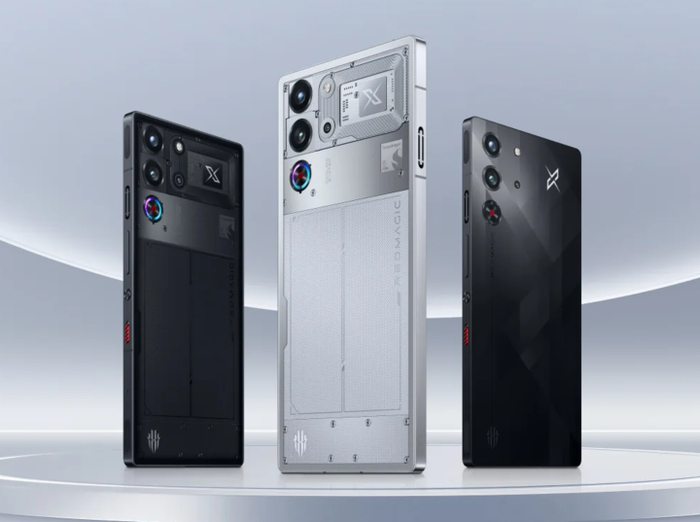
Over the past decade, gaming phones—whether RedMagic, ROG Phone, or Black Shark—have essentially been solving the same problem: how to make the Android mobile gaming experience as good as possible?
So everyone has been piling on active cooling, touch shoulder buttons, high-refresh screens, large batteries, and aggressive performance tuning, but no matter how much the hardware improves, what they ultimately run is still limited to the Android mobile game ecosystem.
If the technical path of SteamOS on Arm is fully realized, the product logic of gaming phones will be completely rewritten.
With the same Snapdragon flagship chip, the same large memory, the same active cooling, controller expansion, and video output capabilities, the device form factor will no longer be limited to a single type—
A regular Android phone by day, a portable Steam handheld when connected to a controller, and a small Steam machine when connected to an external display.
By then, the core competition for gaming phones will no longer be how many frames (Genshin Impact) can run at, but whether they can fully fit the Steam game libraries users have accumulated over more than a decade into a portable device.
Of course, just because Steam Frame delivers this experience doesn’t mean ordinary Android phones will be able to flash SteamOS anytime soon.
Phone devices involve a huge number of fragmented adaptation challenges, including basebands, GPU drivers, touch tuning, power management, and low-level bootloaders. Valve has not announced a Steam Phone plan, nor has it released a SteamOS installer package for general-purpose phones.
But Steam Frame has genuinely made the most critical technical chain work: Snapdragon platform + SteamOS + Proton + FEX + the full Steam ecosystem.
That is also why I am more optimistic about Steam Frame than the new Steam Machine—it may look like nothing more than an upgraded and optimized VR headset, but if Valve later opens up this underlying technology, the change it brings may not be in VR at all. Instead, it could completely reshape the direction of the next generation of gaming phones.
Android gaming phones may really be about to change.