I used to look at fixed-rate DeFi and think: nice, you lock a rate and wait.
Watching TermMax more closely changed that for me.
The interesting part isn’t really the “fixed rate” label. It’s what happens to the position after you create it.
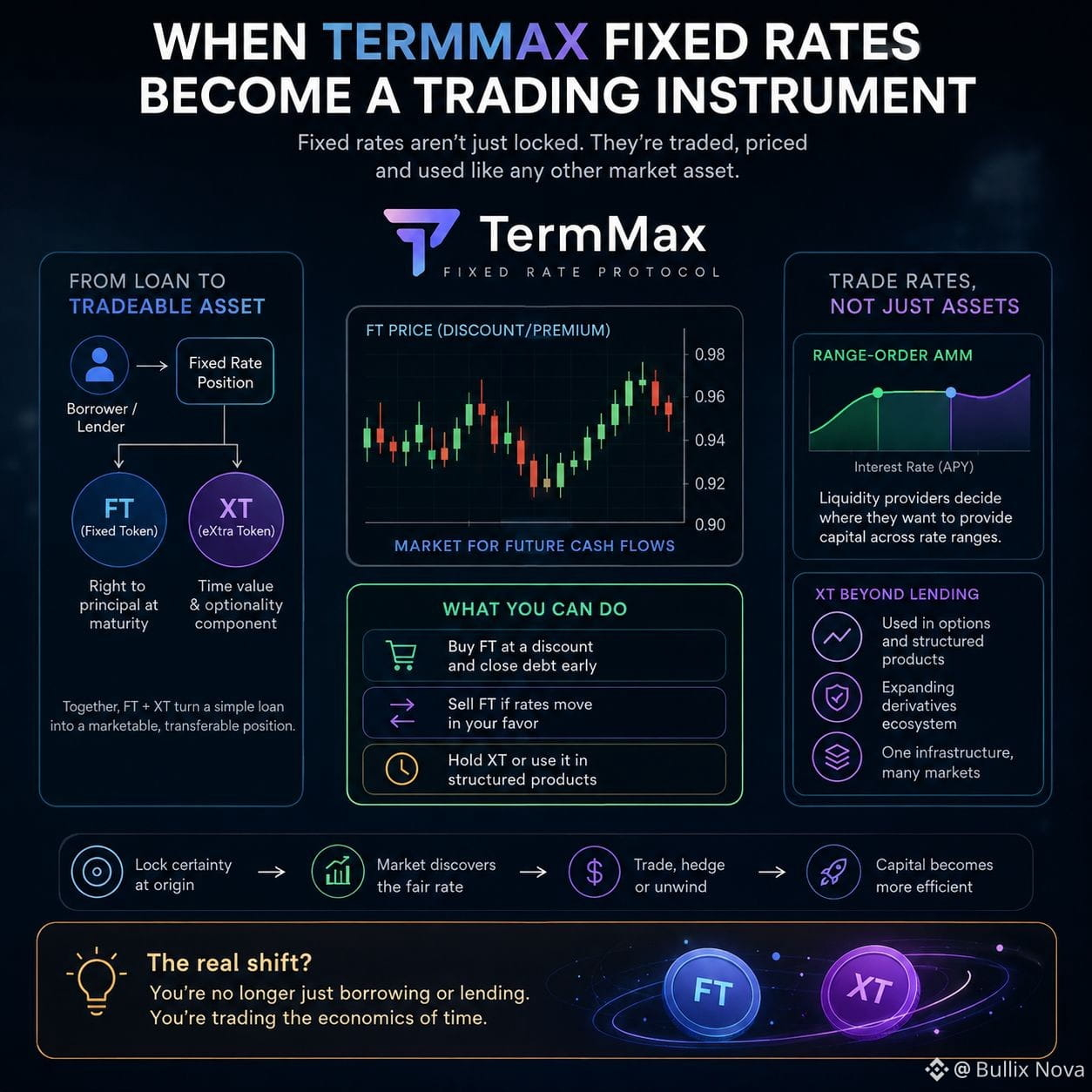
TermMax splits the economics into FT and XT. The FT is tied to the principal you get back at maturity. XT carries the time component. On paper, that sounds like plumbing. In practice, it makes the position feel a lot more like something you can actually trade.
And that creates a weirdly useful situation.
Say you borrowed at a fixed rate and, later, the market price of the FT moves. You’re no longer trapped thinking only about your original loan. You can look at the market and ask whether buying back that future claim is cheaper than simply waiting for maturity.
That is where the fixed rate stops feeling “fixed.”
The obligation stays defined.
The market around it doesn’t.
That distinction is easy to miss.
I also like what the range-order AMM implies for lenders. You’re not just tossing liquidity into a pool and hoping the algorithm finds a rate. You can position liquidity around specific rate ranges. It feels more like quietly quoting a market in funding than depositing into another lending box.
Then XT gets even more interesting because TermMax uses it in structured products, including options mechanics.
So suddenly the thing being traded isn’t only BTC, ETH, or collateral.
You’re trading expectations around time, funding, maturity and future cash flows.
That’s probably the detail most people skip.
Fixed-rate lending looks boring right up until the rate itself becomes something you can trade.
Then you realize the real market was hiding inside the loan.
#termmax @TermMax
Watching TermMax more closely changed that for me.
The interesting part isn’t really the “fixed rate” label. It’s what happens to the position after you create it.
TermMax splits the economics into FT and XT. The FT is tied to the principal you get back at maturity. XT carries the time component. On paper, that sounds like plumbing. In practice, it makes the position feel a lot more like something you can actually trade.
And that creates a weirdly useful situation.
Say you borrowed at a fixed rate and, later, the market price of the FT moves. You’re no longer trapped thinking only about your original loan. You can look at the market and ask whether buying back that future claim is cheaper than simply waiting for maturity.
That is where the fixed rate stops feeling “fixed.”
The obligation stays defined.
The market around it doesn’t.
That distinction is easy to miss.
I also like what the range-order AMM implies for lenders. You’re not just tossing liquidity into a pool and hoping the algorithm finds a rate. You can position liquidity around specific rate ranges. It feels more like quietly quoting a market in funding than depositing into another lending box.
Then XT gets even more interesting because TermMax uses it in structured products, including options mechanics.
So suddenly the thing being traded isn’t only BTC, ETH, or collateral.
You’re trading expectations around time, funding, maturity and future cash flows.
That’s probably the detail most people skip.
Fixed-rate lending looks boring right up until the rate itself becomes something you can trade.
Then you realize the real market was hiding inside the loan.
#termmax @TermMax