

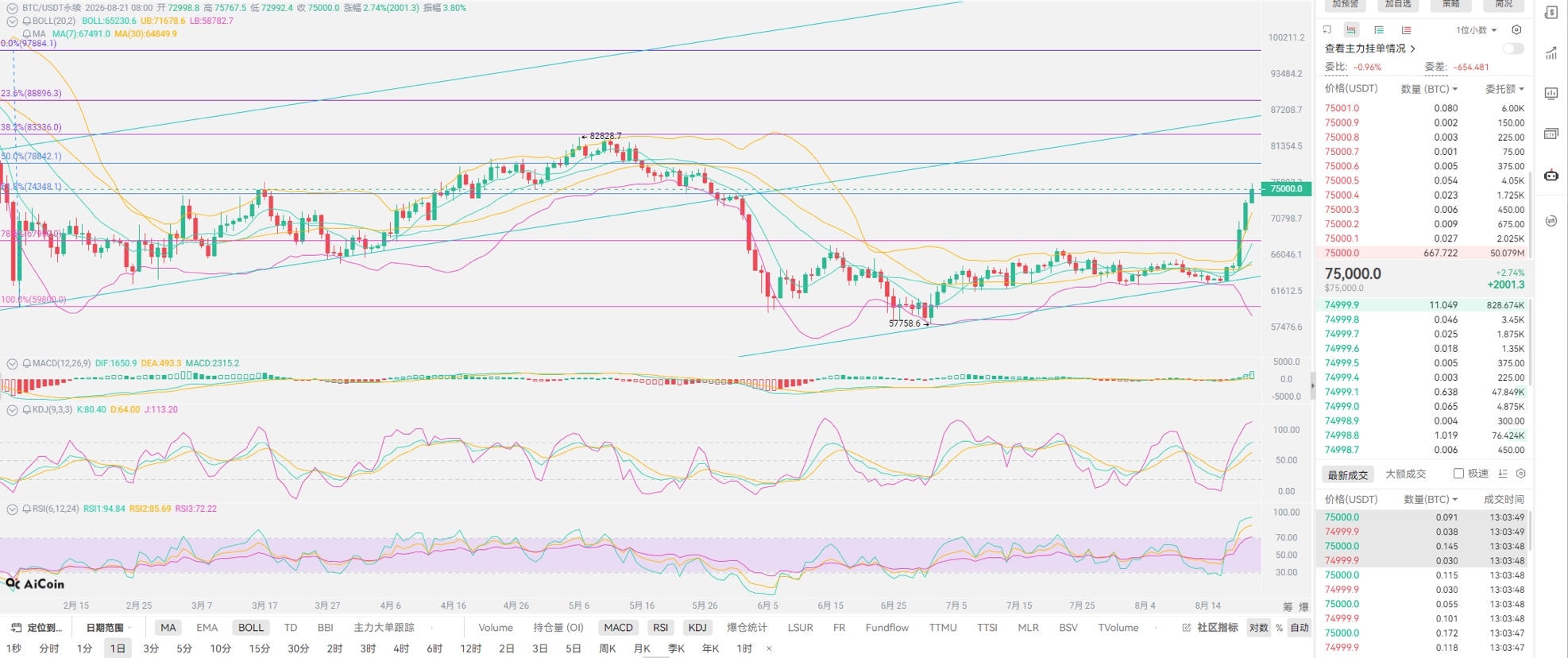
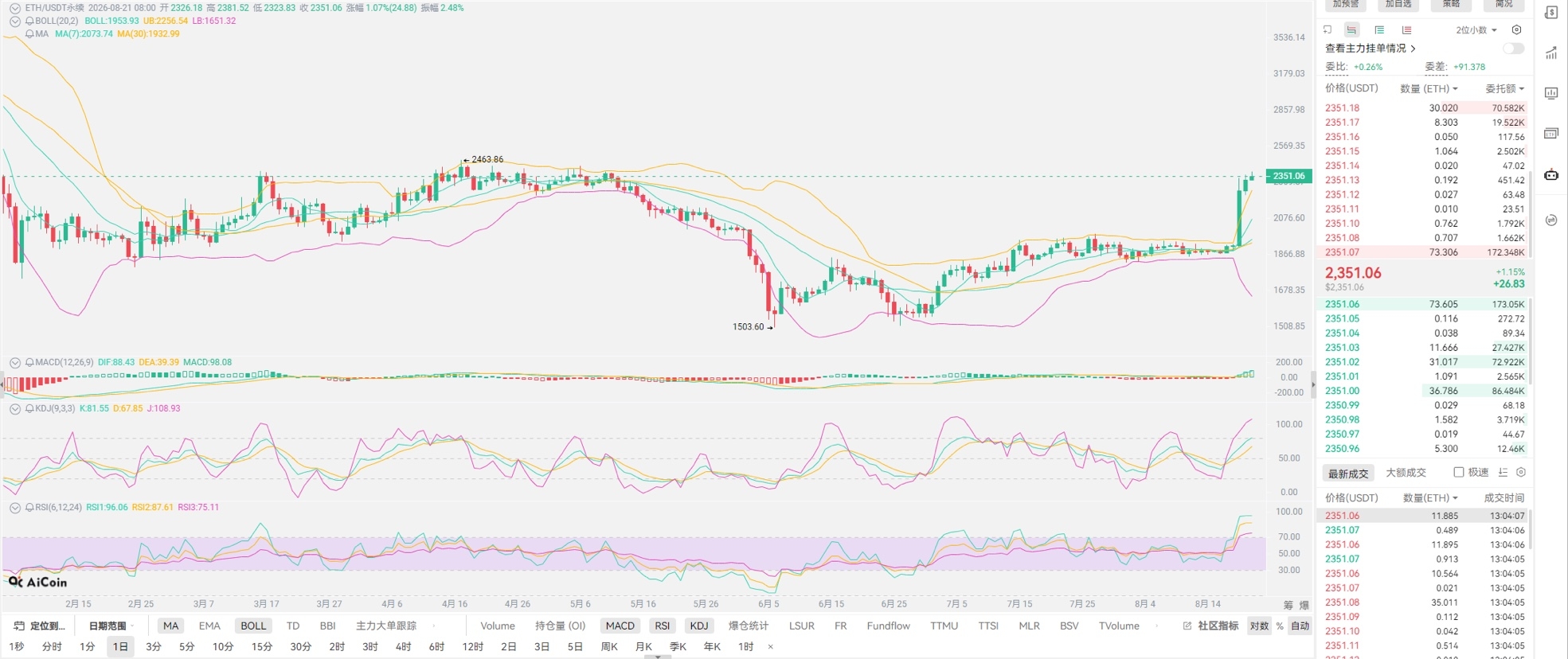
Today, I’ll briefly discuss the “Genius Bill.” Two waves of growth have shown everyone signals of a bull-market rebound. Why doesn’t Old Cui mention the “Genius Bill”? Naturally, he also has his own views. The “Genius Bill” doesn’t have much to do with the crypto market itself; it’s essentially paving the way for stablecoins. It could even be said to be a targeted bill, and its connection to this round of上涨 (rally) isn’t very big. Although the timing of the growth is highly consistent with the bill’s passage, Old Cui doesn’t think this is a positive development. The previous dip for Big Pie (BTC) was around 62,200. Within just a week up to today, it has climbed to the high of 75,767—an extremely impressive increase. Where is the link between the two? The essence of the “Genius Bill” is stablecoins, not crypto assets, and the intended targets are very clear: in the short term, it’s aimed at Tether; in the long term, it’s about paving the way for U.S. dollar hegemony. Among the coins that saw the largest growth this time, several are also related to the stablecoin ecosystem—for example, Ethereum, SOL, XRP, DOGE, and even Bitcoin.
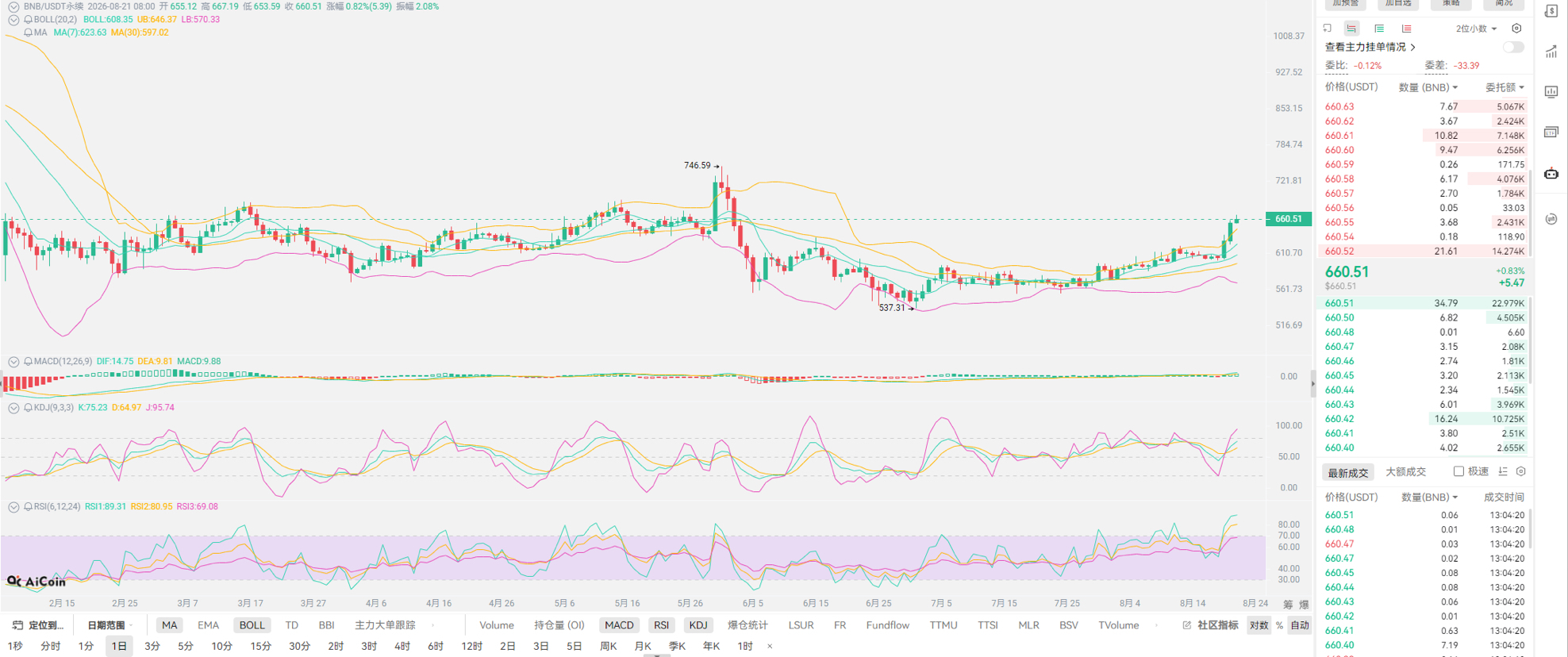
But trying to start a bull market based on this message alone is unrealistic. I wonder if everyone has thought about whether stablecoins themselves and the existence of crypto assets in the crypto market are in conflict? Lao Cui believes these two share the same market, which means there is an inherent conflict of interests. What Trump wants to do is nothing more than to replace the dollar with stablecoins, so that the power to price currency returns to the president himself. In that case, the positioning of crypto assets becomes extremely awkward. You could say the larger the stablecoin market is, the smaller the market left for crypto assets. They essentially compete against each other as fellow industry players. So where do these assets go from here? Lao Cui’s current understanding is that the “link” itself can serve as a bridge between stablecoins and U.S. stocks—or other forms of value. For example, what BN is doing: using the BNB channel to connect to U.S. stocks, issuing U.S.-stock tokens. One blockchain link can build channels for both. The more buyers there are, the more the value of the channel increases. And as channel value rises, maintenance costs correspondingly increase. Those maintenance costs naturally translate into appreciation of the tokens.
This is a complete chain of returns. At this stage, every major crypto asset is competing in terms of computing speed—whether for processing speed, or even stability. Fundamentally, it’s still competition over establishing dominance in the “link.” Everyone wants to secure legitimacy in the future. The currently listed assets will have clearer advantages. The ultimate winner among those in the process of legalization will most likely emerge from these few coins. This is essentially a bet on the future. A simple way to understand it: if today the U.S. were to designate SOL as the specified chain for future U.S. stocks, then it would be reasonable for the SOL coin to surge to a value of 1K today. Naturally, other coins’ values would decline—this is a case of one rising as the other falls, yin and yang interdependently opposing and transforming. What Lao Cui wants to say boils down to this: don’t ignore the role of the “link.” If the link can be connected, it will create a market that you can’t even imagine. At least up to now, in human financial history, no similar financial market has appeared. The outlook is beyond imagination.
Once it forms, there’s almost no obstruction between countries; funds will directly flow into the markets they like. This would definitely have a strong impact on the domestic market, and that is a major consideration behind why it’s prohibited at home. Lao Cui, of course, is also among the opponents—only the top players hope to make this happen; other countries will all oppose it. Many friends will be misled by certain things. Lao Cui has also talked about countries like Russia and Iran, which strongly praise the crypto space. But the thing is, they refuse to look at the fact that externally they accept Bitcoin, while internally their policies are even stricter. Every country, to varying degrees, will have some resistance. The result doesn’t need much discussion; the tide of history can’t be stopped. The world aligning with each other is only a matter of timing. Though the vision is grand, remember: it’s not something that can be achieved in the short term. What we need to do at this stage is to try to hold those coins that have stablecoin channels.
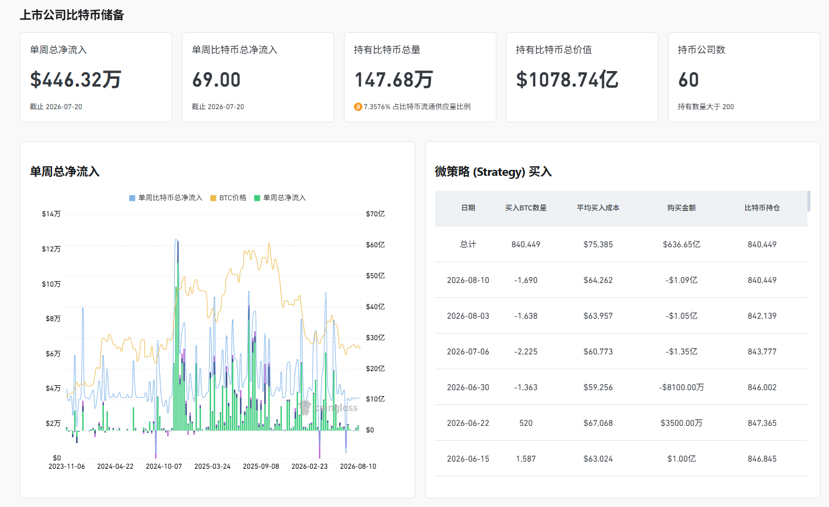
Perhaps some users don’t have enough chips on hand, and you can choose to profit through contracts. Contracts are just tools for making money—don’t think you can achieve financial freedom by using contracts. After accumulating original capital, try to return to the spot market. For the few coins Lao Cui mentioned earlier, you can consider them. The “Talent Bill” may not necessarily be good news for the crypto space. The current rise, as Lao Cui defines it, is more like a rebound of sentiment. The drop from 120,000 to 60,000 is within reason. The giant whales led by Huawei have basically been thoroughly cleared out; the remaining portion is of little significance. Even if the price returns above 80,000, that would be where it should be. But if you want to return to the bull market range this year, don’t rely on wishful thinking. Lao Cui can make it clear: it won’t. Rate cuts are the foundation. As long as September doesn’t see rate cuts, the market will still show sell-off/hammering down. Ultimately, when the bull market truly erupts, you can pay attention to the “Clear Rules Bill.” Once it’s passed, Bitcoin will inevitably make new highs—that is the focus. Let this suspense stay for tomorrow’s explanation! At the end, a reminder to everyone: be sure not to chase the price recently. If there are no rate cuts this year, that will be the biggest bearish message.