


Silver at two prices at once... how long can the paper price ignore reality?
With the beginning of 2026, silver is no longer just a precious metal that fluctuates with the news, but has turned into a mirror revealing a deep flaw in the global pricing mechanism.
In just one day, we witnessed an unprecedented scene:
Silver touches $122 an ounce
Then it drops rapidly to around $84
But the biggest surprise was not the drop...
But where the price remained high, and where it collapsed.
One market... and two different prices for silver
At the end of January 2026, the metal itself was trading in two major markets at shockingly divergent prices:
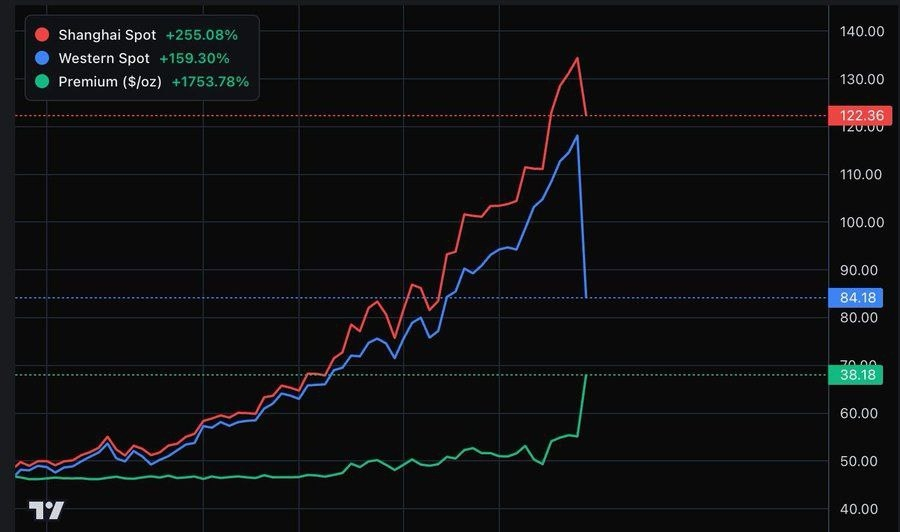
Shanghai: About $122 per ounce
COMEX (USA):Approximately$84 per ounce
With a difference of about $38
More than 45% price difference at the same moment.
This is not a technical glitch...
But a result of a fundamental difference in pricing nature.
Shanghai: When the real metal speaks
In the Shanghai gold and silver market, physical delivery is the norm.
Buyers are industrial and investors who want the metal now, not a paper that promises it later.
For this reason:
The price reflects real demand
The price premium reflects supply tightness
Those who want silver... pay more and get it immediately
The emergence of a high premium here means one thing:
Silver is not available enough.
COMEX: The price created by contracts, not bullion
On the other hand, the American COMEX relies on paper contracts.
The shocking number:
More than 350 paper contracts for just one ounce of actual silver
What does that mean?
A massive paper offering can be sold at the click of a button
Artificial pressure on the price
No need to actually provide the metal
Simply:
Silver can be sold hundreds of times... without a single ounce moving.
The result: A gap that reveals the truth
This gap is not a fleeting number,
But a warning signal.
What does this difference actually mean?
1️⃣ Real scarcity
The high Shanghai premium means that the actual market is experiencing a real shortage of silver.
2️⃣ Unbalanced pricing
Paper markets can suppress price even with increasing real demand.
3️⃣ Risk of delivery pressure
If a sufficient number of contract holders demand physical delivery, we may see violent pricing disruptions.
In conclusion
The $38 per ounce difference between Shanghai and COMEX is not a normal fluctuation,
But a clear crack between paper price and real value.
Markets that rely on physical delivery send a clear message:
Silver is rare... and the real price is higher than what Western screens reflect
The more important question posed by the coming days:
How long can the paper price ignore reality?
#WhoIsNextFedChair #MarketCorrection #silver $XAG