


##
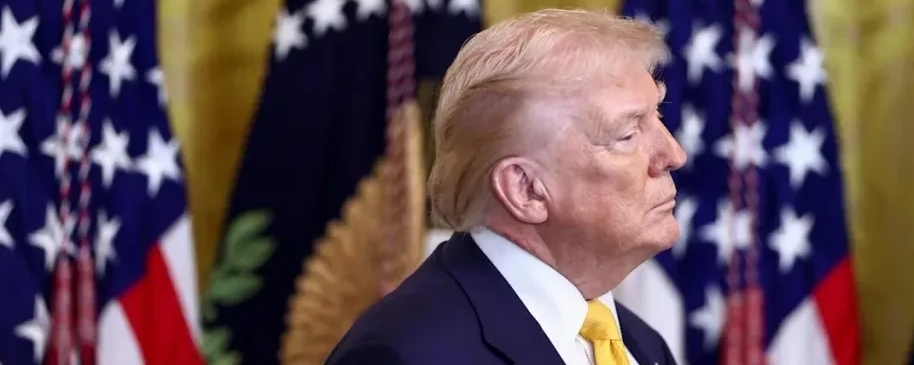
In March 2026, US President Donald Trump sat in a Cabinet meeting and said four words that summarize his direction: “I am a man of gold.” This came in the context of his remarks about a 24-carat commemorative gold coin bearing his image, which was authorized by the Treasury Department to mark the 250th anniversary of America’s founding. The coin was revealed by Treasury Secretary Scott Bessent in July 2026. The coin bears the two inscriptions “In God We Trust” and “Freedom 1776–2026.”
After five months, the president himself entered a meeting at the White House with executives from the cryptocurrency sector—Coinbase, Payward, and Blockchain.com—becoming the strongest catalyst for Bitcoin in 2026.
There’s no contradiction between being a “gold man” and a president supportive of Bitcoin. Gold has protected wealth for five thousand years thanks to its scarcity, durability, and distance from the reach of a money-printing press for any government. Bitcoin does the same thing—only faster and cheaper, with a tighter supply cap than any gold mine. Trump’s instinct, whether he phrased it this way or not, has consistently pointed toward assets whose value governments can’t easily undermine.
And if those moves materialize in both gold and Bitcoin at the same time—an official program to accumulate Bitcoin alongside the U.S. current gold reserve of 8,133 metric tons—then the U.S. would hold the largest quantity of both rare assets compared with any country in the world.
What Trump said in the White House
On August 19, Trump met with leaders from the cryptocurrency industry and urged Congress to pass a “fair” version of the CLARITY law before the September 15 deadline. When directly asked about the likelihood that the United States would make additional Bitcoin purchases for a strategic reserve, Trump said the idea had “already been discussed”.
It also revealed that the Commodity Futures Trading Commission (CFTC) is pursuing a compliant regulatory path to operate Hyperliquid, a decentralized perpetual futures contracts platform, within the United States.
The U.S. government already holds 328,000 Bitcoin, all amassed through legal measures, including shutting down the “Silk Road” platform and recovering funds from the Bitfinex hack.
An executive order issued in March 2025 created a “strategic Bitcoin reserve” and halted further government selling. The Wednesday comments left the door open for this reserve to grow through optional purchases rather than confiscation alone.
What both markets did
Gold is trading today at around $4,489 per ounce, up 66% from its inauguration-day price of $2,697 in January 2025. The metal hit a record high of $5,589 per ounce on January 28, 2026, driven by fears of war with Iran and a weaker dollar.
Meanwhile, Bitcoin is trading today at about $71,500, up from below $65,000 just four days ago, driven by the largest “short squeeze” (liquidation of sell positions) since October 2025, which wiped out $1.74 billion in bearish bets over 24 hours, according to CoinGlass data.
Bitcoin still sits 43% below its all-time high of $126,000, recorded in October 2025.
Leaderboard
The president who put his picture on gold and described himself as a “gold man” oversaw gold’s best performance in decades during the past 18 months. In the same week in which he hinted at a government program to buy Bitcoin, Bitcoin logged its biggest rise since March 2026.
Both assets respond to the same underlying force: a president whose instincts are turning toward hard assets, a Treasury department that is repurchasing long-term bonds to bring down yields, and an administration that has made regulation of digital assets a declared priority.
Gold got Trump’s attention, and Bitcoin got his. The market gave both assets a major move in the same week.