#termmax @TermMax I’ve been looking at @TermMax from different angles over the last few days, and I keep coming back to one question:
Is TermMax actually making DeFi simpler, or just making complexity easier to access?
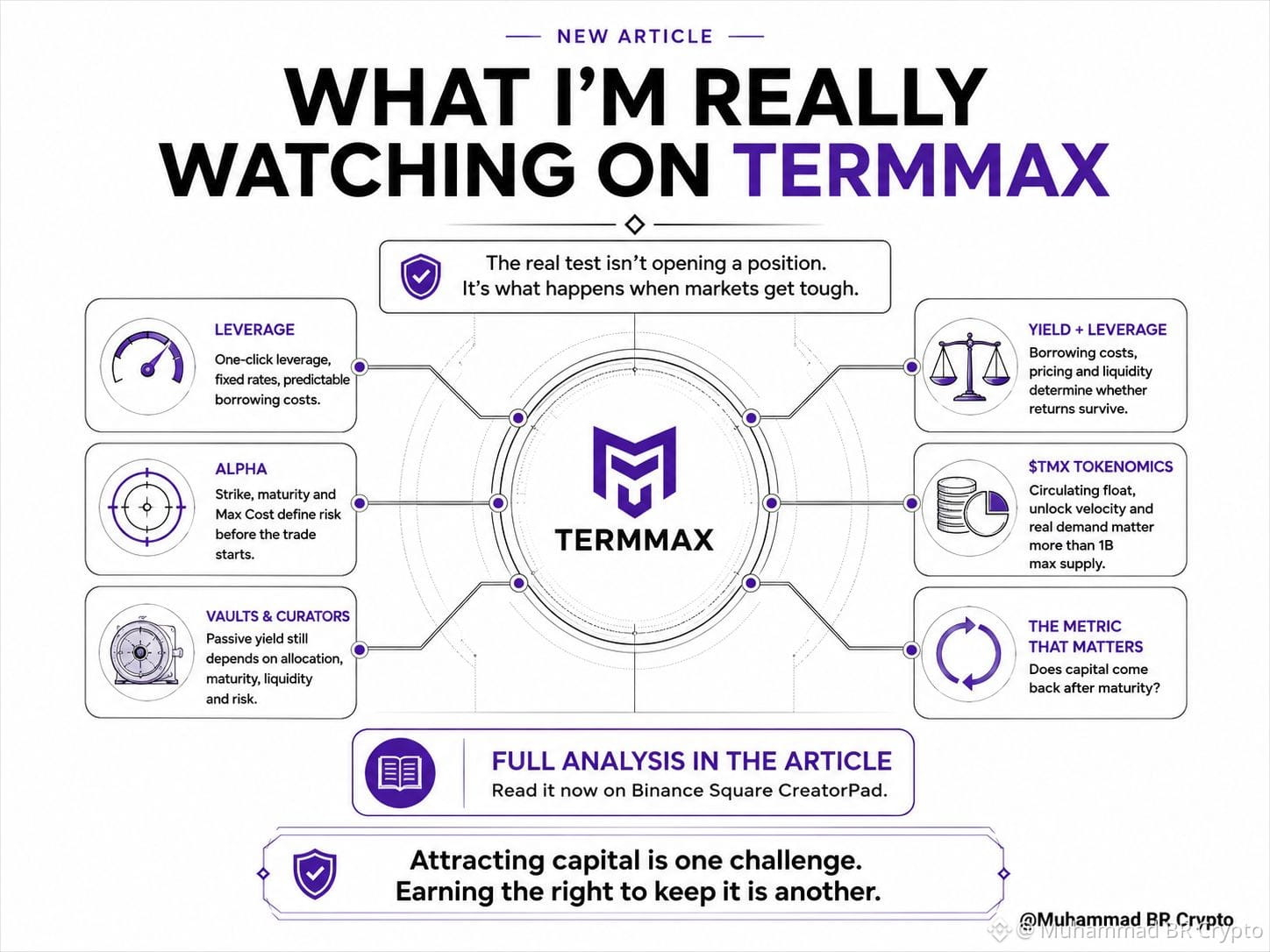
One-click leverage is a good example. It bundles multiple steps into one transaction, while fixed rates make borrowing costs more predictable.
Alpha takes the same idea into risk management. Strike, maturity and Max Cost define the trade before it starts. The market can still move against you, but the downside has a clearer boundary.
Then there’s the Vault and Curator layer.
Passive yield doesn’t remove risk. It shifts the responsibility of choosing markets, maturities, liquidity and risk levels to another layer.
That matters even more with leverage and yield-bearing assets, where borrowing costs, pricing and liquidity can determine whether the expected return actually survives.
Even TMX tokenomics points to the same lesson. The 1B maximum supply matters less than circulating float, unlock velocity and real demand.
And I’m less interested in headline wallet counts or TVL than one simple metric:
Does capital come back after maturity?
Because the real test isn’t opening a position when markets are calm.
It’s what happens when volatility rises, liquidity gets tight and users want to unwind.
Attracting capital is one challenge. Earning the right to keep it is another.