



Introduction
As Changpeng Zhao established Binance in 2017, the exchange became the biggest crypto-asset exchange in the world in terms of traded volume.
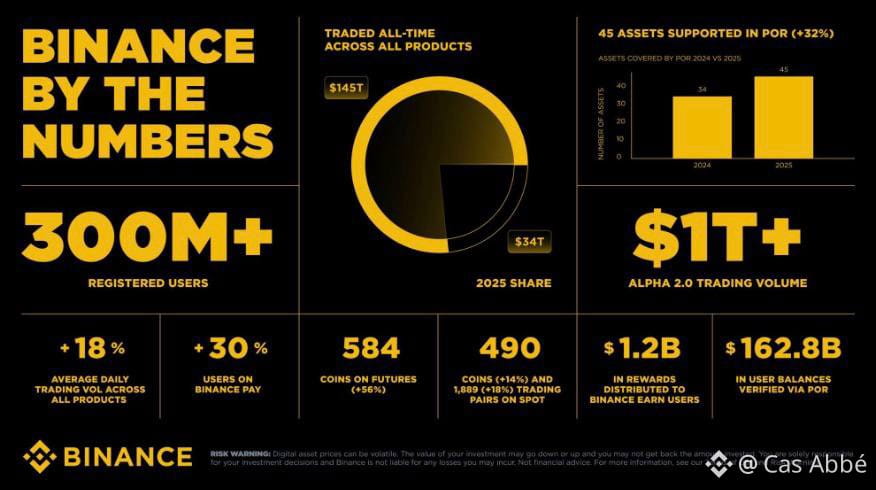
There are still a lot of people who see Binance and only an exchange, without considering what goes on behind the scenes. The platform completed $34 trillion in 2025 alone, in spot, futures, and on-chain trading, which is almost five times the volume that Visa completes globally each year, and two times as much as the total annual volume of the U.S. stock-market. Now, Binance is more of a plumbing of the crypto economy than a marketplace, offering liquidity, execution, security, discovery, and daily payments infrastructure.
 Why the perception is behind reality.
Critics envision Binance in volatility, speculation and scandals every now and then. As recent social-media outbursts demonstrate, this is a gap:
- October -10 Crash and Deleveraging - A sudden software malfunction on 10th October 2025 caused automated liquidation schedule on leveraged accounts. Cathie Wood of ARK Invest said that the glitch had pushed the deleveraging of $28 billion downwards on Bitcoin. The 10/10 flash crash, which erased tens of billions of positions and left a permanent tarnished reputation on the company, was justified by OKX CEO Star Xu.
- Alpha listings controversies Binance Alpha will enable token launches with airdrops, which resulted in many 2025 launches not doing well. The crypto-Twitter memes compared the platform to a coin casino and assumed Binance gives preference to insiders.
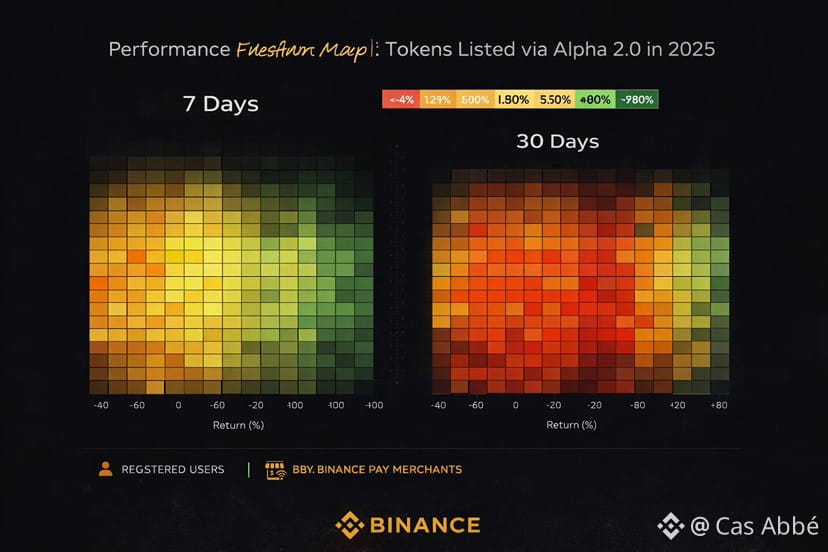
Rivals such as Hyperliquid said that their futures liquidity was now as good as Binance, and the leadership at OKX took the opportunity to demand more transparency.
- CZ on buy and hold tweet of CZ itself – CZ tweeted that basic buy and hold strategies usually show less exotic strategies. Opponents used this to suggest that they should hold all altcoins, which Zhao explained meant that the strategy only works with good projects, with the vast majority of coins at an early stage failing.
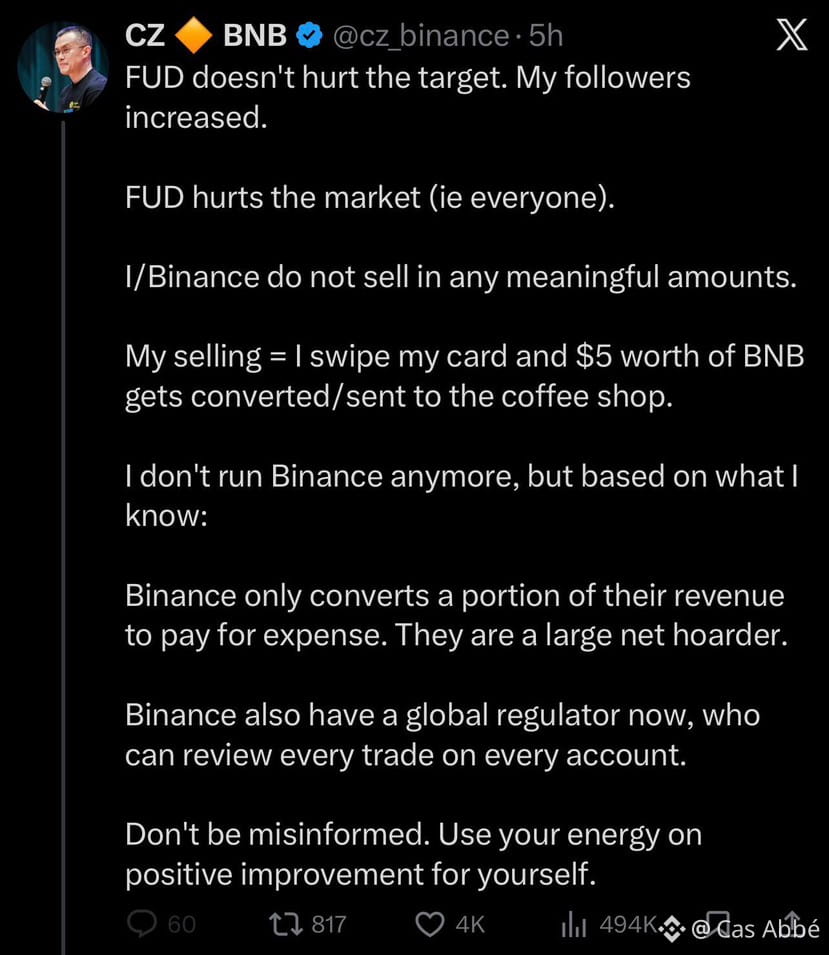
That was the real slap!

These conflicts provide the headlines since they fit the story of crypto excess and exchange malfeasance, but they hide the structural changes which occurred in Binance and the industry at large.
Cryptocurrency industry industrialization.
The picture of Binance 2025 year-in-review creates a stark contrast to the one that many people still have in their minds. Crypto is no more a loosely networked system of speculative markets responding to narratives and cycles. In 2025, a system on an industrial scale has developed that is characterized by liquidity depth, institutional involvement, operational governance, and quantifiable results.
The core of that change lies in Binance, but not a trading application but an element of the financial infrastructure of the world.
Scale and liquidity Where market actually clears.
By 2025, Binance had transacted up to $34 trillion in trading volume of all products spot, futures, and on-chain execution. This was not a single spike; this was a sign of an 18% year over year growth in the average daily volume, which signifies sustained utilization. Spot markets alone were over 7.1 trillion and all-time cumulative volume was 145 trillion. Binance had 490 spot-listed assets and 1,889 trading pairs, and 584 futures markets, with one of the most extensive execution surfaces in the world.
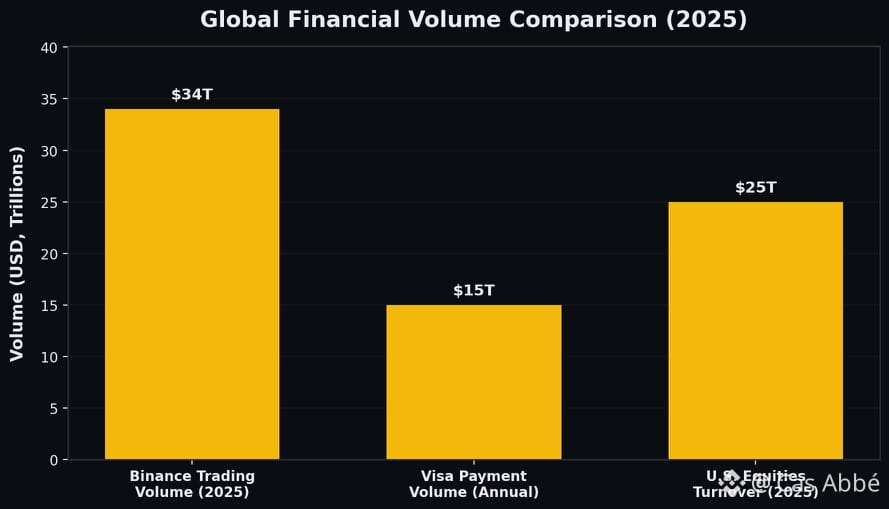
The issue with liquidity is that it contributes to a decrease in the slippage, enhances price discovery, and allows large players to trade without disrupting the market. In 2025 Binance was responding more to volatility as a clearing layer than as a venue.
Web3 and Alpha 2.0: Discovery at infrastructure level.
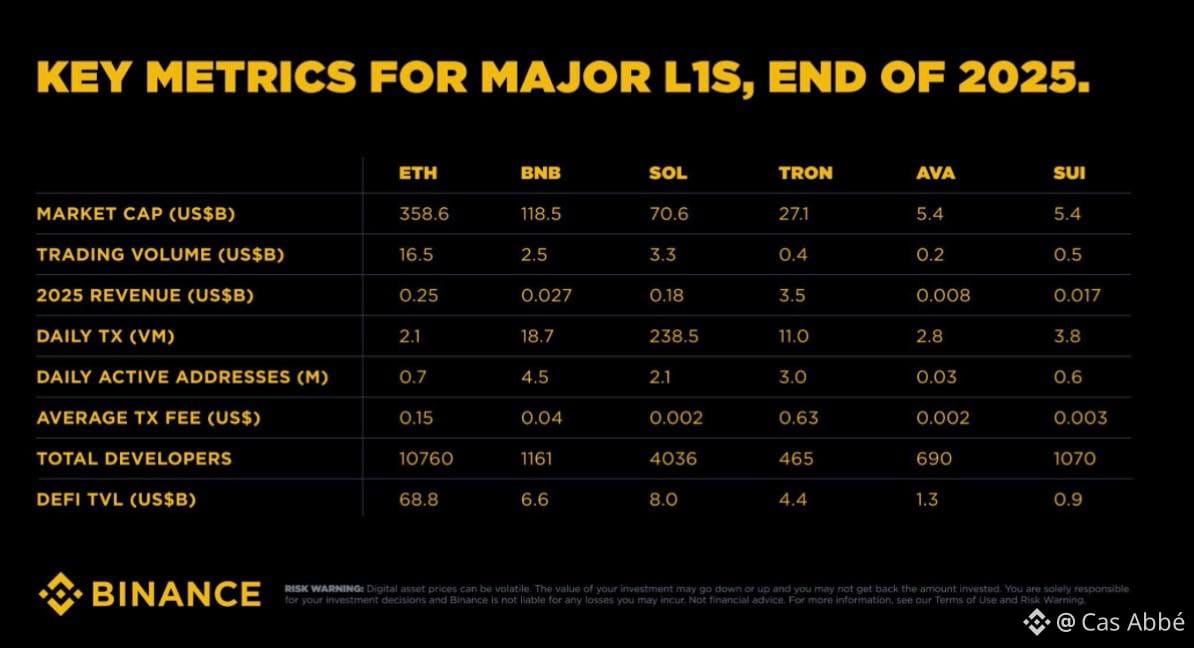
The next step of crypto is not only the trading of the available assets but also the finding and access to the new ones. That shift was centralized on Binance Alpha 2.0. in 2025 Alpha 2.0 will have more than 100 million users onboarded into Web3 workflows with over 100 trillion of volume recorded. It awarded 782.000 of Rewards in 254 airdrops and blocked 270,000 fraudsters. The ratio between high growth and enforcement is an indication of a maturing system where being found is controlled, rather than a free-in-all situation.
The development of Alpha demonstrates that on-chain activity has become mainstream and is channeled through the infrastructure that can withstand the volume and the ability to prevent abuse.
Trust and compliance: Results, not motives.
Development of trust is achieved by actions and not words. Continuous risk improvements have resulted in Binance minimizing direct exposure to large illicit funds categories (896% as of 2023). Security and compliance systems saved 5.4m users, and prevented losses worth 6.69billion of potential fraud and scam in 2025 alone. The platform handled more than 71,000 law-enforcement requests as well as assisting the seizure of about 131 000,000 associated with illicit activity, and providing 160+ training programs across more than 130 countries.
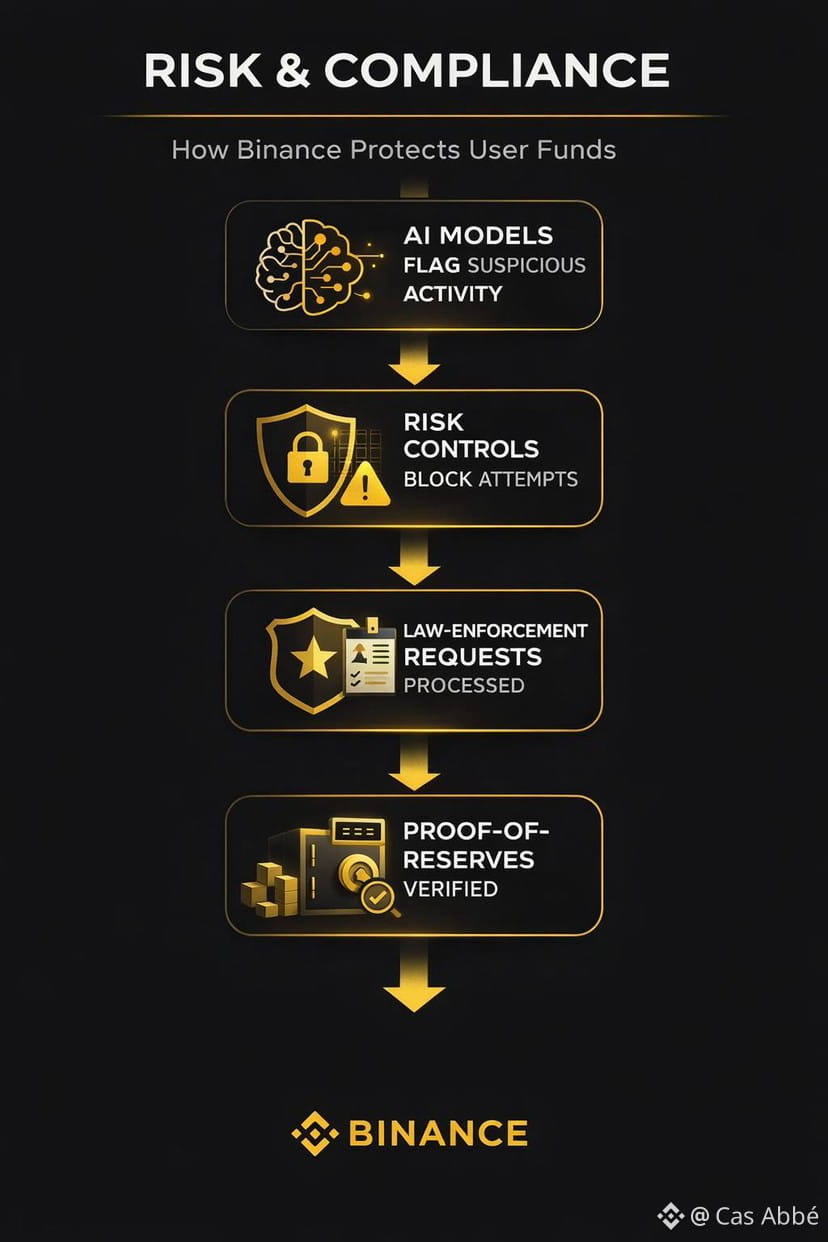
Proof‑of‑Reserves verification represented 162.8 billion user balances in 45 assets, which is 32 percent higher than it was previously. Together with 29 certifications, such as ISO standards of information security, privacy, business continuity, and AI governance, the system is becoming more and more appropriate in terms of global financial expectations.
Institutional and VIP participation: Experimentation to operations.
The institutional adoption of crypto pass through a distinct threshold in 2025. In Binance, the institutional trading volume increased by 21 percent compared to the year before, whereas VIP volume rose by 18 percent. OTC fiat trading increased by 210 percent, which showed large and structured transactions were required. The tokenized collateral programs were shifted toward production application and tokenized funds became accepted in institutional collateral systems. This indicates crypto infrastructure being embedded in conventional capital structure and not being external to it.
This transformation is a change of pilots and proofs of concept to operational workflows.
Bitcoin in Everyday Life: Fiat Rails, Payments, and Earning.
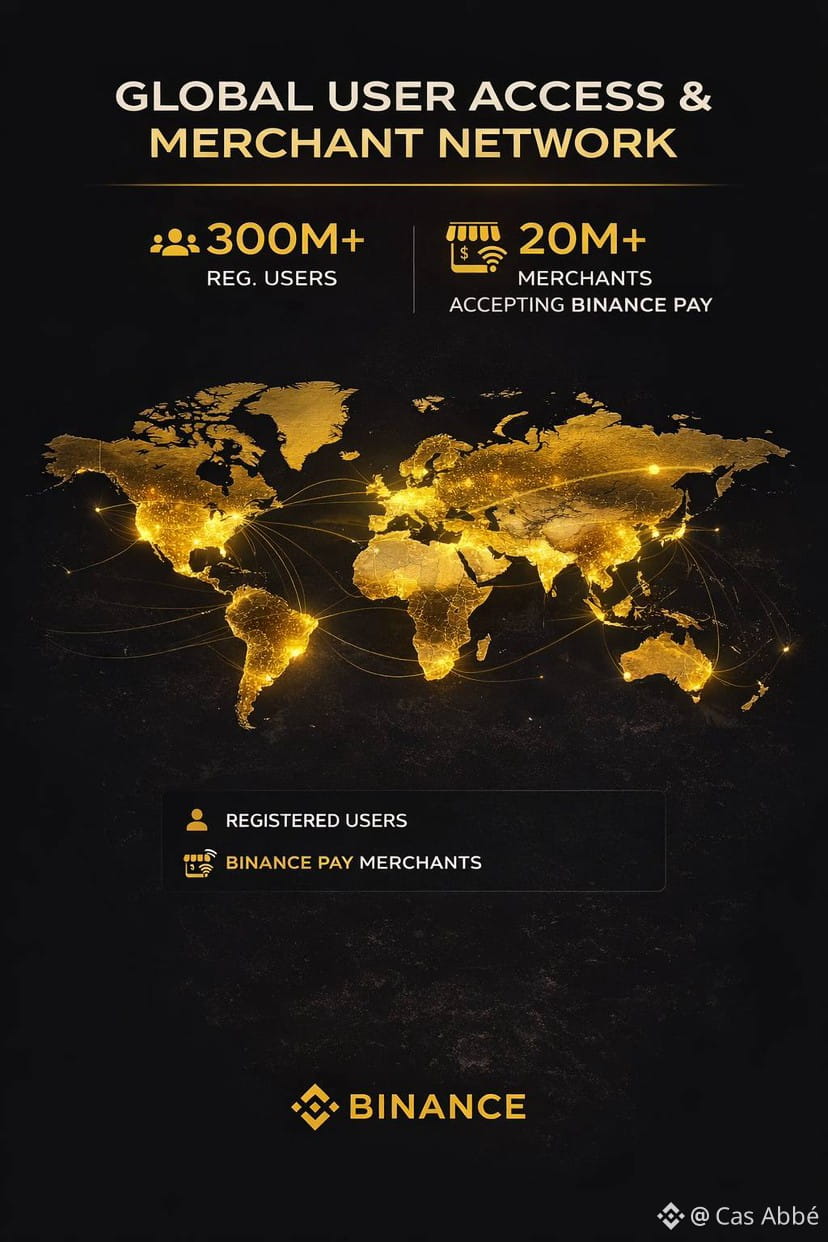
Outside of trading and institutional application, crypto achieved considerable advancement in the daily life in 2025. Fiat and peer-to-peer volume increased by 38 percentage points annually in Binance and Binance Pay users increased 30 percent year over year. The platform also targeted and attracted more than 20 million traders globally, making crypto a part of everyday business.
Since its launch, Binance Pay has served over 280 billion in cumulative transaction volume. By 2025, more than 98% of B2C payments will have been made in stablecoins. Approximately 73 per cent of those who made active users made repeat transactions on fiat rails, meaning that they were used routinely, not experimentally.
Binance Earn has already disbursed 1.2 billion in rewards in the year, which illustrates long-term user engagement.
Community/Education: Beyond Capital Scale.
As of 2025, Binance hosted 1,026 offline and online events attended by 3.7M people worldwide. More than 130, 000 visits came to Binance Square and over 3, 000 creators were present. Moreover, 850,000 authors enrolled in the Write -to-Earn program.
Binance Charity gave approximately 5million dollars to 270,257 recipients, and this shows that scale does not have to be confined to markets but can also create social impact.
In 2025, crypto not only increased, but also industrialized. The facts are clear that it is no longer a hype-based experiment but it is a system that runs on rails.
These statistics show that not everything is trading. Binance is constructing all the on-chain discovery flows to fiat payment rails, regulatory compliance systems, education platforms, and institutional liquidity products. It is a multi-layer infrastructure with components of a stock exchange, brokerage, payment processor, cloud service, and data aggregator.
It takes industrial level to be industrially monitored.
With growth comes scrutiny. In 2025, Binance received complete approval of the Abu Dhabi Global Market (ADGM), indicating its readiness to embrace regulatory systems of ordinary finance. The company also enhanced its evidence-of-reserves -162.8 billion user balances confirmed in 45 assets, and got ISO certification on information security, privacy, business continuity, and AI governance.
The crash of 10/10 leaves a few questions. The issue of the risk system was revealed by automatic liquidations, and the compensation of 283million was a minor proportion of the reported 19billion of forced liquidations. The very fact of the departure of CZ and the settlement offered to it by the US courts shows the human price of non-compliance. That is the reason why Binance is spending heavily on controls. Controlled regulators in various jurisdictions are now able to review all trades and accounts and the compliance department at Binance has fulfilled tens of thousand law-enforcement requests.
The sustainable cash flow and the great decoupling.
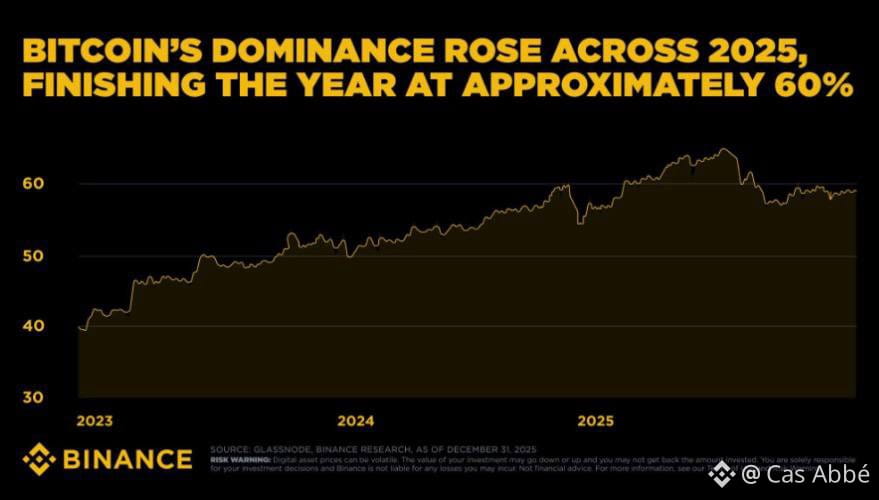
Binance Research found that 2025 was the turning point in speculation to infrastructural-based economics. Decoupling of asset valuations with base-layer metrics of usage. Bitcoin price increased and transactions were few and this points to macro maturity.
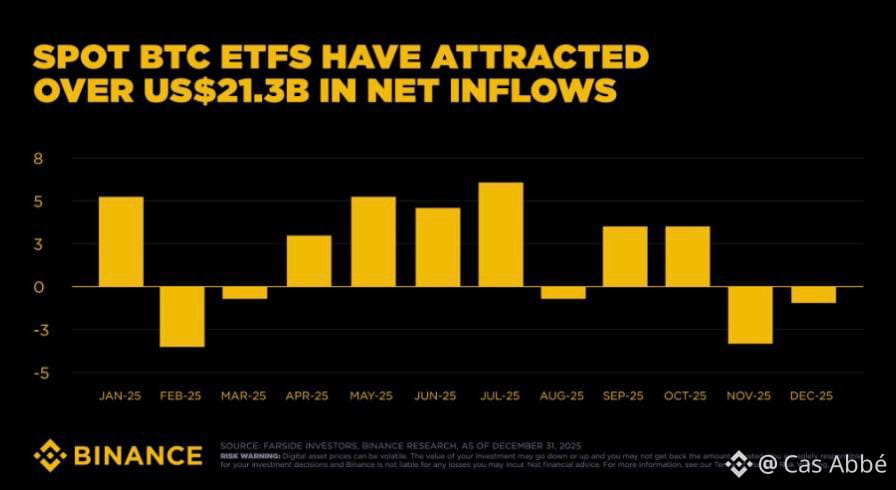
Best DeFi protocols made $16.2 billion of revenue, more than Nasdaq and CME. The amount of stablecoin transactions had hit up to $33 trillion, almost twice the throughput of Visa, and the capitalization of the stablecoin market had reached as much as 300 billion.
These figures represent a sustainable level of cash-flow in which protocols are already running in businesses rather than projects. The rewards of 1.2 billion dollars Binance Earn received last year demonstrate that long-term users cannot stop engaging in their activities after speculative trading.
Adoption and our future in 2026.
In the future, Binance anticipates that the year 2026 will be an adoption year. A number of tendencies confirm this opinion:
1. Regulatory clarity: The presence of ADGM authorization and other similar frameworks will be seen globally, regulated trading places will gain market share, and traditional funds will use them to gain compliant crypto exposure.
2. Tokenization of real-world assets: Pilot projects on tokenized collateral (such as the BUIDL fund at Blackrock) point to the securities, funds and commodities coming to a blockchain rail. The infrastructure of Binance makes it able to custody, clear and collateralize these instruments.
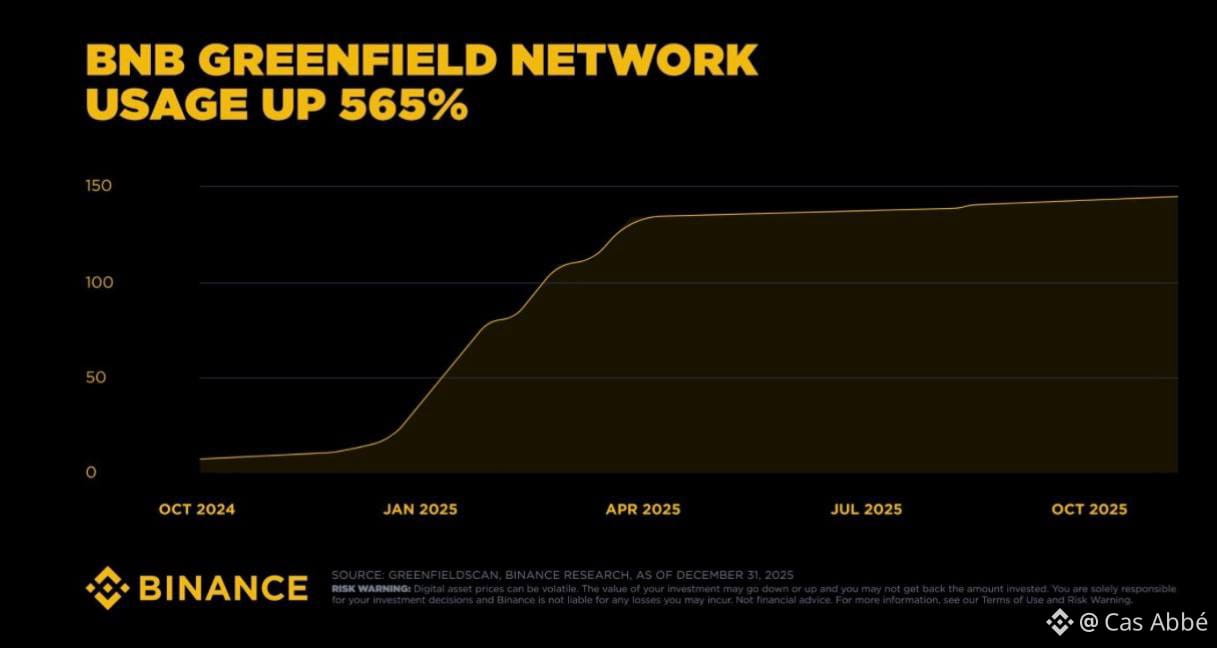
3. Decentralized storage and data: Binance BNB Greenfield storage network increased by 565 per cent in 2025. Distributed storage and compute might become critical to Web3 applications.
4. Stablecoin rails: 98 of Binance Pay is settled in stablecoins, and transaction volume is nearly nearing $33 trillion, digital dollars (and others) are becoming universal settlement assets. Issuers and regulators are likely to increase competition between them.
5. Smart compliance and user experience: Binance has more than 100 AI models that identify fraud and improve compliance processes. Over 3.2 million users were using AI summary technologies to learn complicated crypto data. This intersection of AI-blockchain will become even deeper.
Self-reflection and affirmative account
Being a follower of Binance since its inception, the turnaround is incredible. The trading which was previously conducted in hotel rooms is currently conducting higher volume of transactions on a daily basis than even majority of national stock exchanges. Quite on the contrary, the Alpha 2.0 program, though not flawless, allows mainstream users to explore the on-chain products and invest in new startups through airdrops. Of course, most of the tokens will not make it to the top, this is how innovation works, but a few will reach the next Ethereum or Chainlink.
These new criticisms show a more profound reality crypto is maturing. Gitches and downturns in a mature market encourage regulators, competitors and users to hold the company accountable instead of rejoicing in mayhem. The mere fact that CZ is current words and actions to move markets indicates how much he remains; but his departure also prepares the way to more institutional management style. The new management seems to be centered on obedience, robustness, and honesty as opposed to cults of personality.
The place occupied by Binance today is no longer the noisy front stage of crypto gambling but the silent back stage of the world banking system. One network is being integrated with liquidity, risk management, custody, discovery, education, payments and institutional workflows. This may be considered centralization by critics, but this is the opposite of historical experience, which has seen infrastructure layers allowing increasingly decentralized higher layers. The lack of trusted rails means that DeFi protocols are unable to resolve trades and the institutions are unable to deploy capital without gateways that are compliant. The size of Binance can be beneficial to the whole ecosystem as long as it continues to develop in the open and is controlled.